
WinSavvy Editorial Standards
How this article was created
Sales do not grow by luck. They grow when the right people see the right message at the right time and feel a clear reason to act. That is what strong product marketing does. It does not just explain what a product is. It shows why the product matters, why now is the right time, and why the buyer should choose it over every other option.
Start With a Clear Product Position Before You Promote Anything
Product marketing becomes weak when the business starts with promotion before it understands the product’s place in the market. Many teams rush into ads, email campaigns, launch posts, landing pages, and sales decks without first answering one simple question: why should this product matter to this exact buyer?
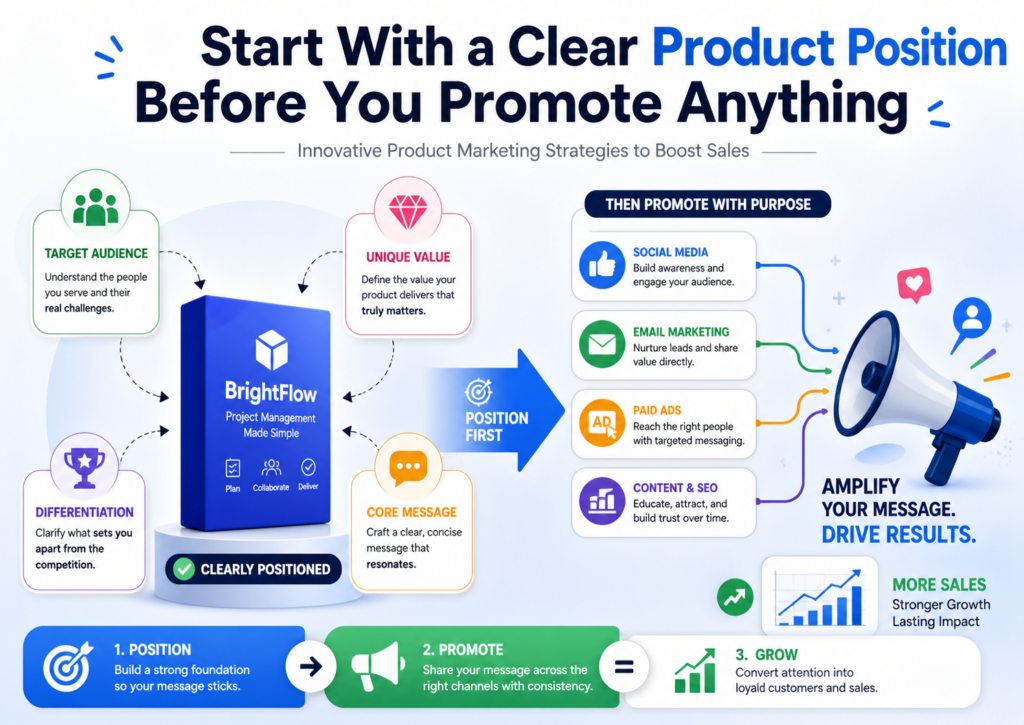
That question is the base of positioning.
Positioning is not a slogan. It is not a catchy line on the homepage. It is the clear space your product owns in the buyer’s mind. When positioning is strong, people understand what you sell, who it is for, what problem it solves, and why it is different. When positioning is weak, even a useful product can look ordinary.
Strong Positioning Makes Every Marketing Channel Work Better
Before you think about traffic, leads, or conversions, you need to make sure your product message is sharp. If your message is vague, more traffic will only show your confusion to more people. If your message is clear, every campaign becomes stronger because each touchpoint says the same thing in a useful way.
A buyer should not have to work hard to understand your value. They should land on your website and quickly feel, “This is for someone like me.” They should read your copy and see their pain clearly reflected. They should understand what changes after they buy from you.
That is the real job of positioning. It helps the buyer place your product in their world.
Your Product Should Be Framed Around the Customer’s Problem
A common mistake is to position the product around what it does instead of what the customer wants fixed. Businesses often lead with features because features are easy to describe. But buyers do not wake up wanting features. They wake up wanting fewer problems, faster results, less risk, more profit, more control, or a better way to do something painful.
So instead of saying your product has a dashboard, automation, reports, templates, or integrations, you should explain what those things help the customer achieve.
A project management tool is not just selling task boards. It is selling fewer missed deadlines, less confusion, and smoother teamwork. A marketing platform is not just selling analytics. It is selling better decisions, lower waste, and clearer growth paths.
A sales tool is not just selling contact tracking. It is selling fewer lost deals and better follow-up.
When your positioning starts with the customer’s real problem, your product feels more useful right away.
Find the Smallest Market Where You Can Be Clearly Better
Many brands try to speak to everyone because they fear losing customers. But broad messaging often weakens sales. When you try to attract everyone, your message becomes soft. It sounds safe, but it does not hit hard.
A better move is to start with the smallest market where your product can feel truly valuable. This does not mean you limit your business forever. It means you give your marketing a sharp starting point.
For example, instead of saying your software helps “businesses manage work,” you may position it as a tool for “small marketing teams that need to manage client campaigns without hiring a full operations manager.” That message is more specific, more memorable, and easier to sell.
A narrow position gives people a clear reason to care.
Specific Buyers Respond Faster Than General Audiences
When a buyer feels like your product was built for their exact situation, trust forms faster. They do not need to guess if it fits. They can see it.
This is why your product marketing should define the buyer with care. You need to know their role, their daily pressure, their fears, their goals, their buying triggers, and the words they use when they talk about the problem. The more real your buyer becomes in your marketing, the less generic your message will sound.
A founder, a sales leader, a marketing manager, and an operations head may all care about growth, but they do not think about growth in the same way. The founder may care about speed and survival. The sales leader may care about pipeline and quota.
The marketing manager may care about campaign results. The operations head may care about process and cost.
If your product can serve all of them, your job is still to speak to each one in a way that matches their world.
Turn Customer Research Into Sales-Focused Messaging
Good product marketing is built on listening. Not guessing. Not copying competitors. Not sitting in a meeting room and deciding what sounds nice. The best messages often come from customers themselves.
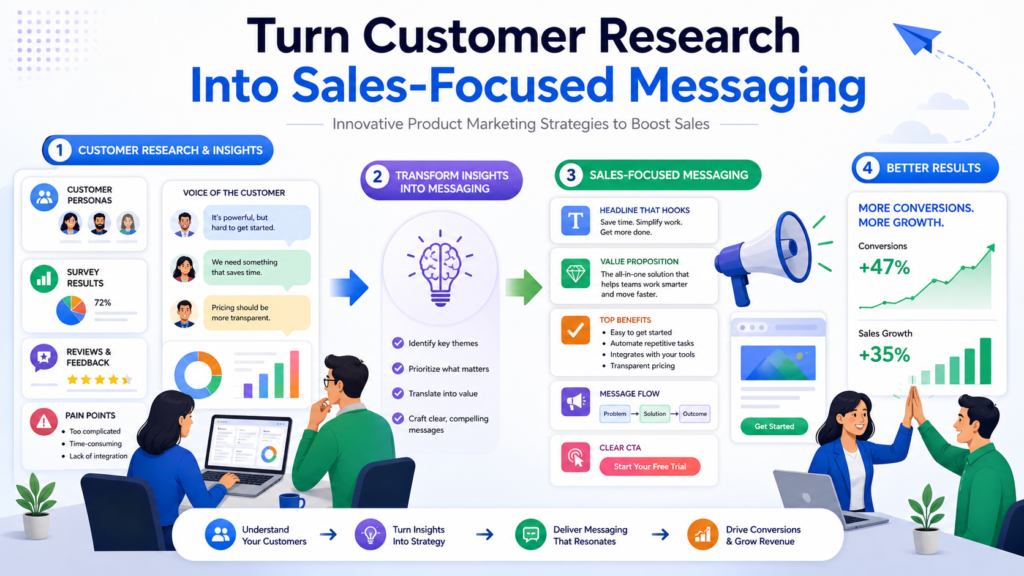
Customers tell you what matters through sales calls, support tickets, reviews, surveys, demo questions, cancellation reasons, and casual comments. Inside those words are the real reasons people buy, wait, doubt, compare, or leave. If you collect those words and study them, your marketing becomes much stronger.
Customer Language Is Often Better Than Brand Language
Brands tend to polish language until it sounds impressive but less human. Customers do the opposite. They explain pain in plain words. They say things like, “We were wasting too much time,” “Our team kept missing follow-ups,” “I could not see what was working,” or “I needed something simple enough for my staff to use.”
That language is gold.
When your copy uses the same type of language your buyers already use, it feels more natural. It also feels more honest. People trust simple words when those words match their real experience.
Your product pages, ads, email campaigns, sales decks, and case studies should all reflect the customer’s voice. This does not mean you copy every quote directly. It means you shape your message around the pain, hope, and outcome customers already talk about.
Sales Calls Can Reveal the Best Conversion Angles
Your sales team hears buyer doubts before anyone else. They know what people ask before buying. They know which objections come up again and again. They know which benefits make prospects lean in. Product marketing should not sit far away from this information.
A smart product marketer reviews sales calls often. They look for repeated phrases. They study which moments made the buyer more interested. They notice where the buyer got confused. They track which competitor names appear. They listen for urgency.
If many prospects ask, “How fast can we set this up?” then speed should become part of your message. If they ask, “Will my team actually use it?” then ease of adoption should be addressed early. If they ask, “How is this different from what we already have?” then your comparison content needs work.
Your market is already telling you what it needs to hear. You just need to listen.
Build a Message Map Before Creating Campaigns
A message map helps your team stay clear and consistent. It turns research into a simple structure that can guide every campaign.
At the center of the map is your main promise. This is the big outcome your product helps customers achieve. Around that promise, you define the main pains, the product features that solve those pains, the proof that supports your claims, and the emotional reasons buyers care.
This makes your marketing easier to manage because each campaign does not start from zero. Your team already knows which problems to speak to, which benefits to stress, and which proof to use.
A message map also helps avoid random campaigns. Without one, your social posts may say one thing, your landing page may say another, and your sales deck may say something else. That creates doubt. Buyers trust brands that sound steady.
Every Claim Needs Proof Beside It
Modern buyers are careful. They have seen too many big claims. If your product marketing says you help people save time, improve sales, cut costs, or grow faster, you need to show proof close to the claim.
Proof can come from customer stories, numbers, screenshots, product demos, reviews, expert comments, before-and-after examples, or clear process explanations. The key is to avoid making the buyer work too hard to believe you.
For example, do not just say your tool helps teams respond faster. Show how a real customer reduced response time. Do not just say onboarding is simple. Show the setup steps. Do not just say your platform improves reporting. Show what the report looks like and explain how it helps decisions.
A strong message is not just clear. It is supported.
Make Your Product Story Easy to Remember
People do not remember every feature. They remember stories, contrasts, simple ideas, and moments that make them feel something. This is why product marketing should not only explain the product. It should create a story that buyers can repeat.
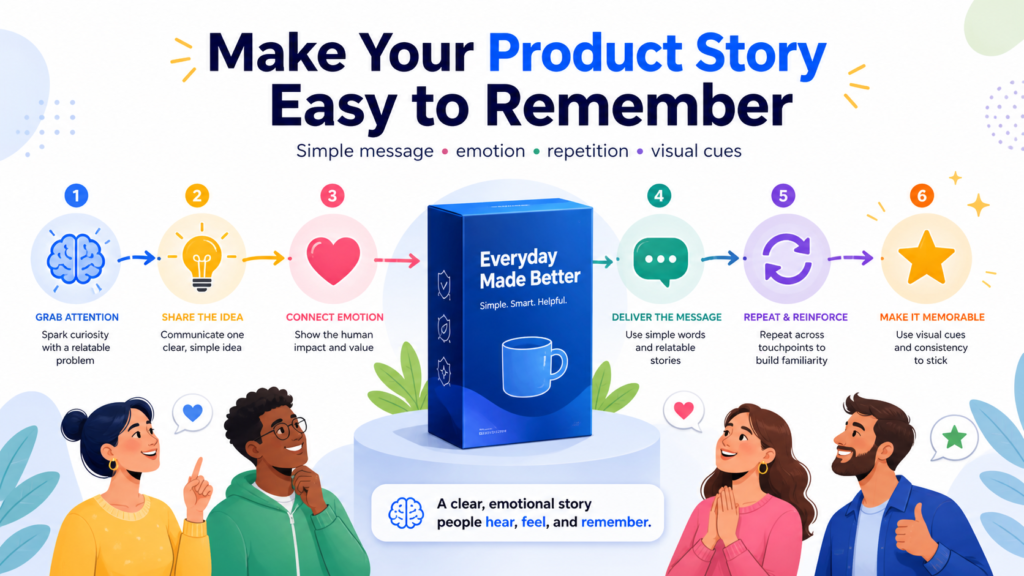
A good product story gives the buyer a clear before and after. Before your product, work is slow, messy, costly, risky, or confusing. After your product, life becomes easier, faster, clearer, safer, or more profitable. That shift is what buyers care about.
The Best Product Stories Make the Customer the Hero
Your brand is not the hero of the story. The customer is. Your product is the tool that helps them win.
This matters because many companies make the story all about themselves. They talk about their technology, their team, their awards, their vision, and their features. Some of that can help build trust, but it should not take center stage. The buyer wants to know what changes for them.
A better product story starts with the customer’s struggle. It shows what is hard about their current situation. It explains why old ways are no longer enough. Then it introduces the product as a better path forward.
This structure feels natural because it matches how people make decisions. They first feel the pain. Then they look for a better way. Then they need proof that the new way will work.
A Clear Enemy Makes Your Story Stronger
Every strong product story has an enemy. The enemy does not need to be a competitor. In fact, the best enemy is often the old way of doing things.
The enemy could be wasted time, messy spreadsheets, slow approvals, unclear data, poor follow-up, weak onboarding, high churn, bad handoffs, or guesswork. When you name the enemy, your product has a stronger reason to exist.
For example, if your product helps businesses manage customer feedback, the enemy may be scattered feedback. If your product helps sales teams close deals, the enemy may be missed context. If your product helps ecommerce brands increase repeat purchases, the enemy may be one-time customer thinking.
A clear enemy makes your marketing sharper because it gives buyers something to push against.
Use Simple Contrast to Show Why Change Is Needed
Contrast is one of the most useful tools in product marketing. It helps buyers understand the difference between staying the same and moving forward.
You can show contrast between old and new, slow and fast, manual and automated, scattered and clear, reactive and planned, hidden and visible, costly and efficient, risky and safe. This makes your message easier to feel.
For example, instead of saying, “Our platform improves team productivity,” you could say, “Your team stops chasing updates across five tools and finally sees every project in one place.” The second version is easier to picture.
People buy faster when they can picture the pain of the old way and the relief of the new way.
Your Story Should Be Short Enough for Sales to Repeat
A product story is only useful if your team can repeat it. If it takes five minutes to explain, it is too heavy. If every salesperson explains it differently, it is not clear enough. If customers cannot repeat it to their boss, it will slow down deals.
The best product stories are simple. They explain who the product helps, what problem it fixes, why the old way falls short, and what better result the customer gets.
This story should appear across your website, sales calls, pitch decks, demos, ads, emails, and customer stories. The words do not have to be exactly the same every time, but the core idea should stay steady.
When the story becomes easy to repeat, it becomes easier to sell.
Build Product Pages That Sell With Clarity, Not Noise
Your product page is often where interest turns into action or disappears. Many brands treat it like a place to list features. That is not enough. A product page should guide the buyer through a clear decision.
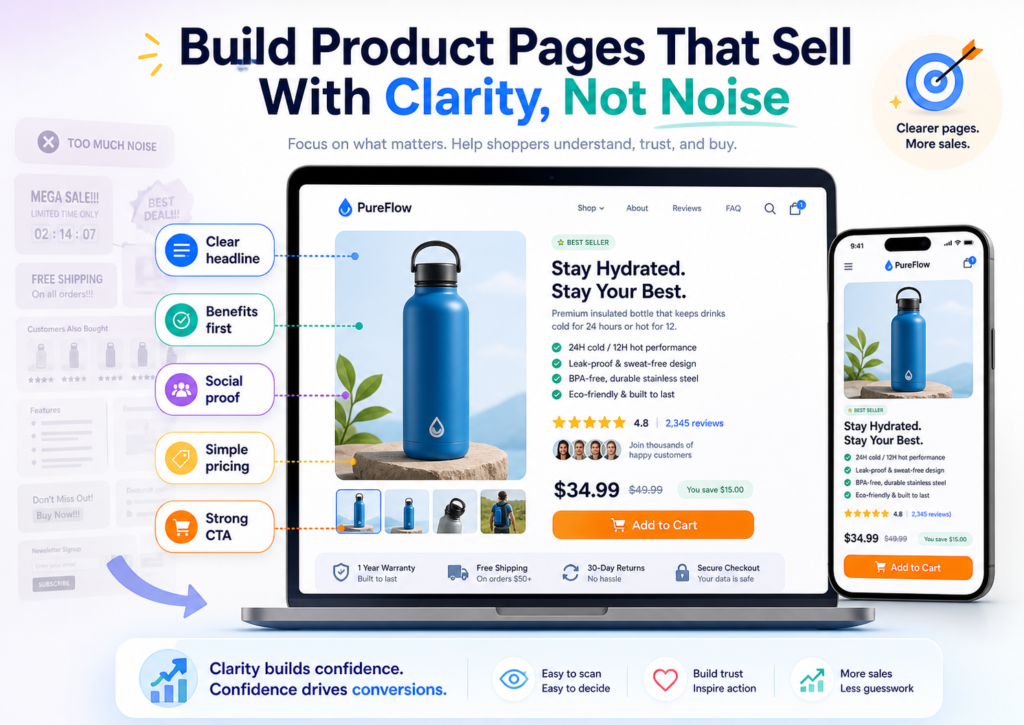
It should help them understand the problem, see the value, trust the product, handle doubts, and know what to do next. The page should feel helpful, not crowded. Every section should earn its place.
The First Screen Should Answer the Buyer’s Main Question
When someone lands on your product page, they are asking, “Is this for me, and should I keep reading?” Your first screen must answer that fast.
The headline should make the value clear. The short text below it should explain who the product helps and what result it creates. The call to action should be easy to see and easy to understand.
This is not the place for vague words like “revolutionary,” “next-generation,” or “all-in-one” unless you explain what they mean in plain terms. Buyers do not want mystery. They want clarity.
A strong first screen may say what the product helps them do, what pain it removes, and why it is different. It should make the next step feel natural.
Show the Outcome Before You Explain the Features
Many product pages start too deep inside the product. They show menus, tools, dashboards, and options before the buyer understands why those things matter. A better approach is to start with the outcome.
Tell the buyer what improves after using the product. Then show how the product makes that improvement happen.
For example, if your product helps sales teams manage leads, start with the result: fewer missed follow-ups and more deals moving forward. Then explain the features that support that result, such as reminders, pipeline views, lead scoring, or email tracking.
This order matters because buyers care about outcomes first and features second.
Remove Doubt at Each Step of the Page
A product page should not just create desire. It should reduce fear. Buyers may wonder if the product is too hard to set up, too costly, too complex, too risky, too limited, or too similar to other options.
Your page should answer these doubts before they become reasons to leave.
If setup is fast, explain how it works. If support is included, show what kind of help customers get. If customers can switch from another tool, explain the migration process. If security matters, make it clear. If pricing is flexible, say so in simple words.
Good product marketing respects buyer doubt. It does not ignore it.
Use Proof Where the Buyer Feels Risk
Proof should not be placed only at the bottom of the page. It should appear where doubt is likely to happen.
If you say the product is easy to use, show a short customer quote about ease of use. If you say it works for large teams, show logos or examples from larger customers. If you say results improve fast, show a short case snapshot. If you say your support is strong, show response times or real support feedback.
This makes the page feel more believable as the buyer reads.
A strong product page does not push people. It guides them. It gives them enough clarity and trust to take the next step with less fear.
Use Customer Segments to Make Your Marketing Feel Personal
Most products are bought by different types of customers for different reasons. This is why one broad message often fails. It may sound clean, but it does not feel personal enough to move people.
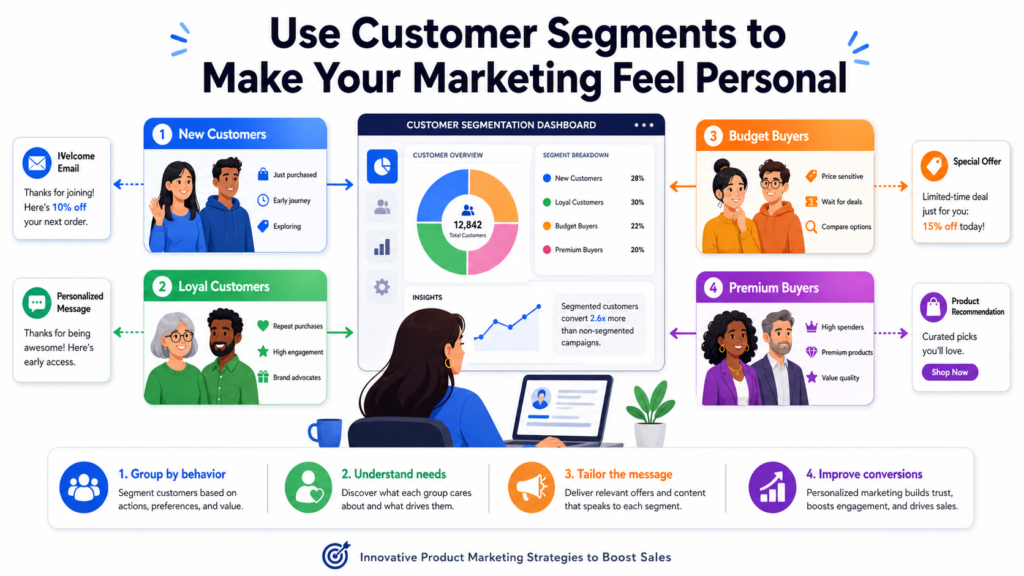
A founder, a marketing head, a sales manager, and a finance leader may all look at the same product and see different value. If your marketing speaks to all of them in the same way, it may not fully connect with any of them.
Segmentation helps you avoid this problem. It lets you shape your message around the real needs of each buyer group. This does not mean you need to create a completely different brand for every audience. It means you need to show each group the part of your product that matters most to them.
Customer Segments Help You Sell the Same Product in Different Ways
A good product has many value angles. One customer may care about saving time. Another may care about lowering cost. Another may care about reducing mistakes. Another may care about helping their team move faster.
The product may solve all these problems, but each buyer needs to see the value in a way that matches their own world.
This is where many businesses miss sales. They know their product is useful, but they explain it from only one angle. As a result, some buyers do not feel seen.
For example, a reporting tool can be sold to a marketing leader as a way to prove campaign results. It can be sold to a founder as a way to make faster growth decisions. It can be sold to a finance team as a way to spot waste. It can be sold to an agency as a way to show clients clearer progress.
The product stays the same. The reason to care changes.
Each Segment Should Have Its Own Main Pain
If you want segmentation to increase sales, do not stop at job titles. A job title tells you who the person is, but pain tells you why they may buy.
For each segment, write down the main pain that pushes them to look for a product like yours. Then write down what they want after that pain is solved. This gives your marketing a clear direction.
A small business owner may want fewer manual tasks because they do not have enough staff. A head of sales may want better follow-up because leads are slipping through the cracks. A customer success leader may want clearer account health because churn risk is hard to see early.
Once you know the pain, your copy becomes stronger. Your landing pages become more focused. Your ads become easier to write. Your emails feel less generic. Your sales team can speak with more confidence because they know what matters to each buyer.
Create Landing Pages for Your Most Valuable Segments
A single product page can rarely do all the work. If you serve different industries, company sizes, use cases, or buyer roles, segment landing pages can help you turn more traffic into leads and sales.
These pages should not be thin copies of your main page with only the title changed. They should speak directly to one group. They should mention the problems that group faces, the results they want, the workflows they care about, and the proof that feels most relevant to them.
For example, if your product helps agencies, your agency page should talk about client reporting, approval delays, campaign visibility, and team workload. If your product helps ecommerce brands, that page should talk about conversion, repeat buying, inventory decisions, and customer behavior.
A buyer should feel like the page was made for their situation.
Segment Pages Should Match the Buyer’s Level of Awareness
Not every buyer arrives with the same level of knowledge. Some already know they need your type of product. Others only know they have a problem. Some are comparing tools. Others are still trying to understand what is broken.
Your segment pages should meet buyers where they are.
If the buyer is early in the journey, focus more on the problem and the cost of leaving it unsolved. Help them see why action matters. If the buyer is already comparing options, focus more on differences, proof, features, setup, and outcomes. If the buyer is close to buying, make the next step clear and reduce final doubts.
This is how segmentation becomes more than a marketing exercise. It becomes a sales tool.
Build Product-Led Content That Moves Buyers Toward Action
Content should not only bring traffic. It should help people understand their problem, trust your point of view, and move closer to buying. Many brands publish content only to rank on search engines, but they forget the sales purpose behind it. That is why their blogs get visits but do not create enough revenue.
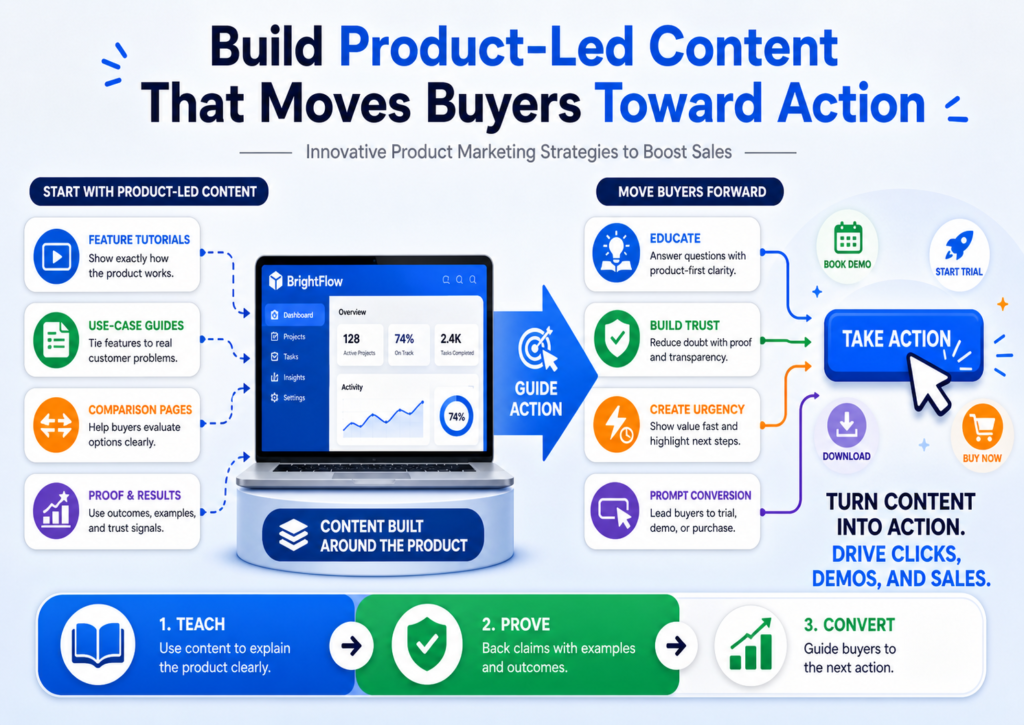
Product-led content fixes this. It connects useful education with the product in a natural way. It does not force a sales pitch into every paragraph. It teaches first, then shows where the product fits.
Product-Led Content Starts With Buyer Problems, Not Keywords Alone
Search keywords matter, but they should not control the whole content strategy. If you only chase keywords, you may create articles that bring the wrong traffic. The better way is to start with the problems buyers face before they purchase.
Ask what the buyer is trying to solve. Ask what they search when the pain starts. Ask what they compare when they know they need a solution. Ask what doubts they have before they book a call or start a trial.
This gives you content that supports the full buying journey.
For example, a brand selling customer feedback software should not only write about “best feedback tools.” It should also write about how to collect useful feedback, how to organize customer requests, how to spot product gaps, how to turn feedback into roadmap decisions, and how to reduce churn using customer signals.
Each topic teaches something useful while creating space to show why the product matters.
The Product Should Appear Where It Genuinely Helps
Product-led content works best when the product is shown as part of the solution, not forced into the article. If the article explains how to solve a problem and your product can make one step easier, show that step clearly.
This can be done through screenshots, examples, workflows, customer stories, templates, or short explanations. The goal is to help the reader see the product in action.
If you are writing about improving sales follow-up, show how your tool helps track follow-up tasks. If you are writing about campaign reporting, show how your dashboard makes results easier to read. If you are writing about onboarding new users, show how your product guides users through setup.
The reader should not feel interrupted by the product mention. They should feel helped by it.
Use Content to Create Demand Before Buyers Are Ready to Buy
Not every reader is ready to purchase today. Some are still learning. Some are feeling the pain but have not named it yet. Some are not aware that a better solution exists. If your content only targets people who are ready to buy, you miss a large part of the market.
Strong product marketing creates demand early. It helps buyers understand the hidden cost of the old way. It shows what better teams do differently. It teaches them how to think about the problem.
This builds trust before the sales conversation begins.
A buyer who has learned from your content over time is more likely to remember your brand when the need becomes urgent. They already trust your thinking. They already know your point of view. They already see you as helpful.
Teach the Buyer How to Make a Better Decision
One of the best ways to use content is to help buyers choose well. This may sound risky because it can include honest comparisons and clear buying advice. But it builds deep trust.
Create content that explains what to look for in a solution, what mistakes to avoid, what questions to ask vendors, what features actually matter, and when a product may not be the right fit. This shows confidence.
For example, a guide titled “How to Choose a CRM for a Small Sales Team” can explain the buying process in plain words. It can show the reader how to compare ease of use, reporting, integrations, support, and pricing. It can also show where your product is strongest without pretending it is perfect for everyone.
Honest content often sells better than heavy promotion because it lowers the buyer’s guard.
Turn Product Demos Into a Strong Sales Engine
A product demo should not feel like a tour of every feature. That is one of the fastest ways to lose a buyer’s attention. A strong demo is a guided story. It shows the buyer how their current problem can be solved with your product.
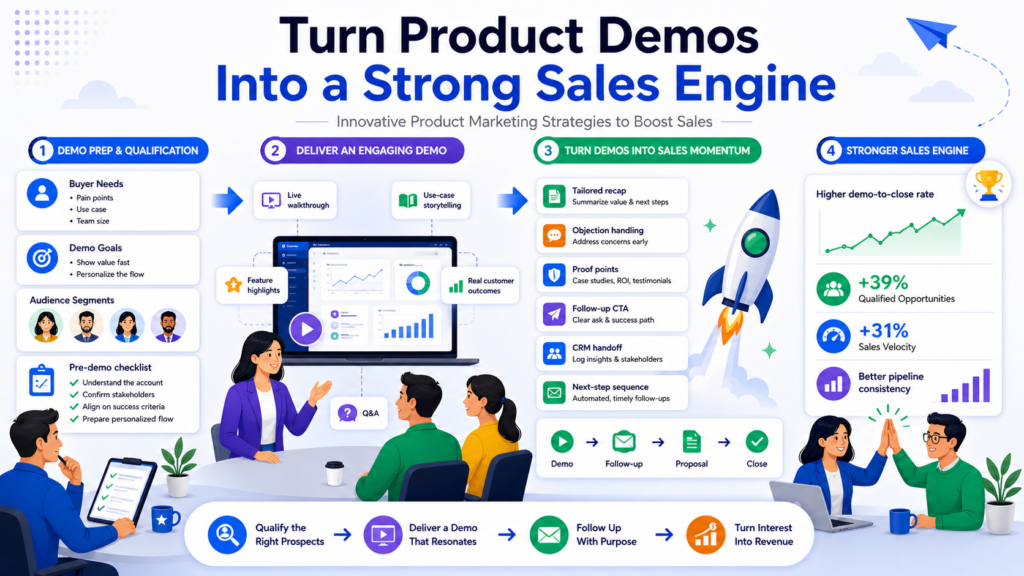
The best demos feel personal, clear, and focused. They do not overwhelm people with every button, tab, and setting. They show the parts of the product that connect directly to the buyer’s pain.
A Good Demo Begins Before the Product Is Shown
Many teams start the demo too fast. They open the product and begin clicking around. This makes the buyer watch instead of care. Before the product appears, the seller or marketer should set the stage.
They should confirm the buyer’s main problem. They should repeat what the buyer wants to improve. They should explain what the demo will focus on and why. This gives the buyer a reason to pay attention.
For example, instead of saying, “Let me show you the dashboard,” a better start is, “You mentioned that your team is losing track of leads after the first call. I’ll show you how the product helps you see every active lead, know the next step, and make sure follow-ups do not get missed.”
Now the demo has meaning.
Show the Buyer’s Workflow, Not Just Your Features
A feature is only powerful when the buyer understands how it fits into their daily work. That is why demos should be built around workflows.
A workflow shows how someone moves from problem to result. It may start with a lead coming in, a task being assigned, a report being created, a campaign being reviewed, or a customer issue being tracked. The product is then shown as the tool that makes that workflow easier.
This makes the demo feel real.
If you only show features, the buyer has to imagine how they would use them. If you show workflows, the buyer can see themselves using the product. That small shift can make a big difference in sales.
Personalize Demo Paths Based on Buyer Type
Not every buyer needs the same demo. A founder may want to see the big picture. A manager may want to see daily use. A technical buyer may want to see setup, security, or integrations. A finance buyer may want to understand cost control and return.
If every demo follows the same script, it will miss important buying motives.
Product marketing should help create demo paths for different buyer types. These paths should guide the sales team on which pain points to address, which features to show, which proof to use, and which outcomes to stress.
This does not mean the demo becomes fake or overly scripted. It means the sales team has a clear plan and can adjust with skill.
End the Demo by Connecting Back to Business Value
A demo should not end with, “That’s the product. Do you have questions?” That ending is too weak. The final moments should connect the product back to the buyer’s goals.
Summarize what the buyer said they wanted. Then show how the product helps them get there. Keep it clear and simple.
For example, you may say, “Based on what you shared, the main issue is that your team does not have one clear place to manage follow-ups. What we walked through today shows how each lead gets tracked, how next steps stay visible, and how managers can spot problems before deals go cold.”
This helps the buyer leave with a clear memory of value, not just a list of features.
Use Social Proof to Make Buying Feel Safer
People trust other people more than they trust brand claims. This is why social proof is one of the strongest product marketing tools. When buyers see that others like them have used your product and reached a good result, the decision feels safer.
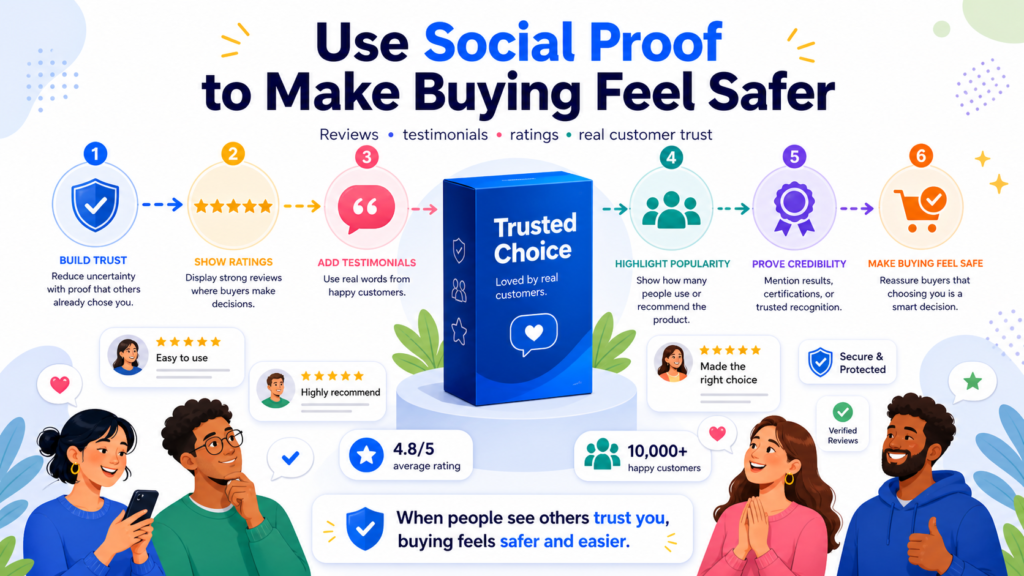
Social proof reduces risk. It tells the buyer, “Someone else has tried this, and it worked.” That matters because buying always carries fear. The buyer may fear wasting money, choosing the wrong tool, upsetting their team, losing time, or looking bad in front of others.
Good social proof lowers that fear.
Customer Stories Should Show the Full Change
Many case studies are too thin. They say a customer used the product and got a result, but they do not explain the journey. That makes the story less believable.
A strong customer story should show what life looked like before the product, what made the customer search for a better solution, why they chose your product, how they used it, what changed, and what result they got.
The story should feel like a real business problem being solved. It should not feel like a polished ad.
If possible, include details about the customer’s old process. Explain what was slow, messy, costly, or frustrating. Then show how your product changed that process. This gives the reader a clear before and after.
The Best Proof Matches the Buyer’s Own Situation
Proof works better when it feels relevant. A small startup may not care as much about a case study from a giant company. An enterprise buyer may want proof that your product can handle scale. An agency may want proof from another agency. A healthcare buyer may want proof from a similar regulated market.
This is why you should organize proof by segment, industry, use case, and company size.
Your website should make it easy for buyers to find stories that match them. Your sales team should also have proof ready for each type of buyer. If a prospect says they are worried about adoption, show proof about easy rollout. If they worry about results, show proof about measurable gains.
If they worry about switching, show proof about smooth migration.
The right proof at the right time can move a deal forward faster than another sales pitch.
Use Small Proof Points Across the Whole Buying Journey
Social proof does not have to appear only in long case studies. Small proof points can be used across ads, landing pages, emails, pricing pages, demo follow-ups, and sales decks.
A short quote can support a claim. A review line can reduce doubt. A customer logo can build quick trust. A result snapshot can make value feel real. A short video clip can bring emotion into the story.
The key is to place proof close to the message it supports.
If your page says the product is easy to set up, place a setup-related quote nearby. If your email says customers see better reporting, mention a real reporting win. If your ad promises faster work, use proof that supports speed.
Proof Should Feel Real, Not Perfect
Buyers can sense when proof has been over-polished. If every customer quote sounds like it came from a brand script, it loses power. Real proof has natural language. It may be simple. It may mention a clear pain. It may use plain words.
That is often what makes it believable.
Do not remove all personality from customer quotes. Do not turn every story into a perfect success tale with no struggle. A little honesty makes proof stronger. When buyers see the real problem, the real doubt, and the real result, they trust the story more.
Great product marketing does not just say, “Trust us.” It shows enough real evidence that trust becomes easier.
Build Launch Campaigns Around One Sharp Sales Goal
A product launch should not be treated like a loud announcement. Noise does not always create sales. A launch works best when it is built around one clear business goal. That goal could be getting more demo bookings, moving trial users to paid plans, winning a new segment, selling an add-on, entering a new market, or bringing back old leads.
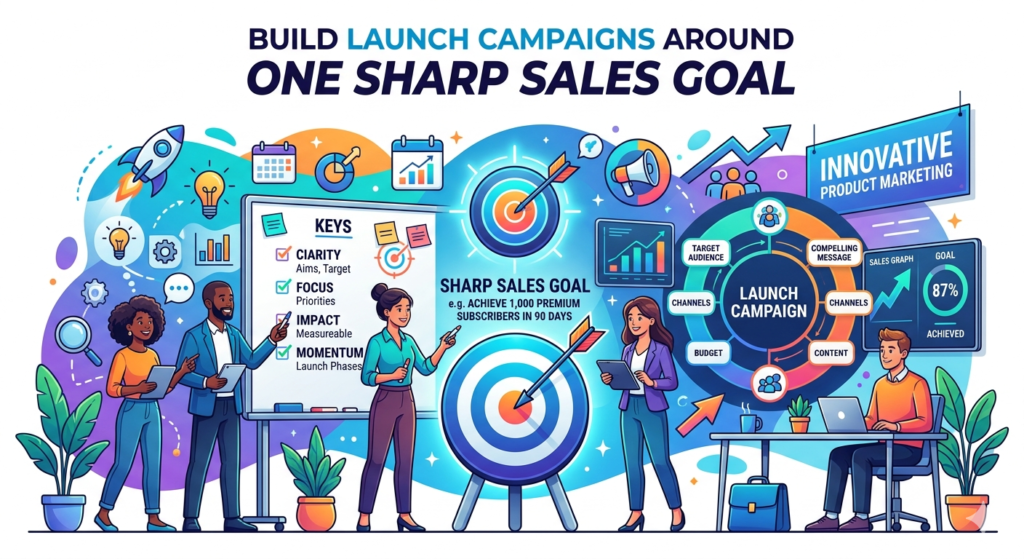
When the goal is clear, every part of the launch becomes easier to plan. The message becomes tighter. The offer becomes stronger. The content becomes more focused. The sales team knows what to say. The customer success team knows what to watch. The campaign feels like one strong push instead of many random actions.
A Strong Launch Starts With the Buyer’s Trigger Moment
A trigger moment is the event that makes a buyer care now. Without this moment, even a good launch can feel easy to ignore. People are busy. They do not act just because a brand has something new. They act when the new thing connects to a problem they already feel.
Your launch should make that connection clear.
For example, if you are launching a faster reporting feature, the trigger may be that teams are tired of spending hours building reports before meetings. If you are launching a new onboarding tool, the trigger may be that customers are dropping off before they see value.
If you are launching a new pricing plan, the trigger may be that smaller teams wanted an easier way to start.
The launch message should speak to that pain first.
The Product News Should Be Framed as Customer Progress
Many launches focus too much on what the company built. The brand says, “We are excited to announce,” then lists what is new. That may matter to the team, but it does not always matter to the buyer.
A better launch frames the news around what the customer can now do.
Instead of saying, “We launched advanced filters,” say, “You can now find your best sales opportunities in less time.” Instead of saying, “We added five new integrations,” say, “Your team can now connect the tools they already use and avoid duplicate work.”
Instead of saying, “We redesigned the dashboard,” say, “You can now see what needs attention without digging through reports.”
The product update is the proof. The customer outcome is the story.
Launches Need More Than One Announcement Day
A common mistake is to put all launch energy into one day. The team writes one email, one social post, one blog post, and one press note. Then the launch fades. That is not enough.
Buyers need repeated exposure. They need to hear the message in different ways. They need time to understand why the update matters. Some will miss the first message. Some will need proof. Some will need a sales conversation. Some will need to see how it works.
A launch should have a pre-launch phase, a launch phase, and a post-launch phase. Before launch, you can build interest by talking about the problem and teasing the change. During launch, you make the offer clear. After launch, you show proof, answer questions, share use cases, and help buyers take action.
The Post-Launch Phase Often Creates the Most Sales
The first announcement may create attention, but the follow-up often creates revenue. This is where you explain use cases, share early wins, answer objections, and give the sales team stronger material.
Post-launch content can include customer examples, short product walkthroughs, comparison pages, sales emails, founder notes, webinars, demo clips, and help articles. The goal is to keep turning interest into action after the first wave of attention has passed.
This matters because many buyers do not buy when they first hear about something. They buy after the idea becomes clear, useful, and safe.
A smart launch does not end when the product goes live. It ends when the market understands the value and the sales team has enough support to turn that value into revenue.
Use Pricing and Packaging as Product Marketing Tools
Pricing is not just a finance choice. It is also a marketing message. The way you package your product tells buyers who it is for, what value matters most, and which path they should take. If pricing is confusing, sales slow down. If packaging feels clear and fair, buyers move with more confidence.
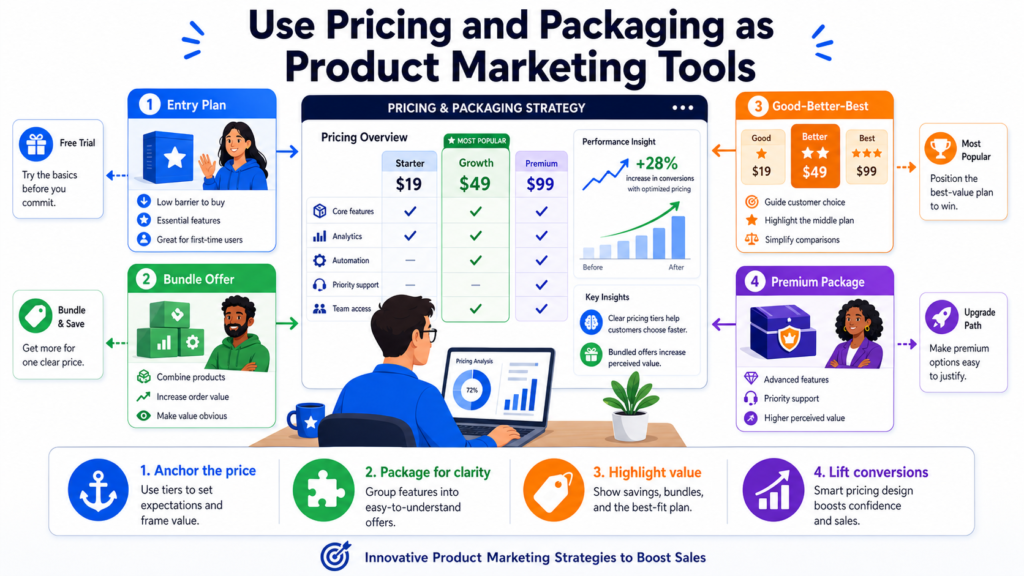
Many businesses lose sales because their pricing page makes people think too hard. The plans are hard to compare. The names are vague. The features are grouped in a way that does not match buyer needs. The best plan is not obvious. The buyer leaves because the decision feels risky.
Simple Packaging Helps Buyers Choose Faster
Good packaging makes the buying decision easier. Each plan should have a clear purpose. A buyer should be able to look at the options and understand which one fits their stage, size, or need.
Plan names can help, but only if they are clear. Names like Starter, Growth, and Scale can work when the feature split supports the meaning. But names alone do not solve confusion. The value behind each plan must be easy to understand.
For example, one plan may be for teams just getting started. Another may be for teams that need more control and reporting. Another may be for larger teams that need support, security, and deeper setup. This helps the buyer self-select.
Do Not Hide the Reason Each Plan Exists
A pricing page should explain who each plan is best for. This small detail can reduce doubt and increase conversions.
Instead of only showing a plan name and price, add a plain explanation of the buyer fit. Say who should choose that plan and what problem it solves. This helps buyers feel guided.
If someone is unsure between two plans, they should not need to contact sales just to understand the basic difference. They may still contact sales for help, but your page should reduce confusion early.
Clear packaging also helps your sales team. When plans are easy to explain, reps can focus on value instead of defending complexity.
Use Offers to Reduce Buying Risk Without Hurting Trust
An offer is not just a discount. It is the full reason someone should act now with less fear. A strong offer can include a trial, a pilot, onboarding help, migration support, a money-back promise, a bonus service, a limited plan, or a clear first step.
The best offers reduce risk while protecting the value of the product.
Discounts can work, but they should not be the only tool. If a brand trains buyers to wait for a discount, it can hurt long-term revenue. Sometimes a better offer is extra support, faster setup, a guided audit, or a starter package that helps buyers see value sooner.
Your Offer Should Match the Buyer’s Main Fear
If buyers fear the product will be hard to set up, offer onboarding help. If they fear their team will not use it, offer training. If they fear switching from another tool, offer migration support. If they fear results will take too long, offer a clear success plan for the first 30 days.
This is how pricing and packaging become strategic. They are not just about how much people pay. They are about how safe and clear the buying decision feels.
A strong offer tells the buyer, “We understand what makes this choice hard, and we have made the next step easier.”
That is powerful product marketing.
Create Sales Enablement That Helps Reps Sell the Product Better
Product marketing should make sales easier. If your sales team has to create its own decks, explain value in different ways, handle objections without support, and search for proof during every deal, revenue will suffer. Sales enablement fixes this by giving reps the tools, messages, and content they need to sell with confidence.
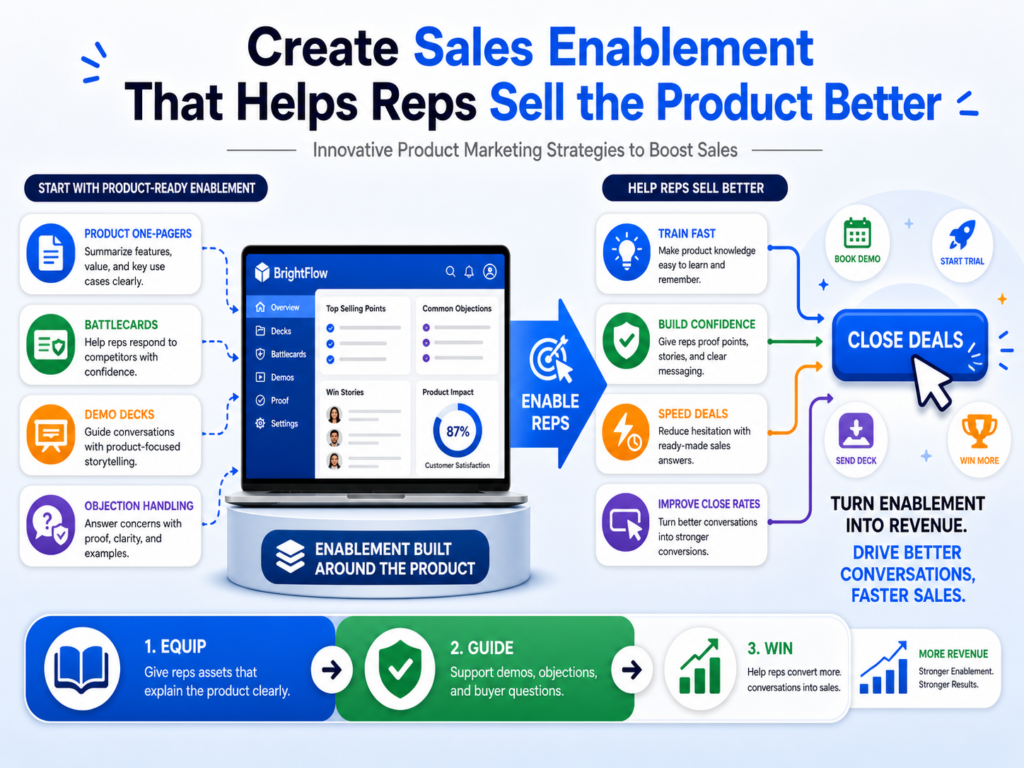
Good enablement is not a folder full of random files. It is a system that helps the sales team say the right thing to the right buyer at the right time.
Sales Teams Need Clear Talk Tracks, Not Just Product Facts
A talk track is the simple path a rep follows to explain the product. It should connect the buyer’s pain to the product’s value. It should help the rep explain why the problem matters, why the current way is holding the buyer back, and how the product creates a better result.
Many sales teams are given feature sheets and left to figure out the rest. That is not enough. Features explain what the product does. Talk tracks explain why the buyer should care.
A good talk track sounds natural. It should not feel like a script that traps the rep. It should give structure while leaving room for real conversation.
Objection Handling Should Be Built From Real Sales Conversations
Every product has objections. The buyer may say the product costs too much, looks too complex, lacks one feature, seems similar to a competitor, or is not urgent right now. Product marketing should collect these objections and build clear answers.
The goal is not to force the buyer. The goal is to help them think through the concern.
If the objection is price, the answer should connect cost to value and risk. If the objection is setup, the answer should explain onboarding steps. If the objection is urgency, the answer should show the cost of waiting. If the objection is competitor comparison, the answer should explain the real difference in plain words.
Reps should not have to invent these answers alone. Product marketing should give them tested responses, proof points, and examples they can use.
Sales Content Should Match Each Stage of the Deal
A buyer does not need the same content at every stage. Early in the deal, they may need problem education. In the middle, they may need proof, product details, and comparison content. Near the end, they may need pricing support, security answers, rollout plans, and business case material.
If your sales content is not matched to the deal stage, reps may send the wrong thing at the wrong time.
For example, sending a heavy technical document too early can slow interest. Sending a light blog post during final approval may not be enough. The right content should help the buyer take the next step.
Internal Sales Notes Can Be as Valuable as Customer-Facing Content
Not all enablement needs to be polished for buyers. Some of the most useful material is internal. This can include cheat sheets, discovery questions, competitor notes, demo guidance, persona summaries, and deal review prompts.
These tools help reps prepare better and sell smarter.
A strong product marketing team listens to sales calls, studies lost deals, reviews customer questions, and updates enablement often. The market changes. Competitors change. Buyer concerns change. Your sales material must keep up.
When sales enablement is strong, the whole revenue team sounds sharper, more useful, and more confident.
Use Email Marketing to Move Product Interest Into Sales Conversations
Email is still one of the strongest channels for product marketing because it gives you a direct way to build trust over time. But email only works when it feels useful. If every message sounds like a pitch, people stop opening. If every email teaches something helpful and moves the buyer forward, email can become a steady sales engine.
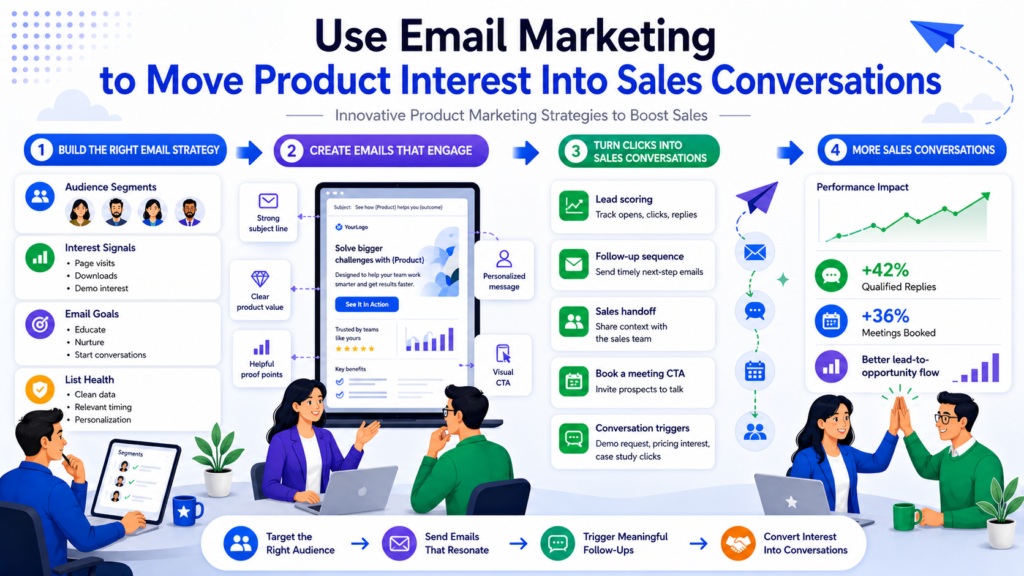
The goal is not to send more emails. The goal is to send better emails at the right moments.
Product Emails Should Be Based on Buyer Behavior
The best emails respond to what the buyer has done. Someone who downloaded a guide should not get the same message as someone who viewed the pricing page three times. A trial user who has not completed setup needs a different message than a trial user who has used the product daily.
Behavior gives you clues about intent.
If someone reads comparison content, they may be choosing between options. If someone watches a demo video, they may need proof. If someone starts a trial but does not invite their team, they may need help seeing the next step. If someone visits the cancellation page, they may need support or a better plan.
Email should use these signals to become more relevant.
Each Email Should Have One Clear Job
A weak email tries to do too much. It teaches, sells, announces, explains, and asks for action all at once. That creates confusion.
Each product marketing email should have one clear job. It may explain one pain. It may show one customer result. It may invite the reader to one demo. It may help them finish one setup step. It may answer one objection.
When the job is clear, the email becomes easier to read and easier to act on.
Keep the message simple. Start with the buyer’s situation. Explain why it matters. Show the useful idea. Then guide them to the next step. That next step could be reading a case study, watching a short walkthrough, booking a call, replying with a question, or finishing setup.
Lifecycle Emails Can Increase Sales Without More Ad Spend
Lifecycle emails are messages sent based on where someone is in the customer journey. They help turn leads into buyers, trial users into paying customers, and customers into repeat buyers.
This is valuable because you are working with people who already know your brand. You do not need to pay again to reach them. You need to help them take the next step.
For leads, lifecycle emails can teach the problem and show proof. For trial users, they can guide setup and show quick wins. For new customers, they can drive activation. For existing customers, they can introduce advanced features or higher plans.
Onboarding Emails Should Focus on the First Real Win
Many onboarding emails explain too many features. That can overwhelm new users. A better approach is to help the user reach one clear win as fast as possible.
The first win should be something meaningful. It should help the user feel progress. It may be creating the first report, sending the first campaign, inviting the first team member, setting up the first workflow, or seeing the first useful insight.
Once the user gets value, they are more likely to stay, pay, upgrade, and recommend the product.
Email can guide this process step by step. But each step should feel simple. Do not make the user feel like they have a huge task ahead. Make the path feel easy, useful, and worth finishing.
Use Product Education to Help Buyers Feel Confident Before They Buy
People do not always avoid buying because they dislike the product. Many times, they avoid buying because they do not feel sure. They are not sure how the product works. They are not sure if their team will use it. They are not sure if the result will be worth the money. They are not sure if they are making the right choice.
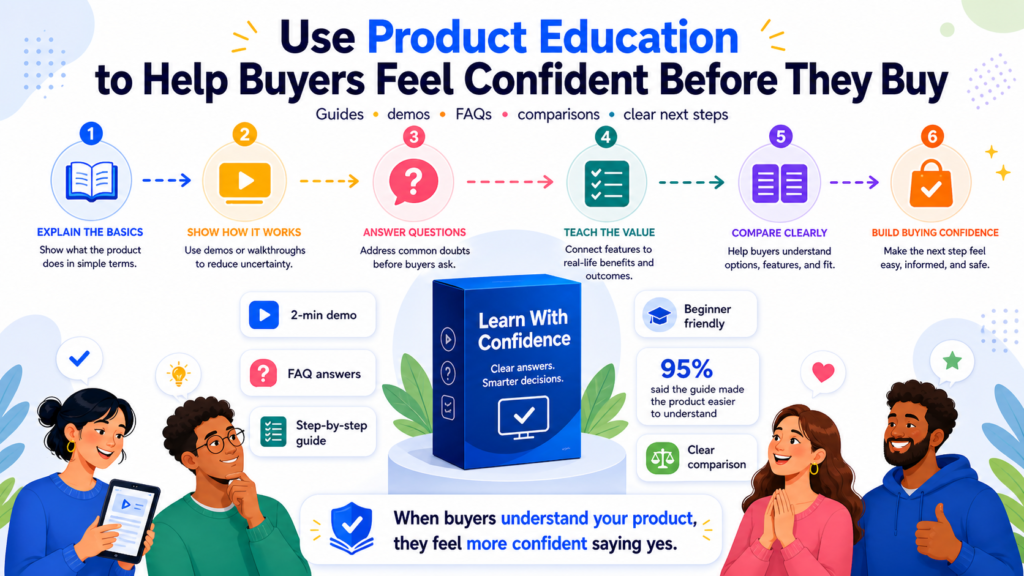
Product education helps remove this fear.
It teaches buyers what they need to know before they speak to sales, start a trial, or make a purchase. It also helps them understand the problem better, so the product feels more valuable.
Education Should Make the Buyer Smarter, Not More Confused
Good product education does not drown people in details. It helps them understand the few things that matter most. Buyers should leave your content feeling clearer than before.
This can happen through guides, short videos, webinars, comparison pages, product tours, templates, workshops, and simple explainers. The format matters less than the usefulness. The goal is to help the buyer understand the problem, the options, the risks, and the best path forward.
If your product solves a complex problem, education becomes even more important. A confused buyer will delay. A clear buyer will move.
Teach the Cost of Staying the Same
Many buyers know they have a problem, but they do not yet feel enough pressure to act. They may think the current way is annoying but acceptable. They may feel that change can wait.
Your education should help them see the real cost of waiting.
For example, if a team is using messy spreadsheets, the cost is not just messy data. The real cost may be slow decisions, missed work, poor handoffs, and wasted hours. If a sales team has weak follow-up, the cost is not just poor organization. The real cost is lost deals and lower revenue.
When buyers understand what inaction is costing them, your product becomes more urgent.
Build a Learning Path Around the Buying Journey
Product education should not be random. It should follow the buyer’s journey. At the start, buyers need help naming the problem. In the middle, they need help comparing solutions. Near the end, they need help feeling safe about the choice.
Early-stage education should focus on pain, trends, mistakes, and better ways to think. Middle-stage education should focus on use cases, workflows, proof, and product fit. Late-stage education should focus on pricing, setup, support, security, return, and risk.
This helps buyers move forward at their own pace.
Your Best Sales Questions Can Become Great Education Content
Sales calls reveal what buyers want to know. If the same questions come up again and again, those questions should become content.
If buyers ask how long setup takes, create a setup guide. If they ask how you compare to a competitor, create a fair comparison page. If they ask how results are measured, create a guide on success metrics. If they ask how their team will adopt the product, create an adoption plan.
This reduces pressure on sales because buyers arrive better informed. It also builds trust because your brand answers hard questions before the buyer has to ask.
Build a Product Marketing Funnel That Does Not Leak Sales
A funnel is not just a set of steps. It is the path a person takes from first hearing about your product to becoming a customer. If that path is unclear, sales leak out. People may click an ad but leave the page. They may read a blog but never see the product.
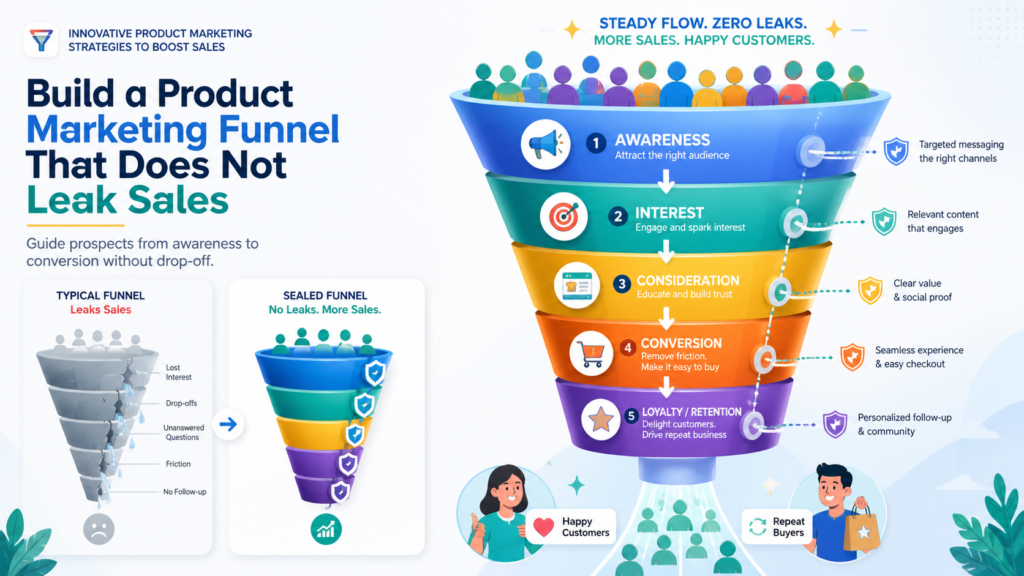
They may start a trial but fail to activate. They may book a demo but never receive a strong follow-up.
A strong product marketing funnel helps each person take the next useful step.
Every Stage Should Have a Clear Next Action
One of the biggest funnel problems is weak direction. The buyer reads something useful, but the next step is not clear. They watch a demo clip, but there is no strong reason to book a call. They start a trial, but the product does not guide them toward value.
Every stage should answer one question: what should the buyer do next?
That next action should match their level of interest. A cold visitor may not be ready for a sales call, but they may read a guide. A warm lead may not be ready to buy, but they may watch a product walkthrough. A trial user may not need more content, but they may need help finishing setup.
Do Not Push Buyers Too Fast
A funnel should guide people, not rush them. If you ask for a demo too early, you may lose people who are still learning. If you hide the demo request too long, you may lose people who are ready to talk. The key is to match the call to action with the buyer’s intent.
High-intent pages like pricing, comparison pages, case studies, and product pages can invite people to book a demo, start a trial, or request a quote. Educational blogs may use softer actions, such as reading a related guide, viewing a use case, or watching a product video.
The more natural the next step feels, the more likely people are to take it.
Measure the Gaps Between Stages
A funnel becomes useful when you measure where people drop off. You do not need fancy reports to start. You need to know where interest is turning into silence.
Look at how many visitors become leads. Look at how many leads book calls. Look at how many demo requests attend. Look at how many trials activate. Look at how many proposals close. Each gap tells a story.
If many people visit your product page but do not convert, the page may lack clarity or proof. If many people start trials but do not activate, onboarding may be weak. If many demos do not close, the sales story or offer may need work.
Fix the Biggest Leak Before Adding More Traffic
Many businesses try to grow by adding more traffic. But if the funnel leaks badly, more traffic only creates more waste.
Before spending more on ads or content, check whether your current visitors and leads are moving forward. Small fixes can create large gains. A clearer headline, stronger proof, better onboarding email, sharper demo flow, or simpler pricing page may increase sales without increasing traffic.
This is why product marketing must work closely with analytics, sales, and customer success. The best growth often comes from removing friction that already exists.
Use Retargeting to Bring Back Buyers Who Showed Interest
Most buyers do not purchase the first time they see your product. They may visit your site, read a page, compare options, get distracted, or decide to wait. This does not mean they are not interested. It often means they need more time, more proof, or a better reason to return.
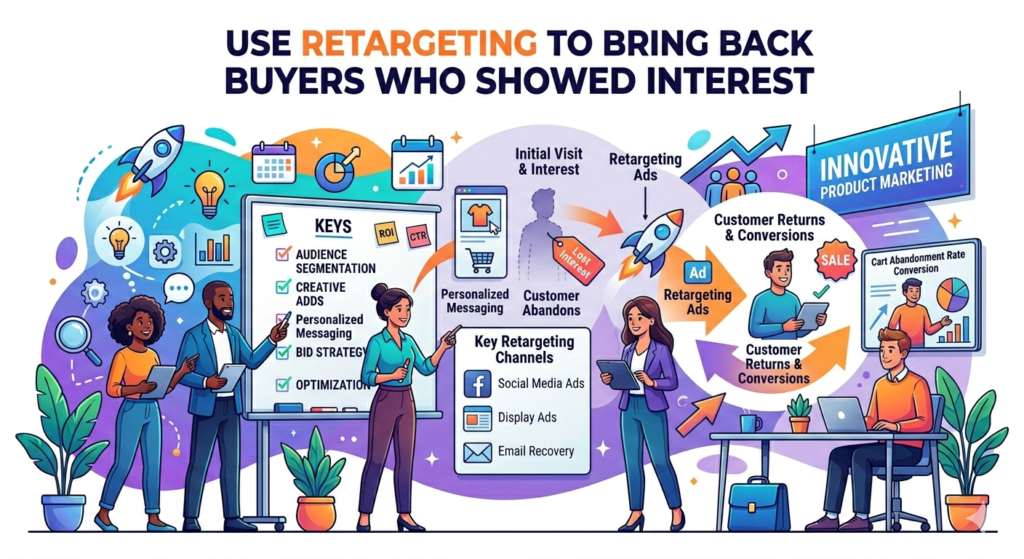
Retargeting helps you stay visible to people who have already shown interest.
It can be used through paid ads, email, social content, and even sales follow-up. The goal is not to chase people with the same message again and again. The goal is to bring them back with something more useful.
Retargeting Should Match What the Buyer Already Did
A person who visited your pricing page should not see the same message as someone who read an early blog post. Their intent is different. Their needs are different.
If someone viewed a product page, show them a customer story for that product. If someone visited the pricing page, show them proof of value or invite them to a demo. If someone read a comparison article, show them a clear reason your product is different.
If someone started a trial but did not complete setup, send them help that makes setup easier.
This is how retargeting becomes helpful instead of annoying.
Use Retargeting to Answer the Next Likely Doubt
Retargeting works better when it answers what the buyer is probably wondering. After visiting a product page, they may wonder if it really works. After checking pricing, they may wonder if it is worth the cost. After reading a case study, they may wonder if it can work for their own business.
Your message should meet that doubt.
For example, a pricing page visitor may see an ad that says, “See how teams get value in the first 30 days.” A demo page visitor may receive an email with a short customer story. A trial user may get a message that says, “Set up your first workflow in ten minutes.”
The best retargeting feels like a useful next step, not a reminder that they were watched.
Frequency Matters Because Trust Can Turn Into Irritation
Retargeting can hurt the brand if it appears too often or says the same thing every time. Buyers may feel followed. They may get tired of the message. They may start ignoring the brand.
This is why frequency and variety matter.
You should rotate messages based on the buyer’s stage. Some ads can teach. Some can show proof. Some can invite action. Some can answer objections. The goal is to build confidence over time.
Stop Showing Ads When the Message No Longer Fits
A smart retargeting system should know when to stop or change. If someone becomes a customer, they should not keep seeing ads asking them to start a trial. If someone books a demo, the message should shift to helpful preparation or proof.
If someone is not responding after a long time, it may be better to reduce spend and move them into a lower-cost nurture path.
Retargeting is powerful when it respects the buyer’s journey. It becomes wasteful when it treats every person the same.
Turn Existing Customers Into a Product Marketing Channel
Your current customers can become one of your strongest growth channels. They already know the product. They have real experience. Their stories, feedback, reviews, referrals, and results can help new buyers trust you faster.
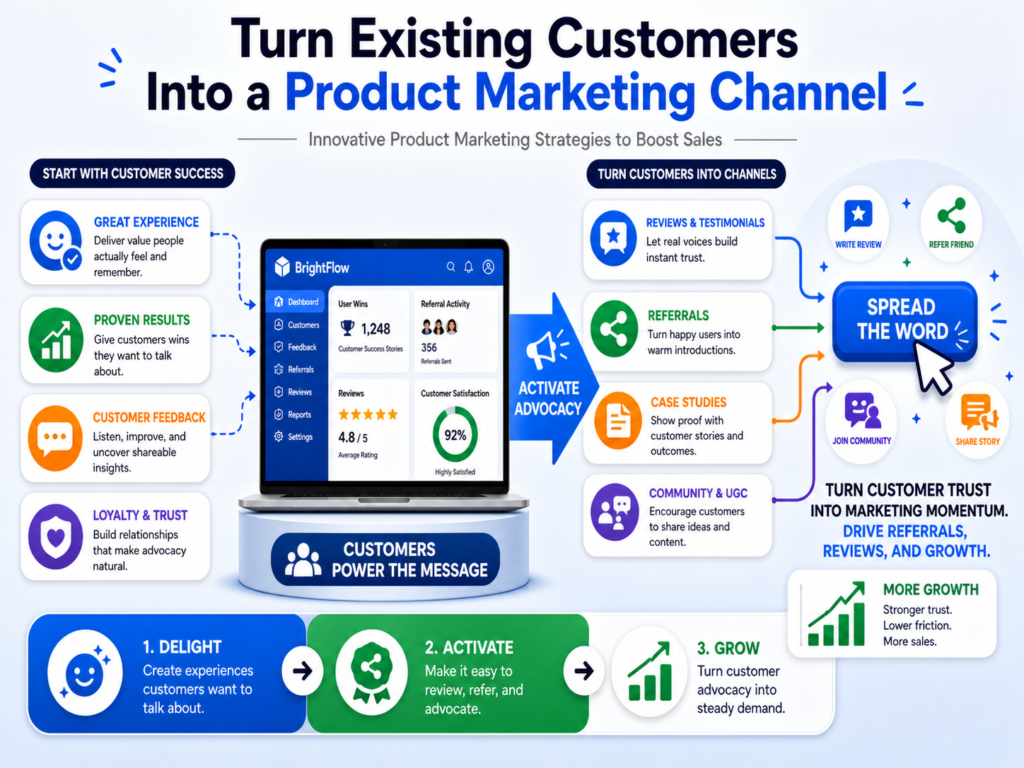
Many businesses focus so much on new leads that they forget the marketing power inside their customer base. That is a mistake. Happy customers can create proof that no ad can match.
Customer Success and Product Marketing Should Work Together
Customer success teams know what happens after the sale. They know which customers are getting value, which features people love, which problems still exist, and which results are worth sharing. Product marketing needs this insight.
When these teams work together, marketing becomes more real. You can create better case studies, stronger testimonials, clearer onboarding content, and smarter upsell campaigns. You can also spot patterns that help improve positioning.
For example, if several customers say they bought the product for one reason but stayed for another, that is useful. It may show a hidden value angle that should be used in marketing.
Look for Customers With a Clear Before and After
Not every happy customer story will make a strong marketing story. The best stories have a clear change. There was a problem before. The product was used. Something improved after.
This change does not always need a huge number attached to it. A strong story can show saved time, smoother work, faster decisions, better team use, fewer mistakes, or more confidence. The point is that the buyer can see the value.
When asking customers for stories, do not only ask, “Do you like the product?” Ask what changed. Ask what was hard before. Ask what became easier. Ask what result they noticed first. Ask what they would tell someone who is unsure.
These answers can become strong marketing assets.
Referrals Work Best When They Are Easy and Timely
Customers are more likely to refer when they are happy, clear on the value, and given a simple way to share. If the process is hard, they may not do it even if they like the product.
The best time to ask for a referral is after a customer has reached a meaningful win. This may happen after a successful launch, a strong result, a good support experience, or a renewal. At that moment, the value is fresh.
The request should be simple and human. Do not make the customer feel used. Explain who you help and why you thought of them.
Make Advocacy Feel Like a Win for the Customer Too
Customer advocacy should not be only about helping your brand. It should also benefit the customer. You can feature their success, bring attention to their work, invite them to events, give them early access, or help them share their expertise.
When customers feel respected, they are more likely to take part.
This can lead to case studies, testimonials, webinars, guest content, community posts, and referrals. Over time, these customer voices become a strong layer of trust around your product.
New buyers may doubt your claims, but they will often trust the words of someone who has already been in their position.
Use Competitor Comparison to Show Why Your Product Is the Better Choice
Most buyers compare before they buy. Even if they do not say it out loud, they are looking at other options. They may compare your product with direct competitors, older tools, manual work, hiring someone, or doing nothing at all.
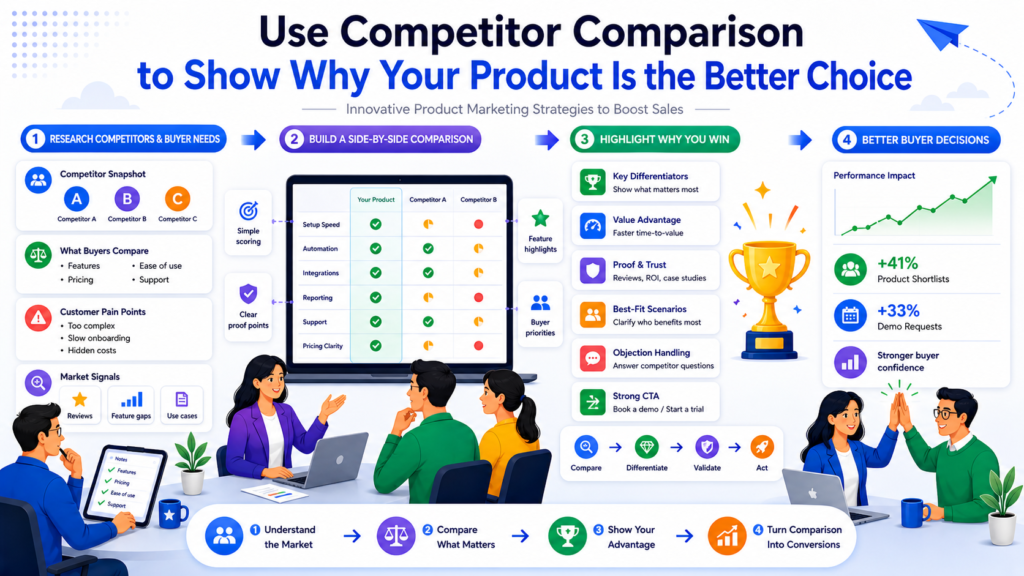
If your product marketing does not help them compare, they will do it on their own, and they may not compare in a way that favors you.
This is why competitor comparison should be part of your sales strategy. It does not mean attacking other brands. It means helping the buyer understand the real difference between choices.
Honest Comparison Builds More Trust Than Empty Claims
Many businesses are scared to mention competitors. They think it will send buyers away. But buyers are already aware of other options. Ignoring that fact does not protect you. It only leaves the buyer without guidance.
A strong comparison page or sales asset explains where your product fits best, where another option may fit better, and what buyers should think about before choosing. This kind of honesty can make your brand feel more confident and useful.
For example, if your product is easier to set up than a larger enterprise tool, say that clearly. If your product is better for small teams, explain why. If a competitor has more advanced features but your product is simpler and faster to use, show that difference in plain words.
The goal is not to say you are better for everyone. The goal is to show where you are the better choice.
Your Comparison Should Focus on Buyer Outcomes
A weak comparison only lists features. A strong comparison explains what those feature differences mean for the buyer.
If your product has simpler onboarding, the real value is faster time to results. If your product has better support, the real value is less stress during setup. If your product has clearer reports, the real value is faster decisions. If your product has fewer complex settings, the real value is easier adoption by the team.
This is where product marketing can turn a dry comparison into a sales tool. It helps the buyer understand not just what is different, but why that difference matters.
Compare Against the Old Way, Not Only Other Products
Your biggest competitor is not always another brand. Sometimes it is the current process. Many buyers are still using spreadsheets, shared folders, email threads, manual checks, or disconnected tools. Some are not looking for a new product yet because they have accepted the pain as normal.
Your marketing should compare your product with the old way of working.
Show the buyer what happens when they keep using a slow or messy process. Then show what changes when they move to your product. This makes the need for change feel clearer.
For example, if teams are using spreadsheets to track sales leads, the pain may include missed follow-ups, poor visibility, duplicate work, and weak reporting. Your product can then be shown as the better path because it creates one clear system.
The Cost of Doing Nothing Must Be Easy to See
Many buyers delay because doing nothing feels safe. They already know the current process. It may be painful, but it is familiar. To move them, you need to show that staying the same has a cost.
That cost may be lost sales, wasted time, poor customer experience, slower work, more errors, or missed growth. You do not need to scare buyers. You need to help them see the truth clearly.
When your marketing explains the cost of inaction, the buyer starts to understand why change matters now. This can make your product feel less like an expense and more like a needed step forward.
Build a Strong Product Review Strategy That Supports Sales
Reviews can shape buying decisions before your sales team ever speaks to a prospect. People want to know what real users think. They want to see if others had a good experience. They want to know if the product is easy to use, if support is helpful, and if the results are real.
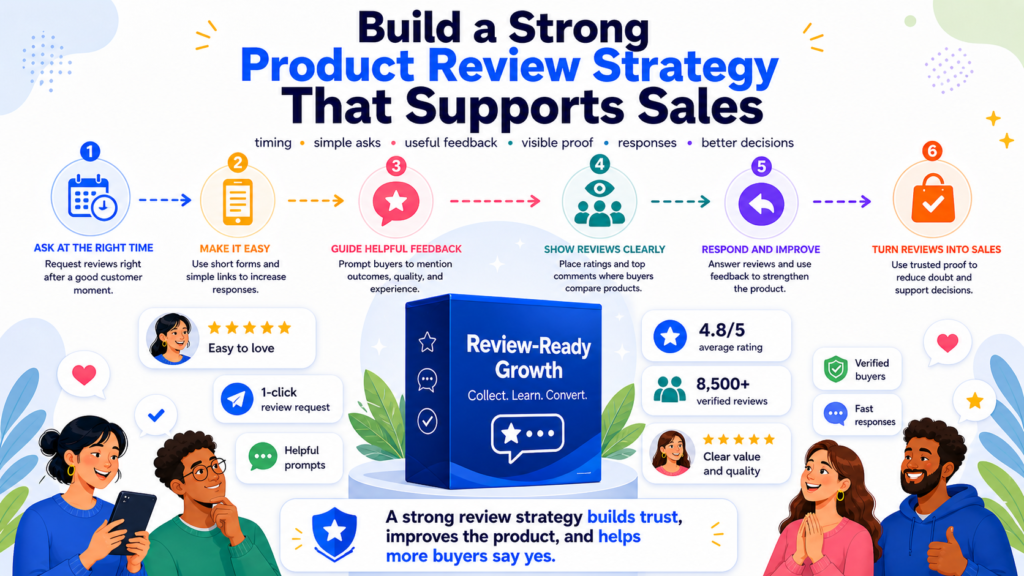
A strong review strategy helps your brand earn trust at scale. It gives buyers proof from people who have already used the product.
Reviews Should Be Collected With Care and Timing
The best time to ask for a review is when the customer has reached a real win. If you ask too early, they may not have enough experience to say something useful. If you ask too late, the excitement may fade.
Look for moments when value is clear. This could be after a customer completes setup, reaches a result, renews, gives positive feedback, upgrades, or praises your support team. At that point, the customer is more likely to share a meaningful review.
The request should feel personal and easy. Explain why the review helps other buyers. Give clear steps. Do not pressure the customer or ask them to say only positive things. Real reviews are stronger when they feel honest.
Ask Questions That Lead to Useful Reviews
A vague request often leads to a vague review. If you simply ask, “Can you leave us a review?” the customer may write something short and general. That may help a little, but it will not give future buyers much detail.
Instead, guide the customer with simple questions. Ask what problem they were trying to solve. Ask what changed after using the product. Ask what feature or part of the experience helped most. Ask what they would tell someone who is considering the product.
These questions help customers write reviews that speak to real buyer concerns.
A review that says, “Great product,” is nice. A review that says, “We stopped losing track of leads and our team now knows exactly who to follow up with each morning,” is far more useful.
Use Reviews Across the Whole Sales Journey
Reviews should not sit only on third-party review sites. They should be used across your marketing and sales materials. A strong review can support a landing page, email campaign, product page, sales deck, retargeting ad, proposal, or onboarding sequence.
The key is to match the review with the message.
If a page talks about ease of use, use a review that mentions simplicity. If an email talks about support, use a review that praises the support team. If a sales deck talks about results, use a review that mentions the outcome.
This makes your claims feel more believable.
Negative Reviews Can Also Improve Product Marketing
No brand likes negative reviews, but they can be useful. They show you where buyers feel disappointed, confused, or unsupported. They may reveal gaps in your product, onboarding, pricing, messaging, or support.
Instead of ignoring negative reviews, study them. Look for patterns. If many people say setup was confusing, your onboarding content needs work. If many people expected a feature you do not offer, your messaging may be unclear. If people say pricing surprised them, your pricing page may need better explanation.
When you fix the problem and respond with care, even a negative review can become a sign that your company listens.
Use Data to Improve Product Marketing Without Losing the Human Touch
Data helps product marketing make better choices. It shows what people click, where they drop off, which messages work, which offers convert, and which campaigns bring real sales. But data should not make your marketing cold. It should help you understand people better.
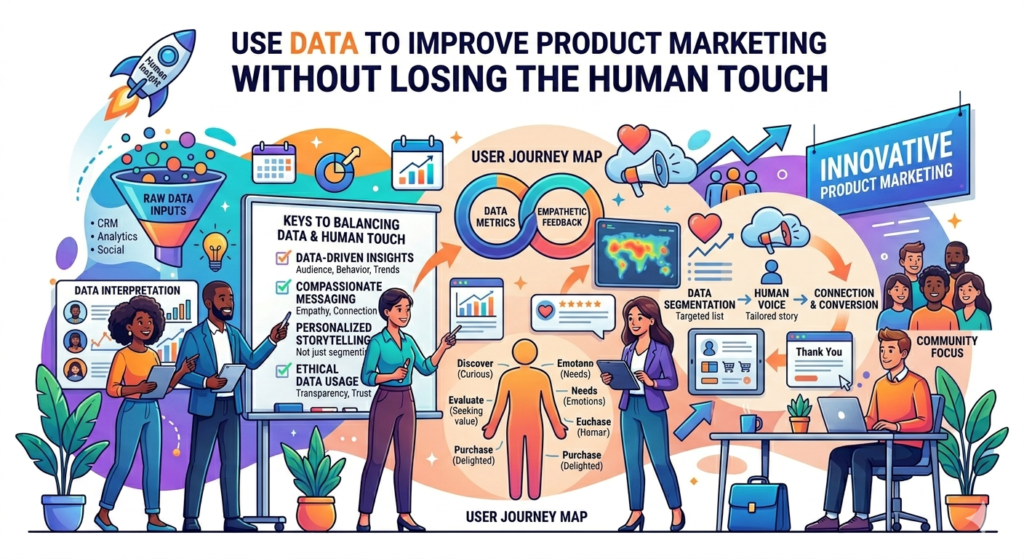
The best product marketers use data and human insight together. Numbers show what is happening. Customer conversations help explain why it is happening.
Track Metrics That Connect to Revenue, Not Vanity
It is easy to get distracted by numbers that look good but do not show real growth. Page views, likes, impressions, and clicks can matter, but they are not the full story. A campaign can get attention and still fail to create sales.
Product marketing should track numbers that connect to buying behavior.
Look at how many people move from product pages to demo requests. Look at how many trial users reach the first key action. Look at how many leads become sales opportunities. Look at which content appears before closed deals. Look at which messages reduce objections. Look at which customer segments convert at higher rates.
These numbers help you see what is actually helping revenue.
Small Conversion Gains Can Create Large Sales Growth
You do not always need a huge new campaign to grow sales. Sometimes a small improvement in the buying journey can create a strong result.
If your product page converts better, every traffic source becomes more valuable. If your onboarding emails help more trial users activate, paid signups can increase without more ad spend. If your demo follow-up improves, more sales conversations can turn into deals.
If your pricing page becomes clearer, fewer buyers may leave in confusion.
This is why product marketing should keep testing and improving. Small gains across the funnel can add up to meaningful revenue.
Use Testing to Learn, Not Just to Chase Winners
Testing is useful when it helps you learn what buyers care about. But many teams test random details without a clear reason. They change button colors, swap images, or rewrite headlines without knowing what question they are trying to answer.
A better test starts with a belief.
For example, you may believe buyers care more about saving time than saving money. You may believe a certain segment needs stronger proof. You may believe the current headline is too vague. You may believe the call to action asks for too much too soon.
Then you test that idea with a clear change.
Qualitative Feedback Explains the Story Behind the Numbers
Numbers can show that a page is not converting, but they may not tell you why. That is where customer feedback helps.
Use short surveys, sales notes, support conversations, user interviews, heatmaps, and session recordings to understand what people are thinking. Ask what confused them. Ask what nearly stopped them from buying. Ask what made them trust the product. Ask what information they wish they had seen earlier.
This feedback gives life to the data.
When you combine numbers with real customer words, your marketing becomes sharper. You stop guessing and start improving based on real behavior.
Create a Product Marketing System That Keeps Getting Better
Product marketing should not be a one-time project. Markets change. Buyers change. Competitors change. Product features change. Customer needs change. A message that worked last year may feel weak today. A sales deck that once felt sharp may no longer answer the questions buyers now ask.
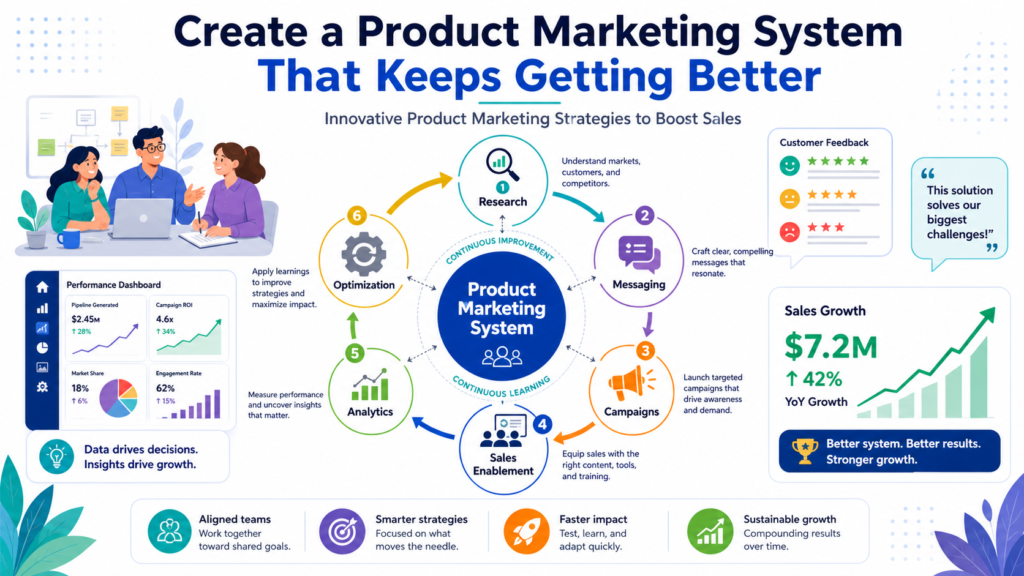
The best companies treat product marketing as an ongoing system. They keep learning, testing, updating, and improving.
Build Regular Feedback Loops Across Teams
Product marketing sits between many teams. It needs input from sales, customer success, product, support, leadership, and customers. If these teams do not share what they are learning, the marketing message becomes stale.
A regular feedback loop keeps the message fresh.
Sales can share objections, lost deal reasons, and competitor mentions. Customer success can share adoption wins, churn risks, and customer stories. Product can share upcoming features and product limits. Support can share common issues and confusion points.
Marketing can share campaign results, content performance, and conversion data.
Together, these insights show what the market needs to hear next.
The Best Insights Often Come From Repeated Patterns
One comment may be interesting, but repeated patterns are more useful. If many prospects ask the same question, your website may need to answer it. If many customers praise the same feature, your messaging may need to highlight it more.
If many lost deals mention the same competitor, your comparison content may need to improve.
This is how product marketing becomes smarter over time.
Do not treat feedback as noise. Treat it as market language. Inside those patterns are better headlines, stronger offers, sharper sales tools, and clearer product stories.
Keep Updating Your Core Messaging Assets
Your core messaging assets should never sit untouched for years. These assets include your product page, positioning statement, sales deck, demo script, email sequences, pricing page, case studies, comparison pages, and onboarding content.
Each one should be reviewed often.
Ask whether the message is still clear. Ask whether the proof is still strong. Ask whether the buyer has new doubts. Ask whether the product has changed. Ask whether sales is using the content. Ask whether customers describe the value differently now.
When you update these assets, your whole revenue team benefits.
Strong Product Marketing Compounds Over Time
The real power of product marketing is that it compounds. A clearer message improves your website. A better website improves conversion. Better conversion makes paid ads more profitable. Stronger proof helps sales close more deals.
Better onboarding helps customers reach value faster. Happier customers create better stories. Better stories bring in more buyers.
Each part supports the next.
This is why product marketing should not be seen as decoration. It is not just copy, campaigns, and launch posts. It is the bridge between your product and the market. When that bridge is strong, sales become easier because buyers understand the value faster and trust the decision more.
Conclusion
Innovative product marketing is not about chasing every new trend. It is about making your product easier to understand, easier to trust, and easier to buy. That starts with clear positioning. It grows through strong customer research, useful content, sharp demos, smart offers, better sales support, honest proof, and a funnel that guides buyers step by step.













Comments are closed.