
WinSavvy Editorial Standards
How this article was created
Holiday marketing is no longer about putting a discount on your website and waiting for people to buy. That may have worked years ago, when shoppers had fewer choices and less noise around them. Today, your customers are busy, careful, and distracted. They compare prices, read reviews, wait for better deals, check social media, ask friends, and often leave without buying even when they like the product.
Build your holiday campaign around one clear buyer promise
A strong holiday campaign starts with a clear promise. Not a vague message like “best holiday deals” or “shop now before it ends.” Those lines are everywhere. Your buyer has seen them many times. They do not stop the scroll because they do not say anything useful.
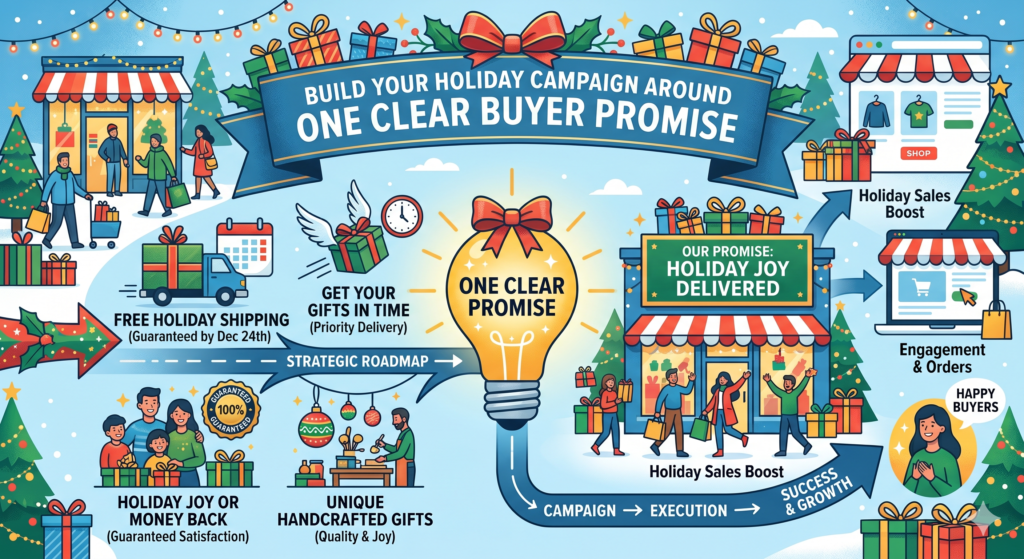
Your promise should tell the customer why your brand matters right now. It should answer a simple question in their mind: “Why should I choose this instead of waiting, comparing, or buying from someone else?”
Your holiday message should solve a real seasonal problem
During the holiday season, people are not only buying products. They are trying to solve problems. They want to find gifts on time. They want to avoid stress. They want to stay within budget. They want to impress someone. They want to save time. They want to feel smart about the choice they made.
This is where many brands go wrong. They focus only on the sale. But the buyer is thinking about the outcome. A parent does not just want a toy. They want a child to feel happy. A manager does not just want corporate gifts. They want clients to feel valued. A shopper does not just want a sweater. They want a safe gift that looks thoughtful.
Your campaign should speak to that deeper reason. Instead of saying “20% off holiday gifts,” a better message might be “Thoughtful gifts that arrive before the holiday rush.” Instead of saying “Black Friday sale,” say “Get your holiday shopping done early without overspending.”
Your main promise should be simple enough to remember
If your message takes too much effort to understand, it will not work. Holiday shoppers move fast. They scan emails, ads, pages, and posts in seconds. Your promise should be short, clear, and easy to repeat.
Think of your campaign promise as the main idea that ties everything together. Your ads, emails, landing pages, product pages, and social posts should all support it. This gives your campaign a steady feel. It also helps customers remember you after they leave your site.
For example, a skincare brand could build a holiday campaign around “calm skin through the busiest season.” A SaaS brand could use “start the new year with cleaner systems.” A local bakery could use “fresh holiday treats without the kitchen stress.” These promises are not just sales lines. They speak to a real need.
Once you have the promise, every piece of content becomes easier to create. Your subject lines get sharper. Your landing page gets clearer. Your offer feels stronger. Your brand stops sounding like every other business shouting for attention.
Start earlier than your competitors, but do not sound desperate
Holiday marketing works best when it starts before the buyer feels rushed. Many people begin thinking about holiday purchases long before they are ready to buy. They browse first. They save ideas. They compare options. They wait for the right offer. If your brand only shows up when the season is already crowded, you are fighting for attention at the hardest time.
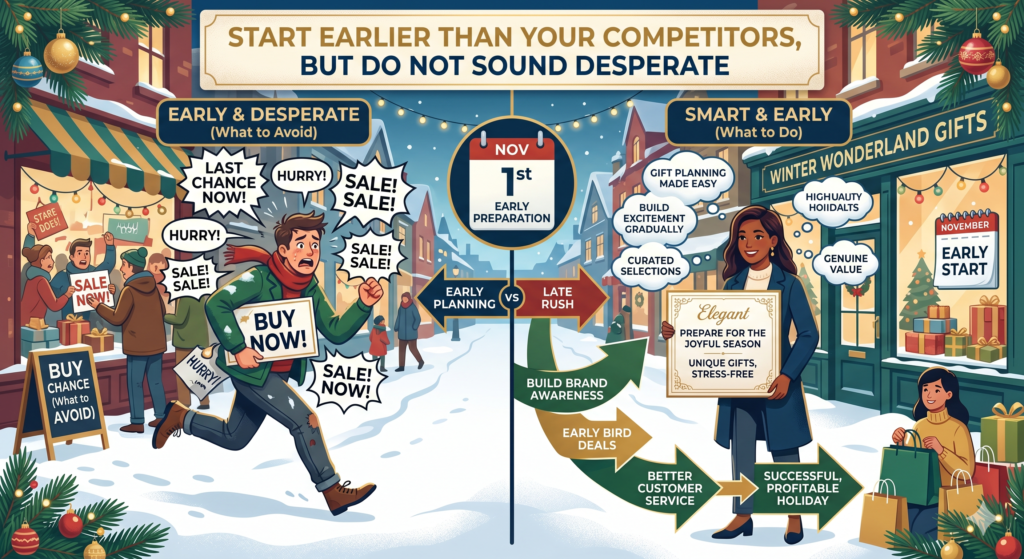
Starting early does not mean pushing hard from day one. It means entering the buyer’s mind before the noise gets too loud.
Early campaigns should focus on planning, not pressure
In the early part of the season, your job is to help customers feel prepared. This is not the time to shout “buy now” in every message. It is the time to educate, inspire, and guide.
You can create gift guides, planning emails, early access pages, bundle previews, holiday checklists, and product comparison content. These assets help customers make better choices. They also help your brand become part of their decision before your competitors even show up.
The tone matters here. Early holiday marketing should feel helpful, not pushy. You can say things like “Plan ahead before the rush begins” or “Get first look at our holiday picks.” These messages create interest without making the buyer feel trapped.
Early attention turns into cheaper conversions later
When customers engage with you early, your later campaigns work better. Your email list warms up. Your retargeting audiences grow. Your social followers become more familiar with your offers. Your website visitors start returning.
This can lower your cost of conversion when peak season arrives. Instead of trying to convert cold traffic during the most expensive ad weeks, you are speaking to people who already know your brand.
This is especially important for smaller brands. You may not be able to outspend bigger competitors during Black Friday or Christmas week. But you can out-plan them. You can build trust earlier. You can give your audience useful reasons to pay attention before everyone else starts flooding their inbox.
A smart early campaign might begin with soft content, then move into early access, then introduce gift bundles, then open limited deals, and finally close with shipping reminders. Each step should feel natural. The buyer should never feel like you appeared out of nowhere just to ask for money.
Create offers that feel useful, not random
A holiday offer should feel like it belongs to the season. A random discount may bring clicks, but it does not always create strong sales. Buyers need to feel that your offer helps them solve a timely problem.
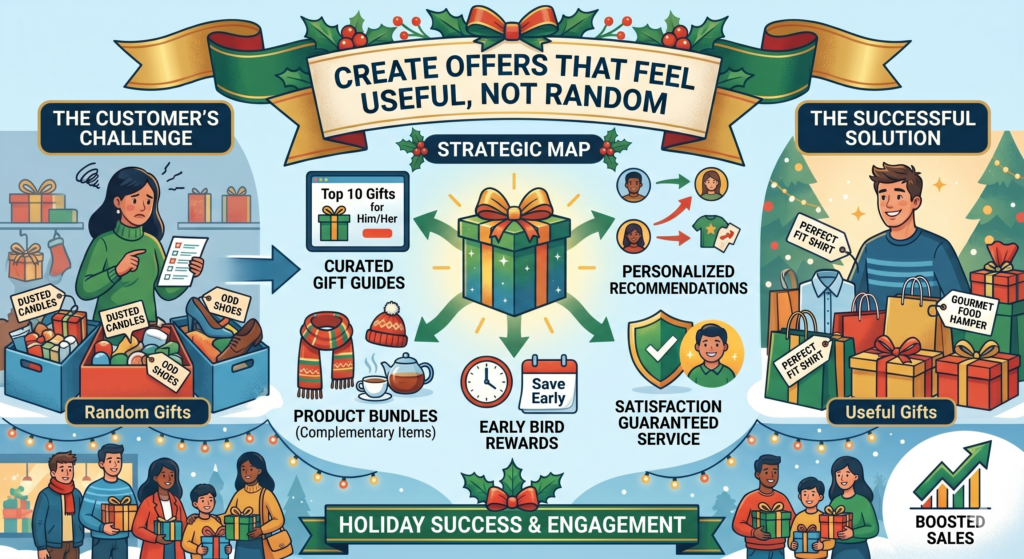
A strong offer makes the choice easier. It gives the buyer a clear reason to act now. It also protects your brand from sounding cheap or desperate.
Your offer should match the buyer’s holiday intent
Different buyers have different needs during the holidays. Some are buying gifts. Some are buying for themselves. Some are planning for the new year. Some are stocking up. Some are looking for last-minute help. Your offer should match the intent behind the purchase.
For gift buyers, bundles often work well because they reduce decision stress. For repeat customers, loyalty perks can feel more personal than public discounts. For last-minute shoppers, fast shipping and clear delivery dates can matter more than price. For B2B buyers, year-end planning packages or January setup offers can be more relevant than a holiday coupon.
The key is to avoid treating every customer the same way. A blanket discount can work, but it often leaves money on the table. A more focused offer can drive stronger action because it feels made for the moment.
Value can be stronger than a bigger discount
Many brands assume that a higher discount will always perform better. That is not always true. A buyer may respond more strongly to free shipping, a bonus gift, a limited bundle, extended returns, gift wrapping, priority delivery, or early access.
These offers reduce friction. They make buying feel safer and easier. During the holidays, that matters a lot. People worry about late deliveries, wrong choices, poor quality, and return problems. If your offer removes one of those worries, it can be more powerful than taking another few dollars off the price.
For example, “Free delivery by December 20” may beat “10% off” for a last-minute shopper. “Buy two gifts and get a free stocking stuffer” may feel more fun than a flat sale. “Holiday bundle with everything included” may convert better than asking shoppers to build their own cart.
Your offer should make the buyer think, “This helps me.” That is the goal. Not just “This is cheaper,” but “This makes my holiday easier.”
Build holiday landing pages that guide buyers to the right choice
Your holiday landing page should not feel like a normal product page with a banner added on top. During the holidays, buyers have different questions. They want to know what to buy, who it is for, when it will arrive, whether it can be returned, and why it is worth choosing now.
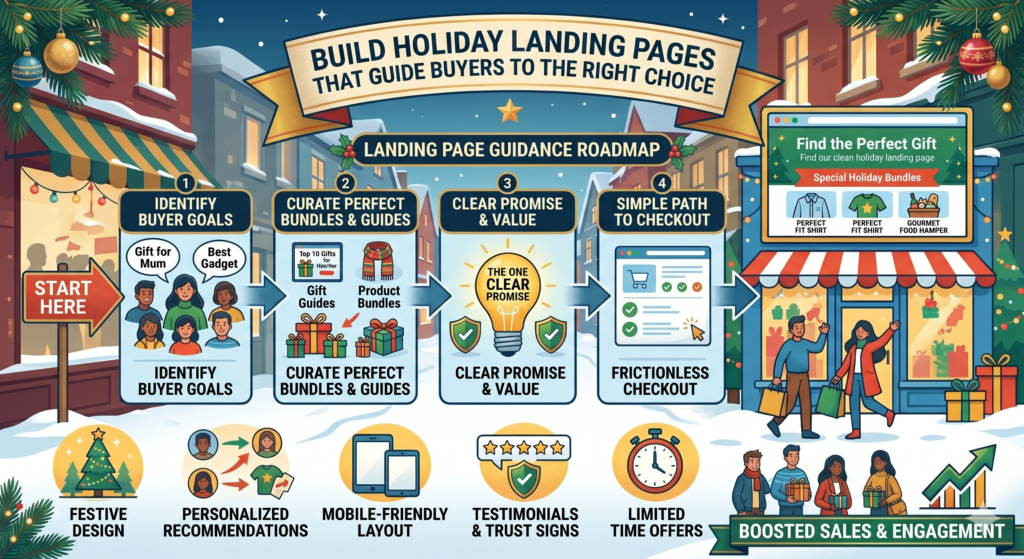
A good landing page answers those questions before the buyer has to search for them.
Make the page easy to scan and easy to trust
Holiday shoppers do not read every word at first. They scan. That means your page needs clear sections, plain headings, strong product groupings, and simple calls to action.
The top of the page should explain the offer and the promise quickly. Then the page should guide people based on their need. You might group products by recipient, price, use case, delivery speed, popularity, or gift type. This reduces the mental work of shopping.
Trust should also appear early. Show delivery deadlines, return policy details, customer reviews, secure checkout notes, and any guarantees that matter. These details help buyers feel safe.
Your page should remove doubt before asking for the sale
A buyer may want your product but still hesitate. That hesitation often comes from small doubts. Will it arrive on time? Is this a good gift? Is the size right? What if they do not like it? Is this the best deal I will get? Can I return it after the holiday?
Your landing page should answer these doubts in plain words. Do not hide shipping details in the footer. Do not make people hunt for return terms. Do not assume reviews on a separate page are enough. Bring the proof close to the buying moment.
For example, near a gift bundle, you can explain who it is best for. Near the checkout button, you can state the delivery deadline. Near a higher-priced item, you can show reviews from real buyers. Near a size-based product, you can include a simple fit note.
The best landing pages feel like a helpful salesperson. They do not overwhelm the buyer. They guide them. They make the next step feel easy and low-risk. That is what lifts holiday conversions.
Use email as your main holiday sales engine
Email is still one of the strongest holiday marketing channels because it reaches people who already know your brand. These are not random strangers. They joined your list, bought before, downloaded something, or showed interest in your business.
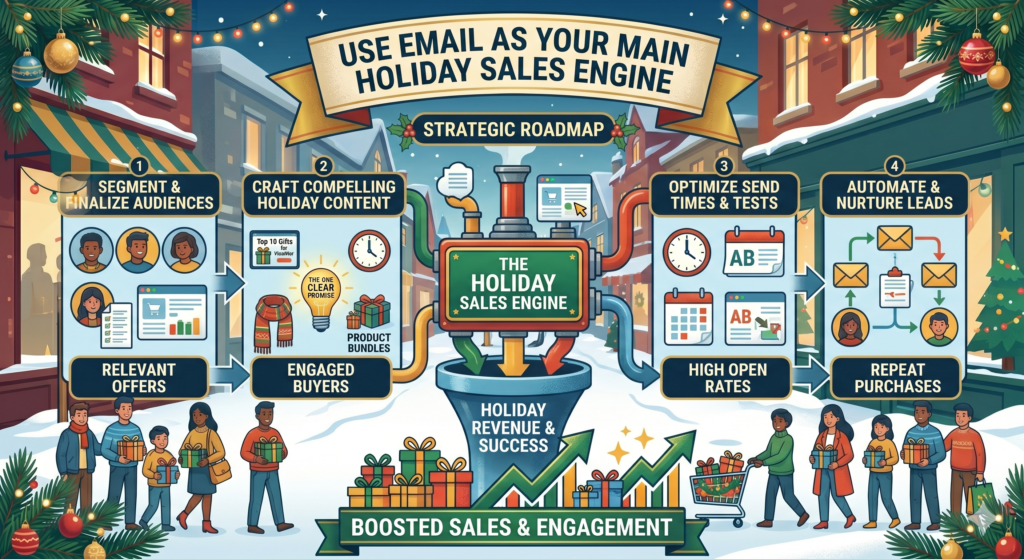
That makes email one of the best places to build urgency, tell your story, promote offers, and bring customers back.
Segment your list before the season gets busy
Sending the same email to everyone is easy, but it is rarely the best move. Your customers are not all at the same stage. A first-time visitor needs a different message than a loyal buyer. Someone who bought last week should not get the same offer as someone who has not purchased in a year.
Before the holiday rush, divide your list into useful groups. You can separate new subscribers, past buyers, high-value customers, inactive subscribers, cart abandoners, and people who clicked but did not buy. Each group should get a message that fits their behavior.
A past buyer may respond well to “Your favorites are back for the holidays.” A new subscriber may need more trust and education. A cart abandoner may need a reminder about delivery dates or limited stock. An inactive customer may need a stronger reason to return.
Every holiday email should have one clear job
Holiday inboxes are crowded. If your email tries to do too much, people will ignore it. One email should focus on one main action.
One email can announce early access. Another can highlight gift bundles. Another can remind shoppers about shipping deadlines. Another can bring back abandoned carts. Another can thank buyers after purchase and suggest add-ons. Each email should feel focused.
Your subject line should match the message inside. Do not use false urgency or vague hype. A clear subject often works better than a clever one. Lines like “Last day for holiday delivery” or “Gift sets under $50 are ready” tell the reader what they need to know.
The body of the email should be simple. Start with the buyer’s need. Show the offer. Give a reason to act. Remove one doubt. Then guide them to the next step. That is enough.
Email works when it feels timely and useful. It fails when it feels like noise. During the holidays, respect your reader’s attention and they are more likely to reward you with action.
Turn social media into a trust-building channel, not just a posting calendar
Social media can drive holiday sales, but only when it does more than announce offers. Most brands post sale graphics and hope people click. That is not a strategy. During the holidays, social media should help people discover your products, trust your brand, and picture themselves buying from you.
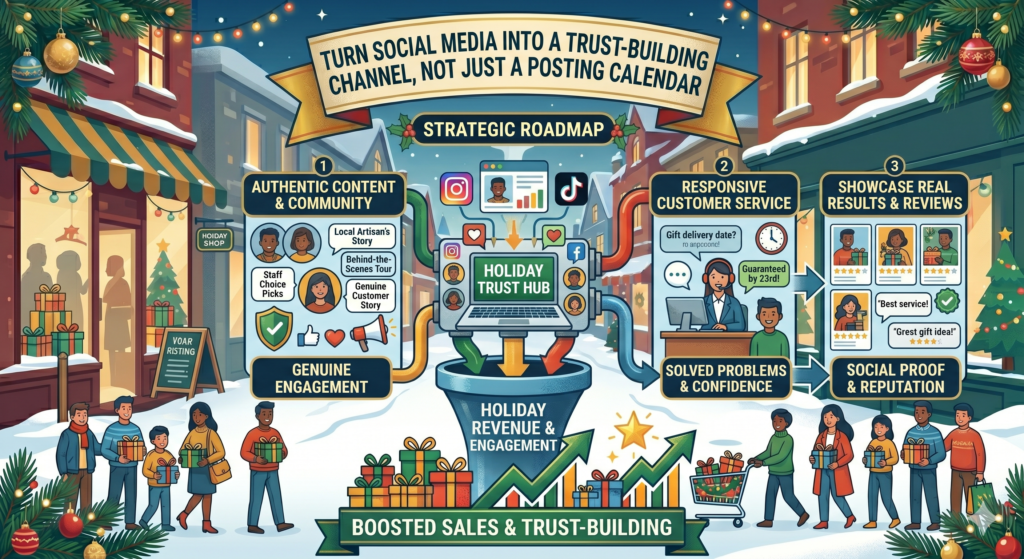
People may not purchase the first time they see your post. But if your content keeps answering their questions and making the product feel useful, they become more likely to buy later.
Show the product in real holiday situations
Holiday shoppers need ideas. They want to see how a product fits into their life, home, work, gift list, party, trip, or routine. Static product photos can help, but real-use content is stronger.
Show how the product is packed as a gift. Show how it looks in someone’s home. Show how it solves a busy-season problem. Show behind-the-scenes preparation. Show customer reactions. Show before-and-after moments if your product allows it.
This type of content makes the product easier to understand. It also makes it more emotional. A candle is not just a candle when it becomes part of a quiet holiday evening. A planner is not just paper when it helps someone start January with control. A food item is not just food when it saves someone from cooking stress.
Social proof should feel natural and specific
Holiday buyers want proof that others trust you. Social proof can come from reviews, customer photos, short testimonials, creator content, comments, case studies, or repeat buyer stories.
But generic proof is weak. “Customers love us” is not enough. A better proof point explains why they love you. Did the product arrive fast? Was it a perfect gift? Did customer support solve a problem? Did the quality surprise them? Did the recipient enjoy it?
Use those details in your content. A simple customer quote about fast delivery before Christmas can do more than a polished ad. A short video of someone opening the product can feel more real than a studio photo.
Social media should make people feel close to the brand. When your content feels human, useful, and timely, it builds the kind of trust that turns into clicks, carts, and sales.
Use paid ads to support the buyer journey, not just chase cold clicks
Paid ads can become expensive during the holidays because many brands are competing at the same time. If you rely only on cold traffic, you may burn through your budget fast. A better approach is to use ads to support the full buyer journey.
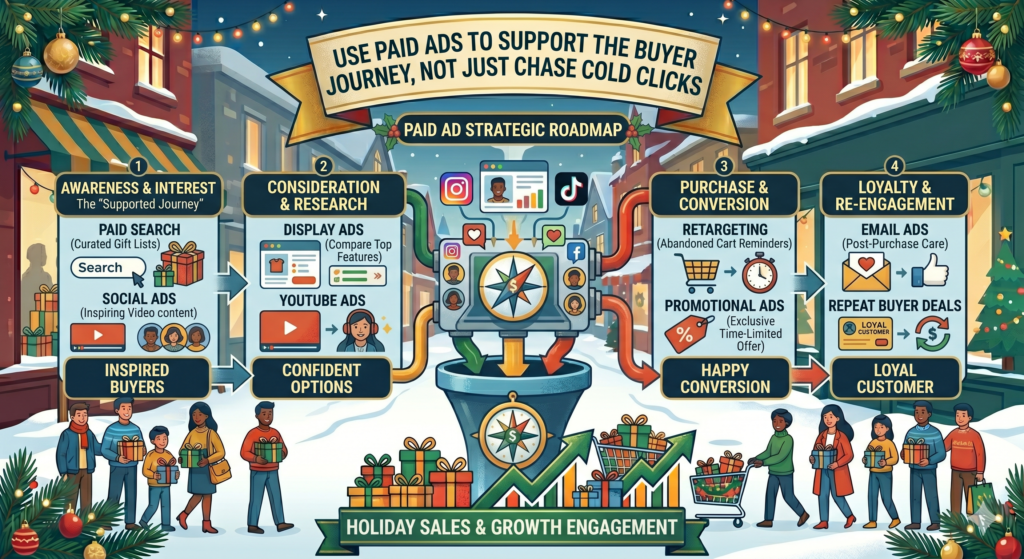
Your ads should introduce, remind, reassure, and convert. Each stage needs a different message.
Match your ad message to the customer’s level of awareness
A person seeing your brand for the first time does not need the same ad as someone who abandoned a cart. Cold audiences need a clear reason to care. Warm audiences need proof and reminders. Hot audiences need urgency and a simple path back to checkout.
For cold audiences, focus on the main problem your product solves during the holidays. For warm audiences, show reviews, bestsellers, bundles, or gift ideas. For cart abandoners, remind them about delivery deadlines, stock limits, guarantees, or the exact item they left behind.
This makes your ad spend work harder. Instead of shouting the same sale to everyone, you guide people based on what they already know.
Retargeting should answer the reason people did not buy
Many visitors leave without buying because they are unsure. Retargeting ads should not only say “come back.” They should deal with the likely reason the person left.
If price is the issue, show value, bundles, or payment options. If trust is the issue, show reviews. If timing is the issue, show shipping deadlines. If choice is the issue, show bestsellers. If the person viewed a product more than once, show that product with a clear reminder.
This is where paid ads become more strategic. You are not just paying for attention. You are using each ad to move the buyer one step closer to action.
The best holiday ad strategy is not always the biggest one. It is the most focused one. When your budget supports the right message at the right moment, you can win more sales without wasting money on people who are not ready.
Build gift guides that reduce choice stress
Holiday shoppers often want to buy, but they do not always know what to buy. This is one of the biggest reasons people browse for a long time and leave without placing an order. They may like your brand. They may trust your products. They may even have a budget ready. But if they are not sure which item is right, they delay the choice.
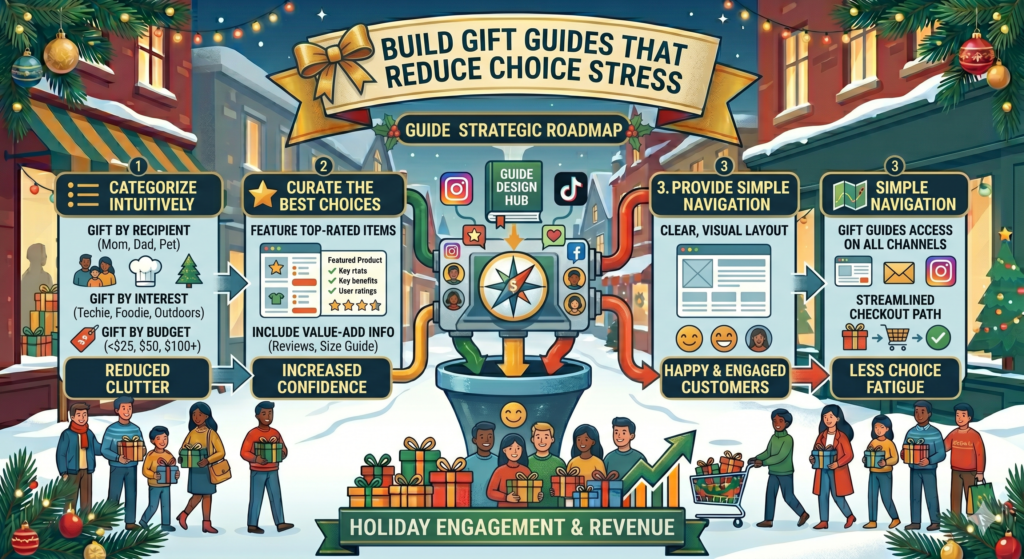
That is why gift guides are so powerful during the holiday season. A good gift guide does more than show products. It helps people make faster decisions with less stress. It turns a large catalog into a simple path.
Your gift guide should be built around the way people actually shop
Most brands build gift guides around product categories. They create sections like clothing, accessories, tools, skincare, software, books, or home items. That can help, but it is not always how customers think during the holidays.
Many shoppers think in terms of people, feelings, budgets, and situations. They ask, “What can I buy for my mom?” “What is a safe gift for a coworker?” “What can I get under $50?” “What feels personal but not too expensive?” “What can arrive quickly?” “What is good for someone who already has everything?”
Your gift guide should answer those questions directly. Instead of only sorting by product type, sort by buyer intent. Create sections for gifts for parents, gifts for clients, gifts for busy founders, gifts under a certain price, gifts for last-minute shoppers, gifts for people who love comfort, or gifts for people starting the new year with big goals.
When your guide follows the customer’s thought process, shopping feels easier. The buyer does not have to translate your product catalog into their real-life need. You do that work for them.
Each gift suggestion should explain why it fits
A weak gift guide simply places products on a page. A strong gift guide explains why each product makes sense. This is where your copy can drive real sales.
Do not just say, “Best for dads.” Explain why. Say that it is useful, simple to enjoy, easy to set up, built to last, or perfect for someone who likes practical gifts. Do not just say, “Great for coworkers.” Explain that it feels thoughtful without being too personal, fits a modest budget, and ships easily.
These short explanations help the buyer feel more confident. They also make the product feel more valuable. The shopper is not just buying an item. They are buying a good choice.
Your gift guide should also include trust details near the recommendations. Mention shipping cutoffs, return windows, gift wrapping, bundle savings, and customer favorites where they apply. These small notes remove friction at the exact moment the buyer is close to making a choice.
A great gift guide acts like a helpful friend. It does not push. It guides. It makes the buyer feel smart, calm, and ready to act.
Use urgency with care so customers trust your brand
Urgency is a major part of holiday marketing. People need to know when deals end, when shipping closes, when stock is limited, and when they must act to get something on time. Without urgency, many buyers wait too long and forget.
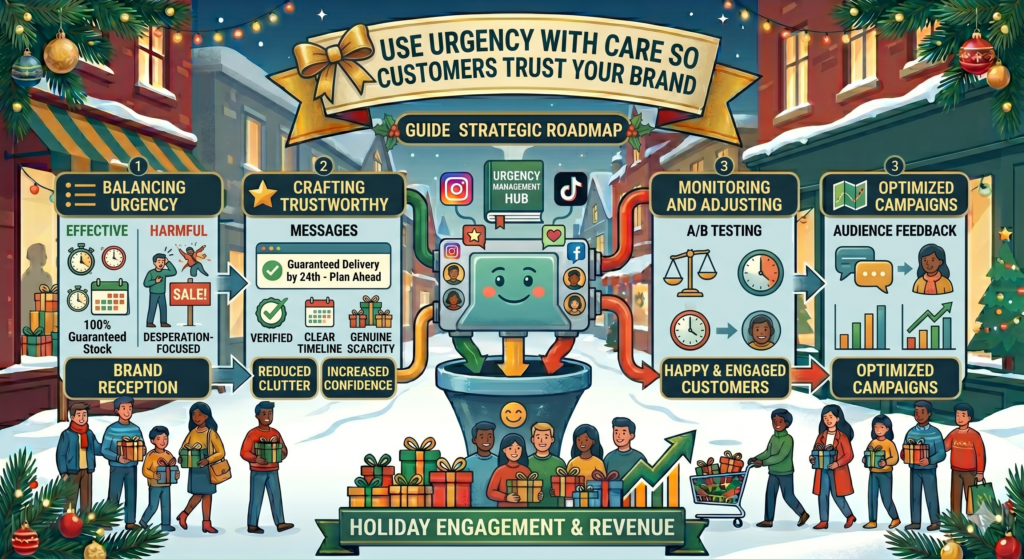
But urgency can also damage trust when it feels fake. Shoppers are smart. They know when a brand says “last chance” every day for two weeks. They know when a countdown timer resets. They know when “limited stock” is used as a trick instead of a real update.
Holiday urgency works best when it is honest, useful, and tied to a real reason.
Real deadlines are stronger than fake pressure
The holiday season gives you many real reasons to create urgency. You do not need to invent pressure. Delivery deadlines are real. Order cutoffs are real. Early access windows are real. Bundle availability can be real. Gift wrapping cutoffs can be real. Event dates are real.
Use these moments clearly. Tell customers the last date to order for standard delivery. Tell them when express shipping begins. Tell them when a bundle will no longer be available. Tell them when customer support hours change. Tell them when a sale price ends.
This kind of urgency helps the buyer. It does not just push them. It gives them information they need to avoid disappointment.
For example, “Order by December 16 for delivery before Christmas” is far stronger than “Hurry, deal ends soon.” The first message is useful. The second is vague. Useful urgency builds trust because it helps the customer plan.
Your urgency should lower stress, not create panic
During the holidays, people are already under pressure. They are managing money, family plans, travel, work, events, and gift lists. If your marketing adds more stress, it can backfire.
The goal is not to scare people into buying. The goal is to help them act at the right time. Your copy should feel clear and calm. Instead of shouting, “Buy now or miss out,” you can say, “Today is the last day to choose standard shipping for holiday delivery.” That message still creates action, but it feels respectful.
You can also use urgency in stages. Early in the season, focus on planning. During peak shopping days, focus on offer deadlines. Near the end, focus on shipping cutoffs and last-minute options. After shipping deadlines pass, shift to digital gifts, gift cards, local pickup, or post-holiday offers.
This keeps your messaging useful at every phase. It also prevents your audience from getting tired of constant pressure.
Urgency should protect the customer from missing out, not trick them into rushing. When buyers feel that your brand is being honest, they are more likely to buy now and come back later.
Make your checkout process fast, clear, and low-risk
A holiday campaign can bring people to your site, but the checkout decides whether the sale actually happens. Many brands spend heavily on ads, emails, content, and social media, then lose buyers at the final step because checkout feels slow, confusing, or risky.
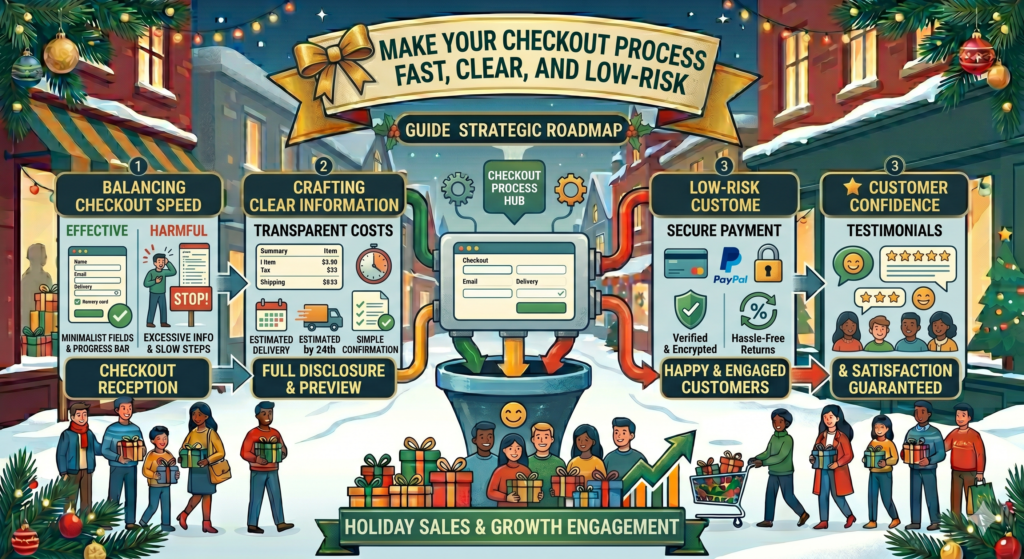
During the holidays, checkout friction is even more dangerous. Shoppers are short on time. They may be buying from several sites in one sitting. They may be comparing delivery dates. They may be using mobile devices while multitasking. If your checkout feels hard, they may leave and buy from a competitor.
Every checkout step should feel obvious
A good holiday checkout should not make people think too much. The buyer should know what they are paying, when the item will arrive, what shipping costs, what payment options exist, and what happens after they order.
Hidden fees are one of the fastest ways to lose trust. If shipping, taxes, handling fees, or delivery charges appear late in the process, buyers may feel misled. Even if the total price is fair, the surprise can cause abandonment.
Show key details early. Make delivery options clear. Let customers know which shipping method is best for holiday arrival. If you offer gift notes, gift wrapping, pickup, or special packaging, make those choices easy to find.
Mobile checkout also matters. A form that feels acceptable on desktop may feel painful on a phone. Reduce unnecessary fields. Allow guest checkout. Make buttons easy to tap. Keep error messages clear. Support common payment methods your customers use.
Risk-reducing copy should appear near the payment moment
The moment before payment is when doubt becomes strongest. The buyer may wonder if the product will arrive on time, if the return policy is fair, if payment is secure, or if customer support will help if something goes wrong.
Place calming details close to the final button. A short note about secure checkout, returns, delivery cutoff, or support can help. This is not fluff. It is conversion support.
For example, near the order button, you might say that orders placed today qualify for holiday delivery. Near shipping options, you might explain which option is recommended for the customer’s deadline. Near the payment section, you might remind buyers that returns are accepted through January.
These small details help the buyer finish the purchase with confidence.
You should also send a clear confirmation email right after purchase. The customer should know the order went through, when it will ship, how to track it, and how to contact you. This reduces support requests and builds trust after the sale.
A fast checkout does not only increase conversions. It improves the whole customer experience. And during the holidays, that experience can decide whether a first-time buyer becomes a loyal customer.
Create cart recovery messages that answer the real reason buyers left
Cart abandonment is normal, especially during the holidays. Many people add items to their cart while comparing prices, checking delivery dates, waiting for payday, looking for coupon codes, or deciding if the gift is right. Some get distracted. Some hesitate. Some plan to return and simply forget.
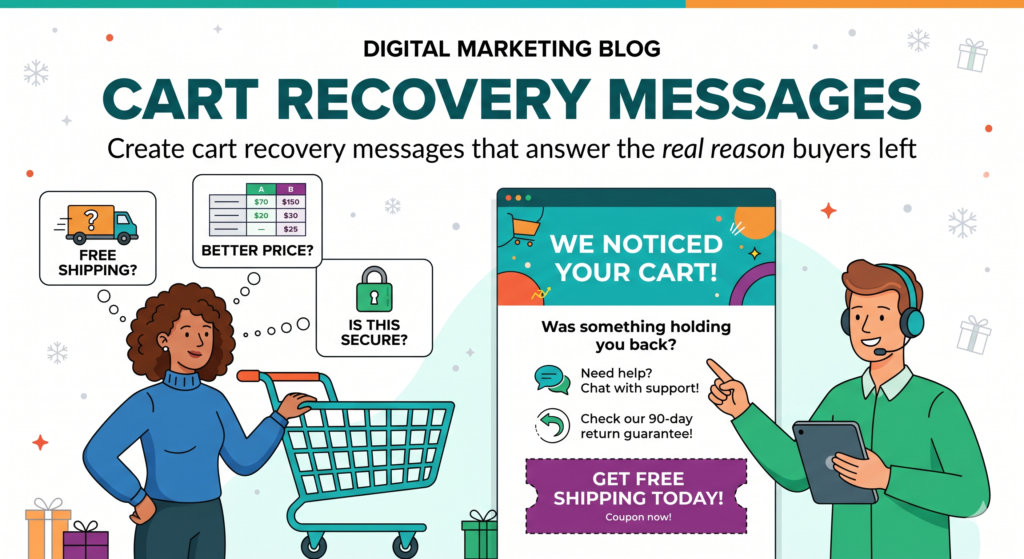
A strong cart recovery flow brings those people back with the right message at the right time. It should not feel like a cold reminder. It should feel helpful, timely, and specific.
Your first recovery message should be simple and helpful
The first cart reminder should not be too aggressive. In many cases, the customer did not reject your product. They just paused. The message should help them continue.
Start by reminding them what they left behind. Show the product name, image, price, and clear return path to checkout if your platform allows it. Keep the copy plain. Something like “You left this in your cart” can work when the rest of the email is useful.
But do not stop there. Add one reason to complete the order. This could be a shipping deadline, a customer review, a return policy note, a bundle reminder, or a stock update if it is accurate.
For holiday buyers, delivery timing is often the most important detail. If the product can still arrive before a key date, say so clearly. If there is a cutoff coming soon, mention it. This gives the shopper a real reason to act now.
Later recovery messages should handle deeper doubt
If the buyer does not return after the first message, the next messages should not repeat the same line. Repetition feels lazy. Instead, each message should address a different possible concern.
One message can focus on trust. Share reviews, ratings, or a short customer quote. Another can focus on ease. Mention returns, gift wrapping, or delivery options. Another can focus on value. Show the benefit of the product, not just the price. If you use an incentive, make it feel intentional rather than automatic.
Be careful with discounts in cart recovery. If customers learn that abandoning the cart always gives them a coupon, they may wait on purpose. You can use discounts for first-time buyers, high-intent visitors, or slower-moving products, but do not make them your only recovery tool.
SMS can also work for cart recovery, but it must be used carefully. Text messages feel more personal than email. Keep them short, clear, and respectful. Only send them to people who agreed to receive them. The goal is to help, not annoy.
Cart recovery works best when it feels like support. You are not chasing the buyer. You are helping them finish a decision they already started.
Use customer data to make your holiday messages feel personal
Holiday marketing gets much stronger when your messages feel like they were made for the person reading them. This does not mean you need complex systems or creepy tracking. It means using what you already know about your customers to send better, more useful messages.
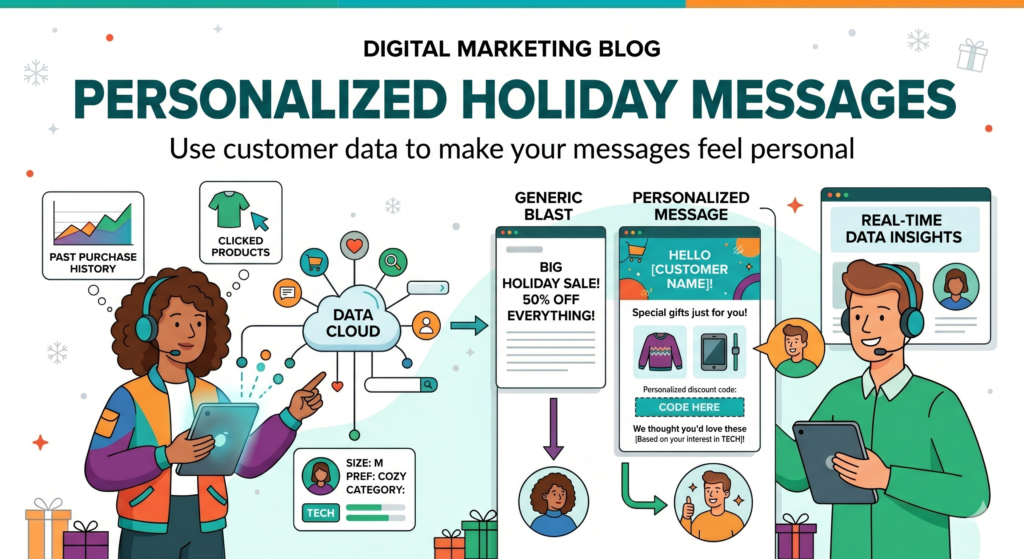
A person who bought from you last year does not need the same message as someone who just joined your email list. A loyal customer should feel known. A first-time visitor should feel guided. Someone who bought a gift before may need gift ideas again. Someone who browsed a certain category may need a clear reason to return to that category.
When your marketing matches the customer’s behavior, it feels less like noise and more like help.
Personalization should be based on useful buying signals
The best holiday personalization starts with simple signals. What did the customer buy before? What did they browse? How often do they purchase? What price range do they usually choose? Did they buy gifts last year? Did they abandon a cart? Did they click on a holiday guide?
These signals can shape your campaigns in a practical way. Past buyers can receive messages that say their favorites are back. Customers who purchased gifts last season can receive a new holiday gift guide. High-value customers can get early access. New subscribers can receive your bestsellers and trust-building content.
This kind of personalization does not need to feel fancy. It just needs to feel relevant.
For example, a customer who bought a winter skincare set last year may respond well to a message about keeping skin calm during the busy season. A customer who bought business gifts may respond better to a message about simple client gifting. A customer who clicked on a “gifts under $50” page should not be pushed first toward your most expensive products.
Relevance makes customers feel understood
The goal of personalization is not to show off how much data you have. The goal is to reduce effort for the customer. When the right offer appears at the right time, the buyer feels understood.
That feeling matters during the holidays because people are tired. They do not want to search through everything. They want shortcuts that still feel thoughtful. If your brand can make the choice easier, you become more valuable.
Personalized messages also protect your audience from fatigue. During the holiday season, brands often send more emails, more texts, and more ads. If every message feels the same, people stop paying attention. But if each message matches a real need, your audience is more likely to stay engaged.
A simple way to start is to create three or four core customer groups. You do not need dozens of segments. Start with new leads, past buyers, loyal customers, and cart abandoners. Then write messages that fit each group’s stage.
Good personalization feels like service. It tells the customer, “We know what may help you right now.” That is what turns attention into sales.
Build holiday bundles that increase order value without making buyers think too hard
Holiday bundles can be one of the easiest ways to lift sales because they solve two problems at once. They help the buyer choose faster, and they help the brand increase average order value. But bundles only work when they feel useful. If you simply group random products together and call it a holiday set, customers will see through it.
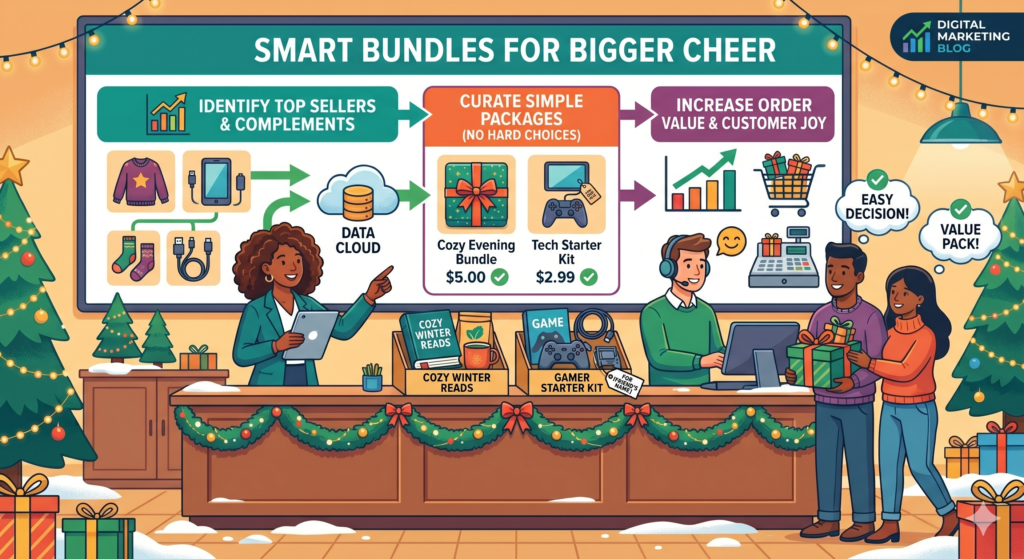
A strong bundle should feel like a complete answer. It should make the buyer think, “That is exactly what I need.”
Good bundles are built around a clear purpose
Every bundle should have a reason to exist. It might be a starter kit, a gift set, a self-care pack, a client gift box, a party-ready collection, a travel pack, a new-year planning kit, or a last-minute gift solution.
The purpose should be easy to understand from the name and the copy. Do not make the buyer guess why these items belong together. Explain it in plain language.
For example, a fitness brand could create a “new year reset bundle” for people planning healthier routines. A coffee brand could create a “holiday morning bundle” for slow family mornings. A software company could create a “January setup package” for teams that want to start the year organized.
The bundle should connect to a real seasonal moment. That is what makes it feel timely instead of forced.
Pricing also needs care. The buyer should quickly understand the value. If the bundle saves money, say so clearly. If it includes a bonus item, explain the bonus. If it saves time, make that the main selling point. The value does not always have to be a discount. Sometimes the value is ease, speed, or confidence.
The best bundles reduce decision stress
Holiday buyers often face too many choices. Bundles help because they remove the need to compare every small item. But if your bundle page is still confusing, you lose that advantage.
Keep bundle options simple. Too many bundles can create the same problem as too many products. A small number of well-named bundles is usually better than a large number of unclear ones.
Each bundle should tell the buyer who it is for. Is it best for a first-time customer? A gift buyer? A busy parent? A remote team? A skincare beginner? A premium shopper? Say it clearly.
You can also use bundles to guide different budgets. Offer one simple entry-level bundle, one best-value bundle, and one premium bundle. This gives customers a choice without making them feel lost.
Photos matter too. Show the bundle as a complete set. If it is meant to be gifted, show the packaging. If it is meant to be used together, show the items in context.
A good bundle feels like a shortcut to a smart choice. It helps customers buy with less doubt, and it helps your brand grow revenue without relying only on deeper discounts.
Use content marketing to capture shoppers before they are ready to buy
Not every holiday customer is ready to buy the first time they find you. Many people start with questions. They search for gift ideas, planning tips, product comparisons, holiday checklists, shipping advice, budget tips, and ways to solve seasonal problems.
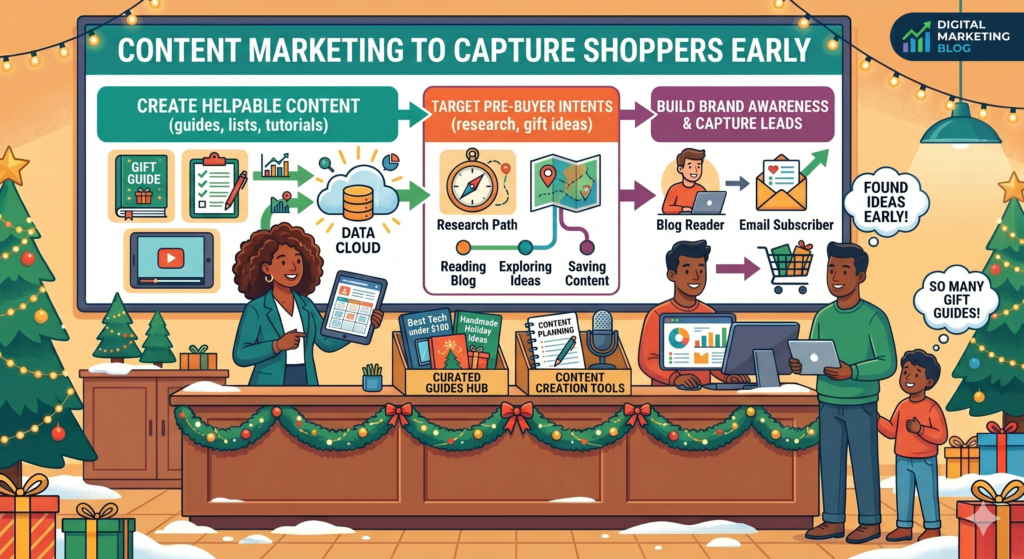
This is where content marketing becomes powerful. It helps you reach people early, build trust, and guide them toward your products before they start comparing only by price.
A holiday content strategy should not be random. It should connect search intent, buyer needs, and your offers.
Helpful content should lead naturally to your products
The best holiday content answers a real question and then shows your product as part of the solution. It should not feel like a hidden sales page. It should feel useful first.
For example, a brand that sells home decor could create content on how to prepare a guest room for holiday visitors. A food brand could write about stress-free hosting. A SaaS company could write about how teams can plan year-end campaigns without chaos. A fitness brand could create content about staying consistent during the holiday rush.
In each case, the content solves a problem that already exists in the customer’s mind. The product appears naturally because it helps with that problem.
This is much stronger than only publishing sale announcements. Sale pages work for people who are ready to buy. Helpful content works for people who are still thinking, planning, or comparing.
Search-friendly holiday content can keep working for years
Holiday content has a useful advantage. Many topics come back every year. Gift guides, planning posts, shipping checklists, seasonal tips, and holiday campaign ideas can be updated and reused.
This makes holiday SEO valuable. A well-written article can bring traffic this season, then be refreshed next season with new examples, dates, products, and offers. Over time, your brand can build authority around seasonal buying moments.
To make this work, your content should be specific. A broad post like “holiday gift ideas” may be too competitive and too vague. A more focused post like “holiday gifts for busy founders” or “last-minute client gifts that still feel thoughtful” can attract a clearer audience.
The content should also guide the next step. Add clear internal links to gift guides, product pages, bundles, email signup forms, or holiday landing pages. Do not leave the reader at a dead end.
Content marketing helps you win before the customer reaches the checkout stage. It gives people a reason to trust you early. And when the buying moment comes, your brand feels familiar, helpful, and safer than a competitor they just discovered.
Make influencer and creator campaigns feel useful, not staged
Creators can help your holiday campaigns reach people in a more human way. A good creator post can show your product in real life, explain why it matters, and make the buying decision feel easier. But creator marketing only works when it feels believable.
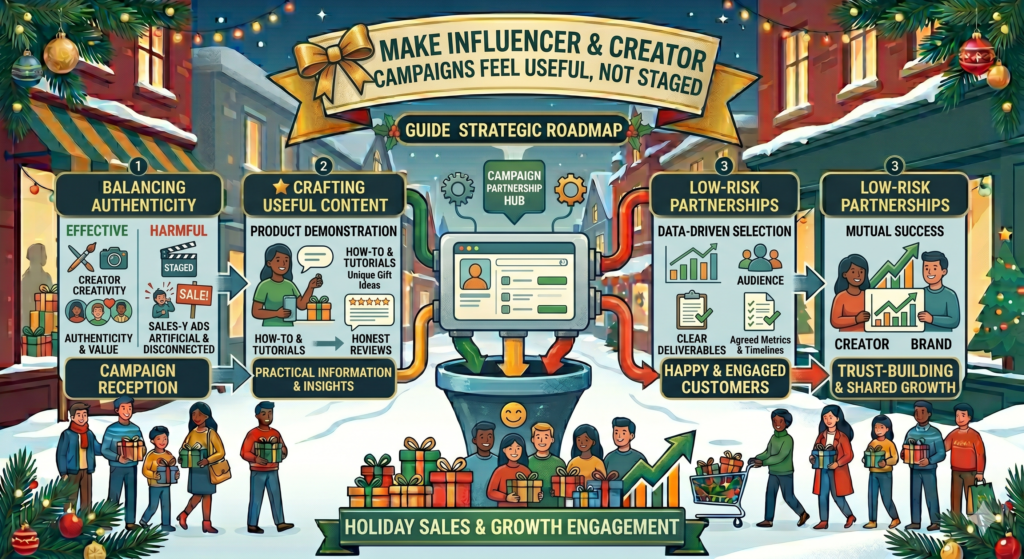
Holiday shoppers are surrounded by sponsored posts. They can often tell when a creator is promoting something they do not care about. That is why your goal should not be to create perfect ads. Your goal should be to create useful, honest content through people your buyers already trust.
Choose creators based on fit, not just follower count
A large audience does not always mean strong sales. A smaller creator with the right audience, strong trust, and clear content can often drive better results than a bigger account with weak engagement.
Look for creators whose audience matches your buyer. Also look at how they explain products. Do they tell stories? Do their comments feel real? Do people ask questions? Do followers trust their advice? Do their posts feel natural?
For holiday campaigns, the creator’s style matters a lot. You want someone who can show how your product fits into a seasonal moment. A creator can show your product as a gift, part of a routine, part of a holiday setup, part of a family moment, or part of a new-year plan.
The content should make the product easier to imagine. That is where creators can do what brand ads often cannot.
Give creators direction without killing their voice
One mistake brands make is over-controlling creator content. They write stiff scripts, force too many talking points, and turn the post into a sales pitch. This usually weakens the content because it no longer sounds like the creator.
Instead, give creators a clear brief with the main promise, key product facts, campaign dates, offer details, and any claims they should avoid. Then let them explain the product in their own voice.
You can ask them to answer real buyer questions. Who is this best for? Why is it a good holiday gift? What problem does it solve? What surprised them? How would they use it? What makes it worth buying now?
This creates content that feels helpful, not staged.
Creator content can also be reused in other channels if you have the rights. You can use it in ads, product pages, emails, and social proof sections. This gives your campaign more trust because real people are showing the product, not just the brand.
A strong creator campaign does not feel like a celebrity endorsement. It feels like a trusted person making the buyer’s choice easier. During the holidays, that kind of trust can move people faster than polished brand copy alone.
Turn your loyal customers into your strongest holiday sales channel
Your loyal customers already know your brand. They have tried your product, trusted your service, and given you money before. During the holidays, that matters a lot. Warm customers are often easier to convert than cold ones because you do not have to start from zero.
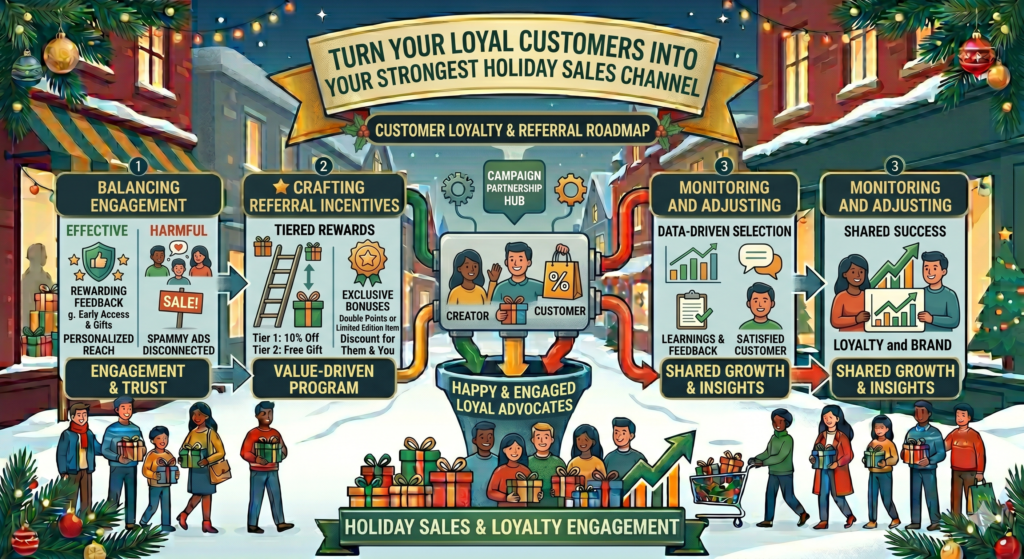
Many brands make the mistake of spending most of their holiday energy on new buyers. New customers matter, but past customers can bring faster sales, higher order value, and stronger word of mouth. They can also become your best source of referrals when gift buying is at its peak.
A loyal customer does not need to be convinced that your brand is real. They need a good reason to buy again, share your offer, or choose your product as a gift for someone else.
Give loyal customers early access before the crowd sees the offer
Early access makes loyal customers feel valued. It gives them a reason to pay attention before the general public sees the campaign. This works especially well for limited bundles, seasonal products, gift sets, service packages, and high-demand items.
The message should not sound like a generic sale blast. It should feel like a thank-you. You can say that they are getting first access because they have supported the brand before. You can let them shop before the public sale starts. You can give them a small bonus, free upgrade, or private bundle.
This does two useful things. First, it can create early revenue before the busiest campaign window. Second, it helps you test what products, bundles, and messages are getting attention before you push them to a wider audience.
Make referral offers easy enough to share without thinking
The holiday season is naturally social. People ask for gift ideas. They talk about what they are buying. They share deals with friends and family. This makes referrals more powerful than usual.
But your referral offer must be simple. If customers need to read long terms or complete too many steps, they will not share it. A good referral message should be easy to understand in one quick glance.
For example, your customer could give a friend a holiday discount and receive a small credit, gift, or bonus when that friend buys. The offer should feel fair for both sides. The friend gets a useful deal. The loyal customer gets a reason to share.
You can promote this through email, post-purchase pages, account dashboards, SMS, and packaging inserts. The best moment to ask for a referral is often after a happy purchase, when excitement is high and the buyer feels good about the brand.
Loyal customers should never feel like an afterthought. They are not just buyers. They are proof, advocates, and repeat revenue. When you treat them as part of your holiday strategy, they can help you sell in a way that feels more human than any ad.
Make customer support part of your holiday marketing strategy
Customer support is often seen as a back-end function, but during the holidays it becomes part of your marketing. A fast, clear, helpful support experience can save sales, prevent refunds, reduce bad reviews, and turn stressed shoppers into loyal customers.
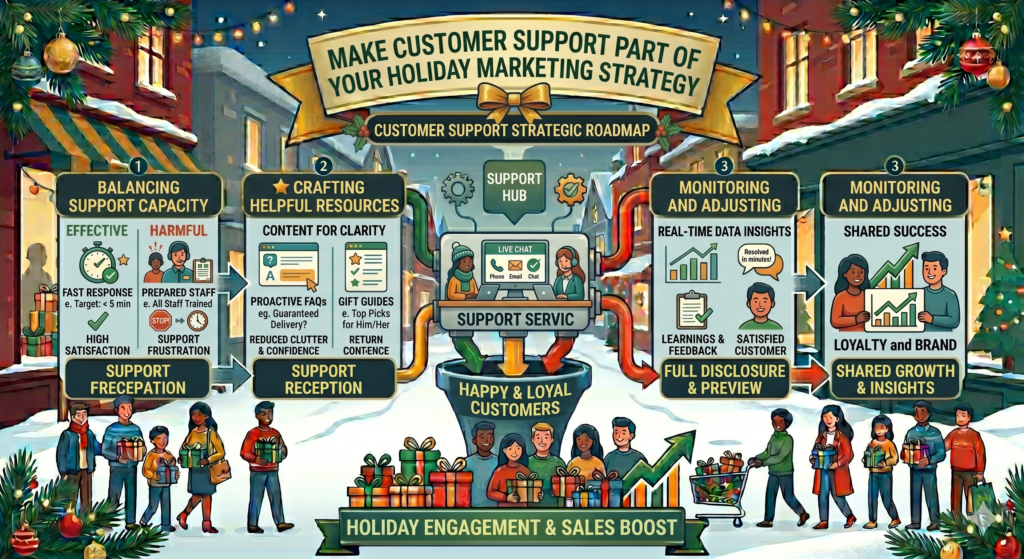
Holiday buyers often have urgent questions. They want to know if an order will arrive on time, whether they can change an address, how returns work, what size to choose, whether a gift receipt is included, or which product is right for someone. If they cannot get answers quickly, they may leave.
Your support team is not just solving problems. They are protecting revenue.
Answer the most common holiday questions before customers ask
The best support strategy starts before the support ticket. Look at the questions customers asked last year. Review chat logs, emails, social comments, return reasons, and checkout issues. Then turn those answers into clear website content.
Your holiday FAQ should cover delivery cutoffs, shipping options, returns, exchanges, gift cards, gift wrapping, order changes, international shipping if offered, customer service hours, and product-specific concerns.
Place these answers where buyers need them. Do not hide them on one support page. Add key answers to product pages, landing pages, cart pages, checkout pages, order confirmation emails, and cart recovery messages.
This reduces buyer doubt and lowers the workload on your support team.
Fast support can be the reason someone chooses you
During the holidays, speed matters. A customer who asks a question may be ready to buy, but only if they get help quickly. If your brand responds tomorrow and a competitor answers in five minutes, the sale may be gone.
Live chat, email templates, help desk tagging, saved replies, and clear internal rules can help your team respond faster. But speed should not come at the cost of warmth. A short, clear, human answer is better than a long, robotic one.
Support should also know the campaign details. If your team does not know the current offer, shipping deadline, bundle details, or return policy, customers will get mixed answers. That creates confusion and hurts trust.
Before peak days, give your team a simple campaign guide. Include active offers, product notes, delivery dates, refund rules, escalation steps, and approved language for common issues.
Great support can become a hidden advantage. Many brands look similar during holiday sales. But the brand that answers clearly, solves issues fast, and makes customers feel safe will often win the order.
Use post-purchase marketing to increase revenue after the first sale
The holiday sale does not end when the customer checks out. In many cases, that is the start of a bigger opportunity. A buyer who has just placed an order is already engaged. They trust you enough to buy. They are watching for updates. They may still need more gifts. They may be open to add-ons, upgrades, subscriptions, gift cards, or future offers.
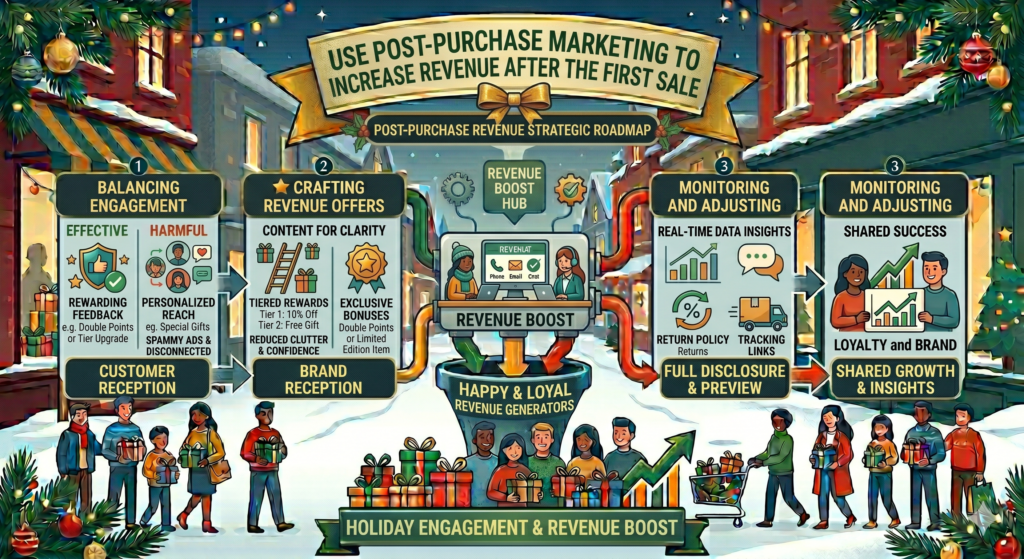
Post-purchase marketing helps you grow revenue without starting from scratch. It also improves the customer experience when done well.
The order confirmation should do more than confirm the order
Most order confirmation emails are plain and forgettable. They say the order went through, show a receipt, and stop there. That is a missed chance.
A strong confirmation email should reassure the buyer first. It should confirm what they bought, when it will ship, how to track it, and how to contact support. This lowers anxiety.
Then, if it makes sense, it can guide the next step. You might suggest a matching product, a gift add-on, a care guide, a referral offer, or a second purchase deadline. The key is to keep it helpful. Do not make the buyer feel like you are ignoring the purchase they just made and only asking for more money.
For example, if someone buys a gift box, you can suggest a gift note or another gift under the same budget. If someone buys a product that needs accessories, you can show the most useful add-on. If someone buys from your brand for the first time, you can invite them to learn how to get the most from the product.
Follow-up messages should build confidence and repeat interest
After purchase, customers want to feel that they made a good choice. Your follow-up emails can help with that. Send useful content related to the product. Explain how to use it, care for it, gift it, install it, style it, or get better results from it.
This reduces buyer regret and improves satisfaction. Happy customers are more likely to leave reviews, refer friends, and buy again.
You can also send a second holiday offer at the right time. For example, after the first order ships, you can remind them of the last date to order another gift. After delivery, you can ask if they need a gift card or last-minute option. After the holiday, you can offer a new-year deal, refill, upgrade, or loyalty reward.
Post-purchase marketing should feel like a natural extension of service. When it is done with care, it increases revenue while making customers feel supported.
Turn your website into a holiday sales assistant
Your website should not just display products. During the holiday season, it should guide people like a smart sales assistant. It should help them find the right product, understand the offer, trust the brand, and complete the purchase without confusion.
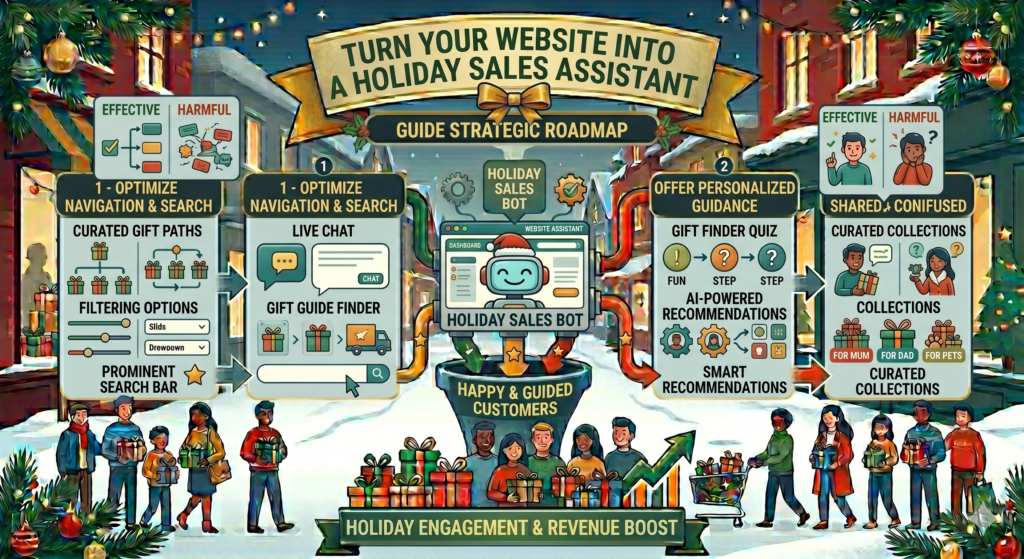
Many holiday campaigns fail because traffic goes to a website that is not ready. The ads look good. The emails get clicks. The social posts create interest. But once visitors land on the site, they face too many choices, unclear information, slow pages, weak filters, or missing trust signals.
Your site must work harder during the holidays because shoppers have less patience.
Make the homepage reflect the current holiday moment
Your homepage should match what is happening in your campaign right now. If early access is live, show it clearly. If gift bundles are the focus, lead with them. If shipping deadlines are close, make that message visible. If last-minute gifts are the main push, guide visitors there.
Do not let your homepage feel disconnected from your ads and emails. If a customer clicks an email about holiday gift sets and lands on a generic homepage with no clear path, you create friction.
The top section of your site should tell visitors what they can do next. It should not be crowded with too many messages. Choose the most important holiday action and make it easy to follow.
Site navigation should help shoppers choose faster
Holiday shoppers often browse by need, not by product category. Your navigation should reflect that. Add clear paths such as gifts by recipient, gifts by budget, bestsellers, last-minute gifts, bundles, stocking stuffers, corporate gifts, or new-year picks if they fit your business.
Search should also work well. If someone types “gift,” “holiday,” “under 50,” “shipping,” or a product use case, your site should return helpful results. A weak search experience can lose high-intent buyers.
Speed matters too. A slow website kills momentum. Compress images, remove unnecessary scripts, check mobile performance, and test checkout before traffic peaks. Even small delays can cost sales when shoppers are moving quickly.
Your website should make buying feel easy. Every page should answer the next question in the buyer’s mind. What is this? Who is it for? Why should I trust it? When will it arrive? What should I do next?
When your site guides instead of just displays, it becomes one of your strongest holiday sales tools.
Use SMS carefully for urgent and high-value moments
SMS can be a powerful holiday channel because people read texts quickly. But that power comes with risk. If you send too many messages or use SMS for weak updates, customers may unsubscribe fast.
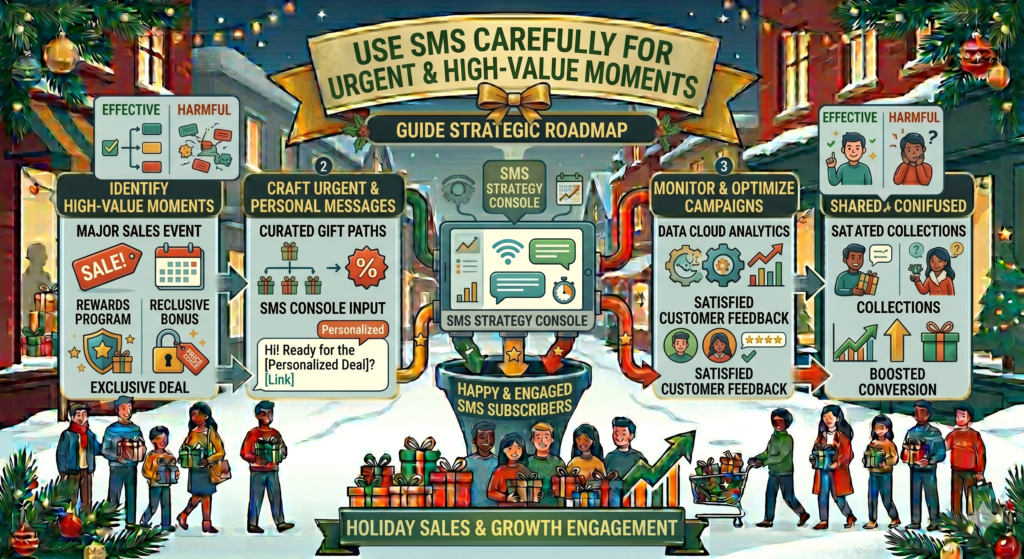
Text messages feel personal. They appear next to messages from friends, family, banks, schools, and delivery services. Your brand has to respect that space.
The best use of SMS during the holidays is for timely, useful, high-value moments. It should not be treated like a shorter version of email.
Send texts only when timing truly matters
SMS works well for early access reminders, sale deadline alerts, shipping cutoff warnings, back-in-stock updates, cart recovery, order updates, and last-minute gift options. These are moments where speed matters.
A text should be clear in one quick read. It should tell the customer what is happening, why it matters, and where to go next. Avoid long copy. Avoid vague hype. Avoid sending messages just because the calendar says you need one.
For example, a useful SMS might remind customers that today is the last day for standard delivery before a holiday. Another might tell VIP customers that early access is open. Another might alert a shopper that an item they viewed is almost sold out, but only if that is true.
SMS should support email, not replace it
Email gives you room to explain. SMS gives you speed. The two should work together.
You can use email for gift guides, product stories, reviews, bundles, and detailed offers. Then use SMS to remind people about time-sensitive actions. This keeps your text messages focused and valuable.
Be careful with frequency. A customer may accept more emails during the holidays, but too many texts can feel invasive. Set limits. Give people control. Make opt-out easy. Only send to people who gave clear permission.
Your SMS tone should feel friendly and direct. Do not use fake panic. Do not overuse all caps. Do not send messages late at night. The more respectful your SMS strategy feels, the longer customers will stay subscribed.
SMS can lift holiday sales when used with care. It is best for moments where a quick message helps the customer avoid missing something useful.
Conclusion
Holiday marketing works best when it feels planned, helpful, and human. The brands that win are not always the loudest or the cheapest. They are the ones that understand what buyers need, guide them with clear messages, remove doubt, and make every step simple.
Start early. Build offers with purpose. Use email, social media, paid ads, content, SMS, and your website as one connected system. Support customers before and after they buy.












Comments are closed.