
WinSavvy Editorial Standards
How this article was created
Small business marketing can feel unfair at first. Big brands have large teams, deep pockets, famous names, and ads that seem to follow people everywhere. They can spend more in one week than many small businesses can spend in a full year. So it is easy for a small business owner to think, “How can I ever compete?” But here is the truth.
Start With a Clear Offer Before You Spend a Dollar
Many small businesses rush into marketing before they are clear about what they are really selling. They know their product. They know their service. But they do not always know the simple promise that makes a customer stop, listen, and care.
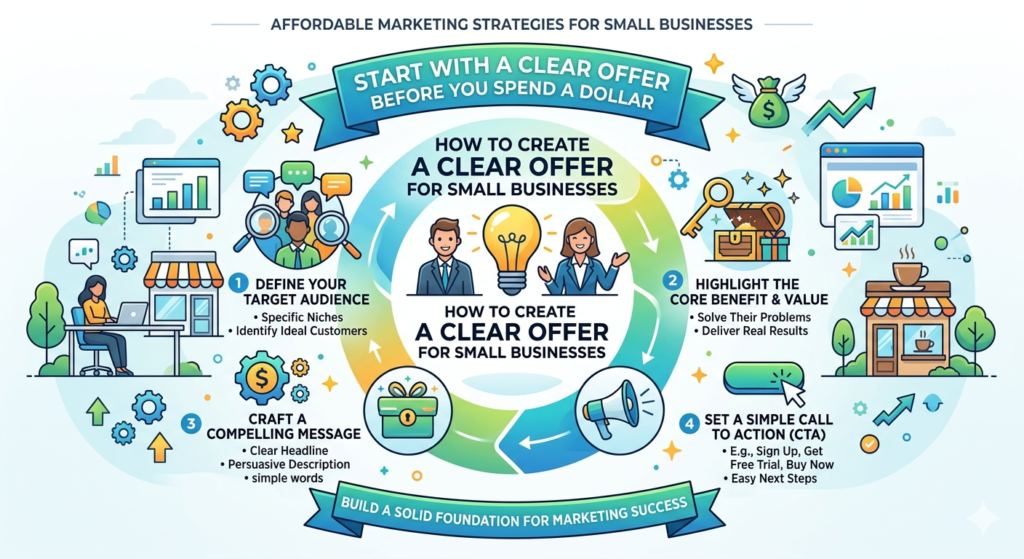
That promise is your offer.
Your offer is not just the thing you sell. It is the result people want from you. A bakery does not only sell cakes. It sells a sweet moment people remember. A local accountant does not only sell tax filing. They sell peace of mind, fewer mistakes, and less stress. A home cleaning company does not only sell cleaning. It sells a calm home and more free time.
When your offer is clear, every marketing move becomes easier. Your website becomes stronger. Your social posts become sharper. Your ads waste less money. Your sales calls feel smoother. People understand you faster because you are not making them guess.
A confused offer makes even good marketing fail
A small business can have a good product and still lose customers because the message is too weak. If your marketing only says what you do, it may not be enough. Customers want to know why it matters to them.
For example, “We offer bookkeeping services” is clear, but it does not create much desire. “We help small business owners stop worrying about messy books and know exactly where their money is going” feels much stronger. It speaks to a real pain. It shows a clear result. It makes the customer feel understood.
That is the kind of message affordable marketing needs. When your budget is small, your words must work harder.
Your offer should answer one simple customer question
The question is this: “Why should I choose you instead of doing nothing or choosing someone else?”
This matters because your real competition is not always another business. Sometimes your competition is delay. Sometimes it is doubt. Sometimes it is the customer thinking they can handle the problem later.
Your offer should make the next step feel worth taking now. It should show what problem you solve, who you solve it for, what result they can expect, and why you are a safe choice.
A simple way to shape your offer is to think about the customer’s before and after. Before they come to you, what are they dealing with? After they work with you, what gets better? The stronger that gap is, the stronger your offer becomes.
For a small gym, the offer may not be “personal training sessions.” It may be “a simple fitness plan for busy people who want to feel stronger without spending hours in the gym.” For a small legal firm, it may not be “business contracts.” It may be “clear contracts that protect your business before problems become expensive.”
The words do not need to be clever. They need to be clear.
Know Your Best Customer So You Stop Marketing to Everyone
Trying to market to everyone is one of the most expensive mistakes a small business can make. It sounds safe, but it creates weak marketing. When you speak to everyone, your message becomes too broad. It does not feel personal to anyone.
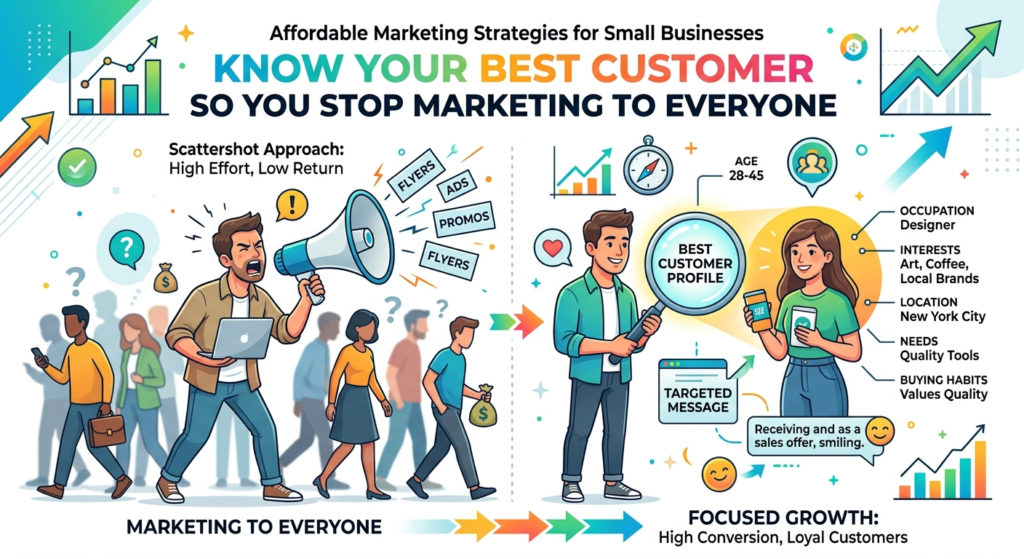
Small businesses grow faster when they know exactly who they serve best.
This does not mean you refuse everyone else. It means your marketing is built around the type of customer who is most likely to buy, stay, refer others, and value your work. That is your best customer.
Your best customer is not always the customer who pays the most once
Some customers pay once and never return. Some ask for constant discounts. Some take too much time and drain your energy. Others trust you, come back often, send friends, and understand the value of what you do.
Affordable marketing should focus on the second group.
Look at your past customers. Notice who was easiest to help. Notice who got the best results. Notice who paid on time, gave good feedback, and referred others. These people give you clues about where your marketing should point.
If you are just starting, look at the people who have the clearest need, the strongest reason to act, and the simplest path to buying from you. You do not need a perfect customer profile. You need enough clarity to stop guessing.
A sharp customer picture makes every channel cheaper
When you know your best customer, you can choose better words, better offers, better platforms, and better timing.
A local meal prep company that serves busy parents should not speak the same way as one that serves bodybuilders. Both may sell healthy meals, but the reason people buy is different. Busy parents want less stress, faster dinners, and meals their kids may actually eat. Bodybuilders may care more about macros, protein, and strict portion control.
The product may look similar. The marketing should not.
This is where many small businesses unlock growth without spending more. They stop shouting general messages and start saying things that feel specific. A customer should read your website or post and think, “That sounds like me.”
That feeling creates trust before the sale even begins.
Build a Simple Website That Turns Visitors Into Leads
Your website does not need to be fancy. It needs to be useful, clear, and built around action. Many small businesses spend too much time worrying about colors, animations, or design trends. Those things matter less than the basics.
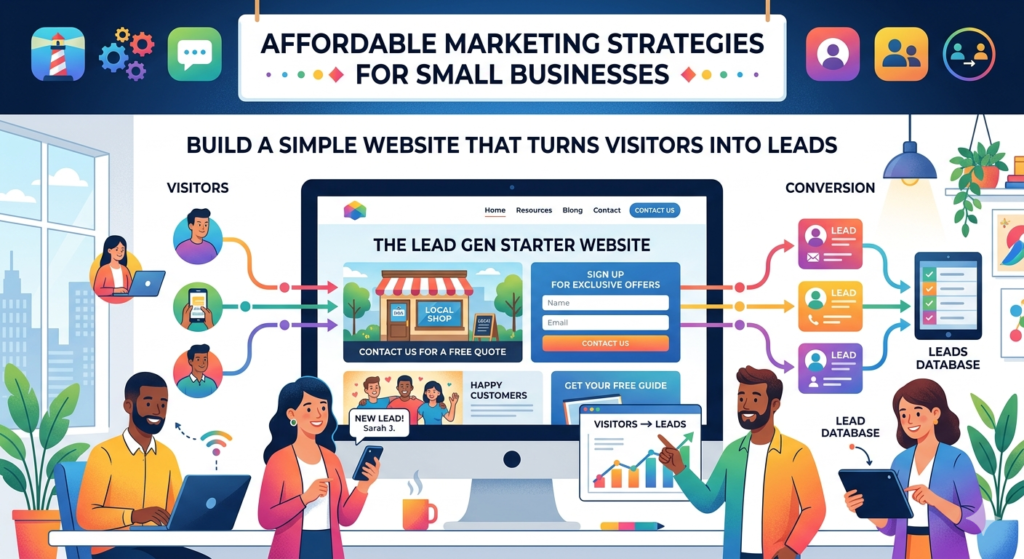
A good small business website should quickly explain what you do, who you help, why people should trust you, and how they can take the next step.
That is it.
If visitors have to search for answers, they will leave. If your pages are slow, confusing, or full of vague claims, they will not contact you. Your website should feel like a helpful salesperson who is always available.
Your homepage should make the next step obvious
The top of your homepage is the most important part. It should not begin with a clever slogan that only makes sense to you. It should say what you do in plain words.
A visitor should understand your business within a few seconds. They should know whether they are in the right place. They should also know what to do next, whether that is calling you, booking a consultation, asking for a quote, visiting your shop, or joining your email list.
Many small business websites hide the next step. The phone number is hard to find. The contact form is buried. The offer is unclear. This creates silent loss. People do not always complain when a website is confusing. They just leave.
Every main page should build trust before asking for action
Trust is the bridge between interest and contact. Your website should give people reasons to believe you.
This can include customer reviews, real photos, simple case stories, years of experience, guarantees, awards, media mentions, before and after examples, or clear answers to common questions. You do not need all of these. You need enough proof to reduce doubt.
Real proof beats big claims. Saying “we are the best” does not mean much. Showing a customer story about how you helped someone save time, solve a problem, or get a better result is stronger.
Your website should also answer the questions customers are afraid to ask. How much does it usually cost? How long does it take? What happens after they contact you? Who will they speak to? What makes your process different?
When people feel informed, they feel safer. When they feel safer, they are more likely to act.
Use Local SEO to Get Found by People Already Looking for You
Local SEO is one of the best affordable marketing strategies for small businesses because it helps you reach people who already have intent. They are not just scrolling for fun. They are searching for a solution.
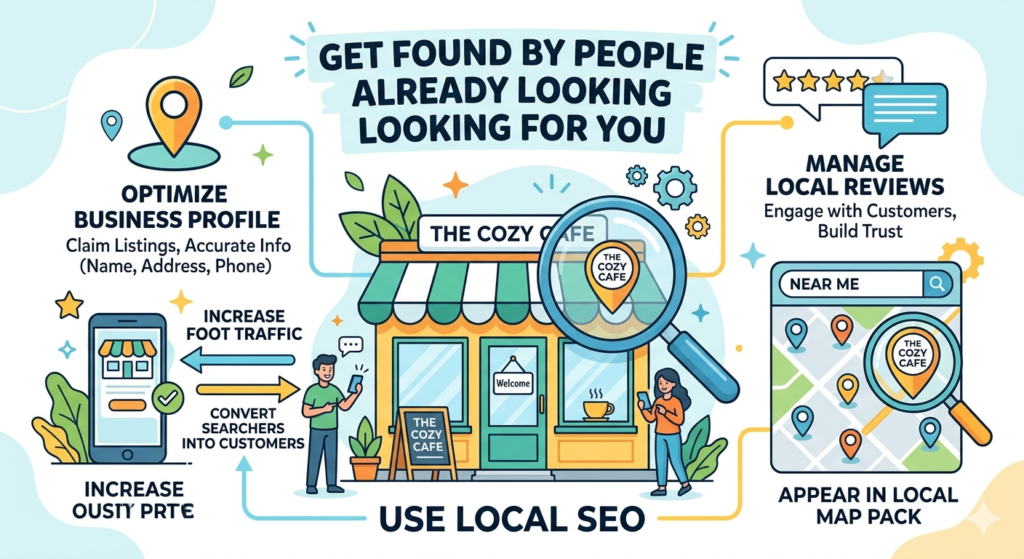
When someone types “dentist near me,” “best café in Jaipur,” “plumber open now,” or “small business lawyer in Austin,” they are already closer to buying than someone who sees a random social post.
That is why local SEO matters so much.
You are not trying to convince people they have a problem. You are helping them find you when they are ready to solve it.
Your Google Business Profile is often more important than your website
For many local businesses, the Google Business Profile is the first thing customers see. It appears in maps, local results, and mobile searches. If it is incomplete, outdated, or weak, you may lose customers before they even reach your website.
Your profile should have the right business category, correct hours, a clear description, updated photos, services, products if relevant, and a working phone number. Small details matter here because customers are often making quick choices.
Photos are especially important. They make your business feel real. A clean storefront, friendly team photo, finished project, menu item, clinic room, product display, or customer result can build comfort fast.
Reviews can become your strongest local marketing asset
Reviews are not just nice to have. They are a major trust signal. People use them to decide whether you are safe, skilled, and worth contacting.
The best way to get more reviews is to ask at the right time. Do not wait weeks after the sale. Ask when the customer is happiest, such as after a successful visit, delivery, project, or result. Make the request simple and polite. Explain that reviews help small businesses grow and help other people make better choices.
You should also reply to reviews. A thoughtful reply shows that you care. It also gives future customers a small preview of how you treat people. Even a simple thank you can make your business feel more human.
Bad reviews should not be ignored. Respond calmly. Do not argue. Show that you take feedback seriously and are willing to make things right. Future customers are not only judging the review. They are judging your response.
Create Content That Answers Buying Questions
Content marketing sounds big, but at its heart, it is simple. You create useful answers to the questions your customers already have.
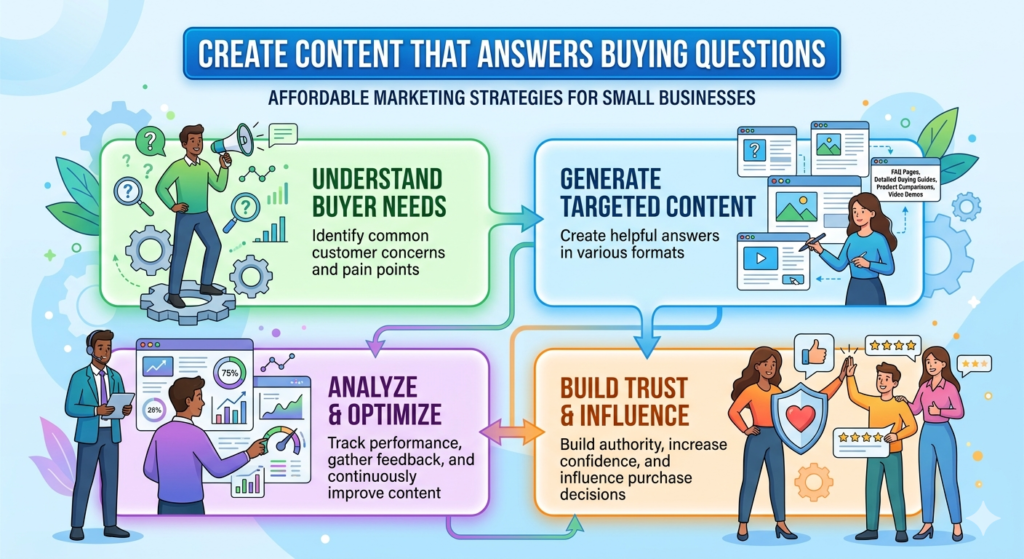
This is one of the most affordable ways to build trust because one good piece of content can keep working for months or years. A blog post, guide, video, comparison page, or FAQ can bring people to your business long after you publish it.
But the content must be useful. Posting random tips is not enough. Your content should help customers move closer to a decision.
The best small business content starts with real customer questions
You do not need to guess what to write about. Your customers are already telling you.
Think about the questions they ask before buying. Think about the doubts they repeat. Think about the things they compare. Think about what they misunderstand. Each of these can become content.
A roofing company can write about how to know if a roof needs repair or replacement. A salon can explain how to choose the right hair treatment for damaged hair. A marketing agency can explain how much a small business should spend on SEO. A tutor can explain how parents can know if a child needs extra help.
This kind of content works because it meets people in the middle of their decision.
Helpful content should lead naturally to your service
Content should not feel like a hard sales pitch from the first line. But it should also not leave the reader with no next step.
The goal is to teach clearly, then show how your business can help. If you write a guide about common tax mistakes for small businesses, you can explain the risks, show simple ways to avoid them, and then invite readers to book a review if they want expert help.
That is not pushy. It is useful.
Strong content makes the reader feel smarter and safer. It gives them enough value to trust you, while also helping them understand why doing the job alone may cost them more time, money, or stress.
This is where small businesses can win. You may not publish as much as a large brand, but you can publish with more care. You can use real customer language. You can show real experience. You can answer questions in a way that feels honest, simple, and practical.
At WinSavvy, we often see that the content that wins is not always the longest or flashiest. It is the content that best matches what the customer needed to know before taking action.
Turn Social Media Into a Trust Channel, Not a Noise Machine
Social media can help small businesses, but only when it has a clear purpose. Many owners feel they must post every day on every platform. They see other brands posting reels, quotes, offers, behind-the-scenes clips, and trends, so they try to keep up.
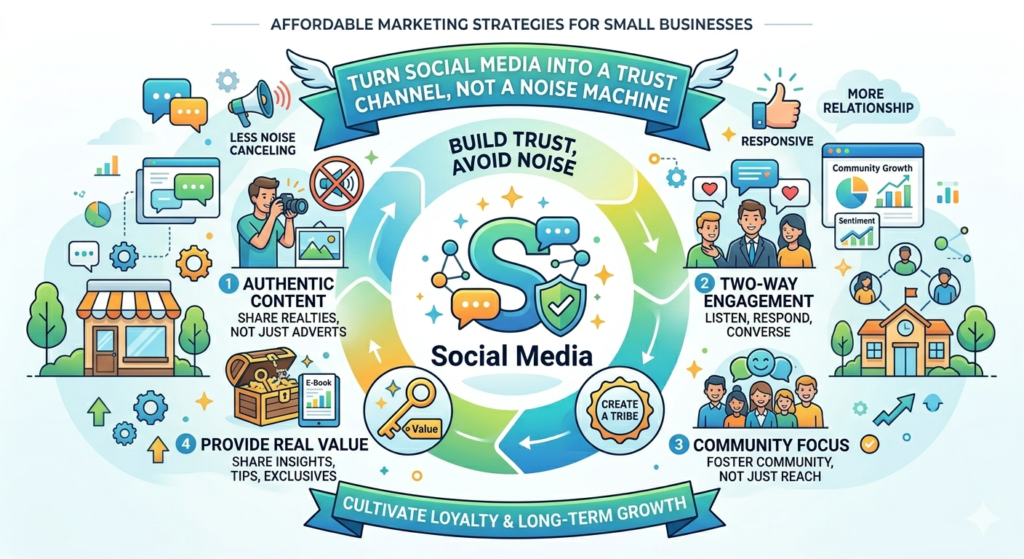
That usually leads to burnout.
The goal is not to be loud. The goal is to be useful, visible, and trusted by the right people. Social media works best when it helps customers understand you before they buy. It should show your work, your values, your process, your proof, and your personality.
You do not need to chase every trend. You need to build a page that makes someone feel more confident about choosing you.
Choose the platform your customers already use
The first step is to stop spreading yourself too thin. If your customers are local families, Facebook and Instagram may matter more than LinkedIn. If you sell to business owners, LinkedIn may be more useful.
If your product is visual, Instagram, Pinterest, or TikTok may help. If you teach, explain, or review things, YouTube can become a strong long-term channel.
The best platform is not the one that gets the most hype. It is the one where your customers already spend time and where your business can show value in a natural way.
A small restaurant can do well with simple photos, short videos, menu updates, customer moments, and local posts. A home repair business can show before-and-after work, quick safety tips, common mistakes, and short clips from real jobs.
A consultant can share short lessons, client problems, simple frameworks, and honest opinions about what works.
Your content should match the way people buy from you.
Treat your profile like a mini landing page
When someone finds your social media page, they should know what you do within seconds. Your bio should be clear. Your location should be easy to find if you serve a local area. Your link should send people to a useful page, not just a random homepage with no direction.
Your pinned posts should answer the basic questions a new visitor may have. Who do you help? What do you offer? What results do customers get? How can someone contact you? What makes your business different?
This matters because people often check your social media before they call, visit, or book. They want to see if you are active, real, and trustworthy. A weak page can make a good business look less reliable.
Post content that removes doubt
The best social content does not just entertain. It lowers the fear of buying.
Customers may wonder if your service is worth the price. They may worry about being disappointed. They may not know how your process works. They may not understand what makes you different from a cheaper option.
Your posts can answer these doubts before a sales conversation starts.
Show proof in a simple and honest way
Proof does not always need to be a big case study. It can be a customer review, a finished project, a short story, a common problem you solved, or a quick before-and-after explanation.
A cleaning company can show the difference between a regular clean and a deep clean. A gym can share a member’s steady progress without making false promises. A marketing agency can explain how a small change improved leads for a client. A bakery can show how a custom order came together from idea to final cake.
The key is to be specific. Instead of saying “we care about quality,” show the steps you take to create quality. Instead of saying “customers love us,” share what customers actually say. Instead of saying “we are experts,” teach something useful that proves it.
Social media should make your business feel real. Real work. Real people. Real results. Real care.
Build an Email List So You Are Not Renting Your Audience
Social media is useful, but you do not fully control it. A platform can change its rules. Reach can drop. Accounts can get restricted. Trends can shift. If your whole marketing plan depends on borrowed attention, your business is always at risk.
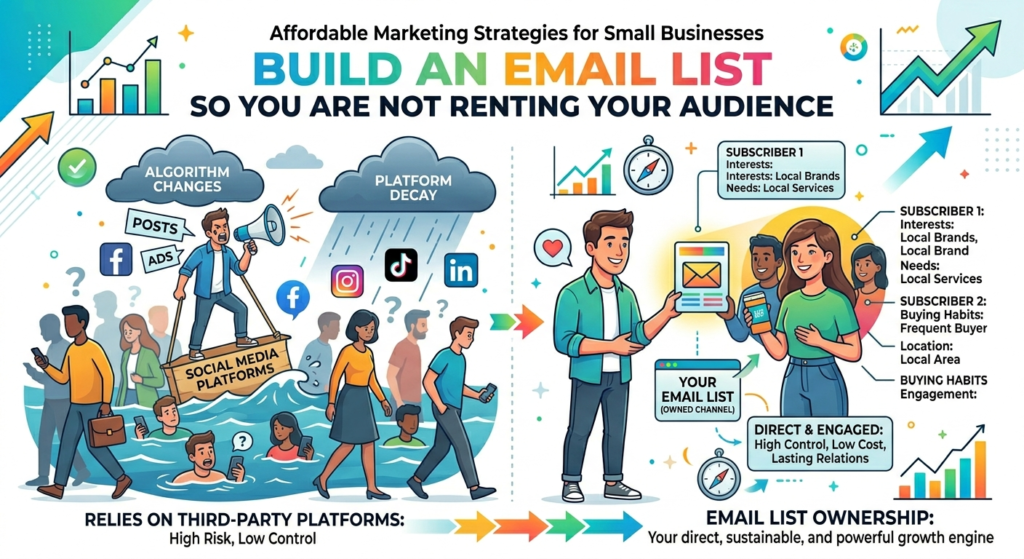
That is why email still matters.
An email list gives you a direct way to reach people who already showed interest. These may be past customers, warm leads, website visitors, event attendees, or people who downloaded a simple guide. They may not buy today, but they can buy later if you stay helpful and visible.
Email is affordable because you are not paying again and again to reach the same people. Once someone joins your list, you can keep building trust over time.
Give people a clear reason to join
Most people will not join your email list just because you say “subscribe to our newsletter.” That phrase feels boring because it does not promise value.
Give them a better reason.
A local service business can offer a simple checklist. A fitness coach can offer a seven-day meal planning guide. A marketing agency can offer a small business website audit checklist. A boutique can offer early access to new arrivals. A café can offer birthday rewards or weekly specials.
The offer does not need to be huge. It needs to be useful enough for the right person.
Your email list should attract buyers, not freebie hunters
A common mistake is offering something too broad. If the free offer attracts people who will never buy, the list may grow but sales will not.
Your email sign-up should connect to your real service. If you sell accounting support, a tax checklist is better than a general productivity guide. If you sell pet grooming, a coat care guide is better than a random pet meme pack. If you sell SEO services, a local SEO checklist is better than a broad marketing quote sheet.
The right free offer brings in people who are already close to the problem you solve. That makes your list more valuable even if it is small.
Send emails that feel helpful, not pushy
Many small businesses avoid email because they do not want to annoy people. That fear is understandable, but it often comes from seeing bad email marketing.
Good email does not feel like spam. It feels like timely help from a business the reader trusts.
You can send useful tips, short stories, seasonal reminders, customer examples, common mistakes, new offers, helpful answers, and simple advice. You can also invite people to book, buy, call, or visit when it makes sense.
Use a simple rhythm you can keep
You do not need to email every day. For many small businesses, once a week or twice a month is enough. What matters is staying consistent.
A monthly email sent every month is better than ten emails in one week and then silence for six months. People trust businesses that show up steadily.
Your emails should sound like they come from a human. Use plain words. Write like you are speaking to one customer, not a crowd. Avoid empty hype. Make the reader feel understood.
A good email may start with a problem the customer knows well. Then it gives a clear tip, a short example, and a simple next step. That is enough.
Over time, email can become one of your strongest sales channels because it keeps warm leads from going cold.
Use Customer Reviews as a Growth System
Reviews are one of the most powerful tools a small business has. They reduce risk for new customers. They show proof that real people have trusted you before. They also help you stand out when someone is comparing options.
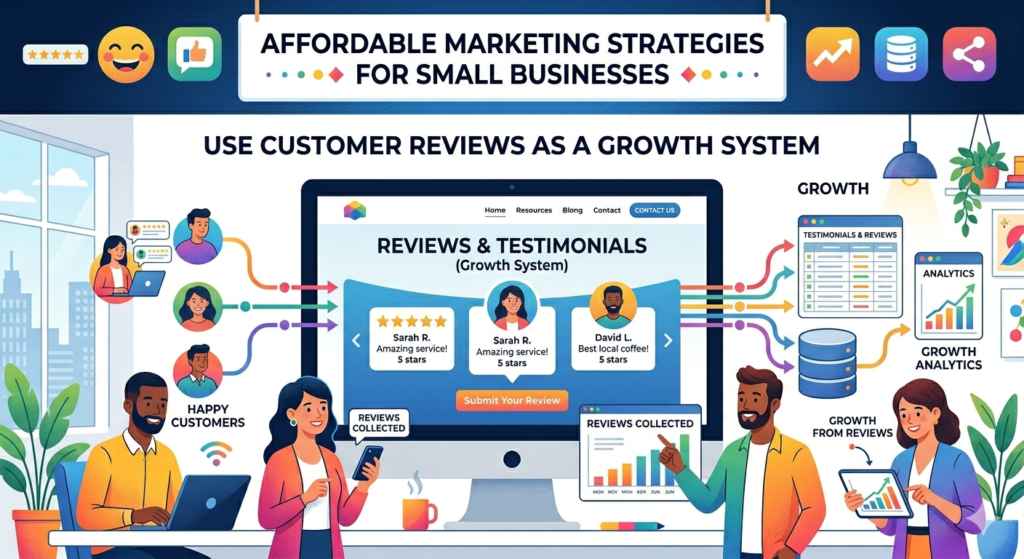
Most small businesses know reviews matter, but they treat them as something that happens by luck. A happy customer may leave one. Or they may not.
That is too passive.
Reviews should be part of your marketing system.
Ask for reviews when customer happiness is highest
Timing matters. The best time to ask is when the customer has just had a good experience. That may be after a project is completed, after a problem is solved, after a meal is enjoyed, after a delivery arrives, or after a customer thanks you.
At that moment, the customer already feels the value. Asking later makes it harder because life gets busy and the feeling fades.
Your request should be simple and warm. You can say that their review helps other people find a small business they can trust. You can also explain that it only takes a minute.
Do not make customers work hard. Send the direct review link. Tell them where to click. Make the process easy.
A review request should feel personal
A cold review request feels like a task. A personal request feels like a small favor.
Instead of sending the same dry message to everyone, add a detail when possible. Mention the service they used, the result they got, or the fact that you enjoyed working with them. This makes the request feel more human.
For example, a designer could say, “I’m so glad we got the new homepage live and that you were happy with the final look. If you have a minute, your review would mean a lot and help other business owners feel safer choosing us.”
That kind of message works because it is honest, clear, and respectful.
Turn reviews into marketing content
A review should not live in only one place. Once a customer gives you kind words, you can use that proof across your marketing, as long as you have permission when needed.
You can place reviews on your website, service pages, email campaigns, social posts, proposals, landing pages, and sales materials. You can also turn strong reviews into short customer stories.
The best reviews explain the before and after
A simple five-star review is helpful, but a detailed review is stronger. The best reviews explain what problem the customer had, what they liked about your service, and what changed after working with you.
You can guide customers by asking better questions. Instead of only asking for a review, ask what problem they wanted solved, what made the experience helpful, and what they would tell someone who is thinking about using your business.
This helps customers write reviews that are more useful to future buyers.
Strong reviews can also reveal your best selling points. If many customers mention that you are fast, kind, clear, careful, or easy to work with, that language should appear in your marketing. Your customers often know your strongest message before you do.
Partner With Other Local Businesses to Reach Warm Audiences
Partnerships are one of the most overlooked affordable marketing strategies. They work because you are not starting from zero. You are borrowing trust from another business that already serves a similar customer.
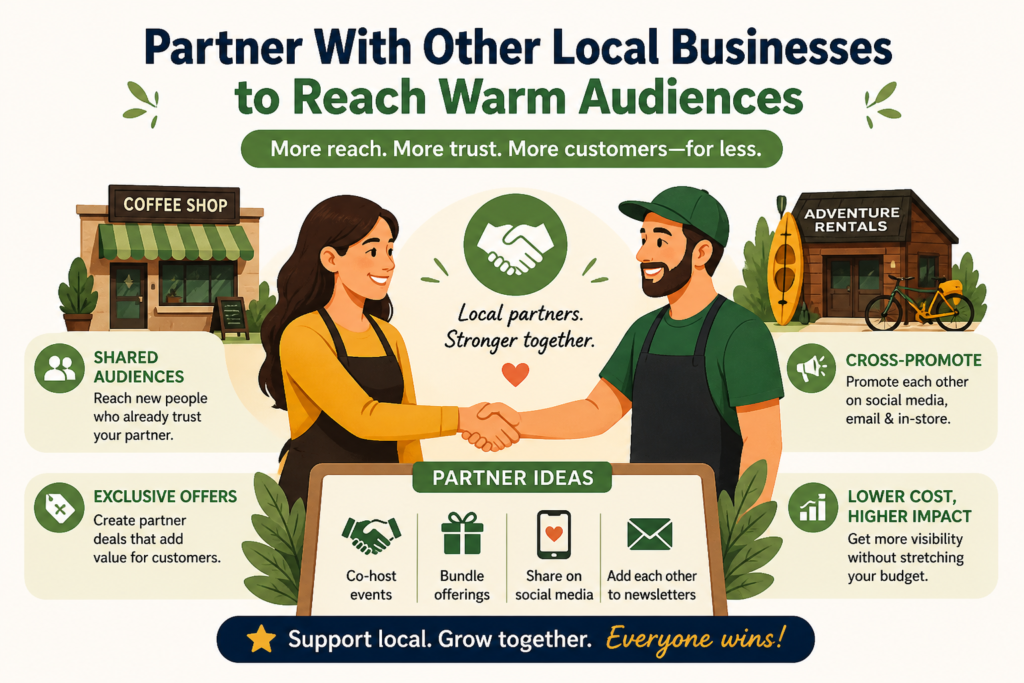
This does not mean paying for big sponsorships or formal deals. It can be simple. Two small businesses can support each other in ways that help both sides grow.
A wedding photographer can partner with florists, makeup artists, venues, and planners. A gym can partner with meal prep companies, physiotherapists, and wellness coaches. A children’s tutor can partner with bookstores, schools, activity centers, and parent groups.
The best partnerships make sense to the customer. They should feel helpful, not forced.
Look for businesses that serve the same customer before or after you
A strong partner is not always a direct competitor. Often, it is a business that serves the same person at a different point in their journey.
A real estate agent serves someone buying a home. So do mortgage brokers, movers, interior designers, home inspectors, cleaners, and contractors. Each one can refer customers to the others because the need is connected.
A small business owner who needs a website may also need branding, SEO, photography, accounting, legal help, and printing. These services can build a simple referral circle.
A good partnership starts with value before asking
Do not begin by asking another business to promote you. Begin by finding a way to help them.
You can share their content, refer a customer, invite them to a joint event, include them in a local guide, or create a simple resource that features both businesses. When you create value first, the relationship feels natural.
The goal is not to collect as many partners as possible. The goal is to build a few trusted relationships that lead to steady referrals over time.
Create simple joint offers that help customers act
A partnership becomes stronger when it gives the customer a clear reason to take action. This could be a shared package, a referral discount, a local workshop, a guide, a giveaway, or a bundled service.
For example, a photographer and makeup artist could create a personal branding photo day for local business owners. A café and bookstore could run a reading evening. A fitness trainer and nutrition coach could host a simple wellness challenge.
Keep the offer easy to understand
Joint offers fail when they become too complicated. Customers should quickly understand what they get, who it is for, why it helps, and how to join or buy.
Each partner should also know their role. Who promotes it? Who collects leads? Who follows up? Who handles payment? Who answers questions?
Clear roles protect the relationship and make the campaign smoother.
Partnerships work best when everyone wins. The customer gets more value. Each business reaches a warm audience. The cost stays low because both sides share effort and trust.
Create a Referral System That Makes Word of Mouth Easier
Word of mouth is one of the oldest forms of marketing, but it should not be left to chance. Many small businesses say most of their customers come from referrals, yet they do not have a clear system for asking, tracking, or rewarding them.
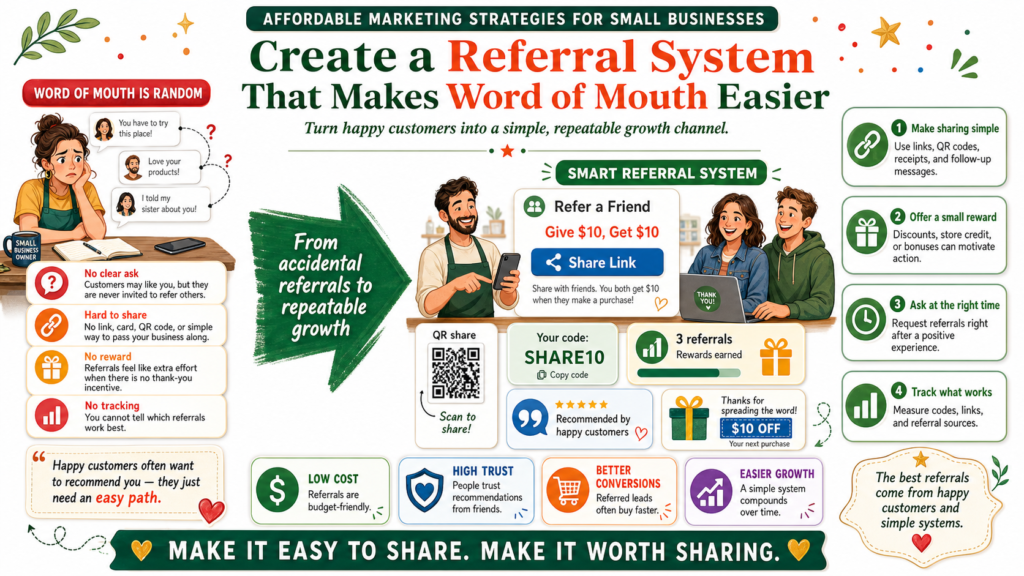
That means they are depending on luck.
A referral system does not need to be complex. It only needs to make it easy for happy customers to tell others about you. People are often willing to recommend a good business, but they may not think of it at the right time. They may not know who to send. They may not know what to say.
Your job is to make the next step simple.
Ask for referrals after a clear win
The best time to ask for a referral is after the customer has seen value. This may be after a successful project, a great appointment, a positive result, or a kind message from them saying they are happy.
At that point, the relationship is warm. The customer has a reason to share your name.
Do not ask in a desperate way. Ask with confidence and gratitude. You can say that you enjoyed helping them and that you would be happy to support anyone they know who needs the same kind of help. This feels natural because you are not begging. You are inviting.
Make the referral request specific
A vague request like “send people our way” is easy to forget. A specific request is easier to act on.
Instead of saying, “Do you know anyone who needs marketing help?” you could say, “Do you know any local business owner who has a website but is not getting enough leads from it?” That gives the customer a clear person to think about.
A home painter could ask, “Do you know any neighbor who is planning to repaint before selling their home?” A fitness coach could ask, “Do you know anyone who wants to get back in shape but feels nervous about joining a big gym?” A bookkeeper could ask, “Do you know any small business owner who feels behind on their monthly accounts?”
The more specific the request, the easier it is for customers to connect the dots.
Give people simple words to use
Your customers may love your work, but they may not explain it in the strongest way. Help them by giving them simple language.
You can create a short referral message they can copy and send. It should sound natural, not scripted. It may say something like, “I worked with them recently and had a great experience. They helped me solve this problem clearly and quickly. You may want to talk to them.”
Remove friction from the referral path
A referral should not create extra work for the person making it. Give them a direct booking link, phone number, landing page, or contact form they can share.
You can also create a referral page that explains who you help, what the referred person should expect, and how to get started. This makes your business easier to recommend.
If you offer a reward, keep it simple. It could be a small discount, a gift card, account credit, free add-on, or thank-you gift. But the reward should not be the only reason people refer you. The main reason should still be trust.
A good referral system turns happy customers into a steady growth channel. It lowers your cost of getting new customers because the trust is already partly built before the person contacts you.
Use Low-Budget Paid Ads Only When Your Basics Are Ready
Paid ads can work for small businesses, but they can also waste money fast. The problem is not always the ad platform. Often, the problem is that the business is not ready to run ads.
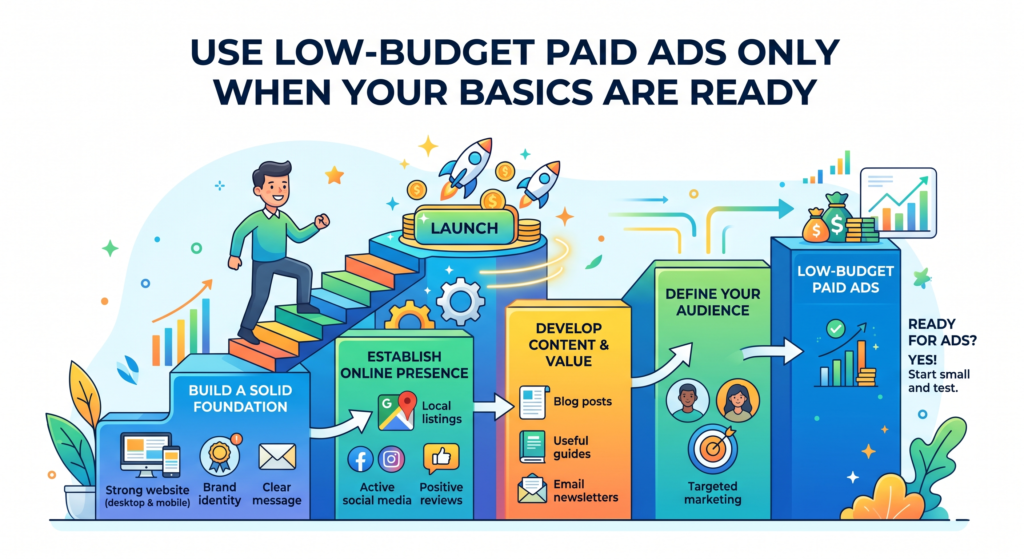
If your offer is unclear, your website is weak, your tracking is missing, or your follow-up is slow, ads will only make those problems more expensive.
Paid ads are like fuel. They help a good engine move faster. They do not fix a broken engine.
Start small and test one clear goal
Small businesses should not begin with a large ad budget unless they already know their numbers. Start small. Choose one goal. Keep the campaign simple.
That goal could be calls, quote requests, bookings, store visits, email sign-ups, or sales. Do not try to do everything with one campaign. A focused campaign is easier to measure and improve.
A local service business may start with search ads for high-intent keywords, such as “emergency plumber near me” or “wedding photographer in Dallas.” These searches often work better than broad awareness ads because the person is already looking for help.
Send ad traffic to a page built for action
One of the biggest mistakes is sending paid traffic to a general homepage. If the ad promises one service, the page should match that service.
A good landing page should repeat the offer clearly, explain the benefits, show proof, answer common questions, and make the next step easy. If someone clicks an ad for “affordable kitchen remodeling,” they should land on a page about kitchen remodeling, not a homepage where they must search for it.
This simple match can improve results without raising your budget.
Track results before spending more
Paid ads can feel exciting because they bring traffic quickly. But traffic does not always mean profit. You need to know what happens after the click.
How many people called? How many filled out the form? How many became customers? How much did each lead cost? How many leads were actually good? How much revenue came from the campaign?
Watch the full path from click to sale
A campaign may look bad when the real issue is slow follow-up. If leads come in but no one calls them back quickly, the ads may not be the problem. A campaign may also look good because it gets cheap leads, but those leads may not buy.
This is why you should track quality, not only quantity.
Small businesses often win with paid ads when they use them carefully. The goal is not to spend more. The goal is to learn what message, offer, keyword, audience, and landing page bring the right customers at a cost you can afford.
When something works, improve it slowly. When something fails, fix the weak point before raising the budget.
Turn Your Existing Customers Into Repeat Buyers
Getting a new customer is usually harder than selling again to someone who already trusts you. Yet many small businesses spend most of their marketing energy chasing new people while ignoring past customers.
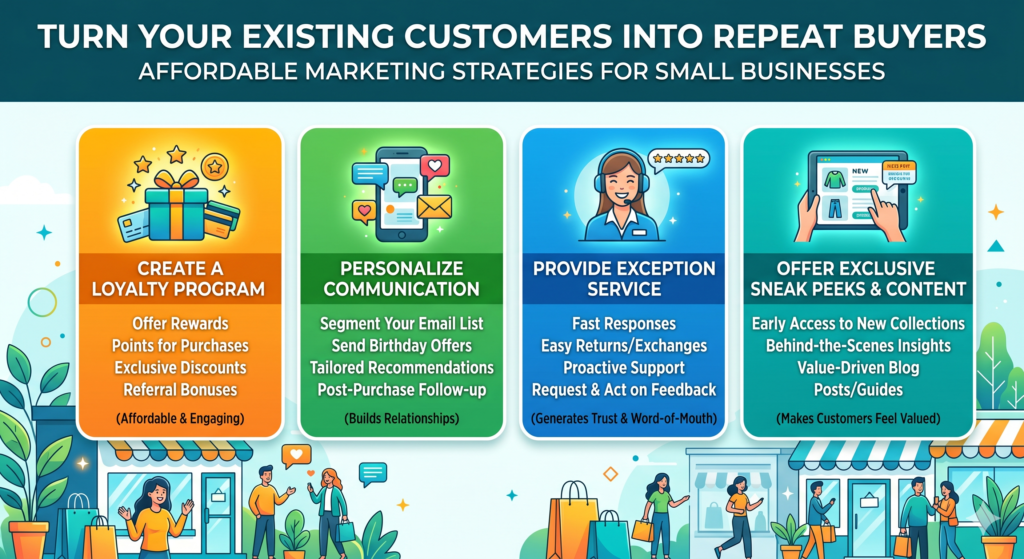
That is a costly mistake.
Your existing customers already know your name. They have already taken the risk once. If they had a good experience, they are much easier to bring back than a cold stranger.
Affordable marketing should always include a plan for repeat business.
Stay in touch after the first sale
The relationship should not end when the sale is complete. A simple follow-up can make a customer feel valued and keep your business in their mind.
You can send a thank-you message, a care tip, a reminder, a check-in, or a helpful next step. The message should match the business.
A dentist can remind patients about future cleanings. A car repair shop can send seasonal maintenance tips. A clothing store can share styling ideas. A consultant can check in after a project to see how the client is using the work.
Make follow-up feel helpful, not forced
The best follow-up does not feel like you are trying to squeeze another sale. It feels like support.
If someone buys a skincare product, send tips on how to use it well. If someone hires you for a website, send a simple guide on what to update each month. If someone joins a class, send encouragement and next-step advice.
This kind of follow-up builds trust. It also creates natural chances to offer more help later.
Create simple reasons for customers to return
Repeat purchases do not always happen by themselves. You need to give people a reason and a reminder.
This could be a maintenance plan, loyalty program, seasonal offer, subscription, bundle, renewal reminder, member event, or customer-only deal.
Design repeat offers around real customer needs
Do not create offers just to sell more. Create offers that make sense based on what customers need after the first purchase.
A carpet cleaner can offer a six-month refresh plan. A pet groomer can help customers book the next appointment before they leave. A marketing agency can offer monthly content support after building a strategy. A restaurant can create a simple lunch club for nearby office workers.
The best repeat offer feels useful, not random.
Repeat customers also become better referral sources. The more often they interact with your business, the more chances they have to talk about you. When you care for existing customers well, you are not only increasing sales. You are building a stronger base for future growth.
Use Simple Video to Build Trust Faster
Video can feel scary for small business owners. They worry about looking perfect, buying equipment, editing for hours, or saying the wrong thing.
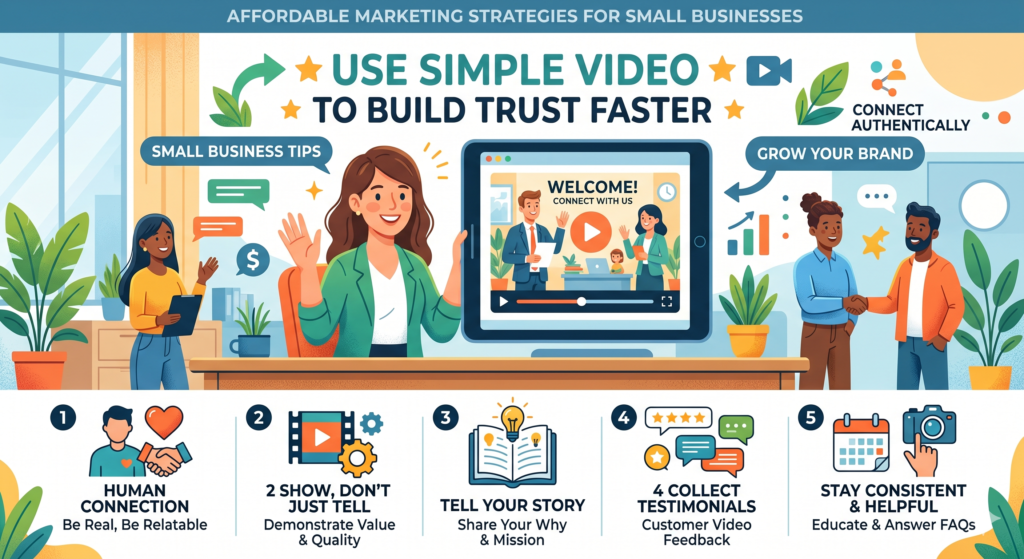
But simple video often works better than polished video because it feels real.
Customers want to see the person behind the business. They want to understand how you think. They want to know if you seem honest, skilled, and easy to work with. Video helps them feel that faster than text alone.
You do not need a studio. A phone, clear sound, and useful message are enough.
Start with the questions customers ask every week
The easiest videos are answer videos. Take one question customers often ask and answer it in plain language.
A dentist can explain why gums bleed. A real estate agent can explain what buyers should check before making an offer. A café owner can show how a popular drink is made. A business coach can explain one common pricing mistake.
These videos do not need to be long. They need to be clear.
Speak like you are talking to one person
Do not try to sound like a presenter. Speak like you are helping one customer across the table.
Start with the problem. Explain why it matters. Give one useful answer. Then tell people what to do next if they need help.
This structure keeps the video focused. It also stops you from rambling.
A good short video may say, “If your website gets visitors but no leads, the issue may not be traffic. It may be that people do not see a clear next step. Make sure every service page tells visitors what to do next, whether that is calling, booking, or asking for a quote.”
That is simple, useful, and connected to a service.
Show the process behind your work
People trust what they can understand. When you show your process, you make your business feel safer.
This can include how you prepare an order, how you inspect a job, how you plan a project, how you choose materials, how you solve a common problem, or how you care for customers.
Behind-the-scenes content makes value visible
Many customers do not understand the work that goes into a good result. They may compare you only by price because they cannot see the difference.
Video can show that difference.
A baker can show the care behind custom cake design. A contractor can show how they protect a home before starting work. A consultant can show how they review data before giving advice. A salon can show how they assess hair before a treatment.
When people see your care, your price makes more sense. They are not just buying the final result. They are buying the skill and process behind it.
Simple video builds familiarity. Familiarity builds trust. Trust makes buying easier.
Use Community Marketing to Become the Local Choice
For many small businesses, the best market is close to home. People like supporting businesses they know, especially when those businesses are visible in the community.
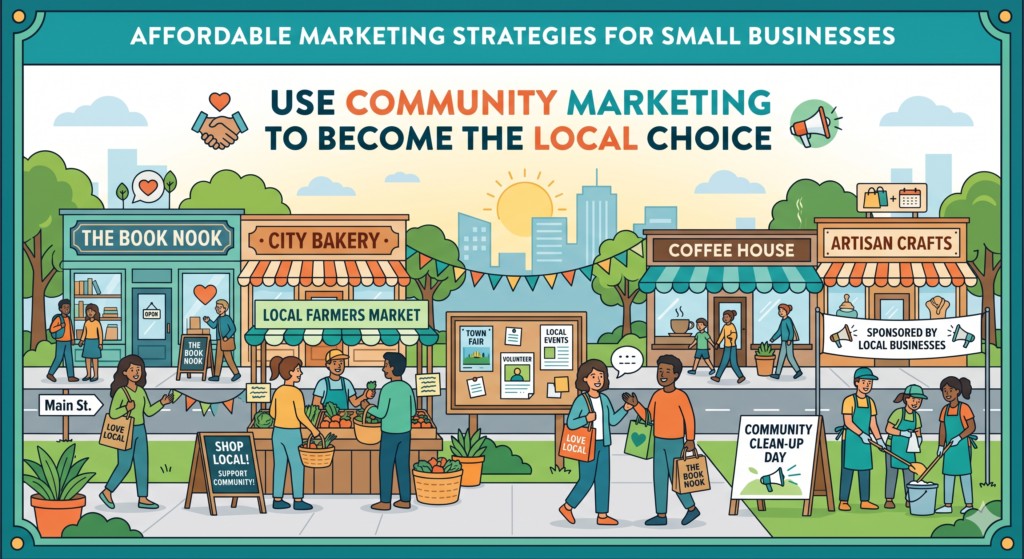
Community marketing is not about handing out flyers everywhere. It is about becoming part of the local conversation in a helpful way.
When people see your business supporting local causes, showing up at events, helping other owners, and sharing useful local information, they begin to remember you. Over time, that memory can turn into trust.
Be useful in local groups before promoting yourself
Local Facebook groups, WhatsApp groups, neighborhood forums, school groups, and business communities can be useful. But they only work if you behave like a helpful member, not a pushy advertiser.
People ignore businesses that only post promotions. They pay attention to people who answer questions, give advice, share resources, and support others.
Earn attention through helpful replies
If someone asks for a recommendation and your service fits, you can respond. But you can also help when there is no direct sale.
A plumber can answer a basic question about water pressure. A tutor can share tips for exam season. A café owner can recommend nearby family activities. A marketer can give simple advice on improving a Google Business Profile.
This builds quiet trust. People may not buy today, but they remember who was helpful.
Show up where your customers already gather
Community marketing can happen offline too. Local markets, school events, charity drives, workshops, trade shows, sports clubs, and business meetups can all create useful visibility.
The goal is not just to place your logo somewhere. The goal is to create real contact.
Small local actions can create long-term memory
A small business can sponsor a school event, host a free class, provide samples, offer a local guide, join a charity day, or support another neighborhood business. These actions work best when they feel connected to your values and your customers.
A children’s bookstore hosting story time makes sense. A fitness coach running a free park workout makes sense. A restaurant supporting a local food drive makes sense. A digital agency teaching a small business website basics session makes sense.
The more natural the connection, the stronger the marketing.
Community marketing is slow in the best way. It builds a reputation piece by piece. For small businesses, that kind of trust can be more powerful than a large ad campaign.
Use Search-Friendly Blog Content to Bring in Customers Over Time
Blog content is one of the best low-cost marketing tools for small businesses, but only when it is done with a clear plan. A blog should not be a place where you post random company updates and hope people care. It should be a place where you answer real questions that your buyers are already typing into Google.
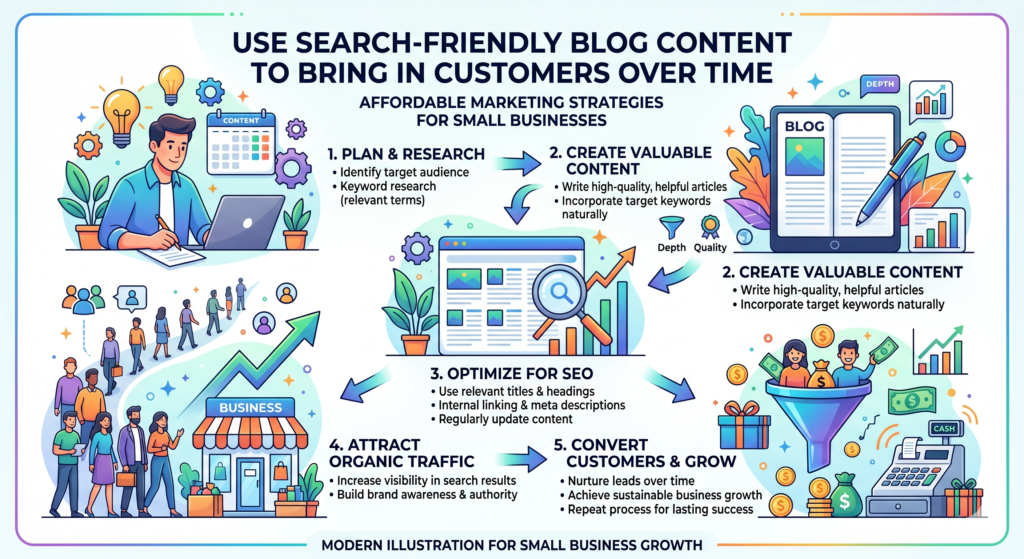
When blog content is planned well, it can keep bringing visitors long after you publish it. That is what makes it powerful. A social post may disappear in a day. A paid ad stops when the budget stops. But a strong blog post can keep working in the background.
The goal is not to write for everyone. The goal is to write for people who have a problem your business can solve.
Choose topics that match real buying intent
Some blog topics bring traffic but no buyers. Others may bring fewer visitors but better leads. A small business should care more about the second type.
For example, a post like “10 fun facts about flowers” may bring casual readers to a florist’s website. But a post like “How to choose wedding flowers on a small budget” attracts someone with a real reason to buy. That person is closer to taking action.
A marketing agency should not only write broad posts like “why marketing matters.” It should write posts that answer practical buyer questions, such as how much local SEO costs, how long SEO takes, how to choose a digital marketing agency, or what small businesses should fix before running ads.
These topics match problems people already have. That makes them more useful.
Your blog should help people make better decisions
The best blog posts do more than give tips. They help readers understand what choice to make.
A strong post explains the problem, shows what matters, warns about common mistakes, and gives a clear next step. It should make the reader feel less confused than before.
If you run a home renovation business, you could write about how to know whether to repair or replace kitchen cabinets. If you run a dental clinic, you could write about when tooth pain needs urgent care. If you run a law firm, you could write about what small business owners should check before signing a lease.
These articles work because they meet the customer at a decision point.
Write like a helpful expert, not like a textbook
Many small business blogs fail because they sound too stiff. The writing is full of empty lines, vague advice, and words customers would never use.
Good blog writing should feel like a smart person explaining something clearly across a table. It should be simple, honest, and useful. You do not need to sound fancy to sound expert. In fact, simple language often builds more trust because people understand it faster.
Use the words your customers use. If customers say “my website is not getting calls,” do not only write “low conversion performance.” Say it the way they say it. This makes your content feel more human and also helps it match real searches.
Every blog post should lead to a next step
A blog post should not end with the reader thinking, “That was nice,” and then leaving forever. It should guide them to the next action.
That next action may be reading a related guide, booking a call, requesting a quote, downloading a checklist, visiting a service page, or joining your email list. The step should feel natural based on the topic.
If the article is about choosing a service, invite the reader to speak with you before they decide. If the article is about common mistakes, offer to review their situation. If the article is about planning, offer a simple guide or consultation.
This is how content becomes a business asset, not just a writing exercise.
Make Your Service Pages Clear Enough to Sell Without Pressure
Many small business owners focus on the homepage and forget the service pages. This is a mistake. Service pages are often where serious buyers make their decision.
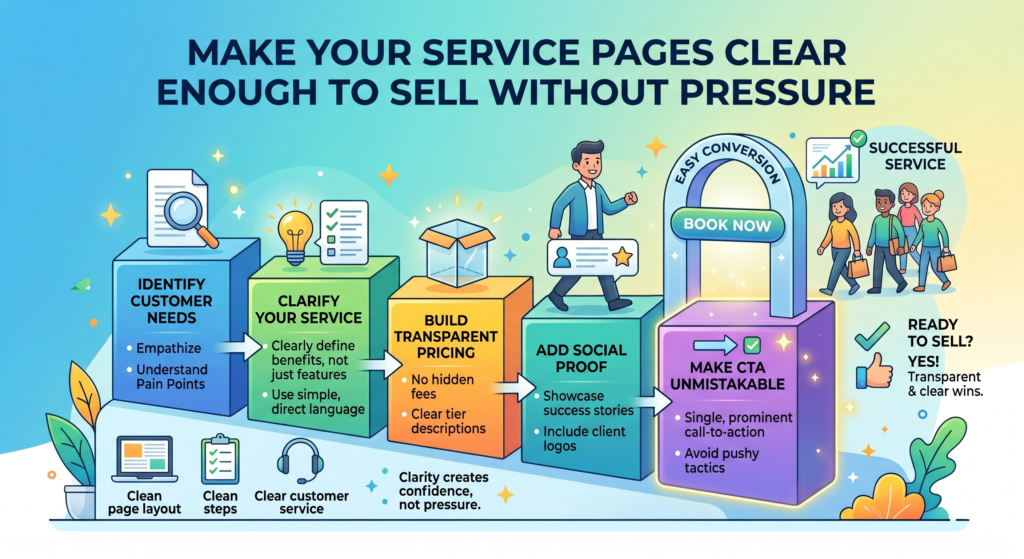
A service page should not just list what you offer. It should explain the problem, show the result, build trust, answer doubts, and make the next step feel easy.
Think of each service page as a quiet sales conversation. The visitor is asking, “Is this right for me?” Your page should answer that question with care.
Start each service page with the customer’s problem
Most businesses begin service pages by talking about themselves. They say how long they have been in business, how skilled they are, or how many services they offer. That information can matter, but it should not always come first.
Start with the customer.
What are they struggling with? What are they trying to fix? What are they afraid of? What result do they want?
A website design service page should not only say, “We build responsive websites.” It should speak to the business owner who is tired of having a site that looks old, loads slowly, and brings no leads. That is the pain. That is what makes the service matter.
Show the cost of doing nothing
Customers often delay decisions. They may know they need help, but they tell themselves they will handle it later.
Your page should gently show why delay has a cost.
If a business has a weak website, it may be losing leads every week. If a shop has poor local SEO, nearby customers may be choosing competitors. If a customer ignores small repair work, the final fix may become more expensive.
This does not mean using fear in a cheap way. It means helping people see the real impact of the problem.
Explain your process so buyers feel safe
People are more likely to buy when they know what will happen next. Confusion creates doubt. A clear process creates comfort.
Your service page should explain how working with you feels from start to finish. What happens after they contact you? Do you call them? Do they fill out a form? Do you send a quote? How long does the work take? What do you need from them? What happens after delivery?
These details make your business feel organized and trustworthy.
A clear process can also reduce bad leads
When your page explains who the service is for, how it works, and what customers can expect, it helps the right people move forward. It also helps the wrong people self-select out.
That saves time.
For example, if your agency only works with small businesses that are ready to invest in long-term growth, say that clearly. If your cleaning service only serves certain areas, make that obvious. If your consulting package is not for people looking for instant results, explain that.
Clarity is not only good for customers. It protects your business too.
Improve Your Follow-Up So More Leads Become Customers
A lead is not a sale. This sounds simple, but many small businesses lose money because they forget it.
Someone may fill out a form, call once, message on social media, or ask for a quote. That does not mean they are ready to buy right away. They may be comparing options. They may be busy. They may need reassurance. They may have questions they have not asked yet.
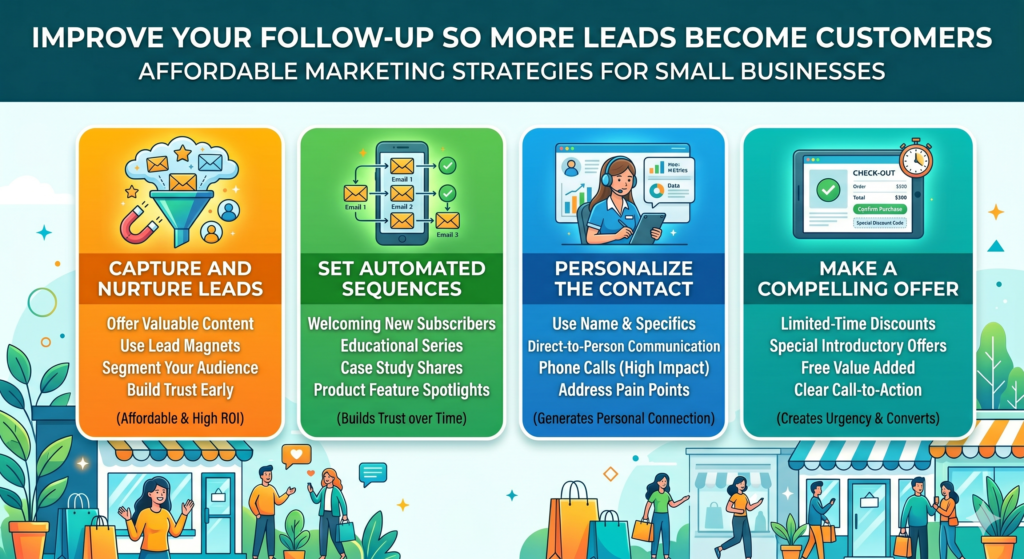
If your follow-up is weak, many of these leads disappear.
Affordable marketing is not only about getting more leads. It is also about closing more of the leads you already get.
Respond faster than your competitors
Speed matters more than many businesses think. When someone reaches out, their interest is fresh. They are thinking about the problem now. If you wait too long, they may contact someone else or lose interest.
A fast reply shows that your business is active and reliable. It also gives you a chance to guide the conversation before the customer gets confused by too many options.
This does not mean you need to be available every minute. It means you need a system. You can use simple auto-replies, booking links, saved responses, call-back windows, or shared inbox checks to make sure no lead is ignored.
A fast reply should still feel human
Speed is helpful, but a cold reply can hurt trust. Do not send messages that sound like a robot wrote them.
A good reply should use the person’s name if you have it, mention their request, and explain the next step. It should feel calm and clear.
For example, instead of saying, “Thanks for your inquiry. We will get back to you,” say, “Thanks for reaching out about your website. I saw that you want help getting more leads from it. The next step is a quick call so we can understand what is working now and what needs fixing.”
That message feels more useful because it shows attention.
Follow up more than once without sounding desperate
Many sales happen after the second, third, or fourth touch. But small businesses often follow up once and stop because they do not want to annoy people.
The key is to follow up with value, not pressure.
Instead of only saying, “Are you still interested?” give the person something helpful. Share a reminder, answer a common question, explain the next step, or offer a simple way to decide.
Each follow-up should reduce one small doubt
Think about what may be stopping the person. Are they unsure about price? Timing? Process? Trust? Results? Your follow-up can address one of these.
If someone asked for a quote but did not reply, you might send a short note explaining what is included, how the process works, and what result they can expect. If someone booked a call but did not show up, you can offer another time and make it easy to reschedule.
The tone should be respectful. People are busy. Silence does not always mean no. Sometimes it means they need a softer path back into the conversation.
A strong follow-up system can increase revenue without adding one more marketing channel.
Use Your Sales Conversations to Improve Your Marketing Message
Your best marketing research is often hiding in your sales conversations. Every call, message, meeting, and quote request gives you clues about what customers care about.
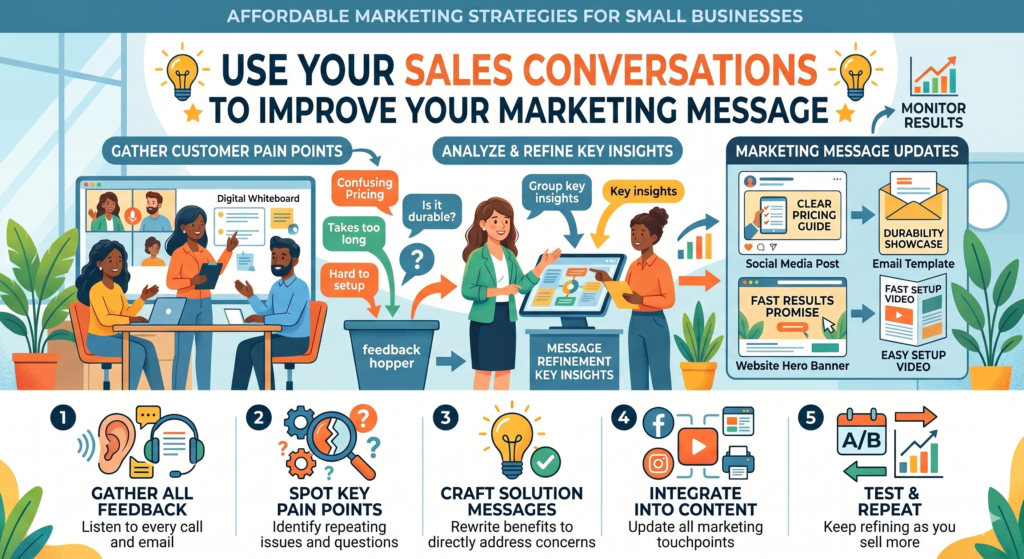
Small businesses that listen carefully can improve their website, ads, emails, content, and offers without guessing.
The goal is simple. Notice what people ask before they buy. Notice what makes them hesitate. Notice what words they use to describe their problem. Notice what finally makes them say yes.
That information is gold.
Track the questions that keep coming up
If customers ask the same questions again and again, your marketing should answer those questions earlier.
Maybe people always ask about price. Maybe they ask how long the work takes. Maybe they ask what makes you different. Maybe they ask whether your service works for their type of business. Maybe they worry about contracts, results, or support.
When the same question appears often, it means your current marketing has a gap.
Turn repeated questions into stronger pages and content
A common question can become a website section, a blog post, an email, a social post, a video, or part of your sales script.
If people keep asking how your pricing works, create a simple pricing guide. If people keep asking whether SEO is worth it for small businesses, write a plain article that explains when it is worth it and when it is not. If people keep asking what happens after they book, add a process section to your service page.
This saves time because customers become more informed before they contact you. It also builds trust because you are not hiding the details they care about.
Notice the words customers use when they describe pain
Business owners often describe their services in expert language. Customers describe problems in real language. The customer’s words are usually better for marketing.
A customer may not say, “We need conversion rate optimization.” They may say, “People visit our website but nobody calls.” A customer may not say, “We need brand positioning.” They may say, “People do not understand what makes us different.”
Use that language.
Clear customer language makes your message feel personal
When people see their own problem written in your words, they feel understood. That feeling is powerful.
It makes your business seem more relevant before you have even spoken to them. It also helps your content show up for real searches, because many people search in the same simple words they use in conversation.
This is one reason small businesses can beat larger brands in marketing. Large brands often sound polished but distant. A small business can sound direct, useful, and close to the customer’s real life.
Your sales conversations are not just for closing deals. They are a research tool. Use them well, and every part of your marketing becomes sharper.
Create a Simple Content Calendar You Can Actually Follow
A content calendar sounds formal, but it does not need to be. For a small business, it is simply a plan that tells you what to post, where to post it, and why it matters.
Many businesses fail at content because they create only when they feel inspired. That creates stress. One week they post five times. Then they disappear for a month. The audience gets mixed signals, and the owner starts thinking content does not work.
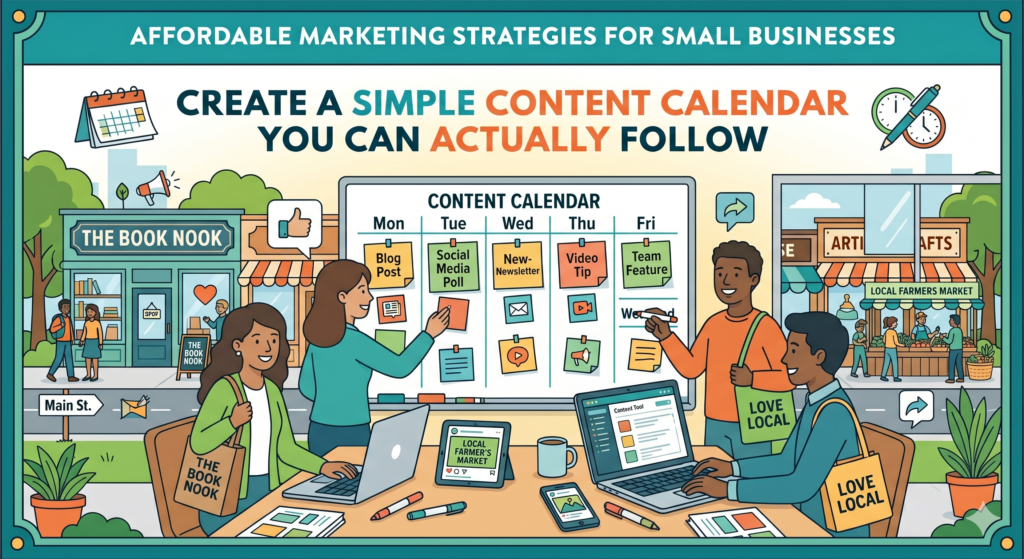
The real issue is not content itself. The issue is lack of rhythm.
A simple calendar helps you stay visible without waking up every day wondering what to say.
Start with your main business goals
Your content should support your business, not just fill space. Before planning topics, ask what you want the content to do.
Maybe you want more local leads. Maybe you want more repeat customers. Maybe you want people to understand a new service. Maybe you want to build trust before sales calls. Maybe you want to show proof because people compare you with cheaper options.
Once the goal is clear, content ideas become easier.
A local bakery trying to sell more custom cakes should not only post random pastry photos. It should explain how to order, show past designs, answer timing questions, share customer stories, and explain what affects price. A small agency trying to sell SEO should not only post general marketing quotes.
It should show how SEO helps real small businesses get found, what to fix first, and what mistakes waste money.
Content should move people one step closer to buying
Not every post needs to sell. But every post should help the customer understand, trust, remember, or act.
Some content brings awareness. Some content builds trust. Some content answers doubts. Some content invites action. A healthy calendar includes all of these, but it should still stay simple.
Think of your content as a set of small conversations. One post may explain a problem. Another may show proof. Another may answer a common question. Another may invite people to book or buy.
This makes marketing feel less random. You are not posting just to be active. You are guiding people toward a clear decision.
Repeat strong themes instead of chasing new ideas every day
Small businesses often think they need fresh ideas all the time. They do not. Most customers need to hear your core message more than once before it sticks.
You can repeat the same themes in different ways. If you are a fitness coach, your themes may be simple home workouts, food habits, client progress, mindset, and common mistakes. If you are a legal consultant, your themes may be contracts, risk, business setup, disputes, and founder protection.
If you are a marketing agency, your themes may be SEO, websites, content, lead generation, and conversion.
Repeating themes makes your brand easier to remember.
A simple weekly pattern can remove most of the stress
You can create a light pattern for each week. For example, one day can answer a customer question. Another day can show proof. Another day can teach a simple tip. Another day can invite action.
You do not need to announce this pattern to your audience. It is only there to help you stay consistent.
This also helps you avoid posting only when you have an offer. If every post says “buy now,” people tune out. But if most of your posts teach, help, show, and build trust, your sales posts feel more natural when they appear.
A content calendar should make marketing easier, not heavier. If the plan feels too hard to follow, make it smaller. A simple plan you follow beats a perfect plan you abandon.
Repurpose Your Best Ideas So One Piece of Work Goes Further
Small businesses do not have endless time. That is why repurposing matters. Repurposing means taking one good idea and using it in different ways across different channels.
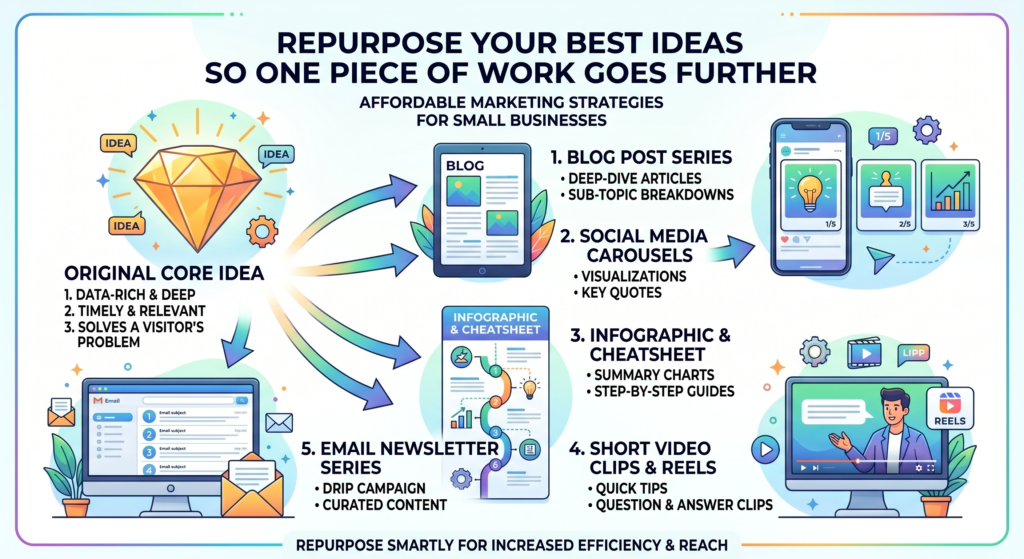
This is not copying without thought. It is smart reuse.
If you spend time creating a useful blog post, that idea should not live only on your blog. It can become a short video, an email, a social post, a customer handout, a sales answer, a podcast topic, or part of a guide.
This helps you get more value from the work you already did.
Start with one strong source piece
The easiest way to repurpose is to create one strong source piece first. This may be a blog post, long email, video, webinar, customer story, or detailed FAQ answer.
From there, pull out smaller ideas.
A blog post about “how to choose the right marketing agency” can become several social posts about warning signs, pricing questions, service comparisons, and what to ask before hiring. It can become an email to warm leads. It can become a short video. It can become a section on your website.
One useful idea can travel far.
Repurposing helps your message reach people in different moods
Not everyone wants to read a full blog post. Some people prefer short videos. Some check email. Some scroll social media. Some search Google when they need an answer.
When you repurpose, you meet people in more than one place without creating from scratch each time.
This matters because your audience does not move in a straight line. A person may see a social post today, read your blog next week, open an email later, and then contact you next month. Each touch builds memory and trust.
Update old content instead of always creating new content
Repurposing also means improving what you already have. Many small businesses keep creating new posts while old content sits unused, outdated, or hidden.
Look at your past content. Which posts got good response? Which pages bring traffic? Which emails led to replies? Which social posts made people ask questions?
Those pieces are clues.
Strong content can be refreshed and reused many times
An old blog post can be updated with better examples. A customer story can be turned into a website section. A popular social post can become a deeper article. A common email answer can become a FAQ page.
This saves time and improves quality. You are not starting from a blank page. You are building on proof.
Good marketing is not always about doing more. Often, it is about getting more from what already works.
Repurposing is one of the most affordable marketing habits a small business can build because it respects your time while keeping your message alive.
Conclusion
Affordable marketing is not about doing everything. It is about doing the right things with care, clarity, and steady effort. Small businesses win when they know their best customer, speak in simple words, build trust before selling, and make every step easy to take.
You do not need a huge budget to grow. You need a clear offer, useful content, strong follow-up, happy customers, and simple systems that keep working even when you are busy.












Comments are closed.