
WinSavvy Editorial Standards
How this article was created
You pick a prize, ask people to enter, choose a winner, and hope your brand gets more attention. But in real marketing, a giveaway can do much more than bring a short spike in likes or comments. When planned well, it can bring the right people into your world, grow your email list, increase trust, create social proof, and turn quiet followers into active buyers.
Start Every Giveaway With One Clear Business Goal
A giveaway should never begin with the prize. It should begin with the reason behind the campaign. Before you decide what to give away, you need to know what you want the giveaway to do for your business.
Some brands want more email subscribers. Some want more product trials. Some want more user-generated content. Some want more brand awareness in a new market. These are all different goals, and each goal needs a different kind of giveaway.
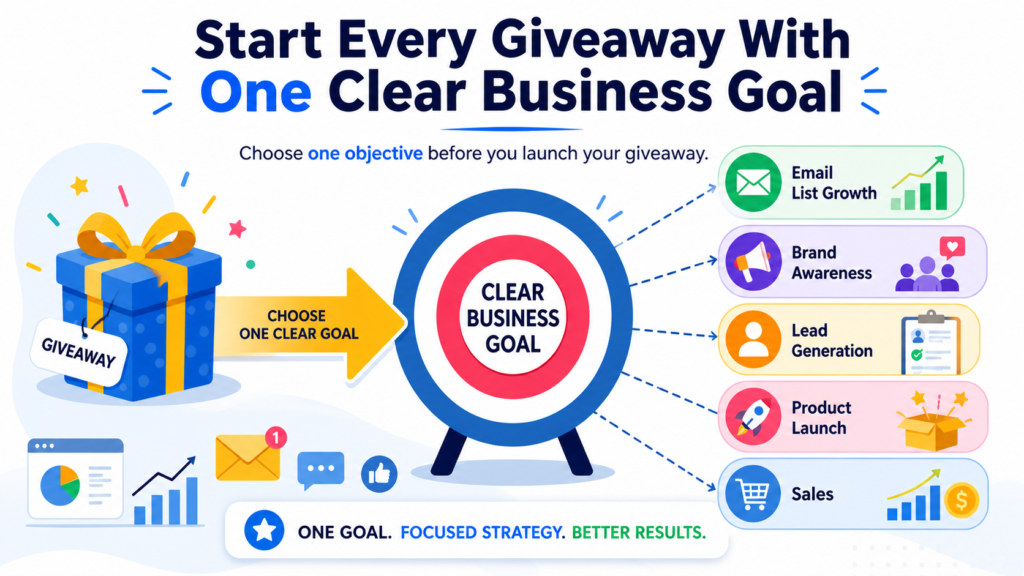
When the goal is unclear, the whole campaign becomes weak. You may get entries, but those entries may not matter. You may get followers, but those followers may never buy. You may get comments, but those comments may not help your brand grow.
A good giveaway goal should connect directly to growth
A strong goal is not “get more engagement.” That is too loose. A better goal is “collect 1,000 email leads from small business owners interested in marketing support.” That gives the campaign direction.
Once you know the goal, every other decision becomes easier. The prize becomes easier to choose. The entry method becomes clearer. The landing page becomes sharper. The follow-up plan becomes more useful.
Your goal decides the type of audience you attract
If your goal is email growth, your giveaway should ask people to sign up through a landing page. If your goal is social reach, your giveaway may ask people to share a post or tag a friend. If your goal is customer insight, your giveaway may ask people to answer a simple question before entering.
The point is simple. Do not run a giveaway just because other brands are doing it. Run it because it supports a real business outcome.
A giveaway is not just a fun campaign. It is a growth tool. But it only works that way when it has a clear job.
Choose a Prize That Filters the Right People In
The prize is one of the biggest reasons a giveaway succeeds or fails. Many brands think a big prize will bring better results. That is not always true.
A big cash prize, a popular gadget, or a general gift card may bring a lot of entries. But many of those people may have no interest in your business. They enter because the prize is useful to anyone. After the giveaway ends, they ignore your emails, unfollow your page, or never engage again.
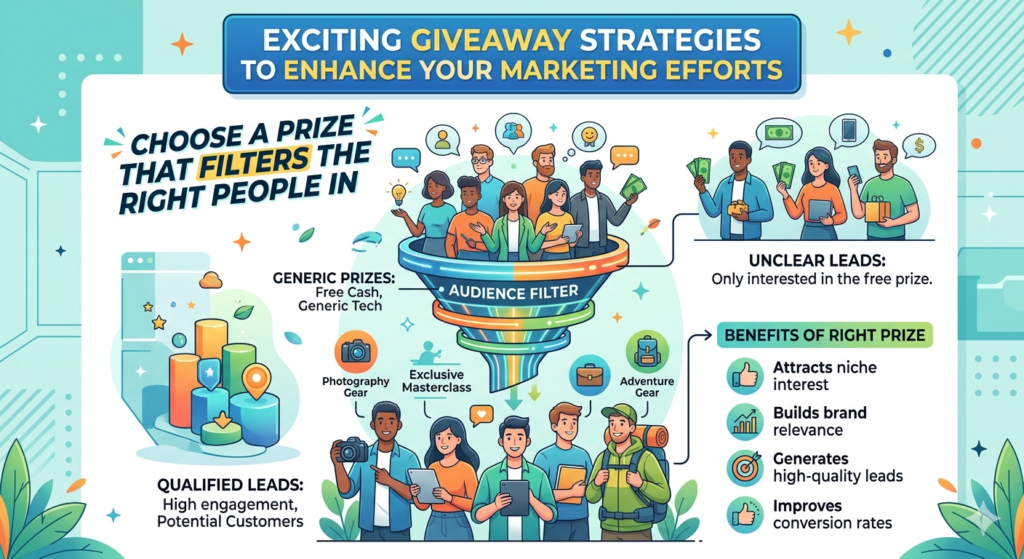
That is why the best giveaway prize is not always the most expensive one. It is the most relevant one.
The prize should match your ideal customer
If you are a marketing agency, your prize should attract people who care about marketing. That could be a free strategy session, a website audit, a content plan, an ad review, or a marketing toolkit. These prizes may not attract everyone, but they attract the right people.
And that is the point.
You do not need thousands of random people. You need people who may become customers, partners, readers, buyers, or loyal fans.
A focused prize acts like a filter. It pulls in people with the right problem. It keeps away people who only want something free and have no real interest in your brand.
The prize should also make the next step feel natural
A smart prize should create a smooth path from entry to sale. For example, if you give away a free website audit, the next step can be a paid website improvement package. If you give away a free content plan, the next step can be monthly content support.
This makes your follow-up feel helpful, not pushy.
The prize should not sit apart from your business. It should lead people closer to your offer. When the prize and the paid service are connected, the giveaway becomes part of your sales path.
That is how you turn a simple contest into a real marketing asset.
Make the Entry Step Simple but Meaningful
A giveaway should be easy to enter. If the entry process feels too long, people will leave before they finish. But that does not mean the entry should be careless or empty.
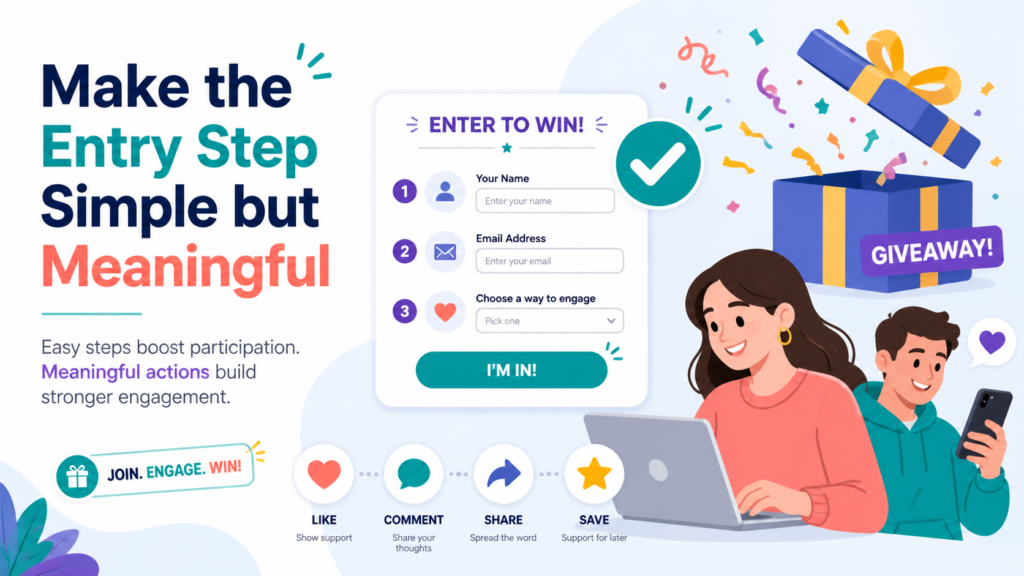
The best entry step is simple enough for people to complete fast, but meaningful enough to help your business.
Asking someone to like a post may be easy, but it gives you very little value. Asking someone to fill out a long form may give you more data, but it may also lower entries. The key is balance.
Ask for the smallest action that supports your goal
If your goal is email list growth, ask for a name and email address. If your goal is user content, ask people to share a photo or short story. If your goal is market research, ask one smart question along with the entry.
Do not ask for too much too soon. People do not trust a brand deeply at the start. They may not want to give their phone number, company size, revenue, job title, and full business history just to enter a giveaway.
Keep it light at first. You can learn more during the follow-up.
A meaningful question can improve lead quality
A simple question can help you understand who is entering. For example, a marketing agency could ask, “What is your biggest marketing challenge right now?” This gives you useful insight and helps you segment your leads.
Someone who says they need more traffic may need SEO help. Someone who says they need better leads may need paid ads or conversion support. Someone who says they do not know where to start may need a strategy session.
This turns your giveaway into more than a lead collection tool. It becomes a listening tool.
And when you listen before selling, your follow-up becomes much stronger.
Build a Giveaway Landing Page That Sells the Reason to Enter
Many brands run giveaways only through social media posts. That can work for small campaigns, but a proper landing page gives you more control. It helps you explain the value, collect leads, track results, and guide people after they enter.
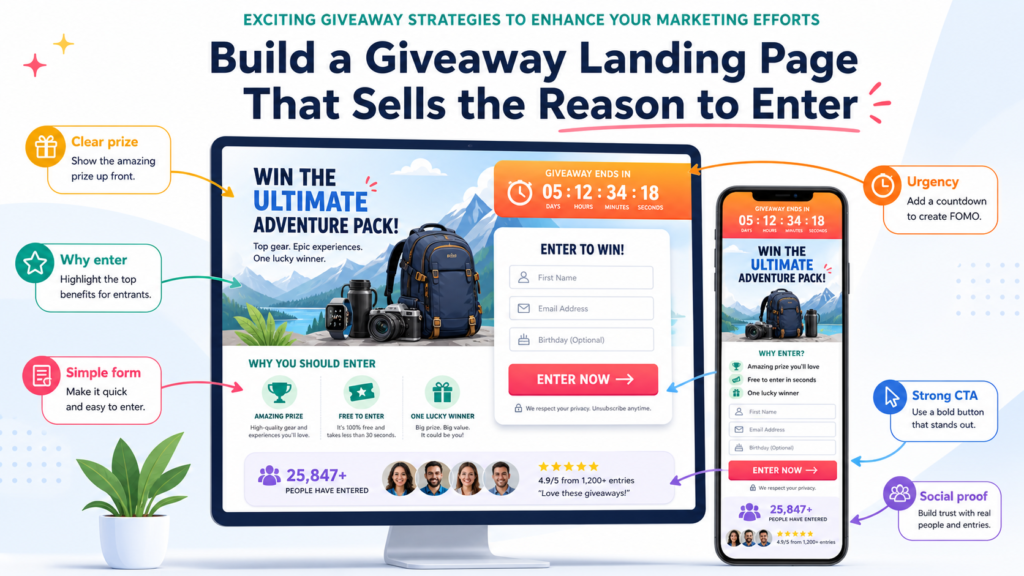
A giveaway landing page does not need to be long. But it does need to be clear.
People should understand what they can win, why it matters, how to enter, when the giveaway ends, and what happens next. If they have to think too much, they may leave.
Your landing page should remove doubt quickly
A good landing page answers the small questions people have in their minds. Is this real? Who is running it? What do I get? How do I enter? When will the winner be picked? Will my email be spammed?
These questions may seem small, but they matter. When people feel unsure, they do not act.
Use plain language. Make the prize clear. Show the deadline. Explain the steps. Add a short note about who the giveaway is for. If possible, include a simple trust signal, such as your brand name, client results, social proof, or a short reason why you are running the giveaway.
The page should also prepare people for your follow-up
After someone enters, do not send them to a dead-end thank-you page. Use that moment wisely.
Your thank-you page can invite them to read a useful guide, book a call, follow your brand, answer one more question, or share the giveaway with a friend. This is not about being aggressive. It is about keeping the momentum going.
When someone enters a giveaway, they are already paying attention. That attention may not last long. Use it while it is fresh.
A strong landing page helps your giveaway feel professional, trusted, and worth joining. It also gives you better data than a simple social post.
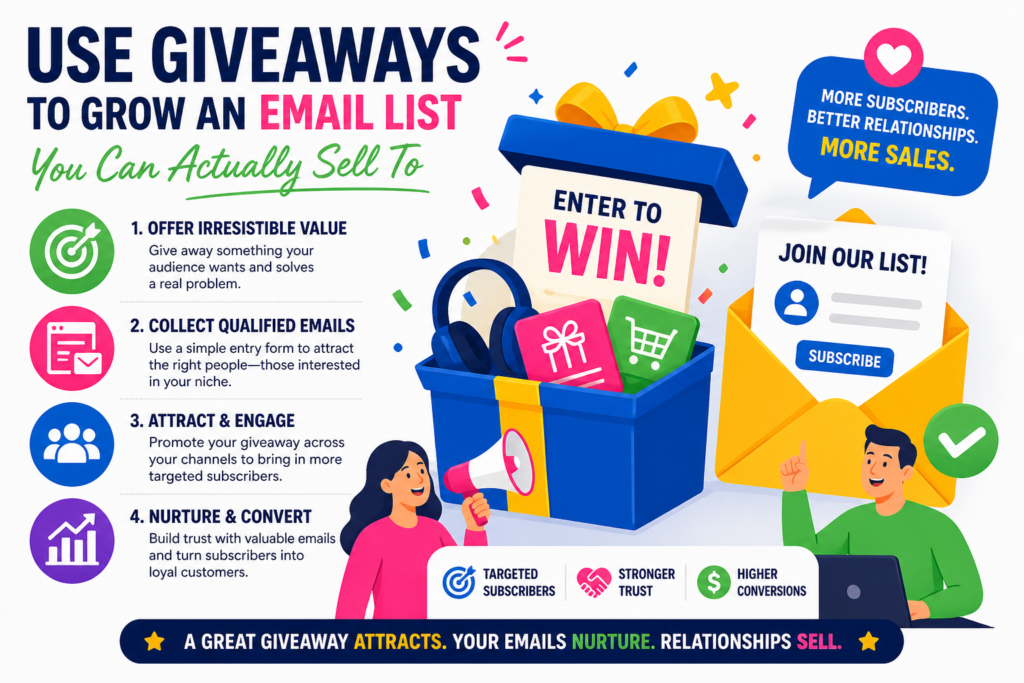
Use Giveaways to Grow an Email List You Can Actually Sell To
Social media attention is useful, but you do not own it. An algorithm can change. A platform can reduce reach. A follower may never see your next post.
An email list gives you more control. That is why one of the smartest uses of a giveaway is email growth. But the goal is not just to collect as many emails as possible. The goal is to collect emails from people who may care about what you sell.
Your giveaway should attract people who want future help
If your prize is closely tied to your service, your email list will be much stronger. A person who enters to win a free marketing audit is more likely to care about future marketing tips. A person who enters to win a random tablet may not.
This matters because email marketing only works when the audience wants the message.
After the giveaway, do not send a hard sales pitch right away. Start with value. Thank them for entering. Share a useful tip connected to the prize. Give them a simple win. Then invite them to take the next step.
The follow-up sequence matters more than most brands think
Many businesses make a major mistake after the giveaway ends. They announce the winner, send one email, and stop. That wastes the list they just built.
You need a short follow-up sequence. The first email should confirm their entry. The second can share helpful advice. The third can tell a story or show a result. The fourth can make a soft offer. The fifth can create urgency around a related service or bonus.
This does not need to feel pushy. It should feel like a natural path.
The giveaway opens the door. The email sequence builds the relationship. The offer gives people a reason to act.
That is how a giveaway becomes more than a short campaign. It becomes the start of a real customer journey.
Create a Referral Loop That Helps the Giveaway Spread
A giveaway becomes much stronger when people help share it. But you should not just hope they share it. You need to build sharing into the campaign.
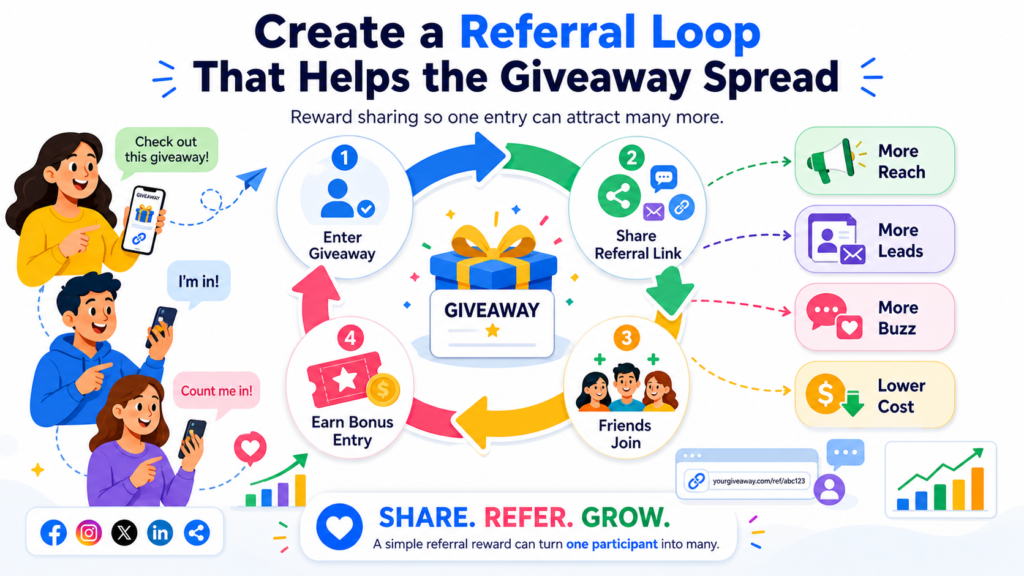
A referral loop means people get an extra chance to win when they invite others. This works because it gives people a simple reason to spread the word. It also helps the campaign grow without depending only on ads or organic reach.
But the referral loop must be done carefully. You want more reach, but you still want quality.
Make sharing easy and connected to the prize
If people have to copy long links, write their own message, or explain the giveaway from scratch, fewer people will share it. Give them a simple share link. Give them a short message they can use. Make the process smooth.
The easier it is to share, the more people will do it.
Still, do not reward unlimited low-quality sharing. If the giveaway becomes too focused on referrals, people may spam others. That can hurt your brand. Keep the reward simple, such as one extra entry for each real referral.
A referral loop works best when the audience is connected
Referral giveaways work especially well when your target audience knows more people like them. For example, small business owners know other business owners. Designers know other creatives. Fitness customers know other people interested in fitness.
This means one good entrant can bring more people who are also a good fit.
That is why the prize still matters. If the prize is random, referrals will also be random. If the prize is focused, referrals are more likely to be focused too.
A smart referral loop turns your audience into a quiet growth channel. It gives people a reason to share, while keeping the campaign tied to your business goals.
Turn Social Sharing Into a Story, Not Just a Requirement
Many giveaways ask people to tag friends, share a post, or repost a story. There is nothing wrong with that. But if the sharing action feels forced, it can make the campaign look cheap.
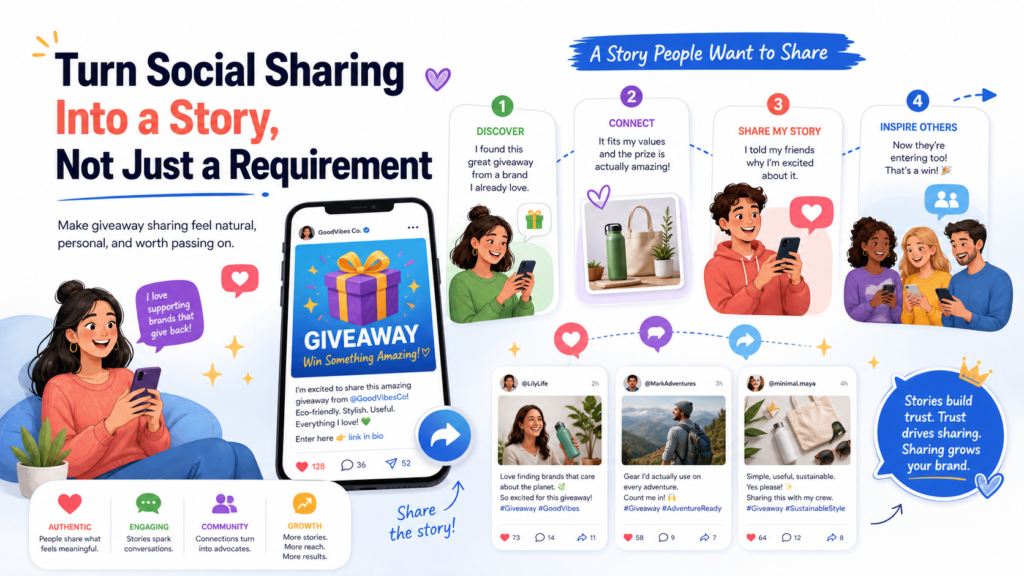
People are more likely to share when the giveaway gives them something interesting to say. This is why your campaign should feel like a story, not just a request for attention.
A basic giveaway says, “Enter to win.” A stronger giveaway says, “Tell us what you are building, what you are struggling with, or what you want to improve.” That small shift makes the campaign feel more human.
Your audience should feel part of the campaign
A good giveaway gives people a reason to speak. For example, a marketing agency could ask business owners to share the one marketing problem they want solved this year. A skincare brand could ask customers to share their morning routine. A fitness brand could ask people to share the goal they are working toward.
This does two things at once. It increases engagement and gives your brand useful content. You are not just collecting entries. You are collecting real words from real people.
Those words can later guide your content, emails, ads, offers, and sales calls.
Social posts should make people feel seen
When people enter a giveaway through a comment or post, they are giving you a small piece of their attention. Treat that with care.
Reply to comments when possible. Like strong entries. Share a few thoughtful responses. Make people feel noticed. A giveaway should not feel like a cold machine where people enter and disappear.
This matters because people remember how your brand makes them feel. If your campaign feels warm, active, and personal, they are more likely to trust you later.
A social giveaway should create conversation. The prize starts the campaign, but the story keeps it alive.
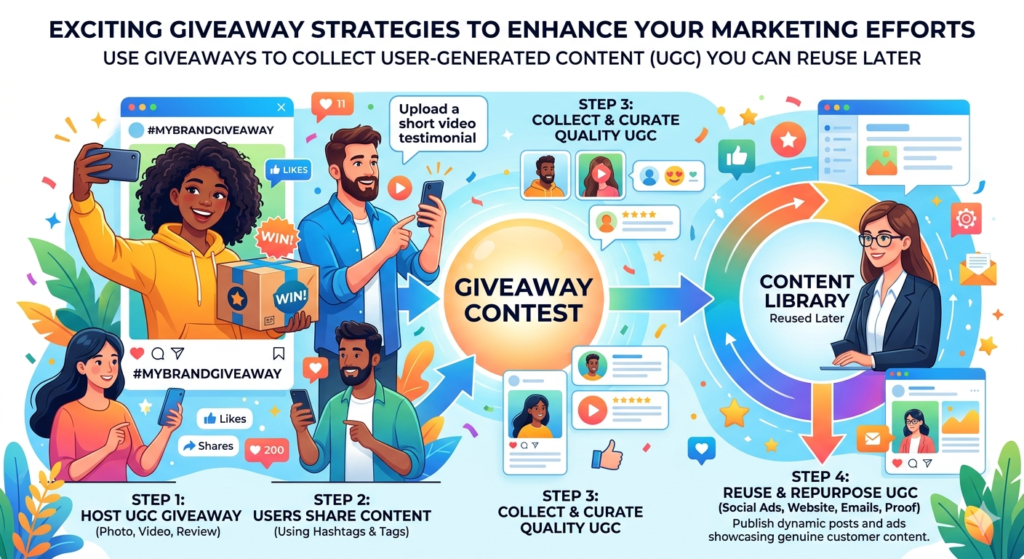
Use Giveaways to Collect User-Generated Content You Can Reuse Later
User-generated content is one of the most useful things a giveaway can create. It gives your brand real photos, stories, reviews, videos, and comments from your audience. This kind of content often feels more trusted than polished brand content because it comes from real people.
But you need to plan for it from the start.
If you want user-generated content, your giveaway should ask for it in a simple way. Do not make the task too hard. Most people will not record a long video or write a full case study just to enter. But they may share a short post, a photo, a quick comment, or a small story.
The content request should match the effort of the prize
If the prize is small, keep the entry task small. If the prize is bigger, you can ask for a little more. The effort should feel fair.
For example, asking someone to share a quick photo for a small prize can work well. Asking them to create a full video campaign for a low-value prize may feel like too much. People will sense when a brand is trying to get free labor instead of building a fair exchange.
The best user-generated content giveaways feel fun, useful, and simple.
Always make usage rights clear before people enter
If you plan to reuse customer content in your ads, emails, website, or social posts, make that clear in the giveaway terms. This protects your brand and avoids confusion later.
You do not need to make the language scary. Just explain that by entering, people allow your brand to share their submitted content for marketing purposes. Keep it clear and easy to understand.
Once the giveaway ends, choose the best content and use it with care. Share the winner. Highlight great entries. Turn strong stories into social posts. Use customer words in email subject lines. Add helpful quotes to landing pages.
A giveaway can give you far more than leads. It can give you proof, voice, and content that keeps working long after the prize is gone.
Partner With Another Brand to Reach a Warmer Audience
A partner giveaway can help you reach people who already trust someone else. This can be very powerful when the partner serves the same type of audience but does not directly compete with you.
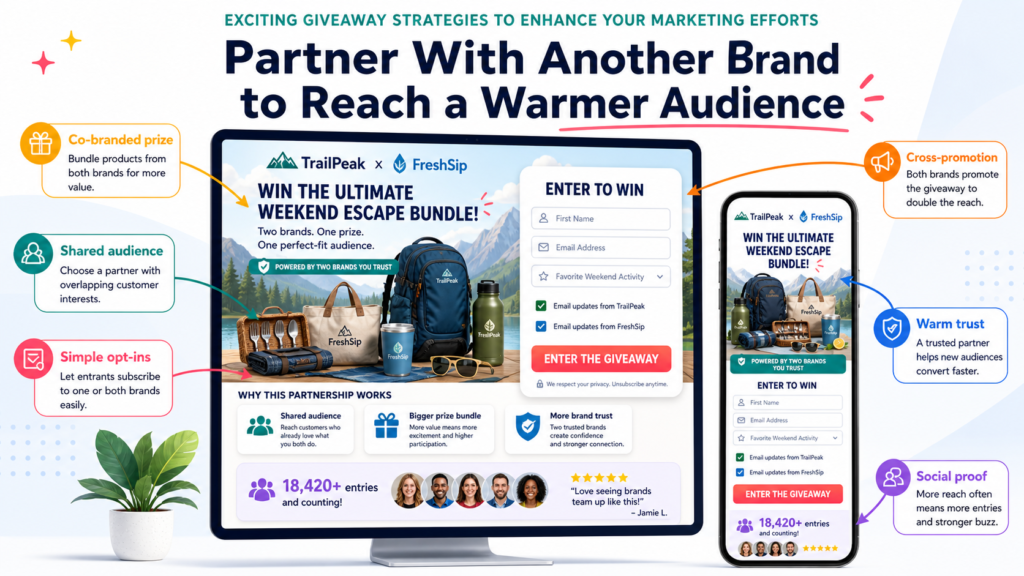
For example, a digital marketing agency could partner with a website designer, a business coach, a software tool, or a bookkeeping service for small businesses. Each brand brings value, and both audiences get a better prize.
The key is choosing the right partner. A poor partner can bring weak leads, unclear messaging, or brand confusion. A strong partner can make the giveaway feel bigger, more useful, and more trusted.
The best partner has the same audience but a different offer
You do not want a partner just because they have a large following. You want a partner whose audience matches your ideal customer.
A small but focused audience is often better than a huge mixed audience. If your business helps founders improve marketing, a partner with 5,000 engaged startup owners may be more useful than a lifestyle page with 100,000 casual followers.
The giveaway should feel natural to both audiences. If people look at the prize and wonder why the brands are working together, the fit is weak.
Shared promotion needs a clear plan
Many partner giveaways fail because both sides assume the other side will promote more. Before the campaign starts, agree on the details.
Decide who creates the landing page, who writes the copy, who designs the creative, who sends emails, who posts on social media, and how leads will be handled. Also decide how often each partner will promote the giveaway.
This does not need to be complicated, but it must be clear.
A partner giveaway works best when both brands are fully invested. When done well, it can lower your promotion cost, build trust faster, and help you reach people who are already likely to care.
Build a Giveaway Around a Product Launch
A product launch needs attention, but attention alone is not enough. You need people to understand the product, care about the problem, and feel excited to take action. A giveaway can help with all three.
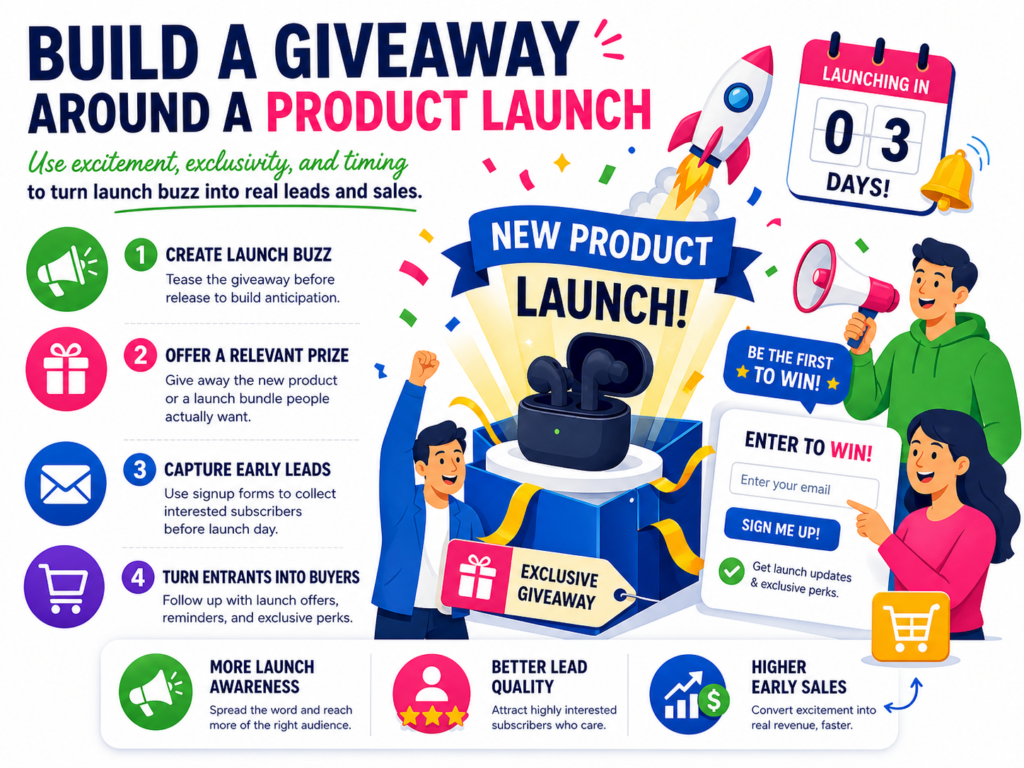
Instead of running a basic launch announcement, you can build a giveaway around the launch moment. This gives people a reason to pay attention before the product is fully available.
The giveaway can offer early access, a free trial, a bonus package, a private demo, or a chance to win the product. The prize should help people experience the product or move closer to using it.
A launch giveaway should teach people why the product matters
Do not make the giveaway only about winning. Use the campaign to explain the problem your product solves.
Each post, email, or landing page should make the need clearer. Show the pain. Show the cost of doing nothing. Show the better outcome. Then connect the giveaway prize to that outcome.
For example, if you are launching a content planning tool, the giveaway should not only say, “Win free access.” It should also show how poor planning leads to missed deadlines, weak traffic, and wasted effort.
The follow-up should turn interest into adoption
After people enter, your job is to move them closer to product use. Send helpful emails that show use cases, simple wins, customer examples, or behind-the-scenes details.
When the winner is announced, do not let the rest of the audience go cold. Give non-winners a launch offer, early access discount, bonus training, or free resource. They already showed interest. Do not waste that moment.
A launch giveaway can turn quiet interest into real demand. But only when it is tied to education, trust, and a clear next step.
Use Seasonal Giveaways Without Becoming Predictable
Seasonal giveaways can work very well because people are already in a buying or planning mood. Holidays, new year planning, back-to-school periods, business anniversaries, and industry events can all create useful timing.
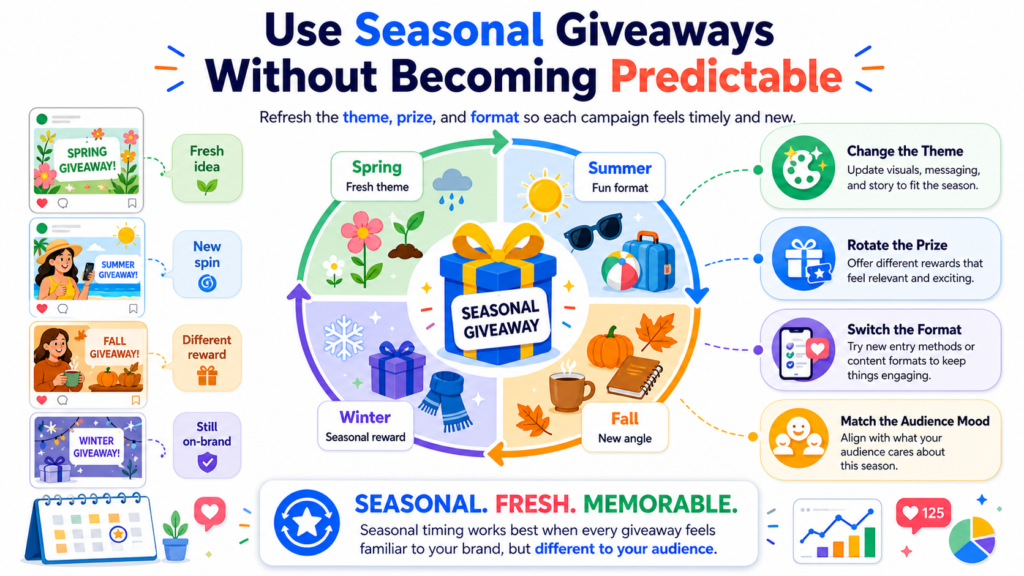
But seasonal giveaways can also become lazy. Many brands run the same “holiday giveaway” with the same kind of prize and the same kind of post. People scroll past because it feels like everything else.
To stand out, you need a stronger angle.
The season should support the message, not replace it
Do not run a seasonal giveaway just because a holiday is coming. Connect the season to a real customer need.
For example, a new year giveaway could focus on helping businesses fix their marketing plan before the year gets busy. A summer giveaway could help ecommerce brands prepare for a slower season. A holiday giveaway could help business owners improve their sales campaigns before peak buying days.
The timing should make the offer feel more useful.
A fresh theme can make a common season feel new
Instead of calling it a basic holiday giveaway, give the campaign a theme that speaks to your audience’s goal. A marketing agency could run a “Fix Your Funnel Giveaway” in January or a “Holiday Sales Boost Giveaway” before the festive season.
This makes the campaign feel more specific and more valuable.
Seasonal giveaways work best when they meet people at the right moment. Your audience is already thinking about something. Your campaign should join that thought and guide it toward action.
Make Your Giveaway Feel Exclusive Without Making It Hard to Join
People value things that feel special. That is why exclusive giveaways can perform well. But exclusive does not mean complicated. It means the giveaway feels made for a certain group of people.
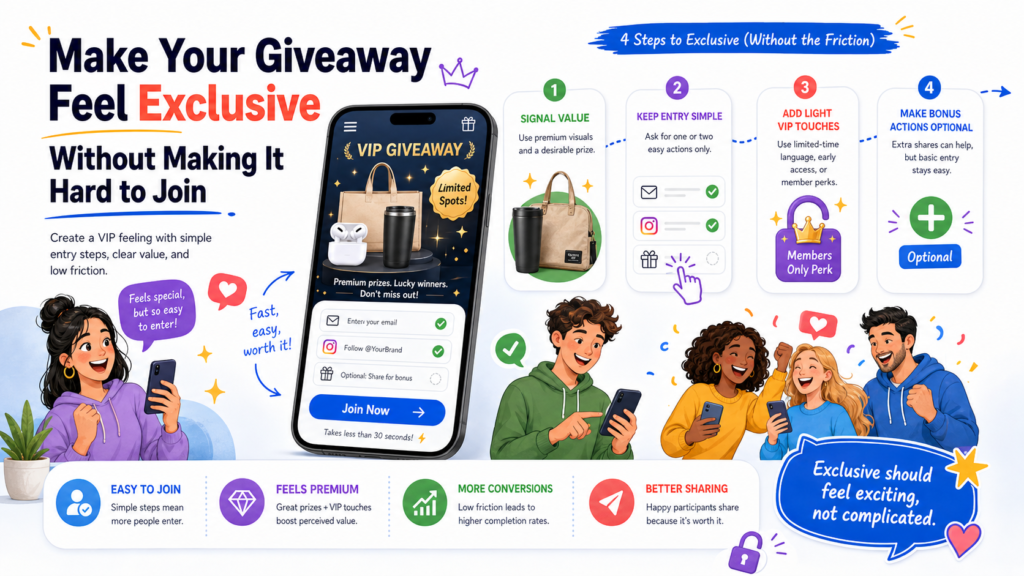
For example, a giveaway for “founders who want better leads” feels more focused than a giveaway for “everyone who wants to win.” A giveaway for “local salon owners” feels more personal than a general business contest.
When people feel the giveaway is made for them, they pay closer attention.
Clear audience framing improves lead quality
Your landing page and posts should say who the giveaway is for. This helps the right people feel invited. It also helps the wrong people self-select out.
That may sound risky, but it is smart. You do not need every person to enter. You need the right people to enter.
A narrow giveaway can create better results than a broad one because the follow-up becomes easier. You know who you are speaking to. Your emails can be sharper. Your offer can be more relevant. Your sales message can feel more personal.
Exclusive does not mean making people jump through hoops
Do not confuse exclusivity with friction. You can make a giveaway feel special without making it hard to enter.
Use language that frames the opportunity clearly. Explain why the prize matters for that audience. Show that the winner will get real value. Keep the entry process simple.
The best exclusive giveaways feel focused, not blocked. They make people think, “This is for someone like me.” That feeling is powerful.
Use a Giveaway to Bring Old Leads Back to Life
Not every lead is ready to buy when they first find you. Some join your list, read a few emails, and go quiet. Others ask about your service and then disappear. A giveaway can help bring these people back into the conversation.
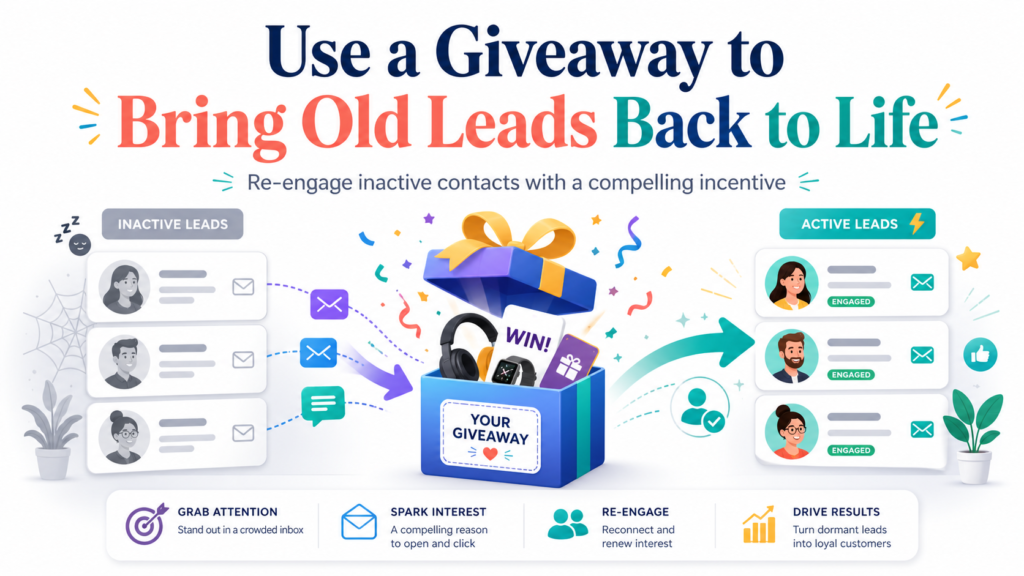
This works because the giveaway gives you a reason to reach out without sounding needy. You are not saying, “Why did you not buy?” You are saying, “Here is something useful you may want to enter.”
That softer approach can reopen attention.
Old leads already know your brand, so the message can be warmer
When you run a giveaway for cold audiences, you need to build trust from the start. With old leads, some trust may already exist. They have seen your brand before. They may know what you offer. They may simply need a fresh reason to engage.
Your message can remind them why they were interested in the first place.
For example, you could say that you are giving away a free strategy session to help business owners fix one major marketing gap. That can pull back people who still have the same problem but were not ready earlier.
Segment old leads before sending the giveaway
Do not send the exact same message to every old lead if you can avoid it. A person who once asked about SEO should receive a message that connects the giveaway to traffic growth. A person who asked about ads should see a message tied to lead quality or ad returns.
Even small changes can lift response.
After they enter, watch what they do. Did they click? Did they answer a question? Did they book a call? Did they reply? These actions show fresh intent.
A giveaway can wake up leads that were sitting quietly in your list. When the prize is relevant and the message is personal, it can bring back people who were closer to buying than you thought.
Create a Giveaway That Teaches Before It Sells
A giveaway becomes much stronger when it does more than offer a prize. It should also teach your audience something useful. This is one of the easiest ways to turn a simple campaign into a trust-building tool.
Many people enter giveaways without knowing much about the brand behind them. They may see the prize first. They may not know your service, your process, or your point of view. If your giveaway only says “enter to win,” you miss the chance to educate them while you have their attention.
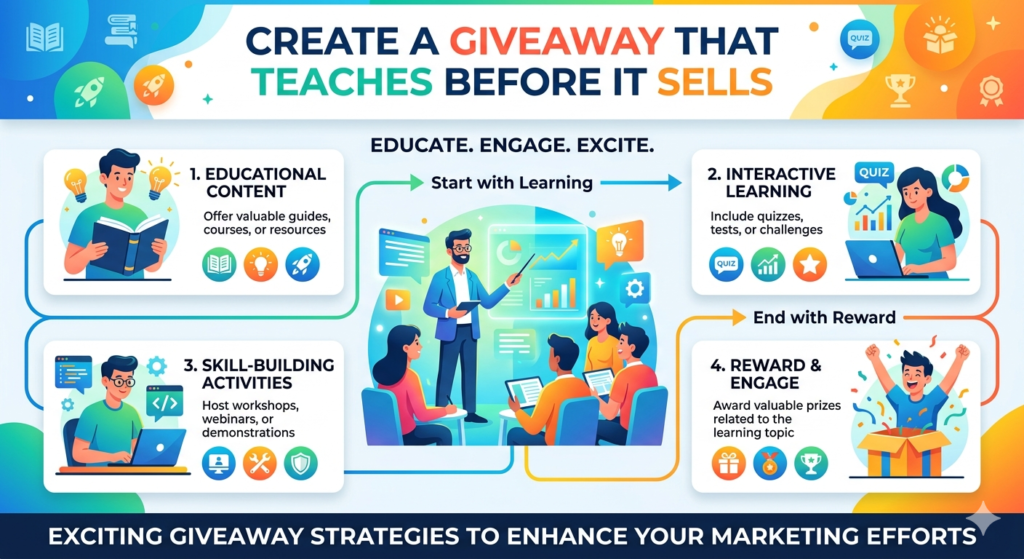
That is why a smart giveaway should include small teaching moments. These moments do not need to be long. They can be simple tips, short examples, useful emails, quick videos, or short posts that explain the problem your prize helps solve.
For example, if WinSavvy were running a giveaway for a free marketing audit, the campaign could teach business owners how to spot weak landing pages, why their traffic is not turning into leads, or how poor messaging can hurt conversions. The giveaway would still be exciting, but it would also make the audience smarter.
And when your audience learns from you, they start to trust you.
Education makes the prize feel more valuable
A prize has more power when people understand why it matters. If you give away a free SEO audit, some people may think, “That sounds useful.” But if you first explain how small SEO mistakes can stop good pages from ranking, the audit suddenly feels more important.
This is where many brands fall short. They assume people already understand the value of the prize. But most people are busy. They do not always see the hidden cost of their problem. They may know something is wrong, but they may not know why it is happening.
Your giveaway content should help them connect the dots.
If your prize is a free consultation, teach them what a good consultation can uncover. If your prize is a product bundle, teach them how to use it to get a better result. If your prize is a service trial, teach them what problem it solves and what a better outcome looks like.
This does not mean turning the giveaway into a classroom. It means giving enough useful context so the prize feels like a solution, not just a free item.
When people understand the value, they are more likely to enter. They are also more likely to care about your follow-up after the giveaway ends.
Your teaching content should make the next step feel obvious
The best educational giveaway content does not feel random. It gently leads people toward the next action.
Let’s say you are giving away a free landing page review. Before the winner is chosen, you could publish content about common landing page mistakes. You could explain why unclear headlines make visitors leave. You could show how weak calls to action reduce leads. You could talk about why trust signals matter.
By the time someone enters, they are not just hoping to win. They are also starting to think, “Maybe my landing page needs help.”
That thought is valuable.
Now, when the giveaway ends, you can offer non-winners a smaller paid review, a free checklist, or a discovery call. The offer feels natural because you have already shown them the problem and the value of solving it.
This is how you avoid sounding pushy. You are not suddenly selling something out of nowhere. You are continuing the same conversation.
A giveaway that teaches before it sells creates a smoother path from attention to trust, and from trust to action.
The best teaching feels simple and close to the customer’s pain
Do not make your educational content too broad. Keep it close to what your audience already worries about.
A small business owner may not care about “conversion optimization frameworks.” But they do care about why people visit their website and leave without contacting them. A founder may not care about “multi-touch attribution.” But they do care about wasting money on ads that do not bring good leads.
Use the words your audience would use. Speak to the pain they already feel.
For a marketing giveaway, strong teaching topics could include why followers are not turning into buyers, why website traffic is not enough, why discounting can hurt your brand, why weak follow-up kills leads, or why a pretty website may still fail to sell.
Each topic should make the audience feel understood.
When people feel understood, they stay longer. They read more. They enter more willingly. They reply to emails. They take the next step.
That is the real value of teaching inside a giveaway. You are not only building entries. You are building belief.
Use Giveaways to Test Offers Before Spending More on Ads
A giveaway can be a smart way to test what your audience actually wants. This is useful because many businesses spend money on ads before they know which message, prize, offer, or angle will get people to act.
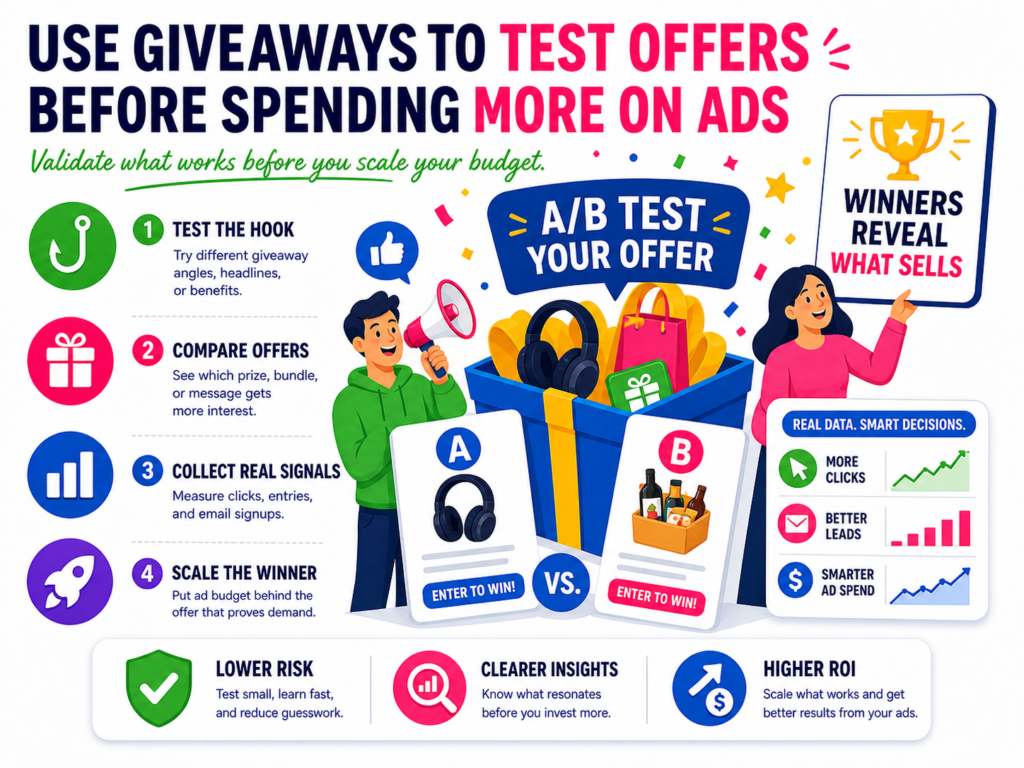
A giveaway gives you fast feedback. It shows what catches attention, what people click, what they share, what questions they answer, and what kind of offer makes them willing to give their email.
This does not mean a giveaway replaces proper market research. But it can give you real signals from real people. Those signals can help you make better marketing decisions.
For example, you may think your audience wants a free strategy call. But your giveaway may show that they are more excited about a done-for-you content plan. Or you may think people care most about social media growth, but their entry answers may show they are more worried about getting better leads.
That insight can save money. It can shape your next campaign. It can improve your sales message. It can help you choose better lead magnets, better ads, and better service packages.
A giveaway can reveal which pain point has the most pull
Every audience has more than one problem. But not every problem creates action. Some problems are annoying. Others feel urgent. Your giveaway can help you find the difference.
If you are a digital marketing agency, your audience may care about traffic, leads, branding, content, ads, website design, email marketing, and sales. But which of these problems makes them act today?
You can test this by creating a giveaway around one clear pain point. For one campaign, the prize may be a free SEO review. For another, it may be a free ad account audit. For another, it may be a free content strategy session.
Watch which one gets better entries from the right people. Do not only look at the number of entries. Look at the quality. Are the entrants close to your ideal customer? Are they describing real problems? Are they opening your emails? Are they booking calls? Are they asking follow-up questions?
This is where giveaway testing becomes useful.
A giveaway that gets fewer but better leads may be more valuable than one that gets thousands of weak entries. Your goal is not to win a popularity contest. Your goal is to learn what your future customers care about enough to act on.
Track behavior after entry, not just entry numbers
Most brands judge a giveaway too early. They look at how many people entered and stop there. That is not enough.
You need to watch what happens after the entry. Do people open the confirmation email? Do they click the helpful resource? Do they visit your service page? Do they reply to your question? Do they book a call? Do they stay subscribed after the winner is announced?
These actions tell you far more than the entry count.
A person who enters and never opens another email may not be very useful. A person who enters, reads three emails, clicks your pricing page, and replies with a question is much more valuable.
This is why your giveaway should be connected to tracking. You do not need a complex setup. But you should know which traffic source brought the entrant, which email they opened, and which next step they took.
That data helps you make sharper choices.
If Instagram brings many entries but few qualified leads, while your email list brings fewer entries but more calls, that matters. If one prize brings people who only want free help, while another brings people who are ready to buy, that matters too.
Good marketing is not just about getting attention. It is about understanding which attention can turn into revenue.
Use giveaway results to improve your paid campaigns
Once you know which prize, message, and pain point work best, you can use those findings in your ads.
This is powerful because your giveaway has already shown you what people respond to. You are not guessing from a blank page.
For example, if your giveaway headline “Win a free website teardown to find why visitors are not converting” gets strong leads, that same idea can become an ad angle. You can create a lead magnet, webinar, audit offer, or paid consultation around it.
If many entrants say their biggest problem is “getting traffic but no leads,” that exact phrase can appear in your ad copy, landing page headline, and email sequence.
This makes your marketing feel closer to the customer’s real thoughts.
The best copy often comes from the audience. A giveaway gives you a chance to collect those words directly. Pay close attention to how people describe their problems. Do they say “I need more sales,” “I need better leads,” “my ads are not working,” or “people visit but do not buy”? Each phrase tells you how they see the problem.
Use their words. Build your campaigns around their pain. Shape your offers around what they already want solved.
That is how a giveaway becomes a testing ground for bigger marketing moves.
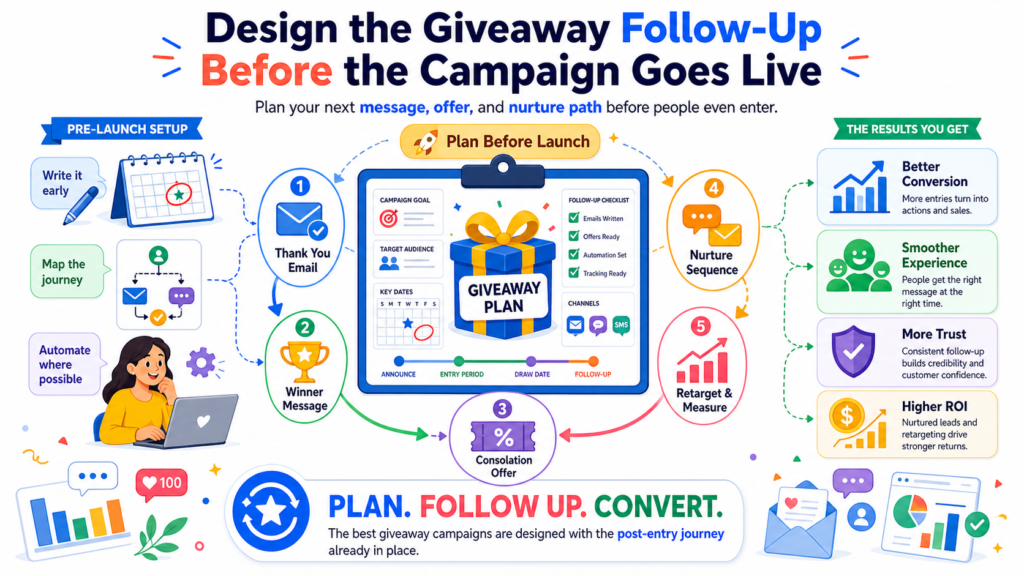
Design the Giveaway Follow-Up Before the Campaign Goes Live
The follow-up is where most giveaway campaigns lose money.
Many brands spend days planning the prize, the post, the design, and the entry rules. But once people enter, they have no clear plan. They send a basic confirmation email, announce the winner, and then go quiet.
That is a major mistake.
The real value of a giveaway is not only in the entry. It is in what happens after someone enters. This is when you turn interest into trust. It is when you help people understand your brand. It is when you guide them toward a useful next step.
You should design the follow-up before the giveaway begins. If you wait until the campaign ends, you will move too slowly. By then, many people will have forgotten why they entered.
A strong follow-up keeps the energy alive.
The first email should confirm, welcome, and set expectations
Right after someone enters, they should receive a clear email. This email should confirm that they are entered. It should remind them what they can win. It should tell them when the winner will be announced. It should also introduce your brand in a simple and helpful way.
Do not make this first email too sales-heavy. The person just entered. They may not know you well yet. Your job is to make them feel safe, welcomed, and interested.
You can say why you created the giveaway. You can share a short helpful tip related to the prize. You can invite them to follow your brand for updates. You can also tell them to look for the next email if you plan to share useful advice during the campaign.
This creates a small open loop. It gives them a reason to pay attention.
The tone should feel human. Write like someone from your team is speaking directly to them. Avoid cold lines that sound like software wrote them. A warm welcome can make a big difference.
The middle emails should build trust before making an offer
During the giveaway period, send a few helpful emails tied to the prize and the customer’s problem.
If the giveaway is for a free marketing audit, one email could explain why many businesses attract traffic but fail to turn it into leads. Another could share a simple way to improve a homepage headline. Another could show a short example of how better messaging can improve inquiries.
These emails should not feel like random newsletters. They should connect back to the reason the person entered.
This helps people understand your expertise. It also helps them see their own problem more clearly.
When you do make an offer, it will feel more natural because you have already provided value. You have already shown that you understand the problem. You have already helped them think differently.
That is much stronger than sending a blunt “book a call” email right after they enter.
A good follow-up sequence warms people up one step at a time.
The winner announcement should not be the end of the campaign
The winner announcement is an important moment, but it should not close the door on everyone else.
Most entrants will not win. If you simply say, “Sorry, you did not win,” you waste their attention. Instead, give non-winners a useful next step.
This could be a smaller bonus, a limited-time consultation offer, a free checklist, a discount, a group training, or an invite to a helpful resource. The key is to make them feel like they still gained something by joining.
For example, you could say that while only one person won the full audit, every entrant can still get a short website checklist or a reduced-price review for a few days.
This keeps goodwill high. It also gives interested people a reason to act now.
Your giveaway should not create one winner and hundreds of dead ends. It should create one main winner and many smaller paths to value.
That is where the real return comes from.
Make the Giveaway Rules Clear So Trust Does Not Break
A giveaway can create excitement fast, but it can also create doubt fast if the rules are unclear. People want to know what they are entering, what they need to do, when the campaign ends, how the winner will be picked, and whether the whole thing is fair.
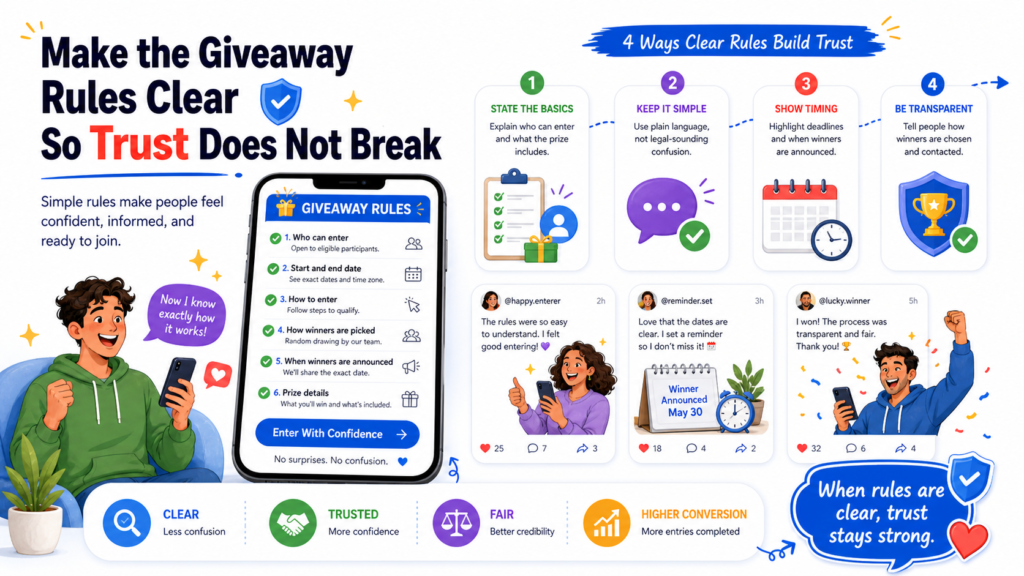
This matters more than many brands think.
When rules are missing or confusing, people may hesitate to enter. Some may think the giveaway is fake. Others may feel the brand is only trying to collect emails without giving anything real. Even people who enter may feel annoyed later if the winner selection feels unclear.
Trust is fragile during a giveaway because people are giving you attention, contact details, and sometimes content. They need to feel safe.
That does not mean your rules need to sound like a long legal document in every post. But the main details should be easy to find and easy to understand. You can keep your social post simple and link to a landing page with full terms. You can also add a short rules section near the entry form.
The goal is not to scare people. The goal is to remove doubt.
A clean giveaway feels honest. And an honest giveaway makes your brand look more professional.
Clear rules help people enter with confidence
People should not have to guess how the giveaway works. If they are unsure, they may scroll away or decide not to share their information.
At the very least, your giveaway should explain who can enter, what the prize includes, when entries close, how the winner will be chosen, when the winner will be announced, and how the winner will be contacted.
You should also explain whether the giveaway is open to certain locations only. This matters if shipping, service areas, currency, age limits, or local rules apply. A giveaway that is open worldwide may need different planning than one open only to a specific country or city.
If your prize is a service, explain what is included and what is not included. For example, if you are giving away a free marketing audit, say whether it includes a call, a written report, a recorded review, or only a short overview. This protects both sides.
Clear rules also reduce awkward conversations later. If someone expects more than you promised, you can point back to the campaign details. If someone asks how the winner was picked, you can explain the process.
A giveaway should create goodwill. Confusion creates the opposite.
Simple language makes rules feel less scary
Many brands write giveaway rules in stiff language. That can make the campaign feel cold. You should still protect your business, but you can explain the main rules in simple words.
For example, instead of saying, “Entrants must complete all required actions to be deemed eligible for prize fulfillment,” you can say, “To enter, complete the form before the deadline. We will choose one winner from valid entries.”
That is clearer. It sounds more human. It also makes people more likely to trust the process.
If you need formal terms, keep them on a separate page. On the main landing page, use plain language to explain the most important parts. Then link to the full terms for people who want more detail.
This keeps the campaign smooth.
You should also be careful with platform rules. Social media platforms often have their own promotion guidelines. For example, some platforms may not want brands to imply that the platform sponsors or manages the giveaway. Your post should make it clear that the giveaway is run by your brand, not by the social platform.
This may seem small, but it helps protect your campaign.
A simple line can do the job. The important thing is to avoid making claims that create confusion.
Fair winner selection protects your brand reputation
The moment you choose a winner is one of the most sensitive parts of the campaign. People may not say it out loud, but they want to know the giveaway was fair.
If the winner is a friend of the brand, a repeat customer, or someone who seems connected to the team, people may question the result. That does not mean the winner is not valid. But perception matters.
To avoid doubt, decide your winner selection method before the campaign starts.
If the winner is chosen randomly, say that. If the winner is chosen based on the best entry, say what makes an entry strong. If the winner must meet certain conditions, explain those conditions.
For user-generated content giveaways, judging can feel more personal. In that case, tell people what you are looking for. You may choose based on creativity, clarity, story, effort, or fit with the theme. Keep the judging standards simple.
After choosing the winner, announce them in a clear and respectful way. You do not need to share private details. But you should make the announcement visible enough that people know the campaign was real.
A fair process makes people more willing to join your future campaigns. Even people who do not win can still leave with a positive feeling.
That positive feeling is valuable. It keeps your brand trusted after the giveaway ends.
Use Scarcity and Urgency Without Sounding Pushy
Giveaways naturally have urgency because they end on a certain date. But many brands either ignore that urgency or overdo it.
If you ignore it, people may think they can enter later and then forget. If you overdo it, your campaign may sound desperate. The best approach is to use urgency in a calm, clear, and honest way.
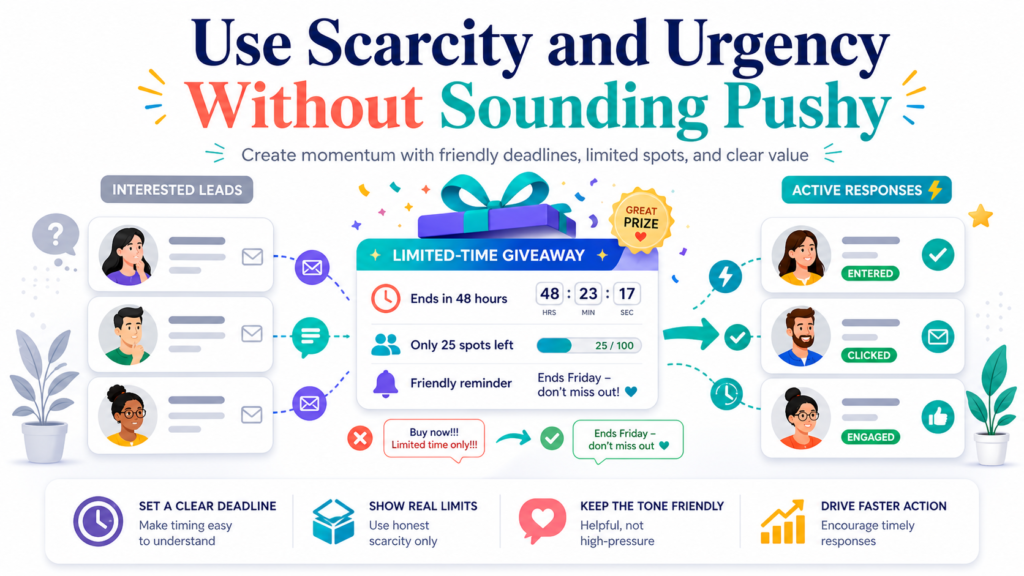
Urgency should help people make a decision. It should not pressure them with fake fear.
A giveaway gives you a real reason to remind people. There is a real deadline. There is a real prize. There is a real moment when entries close. That is enough. You do not need to invent drama.
Instead, your message should make the timeline easy to understand. Tell people when the giveaway closes. Remind them as the deadline gets closer. Explain why entering now matters. Keep it simple.
The strongest urgency feels useful, not loud.
Real deadlines help people act sooner
People delay action when there is no clear reason to act now. This is true for buying, booking calls, downloading guides, and entering giveaways.
A deadline changes that.
But the deadline must be clear. Do not say “ending soon” without also giving the date. “Ends Friday at midnight” is stronger than “don’t miss out.” “Entries close on May 10” is clearer than “last chance coming.”
Clear deadlines make people feel informed. Vague urgency makes people feel pushed.
You can use the deadline in your landing page headline, social captions, email reminders, and thank-you page. But do not make every message sound the same. Repeating the same phrase again and again makes your campaign feel lazy.
One message can focus on the prize. Another can focus on the problem the prize solves. Another can focus on the deadline. Another can show entries or social proof. Another can remind people of the final day.
This keeps the campaign fresh while still creating urgency.
Scarcity should be tied to real limits
Scarcity works when there is a real limit. In a giveaway, the most obvious limit is the number of winners. If there is only one winner, say that. If there are three prizes, say that. If only the first 100 entrants get a bonus resource, say that too.
But do not fake scarcity. Do not say “limited spots” if there is no limit. Do not say “only a few entries left” if entries are open to everyone until the deadline. People can sense fake pressure, and it can damage trust.
Real scarcity is enough.
You can also create smaller forms of scarcity inside the campaign. For example, you may offer a bonus entry window for the first three days. You may give early entrants access to a mini training. You may offer a special bonus to people who enter before a certain date.
This gives people a reason to act sooner without making the campaign feel aggressive.
For a marketing agency, this could look like giving early entrants a free website checklist or a short guide on improving lead quality. The main giveaway stays the same, but early action gets an extra reward.
That kind of urgency feels fair because people get more value for acting quickly.
The final reminders should be helpful, not annoying
As the giveaway nears the end, your reminders matter. Some people wanted to enter but forgot. Others saw the campaign once and need another nudge. Some may have been unsure but are now ready.
Final reminders can bring in a strong wave of entries.
But do not send the same message over and over. Give each reminder a reason to exist.
One reminder can answer common questions. Another can restate the prize value. Another can share what the winner will receive. Another can say entries close tonight. This keeps the campaign useful.
The tone should stay calm. You can say, “Entries close tonight, so this is the final reminder.” That is enough. You do not need to shout.
Good urgency respects the reader. It tells them what is happening, why it matters, and what they can do next.
That respect builds trust.
And trust is what makes people more likely to stay with your brand after the giveaway ends.
Match the Giveaway Channel to the Audience You Want
Not every giveaway belongs on every platform. This is where many brands waste effort. They post the same message everywhere and hope something works.
A better approach is to choose channels based on the audience you want and the action you need.
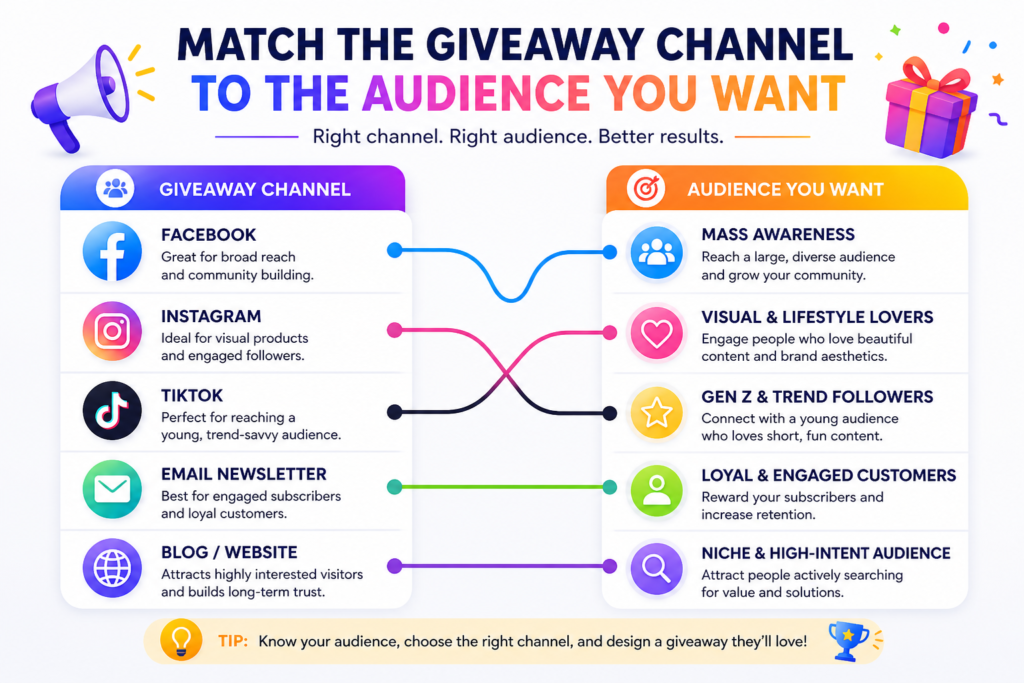
A giveaway for email list growth may perform best through a landing page, paid ads, and partner emails. A giveaway for user-generated content may work better on Instagram or TikTok. A giveaway for business owners may perform well on LinkedIn, email, niche communities, or webinars.
The channel should support the goal.
If you choose the wrong channel, even a good prize can underperform. You may attract people who are not serious, people who do not match your customer profile, or people who enter but never engage again.
The channel shapes the quality of the audience.
Social platforms are useful for reach, but not always for depth
Social media is often the first place brands think of when planning a giveaway. That makes sense. Social platforms can help a giveaway spread fast. They make it easy for people to comment, tag, share, and react.
But social reach can be shallow.
Someone may follow your page just to enter and then disappear. Someone may tag friends who are not a good fit. Someone may engage with the post but never visit your website or learn about your offer.
That does not mean social giveaways are bad. It means you need to connect them to a deeper path.
For example, instead of asking only for a comment, you can guide people to a landing page where they enter with their email. Instead of making the whole campaign live inside a post, you can use the post as the attention driver and the landing page as the conversion point.
This gives you more control.
If you use Instagram, the campaign should be visual and easy to share. If you use LinkedIn, the campaign should feel professional and useful. If you use TikTok, the idea should be simple, fast, and story-driven. If you use Facebook groups, the giveaway should feel community-focused, not spammy.
Each platform has its own mood. Your giveaway should fit that mood.
Email is powerful because the audience is already warmer
Your existing email list can be one of the best places to promote a giveaway. These people already know your brand. They may have read your content, downloaded a resource, bought from you, or shown interest before.
That makes them warmer than a random social viewer.
Email also gives you room to explain the prize better. You can tell a short story. You can explain who the giveaway is for. You can connect the prize to a real problem. You can guide people to the entry page with more context.
For WinSavvy, an email giveaway could work well for re-engaging quiet leads. The message could focus on a business problem the audience already cares about, such as weak website conversions, poor lead quality, or unclear content strategy.
The email could say that one winner will receive a practical review or strategy session, while every entrant will get a useful guide. That way, even non-winners receive value.
This makes the campaign feel generous, not transactional.
Email also helps you segment people based on clicks and entries. If someone clicks but does not enter, you can send a reminder. If someone enters and clicks your service page, you can follow up with a more relevant message later.
That is much harder to do with social engagement alone.
Paid ads can scale a giveaway, but only after the offer is proven
Paid ads can bring a lot of people into a giveaway. But they can also bring low-quality entrants if the campaign is too broad.
Before putting serious money behind a giveaway, test the prize and message with your existing audience first. See if people care. See if the right people enter. See if they engage with your follow-up.
Once you have proof, paid ads can help you scale.
The ad should not only promote the prize. It should call out the right audience and the right pain. For example, “Win a free marketing audit” is okay. But “For small business owners getting traffic but not enough leads: win a free marketing audit” is much stronger.
The second version filters better. It speaks to someone with a real problem.
When running paid ads for giveaways, watch lead quality closely. Cheap leads are not always good leads. If your cost per entry is low but nobody opens your emails or books calls, the campaign is not as strong as it looks.
The goal is not just to reduce cost per lead. The goal is to increase useful leads.
That means your channel choice, targeting, prize, and follow-up all need to work together.
Turn Non-Winners Into Buyers Without Making Them Feel Like Losers
Most people who enter your giveaway will not win. That is normal. But the way you treat non-winners can decide whether the giveaway creates long-term value or ends with disappointment.
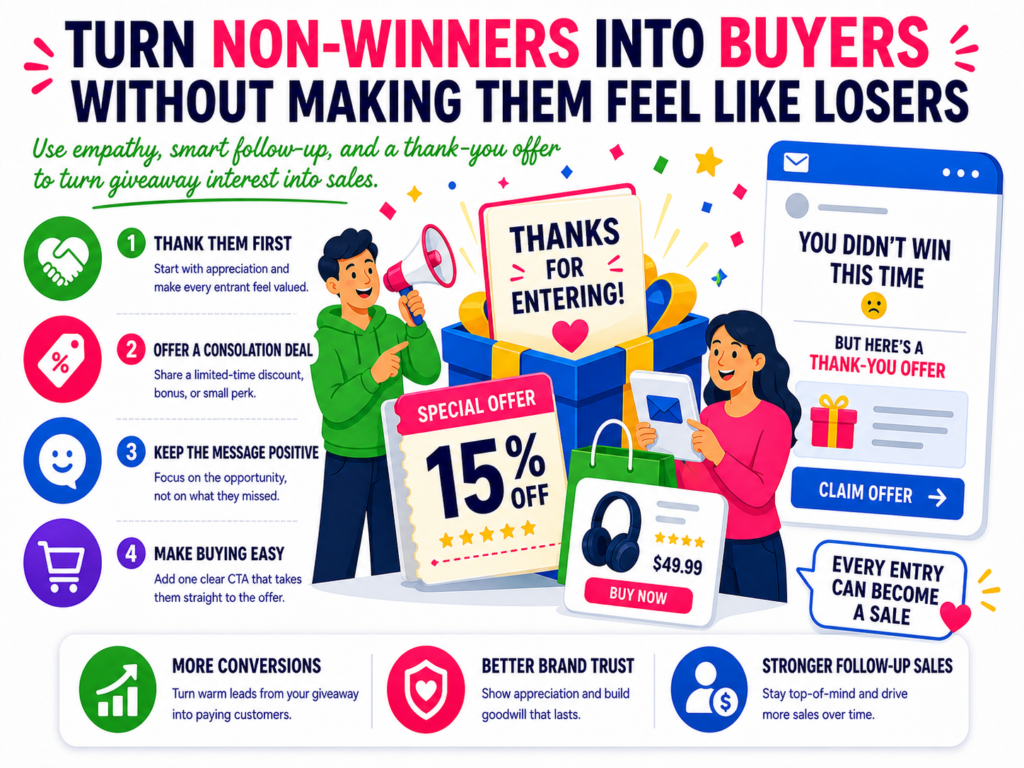
This is a major part of giveaway strategy.
If your message to non-winners feels cold, they may leave. If it feels thoughtful, they may stay engaged and even buy from you. The key is to make people feel like entering was still worth it.
Nobody likes feeling used. If someone gave you their email, shared your campaign, or submitted content, they should receive something in return, even if they did not win the main prize.
That does not mean you need to give away something expensive to everyone. It can be a guide, a checklist, a small discount, a mini training, a free template, or a useful next step. The point is to show respect.
A giveaway should not create one happy winner and hundreds of ignored people. It should create one main winner and a wider group of people who still feel closer to your brand.
The non-winner email should be warm and useful
The non-winner email is one of the most important emails in the whole campaign. Many brands treat it like an afterthought. They say, “You did not win, better luck next time,” and stop there.
That is a waste.
A better email thanks people for entering, announces the winner, and then gives them something useful. The tone should be kind, not robotic. It should make people feel seen.
You can say that while only one person could win the main prize, you still wanted to share something helpful with everyone who joined. Then give them a resource that connects to the giveaway topic.
If the prize was a marketing audit, the non-winner gift could be a simple self-audit checklist. If the prize was a product bundle, the gift could be a small discount or bonus. If the prize was a coaching session, the gift could be a short training video.
This keeps the relationship positive.
It also gives people another reason to click, read, and engage after the campaign ends.
A soft offer works better than a hard pitch
After a giveaway, some people may be ready to buy. But many will still need more trust. That is why your offer to non-winners should feel helpful, not harsh.
Instead of saying, “You did not win, so buy now,” frame the offer around the same problem the giveaway promised to solve.
For example, you could say that if they still want help improving their website, they can book a limited number of reduced-price reviews. Or if they want to work through their marketing gaps, they can schedule a short strategy call.
The offer should feel like the next best step, not a consolation prize.
You can also create a special offer just for entrants. This makes them feel part of a smaller group. It rewards them for joining the campaign.
The offer does not always need to be a discount. Sometimes a bonus is better. A discount can lower perceived value if used too often. A bonus can make the offer feel richer without making your core service seem cheaper.
For a digital marketing agency, a bonus could be a free content review, a simple funnel map, or a short competitor check added to a paid strategy session.
The best offer continues the same story the giveaway started.
The real goal is to keep the relationship moving
Not every non-winner will buy right away. That is fine. Some may need weeks or months. Some may not have the budget yet. Some may still be learning.
Your job is to keep them moving closer.
After the non-winner email, continue sending useful content. Share lessons from the giveaway. Share common problems people mentioned in their entries. Share a few tips based on what you learned. Show them that you listened.
This is powerful because it makes the campaign feel alive even after it ends.
For example, if many entrants said they struggle with getting leads from their website, you can write an email about the three homepage fixes that help visitors take action. If many said they struggle with content ideas, send a guide on planning content around buyer questions.
This makes your follow-up feel personal at scale.
People are more likely to trust a brand that listens. They are more likely to buy from a brand that keeps helping after the campaign is over.
A giveaway should never be seen as a one-time event. It should be the start of a longer conversation. Non-winners are not failed leads. They are people who raised their hands.
Treat them that way, and your giveaway can keep producing value long after the prize is awarded.
Conclusion
Giveaways work best when they are built with purpose. A strong giveaway is not just about getting likes, comments, or quick attention. It is about attracting the right people, earning trust, starting real conversations, and guiding interested leads toward the next step.
The prize matters, but the strategy behind it matters more. Choose a prize that fits your audience. Keep the entry simple. Follow up with care. Give value to winners and non-winners.















Comments are closed.