
WinSavvy Editorial Standards
How this article was created
Valentine’s Day gives brands a rare chance to do something most marketing campaigns fail to do. It lets you sell while making people feel something. That is why this season matters so much. Customers are not only looking for gifts. They are looking for a way to say, “I thought of you.” Your job is to make that easy, sweet, and worth remembering.
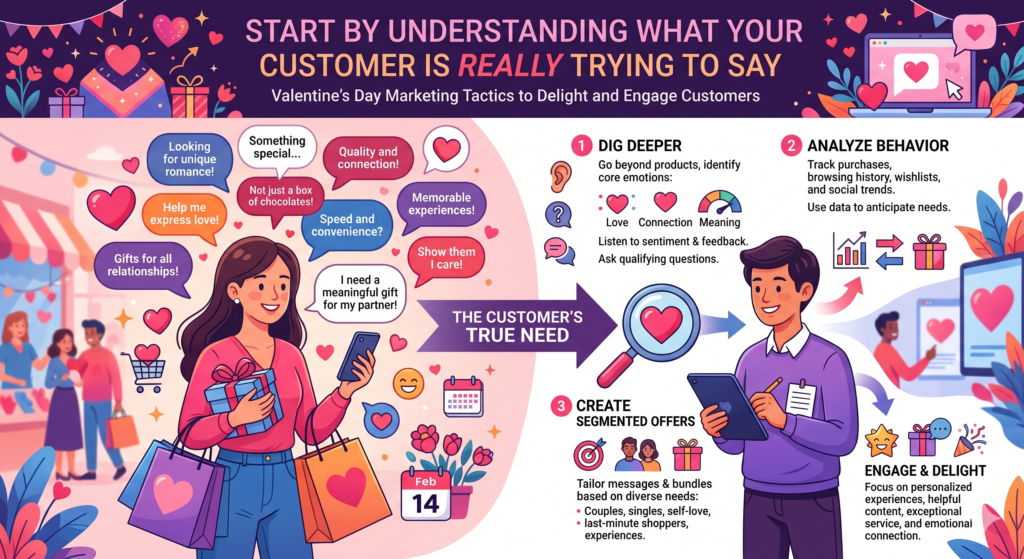
Start By Understanding What Your Customer Is Really Trying To Say
Valentine’s Day marketing works best when it is built around emotion, not just products. This sounds simple, but many brands miss it. They rush straight into selling flowers, candles, chocolates, clothes, jewelry, beauty sets, dinner deals, or gift cards. The product matters, but it is not the real reason someone buys.
The real reason is the message behind the gift.
A customer is often trying to say, “I love you.” Sometimes they are trying to say, “I know you.” Sometimes they are saying, “Thank you for being in my life.” Sometimes they are saying, “I messed up and I want to fix it.” Sometimes they are saying, “You deserve something nice.” And more often now, they may be saying that to themselves.
When you understand this, your whole campaign changes. You stop talking only about price, color, size, and delivery. You start helping the customer express a feeling. That is where Valentine’s Day becomes powerful.
Your campaign should help people find the right words before it helps them find the right product
A strong Valentine’s Day campaign does not begin with “Buy now.” It begins with a feeling the customer already has but may not know how to express. Many people feel pressure during Valentine’s Day.
They want to do something thoughtful, but they do not want to look boring. They want to buy something nice, but they do not want to overthink it. They want the gift to feel personal, but they may not have time to plan something big.
This is where your content, email copy, ads, landing pages, and product pages can do real work.
Instead of saying, “Shop our Valentine’s Day sale,” a stronger message would say something closer to, “Find a gift that says what you have been meaning to say.” That line does more than announce a sale. It gives the customer a reason to care. It tells them your brand understands the emotional job they are trying to complete.
For WinSavvy clients, this is often the first shift we recommend. Do not build the campaign around the holiday. Build it around the customer’s intent during the holiday. The holiday is only the setting. The emotion is the engine.
The best Valentine’s Day brands sell meaning before they sell the item
A customer buying a necklace is not only buying metal and design. They are buying a memory. A customer buying a skincare set is not only buying creams and oils. They are buying care, comfort, and a small moment of peace. A customer booking a table is not only buying food. They are buying time together.
This matters because meaning gives your product more value without forcing you to discount heavily. If every message is about saving money, customers will compare you only on price. But if your message connects the product to a moment, the customer has more reasons to choose you.
A simple mug becomes “something they will use every morning and think of you.” A box of sweets becomes “a small surprise after a long day.” A simple online course, journal, perfume, plant, or fitness gift can become a thoughtful choice when it is placed in the right emotional frame.
This does not mean your copy should become cheesy. In fact, the best Valentine’s Day copy is often plain and direct. It sounds like something a real person would say. It does not try too hard. It does not drown the reader in hearts and poetry. It simply connects the product to the human moment behind the purchase.
You need to segment by relationship, not just by product category
Many brands segment Valentine’s Day campaigns by product type. They create one page for jewelry, one for flowers, one for clothing, one for food, or one for beauty items. That can help, but it is not enough. Customers do not always shop by product first. They shop by person.
They are thinking, “What should I get my wife?” or “What should I send my long-distance partner?” or “What can I buy for my best friend?” or “What is a small but sweet gift for someone I just started dating?” These are emotional search paths, and your campaign should support them.
This is why relationship-based gift guides work so well. You can create pages, emails, and social posts around who the gift is for. The same product can appear in many places, but the angle changes each time. A scented candle for a partner can be framed as romantic.
A candle for a friend can be framed as a cozy self-care gift. A candle for yourself can be framed as a reset after a busy week.
The product has not changed. The meaning has.
That is the secret.
A relationship-based campaign makes the customer feel less lost
Valentine’s Day can create decision stress. People may not know what is “enough.” They may not know if a gift is too serious, too casual, too cheap, too expensive, too plain, or too much. When your campaign sorts gifts by relationship stage or emotional goal, you reduce that stress.
For example, instead of only saying, “Valentine’s Day Gifts Under $50,” you could say, “Sweet Gifts That Do Not Feel Too Serious.” That speaks directly to someone in a new relationship. Instead of saying, “Premium Gift Collection,” you could say, “Gifts That Feel Personal Without Needing A Long Plan.”
That speaks to busy buyers who still want to be thoughtful.
This kind of copy feels more useful because it meets the customer inside their real thought process. It does not make them translate your product categories into their life. You do that work for them.
Build A Valentine’s Day Offer That Feels Thoughtful Instead Of Desperate
Discounts are common during Valentine’s Day. They can work, but they can also weaken your brand if they are used without care. A plain “20% off” message may bring some sales, but it does not always create excitement. It also teaches customers to wait for a better price.
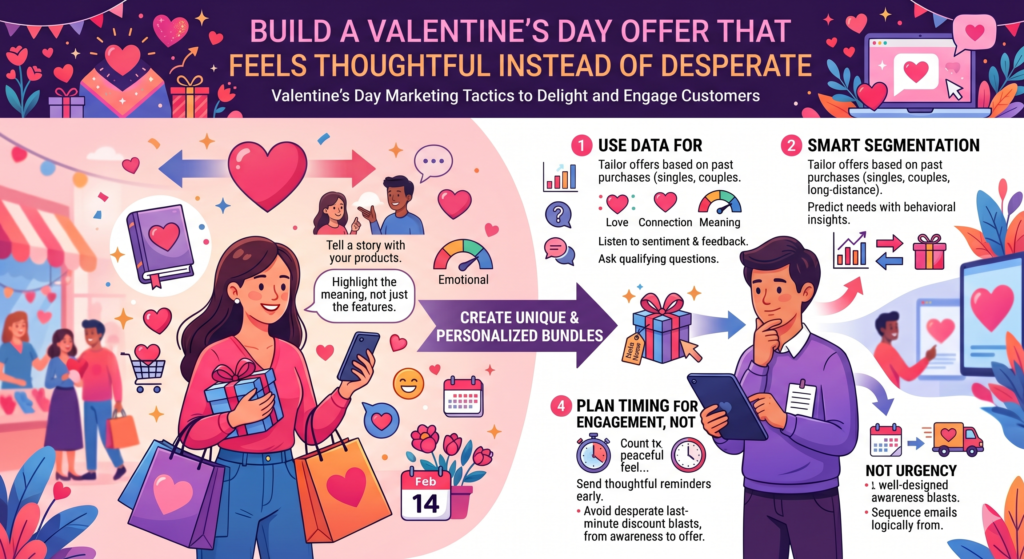
The better move is to build an offer that feels tied to the occasion. The offer should make the buying experience easier, sweeter, faster, or more personal. A discount can be part of it, but it should not be the whole story.
A great Valentine’s Day offer feels like help.
It helps someone choose. It helps someone send the gift on time. It helps someone add a personal touch. It helps someone avoid stress. It helps someone create a better moment.
Your offer should remove one clear problem from the customer’s path
Every Valentine’s Day buyer has some kind of friction. Some are worried the gift will not arrive on time. Some do not know what to choose. Some think everything looks the same. Some want the gift to feel more personal. Some are shopping at the last minute. Some are afraid of looking careless.
Your offer should solve one of these problems.
A free gift note solves the problem of making the gift feel personal. A ready-made gift bundle solves the problem of choice. Fast shipping solves the problem of timing. A “build your own box” option solves the problem of making a gift feel custom. A gift card with a nice digital message solves the problem of being late without looking careless.
This is much stronger than a random discount because the offer is connected to the customer’s need.
For example, a beauty brand could create a “Date Night Glow Kit” with three products that work well together. A food brand could offer “Send Dessert To Their Door” with a custom note. A fitness brand could create a “Couples Reset Plan” or a “Self-Love Starter Pack.” A SaaS brand could run a “Share The Love” referral offer where customers gift a free month to a friend.
The point is not to copy what others do. The point is to ask what your customer is trying to make easier, and then shape the offer around that.
Bundles work well because they make the buyer feel guided
Valentine’s Day is a perfect time for bundles. The reason is simple. A bundle gives the customer confidence. It says, “These items belong together.” That lowers the mental effort needed to buy.
But the bundle must have a clear story. Do not just put slow-moving products together and call it a Valentine’s Day bundle. Customers can feel when a bundle is only made to clear stock. The items should make sense together and should create a better experience than buying one product alone.
A strong bundle has a name that explains the moment. “Cozy Night In” is better than “Bundle A.” “The Long-Distance Love Box” is better than “Gift Set 3.” “The Self-Care Evening Kit” is better than “Valentine Pack.” The name should help the customer picture the use of the product.
The product page should then explain the moment in plain words. Tell the buyer when to give it, who it is best for, what feeling it creates, and why the items were chosen together. This turns the bundle into a guided choice, not just a group of products.
A bundle should feel like a shortcut to being thoughtful
People love shortcuts when the shortcut still makes them look good. That is what a great Valentine’s Day bundle does. It saves time, but it still feels personal. It gives the buyer a simple way to make a good choice.
This is especially useful for last-minute buyers. They may feel rushed, but they still want the gift to feel warm. Your bundle can help them move fast without feeling careless.
You can make this even stronger by adding small personal touches. A note field at checkout, a choice of packaging, a small add-on, or a message card can make the bundle feel more custom. These details do not need to be expensive. They only need to make the customer feel like the gift was chosen with care.
Limited-time offers should create urgency without making people feel pushed
Urgency is useful during Valentine’s Day because the date is fixed. Customers already know there is a deadline. Your job is not to scare them. Your job is to make the deadline clear and helpful.
Bad urgency says, “Hurry before it is too late.” Better urgency says, “Order by February 10 to get it there before Valentine’s Day.” The second version is more useful. It gives the customer a clear action and a clear reason.
You can use urgency across your site, email, SMS, and ads, but it should feel like service, not pressure. Shipping cutoffs should be easy to find. Delivery dates should be clear. Last-order reminders should be honest. If a product may not arrive in time, do not hide that fact. Offer a digital option, local pickup, printable card, or delayed gift message instead.
Trust matters more than squeezing one more sale. A customer who feels tricked by unclear delivery timing may not come back. A customer who feels guided will remember the brand in a good way.
Create Gift Guides That Make Buying Feel Simple And Personal
Gift guides are one of the most useful Valentine’s Day assets a brand can create. They help search traffic, email clicks, social content, ad campaigns, and on-site conversion. But many gift guides are weak because they are built like product dumps. They show items, prices, and buttons, but they do not guide.
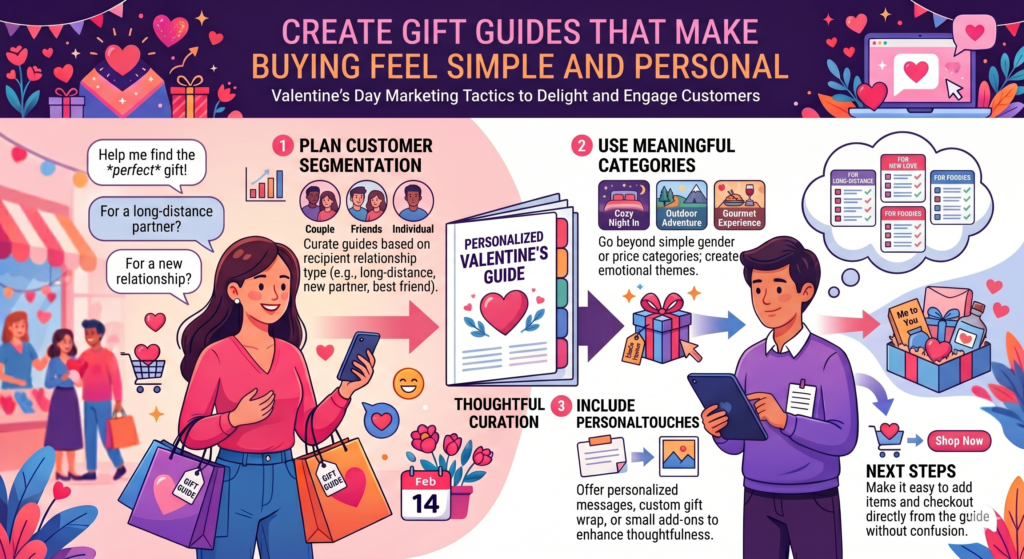
A strong gift guide acts like a helpful friend. It knows the situation. It understands the buyer’s worry. It explains why each gift fits. It gives the customer confidence to make a choice.
This is where content and commerce come together.
The best gift guides answer the questions customers are too busy to ask
Most people do not want to browse forever. They want to find something that feels right. Your guide should help them do that fast.
Instead of making one general “Valentine’s Day Gift Guide,” create guides around real buying moments. A guide for new couples should feel different from a guide for married couples. A guide for long-distance partners should feel different from a guide for friends. A guide for self-care should feel different from a guide for luxury gifts.
Each guide should start with a short, warm introduction that names the problem. For example, a guide for new couples might say that finding the right gift can feel tricky because you want something thoughtful but not too intense. That one sentence tells the reader they are in the right place.
Then each product should be framed with a reason. Do not simply say what it is. Say why it works.
A product description like “handmade ceramic cup” is fine, but it is not enough. A stronger version would say, “This is a sweet choice for someone who loves slow mornings, warm drinks, and small daily rituals.” Now the buyer can picture the person using it. That picture helps sell.
Gift guide titles should match how people actually think and search
Your titles should be simple, clear, and close to the customer’s real words. Cute titles can work, but clarity matters more. A title like “Gifts For The Person Who Says They Do Not Want Anything” is strong because it matches a real buying problem. A title like “Small Valentine’s Day Gifts That Still Feel Thoughtful” works because it speaks to both budget and emotion.
You can also build guides around price, but the angle should still feel human. “Valentine’s Day Gifts Under $25” is useful, but “Thoughtful Valentine’s Day Gifts Under $25 That Do Not Feel Cheap” is better. It speaks to the hidden fear behind the budget.
This is how SEO and copywriting work together. Search brings the customer in. Emotional clarity keeps them reading. Good product framing gets them to click. A smooth buying path helps them finish.
A gift guide should lead naturally into the product page
A common mistake is treating the gift guide as the final step. It is not. It is the bridge. Once someone clicks a product, the product page must continue the same story.
If the gift guide says a product is perfect for a cozy night in, the product page should not suddenly become cold and technical. It should still support that buying reason. The images, copy, reviews, add-ons, and delivery details should all help the customer feel sure.
This is especially important for paid traffic. If your ad promises “sweet last-minute gifts,” the landing page and product pages must make last-minute buying easy. If your email promotes “gifts for long-distance love,” the page should explain shipping, notes, packaging, and delivery timing clearly.
The customer should never feel like they clicked into a different conversation.
Use Email Marketing To Build Desire Before You Push The Sale
Email is one of the strongest channels for Valentine’s Day because it lets you build the story over time. You do not need to send one big sales blast and hope it works. You can guide the customer from idea to interest to action.
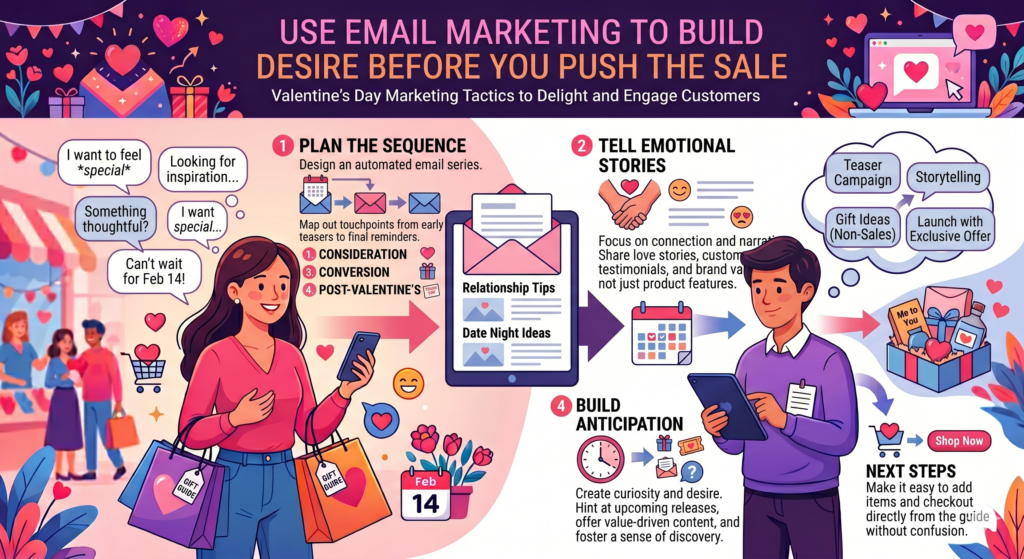
The mistake many brands make is waiting too long. They send one or two emails right before the holiday, when inboxes are crowded and customers are already rushed. A better approach starts earlier and changes the message as the date gets closer.
Early emails should help customers plan. Middle emails should help them choose. Later emails should help them act fast. Last-minute emails should offer simple options that still feel thoughtful.
Your first emails should inspire, not pressure
At the start of the campaign, do not lead with panic. Lead with ideas. This is the stage where customers may not be ready to buy, but they are open to thinking.
You can send an email that helps them match gifts to personality types, relationship stages, love languages, or daily habits. You can tell a short story about how to choose a gift that feels personal. You can show bestsellers, but the copy should feel more like guidance than a hard pitch.
The subject line should also feel light and useful. Instead of shouting about a sale, try a softer angle that opens a loop. Lines like “A small gift that says a lot” or “Not sure what to get them yet?” feel human because they match the customer’s state of mind.
Inside the email, keep the message simple. One clear idea is better than ten competing offers. Give the reader a reason to click, then let the landing page do more of the selling.
As the date gets closer, your emails should become more direct
Once Valentine’s Day is near, customers need clarity. This is when your copy can become more action-focused. But direct does not mean dull. You can still sound warm while being clear.
Tell people what to buy, who it is best for, when to order, and what happens next. If shipping deadlines are close, say so plainly. If certain items are almost gone, be honest. If you have digital gifts or local pickup, make that easy to see.
A strong late-stage email might focus on “thoughtful gifts that still arrive on time.” That message speaks to urgency and emotion at the same time. It does not shame the buyer for being late. It helps them recover.
That tone matters. Many last-minute buyers already feel rushed. If your brand makes them feel judged, they may leave. If your brand makes them feel saved, they may buy quickly and remember you kindly.
Your best email copy should sound like a calm, helpful person
The more crowded the inbox gets, the more human your emails need to feel. Avoid stiff lines that sound like every other campaign. Do not overuse words like “exclusive,” “ultimate,” “perfect,” or “limited-time” unless they truly add meaning.
Write like you are helping one person choose a gift. Keep sentences short. Make the offer clear. Make the next step easy. Use warmth, but do not overdo it.
A simple line like “Still looking? These gifts are easy to love and easy to send” can work better than a loud promotional message. It feels useful. It respects the reader’s time. It gives them a reason to keep reading.
Make Your Website Feel Like A Valentine’s Day Shopping Assistant
Your website should not just display Valentine’s Day products. It should guide the visitor from “I need something” to “This is the right choice.” That is a big difference. A normal product page makes people browse. A smart Valentine’s Day experience helps people decide.
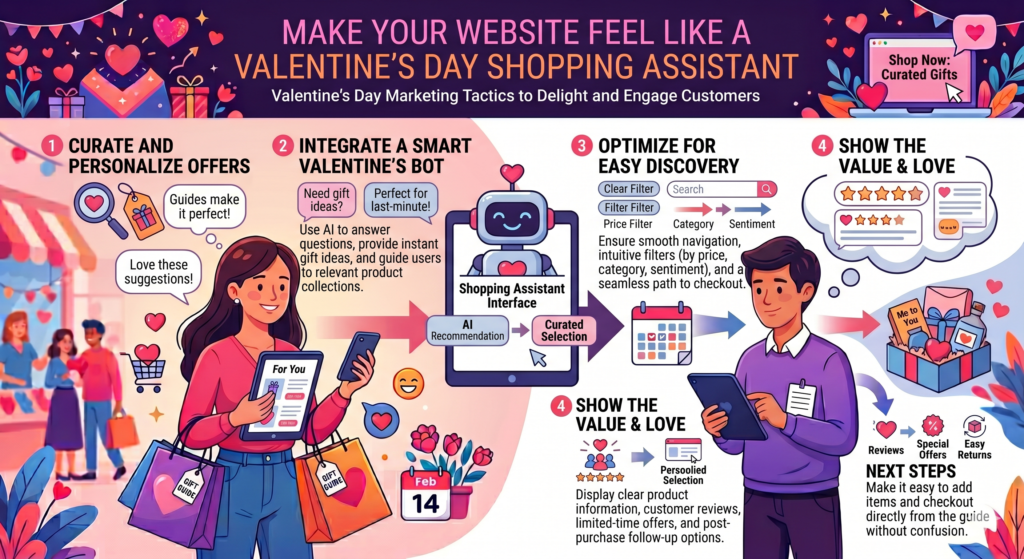
Most shoppers arrive with some level of doubt. They may like your products, but they are still asking quiet questions in their mind. Is this gift too plain? Will it arrive on time? Will the person like it? Can I add a note? Is this the best option for my budget? Should I keep looking?
If your website does not answer these questions quickly, customers leave. They may not leave because they dislike your brand. They leave because the choice still feels hard.
That is why your Valentine’s Day website experience must be built around ease. Every page should reduce stress. Every message should make the next step clear. Every product should feel like it belongs to a real gifting moment.
Your homepage should make the Valentine’s Day path easy to find
During the Valentine’s Day season, your homepage should not make customers search for the campaign. If Valentine’s Day is a major sales moment for your brand, it deserves clear space on the homepage. This does not mean you need to cover the whole page in red and pink. It means the path should be obvious.
A strong homepage message should tell visitors what you can help them do. Instead of only saying “Valentine’s Day Collection,” say something more useful, such as “Find a thoughtful gift they will actually use.” That line gives the visitor a reason to click because it speaks to their real worry.
The homepage section should lead to a focused landing page. Do not send Valentine’s Day traffic to a general shop page unless the product range is very small. A general shop page makes people work too hard. A seasonal landing page gives them a clear path.
This page should sort gifts by intent. It can guide visitors by recipient, price, delivery speed, mood, or gift type. The key is to help the visitor feel less lost than they did when they arrived.
Your landing page should sell the moment before it shows the products
A Valentine’s Day landing page should not begin like a warehouse shelf. It should begin like a helpful guide. The top section should quickly explain who the page is for, what kind of gifts they will find, and why these choices make sense.
For example, if you sell home goods, your page could focus on quiet, cozy gifts for people who love comfort. If you sell food, your page could focus on small treats that make the day feel special. If you sell fashion, your page could focus on gifts that feel personal without being hard to choose.
If you sell software or services, your Valentine’s Day angle could be about appreciation, referrals, customer love, or helping customers share something useful with someone else.
The landing page should then move into clear sections. Each section should have a purpose. One section might help people who are shopping early. Another might help last-minute buyers. Another might help people with a smaller budget. Another might help people who want something more premium.
The page should feel like it understands different buyers. That is what makes it useful.
The best product sections answer the buyer’s hidden concern
Every Valentine’s Day product section should do more than show items. It should remove doubt. If the section is for last-minute gifts, it should make delivery timing clear. If the section is for new relationships, it should explain that these gifts feel thoughtful without feeling too serious. If the section is for luxury gifts, it should explain what makes the item feel special.
This kind of framing helps customers choose faster. It also makes your brand feel more thoughtful. You are not forcing the buyer to figure everything out alone. You are giving them confidence.
Your product pages should connect features to feelings
A product page still needs clear details. Size, materials, ingredients, shipping, returns, and care instructions all matter. But during Valentine’s Day, product pages also need emotional context.
Do not only tell people what the product is. Tell them why it makes a good gift. Tell them who would enjoy it. Tell them what kind of moment it creates. Tell them how to make it feel more personal.
A candle is not just a candle. It can be a quiet evening after a long week. A journal is not just paper. It can be a small promise to slow down. A meal kit is not just food. It can be a date night without the stress of booking a table. A digital product is not just access. It can be a shared experience or a useful gift that keeps giving value after the day is over.
Your product copy should make that clear in simple words.
This does not mean writing long emotional stories on every page. It means adding enough context to help the buyer feel sure. A short paragraph can do this well if it is specific. “This is a good choice for someone who loves slow mornings and small rituals” says more than “perfect Valentine’s Day gift.” It feels more real because it paints a clear picture.
Your checkout should protect the sale from last-minute doubt
The checkout stage is where many Valentine’s Day sales are lost. The customer has chosen the gift, but now they need to trust the process. They want to know when it will arrive, what the packaging looks like, whether the receipt will show the price, whether they can add a note, and what happens if something goes wrong.
Do not hide these details. Make them easy to see before checkout and during checkout. If you offer gift wrapping, show it clearly. If you offer a message card, make the field simple. If shipping deadlines matter, show the date in plain language. If you cannot guarantee delivery by Valentine’s Day after a certain date, be honest and offer another path.
A clean checkout can become a strong marketing tool because it builds trust at the exact moment the customer is deciding whether to finish.
Small checkout details can make the gift feel more personal
Personal touches do not need to be complex. A simple gift note field can increase the feeling of care. A choice between two packaging styles can make the buyer feel more involved. A reminder that prices will not be shown in the package can remove worry. A small add-on at checkout can increase order value without feeling pushy.
The add-on should make sense. If someone buys flowers, a card or small sweet treat fits. If someone buys skincare, a travel pouch or mini item fits. If someone buys a book, a bookmark or note card fits. If someone buys a digital service, a printable gift message or welcome email timing option fits.
The key is to make the add-on feel helpful, not random.
Use Social Media To Create Desire Before Customers Reach Your Site
Social media is where Valentine’s Day campaigns can feel alive. It is where people discover ideas, share hints, laugh at common gift problems, and save posts for later. But social media can also become noisy very fast. During this season, everyone is posting hearts, gift boxes, red outfits, couple photos, and discount codes.
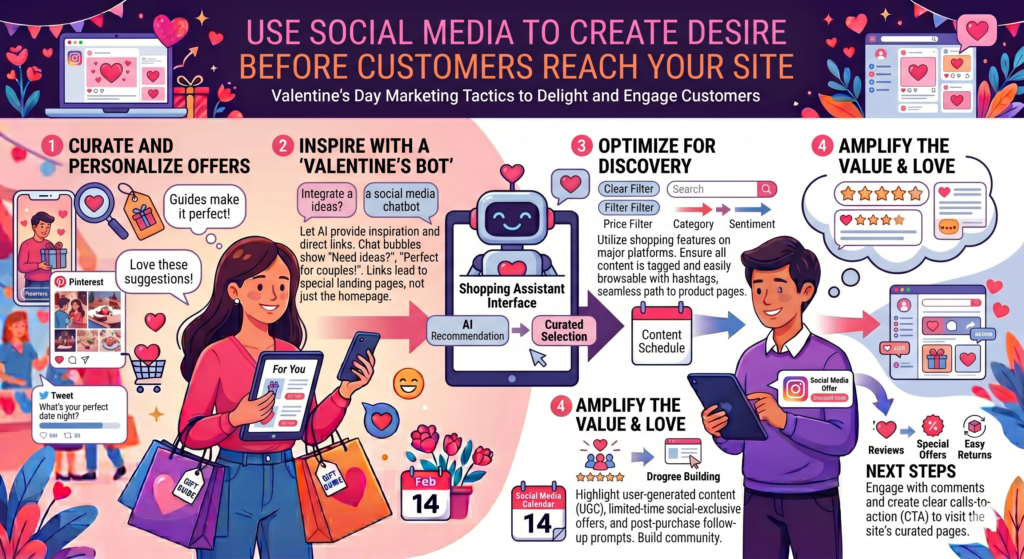
To stand out, your content needs a point of view. It should not only show what you sell. It should show that you understand the emotions, stress, humor, and small stories around Valentine’s Day.
Good social content makes people stop because it feels true.
Your social content should talk about real Valentine’s Day moments
The strongest Valentine’s Day posts often come from simple human truths. People forget to plan. People overthink gifts. People say they do not want anything, but they still want to feel remembered.
People want a gift that feels personal, but they do not always know what that means. People in new relationships do not want to do too much. People in long-term relationships want to avoid doing the same thing every year.
These are not just content ideas. They are buying triggers.
A brand can turn each of these moments into useful content. A short video can show three gifts for someone who says they do not need anything. A carousel can explain how to choose a gift based on how someone spends their free time. A reel can show a last-minute gift rescue. A simple post can ask followers what gift actually made them feel seen.
This kind of content works because it starts with the customer’s life, not the brand’s product list.
Behind-the-scenes content can make your brand feel more human
Valentine’s Day is emotional, so people respond well to brands that feel warm and real. Behind-the-scenes content can help with that. Show how orders are packed. Show your team choosing their favorite gifts. Show the making of a product. Show the care that goes into the packaging. Show the note-writing station. Show the small details customers may not notice at first.
This is not just about looking cute. It builds trust. When people see the process, they feel closer to the product. They can picture the gift being prepared. They can feel the care behind it.
For service brands, behind-the-scenes content can work too. A digital marketing agency, for example, can show how it helps brands plan seasonal campaigns. A restaurant can show its Valentine’s Day menu prep. A salon can show the setup for Valentine’s Day bookings. A SaaS brand can show how customers use its tool to send better messages, manage offers, or create smoother experiences.
The goal is to turn your brand from a seller into a helpful presence.
User-generated content can make your campaign feel more trusted
People trust other people. That is why user-generated content can be powerful during Valentine’s Day. A customer photo, short review, unboxing clip, or story can do more than a polished ad because it feels real.
Ask past customers to share how they used your product as a gift. Ask them to tag your brand. Ask them to share what made the gift special. You can also invite customers to share stories around love, friendship, self-care, or appreciation.
The best user-generated content does not need to be perfect. In fact, it often works better when it feels natural. A real customer holding your product in a real room can feel more believable than a studio shot.
You can then use this content across your emails, product pages, ads, and social posts. Make sure you get permission before using customer content in your marketing. That small step protects trust and keeps the relationship clean.
Social proof should be placed where buying doubt is highest
Social proof is not only for social media. It should also support the buying path. If a product is popular for Valentine’s Day, say so on the product page. If customers often mention fast delivery, show that review near shipping details. If buyers love the packaging, place those comments near the gift wrap option.
The right proof in the right place can answer doubts before the customer leaves.
A review that says “It arrived beautifully packed and my partner loved it” is more useful during Valentine’s Day than a generic five-star rating. It speaks to the buyer’s real concern. They want to know if the gift will feel good when received.
Do not bury that kind of proof. Bring it forward.
Build Paid Ads Around The Buyer’s Situation, Not Just The Product
Paid ads can drive strong Valentine’s Day sales, but only when the message matches the buyer’s stage and need. A common mistake is running one broad Valentine’s Day ad to everyone. That usually leads to weak results because not all buyers are thinking the same way.
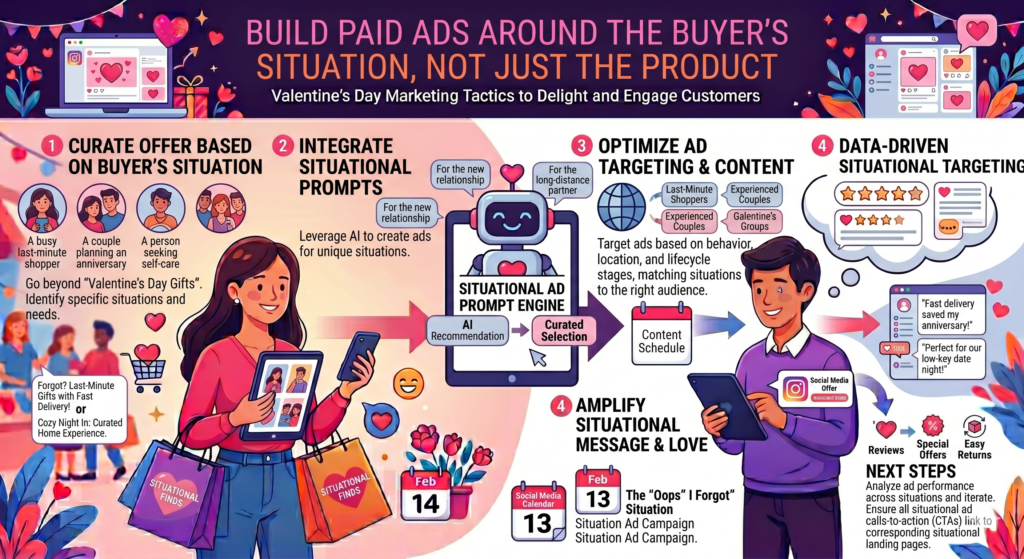
Some people are planning early. Some are comparing gifts. Some are waiting for payday. Some are shopping at the last minute. Some are buying for a partner. Some are buying for a friend. Some are buying for themselves. Each group needs a different message.
If your ads speak to everyone the same way, they may not feel personal to anyone.
Early ads should focus on inspiration and saving ideas
At the start of the campaign, your ads should help people discover options. Many buyers are not ready to buy yet, but they are willing to save, click, browse, and think. This is the time to promote gift guides, bestsellers, quizzes, bundles, and idea-led landing pages.
The copy should feel light. It can say, “Not sure what to get them yet?” or “Start with gifts that feel personal.” These lines work because they match the early buyer’s mindset. They are not pushing too hard. They are opening a helpful path.
The goal of these ads is not always immediate purchase. Sometimes the goal is to build warm audiences. People who visit your gift guide, view products, start a quiz, or add items to cart can later see more direct ads.
This is how you make the campaign smarter as the holiday gets closer.
Middle-stage ads should help customers compare and choose
Once people have visited your site or engaged with your content, your ads can become more specific. This is where you can show product benefits, bundles, reviews, and gift reasons.
A retargeting ad should not simply say, “Come back and buy.” It should give the customer a fresh reason to return. If they viewed a gift guide, show them bestsellers from that guide. If they viewed a product, show a review about gifting. If they abandoned cart, remind them about shipping cutoffs or gift note options.
The message should always answer the question, “Why should they come back now?”
If the customer is still deciding, proof helps. If they are worried about time, delivery clarity helps. If they are unsure about the gift, recipient-based copy helps. If they are worried about price, a bundle or value message helps.
Last-minute ads should be clear, calm, and very easy to act on
Last-minute Valentine’s Day ads should not be clever at the cost of clarity. When time is short, people need simple choices. Tell them what is still available, when it can arrive, and what option is safest.
A strong last-minute ad might promote digital gift cards, local pickup, same-day delivery, printable gift notes, instant access, or fast-shipping items. The copy should make the buyer feel rescued, not embarrassed.
Words like “still time” can work well because they create relief. The customer does not need a lecture about planning earlier. They need a clean way to solve the problem now.
This is also where brands can win loyalty. If you help someone at the last minute, they may remember you next year.
Use Personalization To Make Customers Feel Like You Understand Them
Personalization can make a Valentine’s Day campaign much stronger, but only when it feels useful. It should not feel creepy or forced. The goal is simple. Help the customer find the right gift faster and make the buying experience feel more relevant.
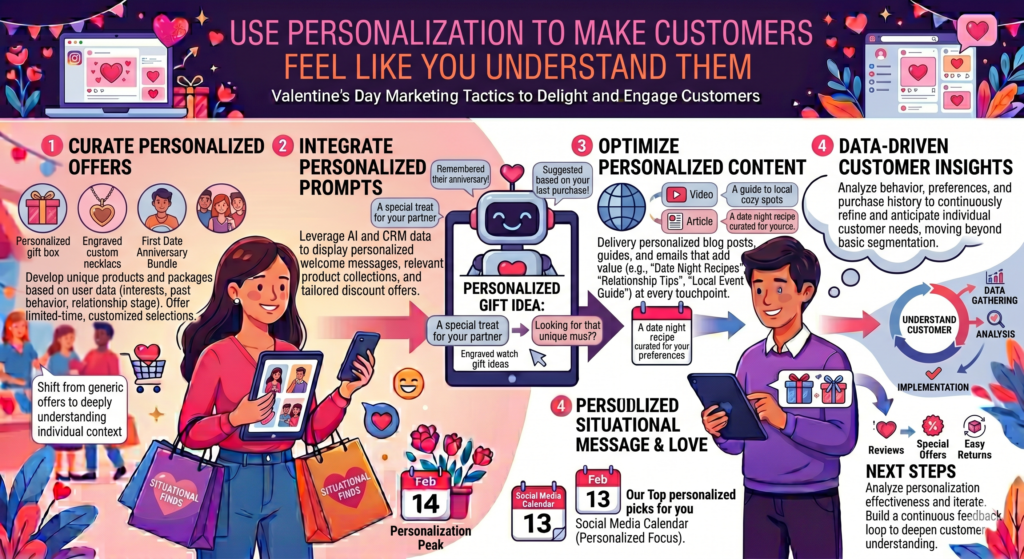
Good personalization is not about using someone’s name in every email. It is about showing the right message, product, or offer based on what the customer needs.
Your quiz can turn gift stress into an easy buying path
A simple gift quiz can work very well during Valentine’s Day. It does not need to be complex. It can ask who the gift is for, what kind of mood the buyer wants to create, what budget they have, and when they need the gift delivered.
The result should feel helpful. Do not use the quiz only as a trick to collect emails. Use it to give a real recommendation. Explain why the recommended product fits. Show one main choice and a few backup choices. Make the next step clear.
A quiz also gives you useful data. You can learn which gift types people want, which budgets are most common, and which relationship categories drive the most interest. That insight can shape your emails, ads, and future campaigns.
For example, if many quiz users choose “new relationship,” you can create more content around gifts that feel thoughtful but not too serious. If many choose “long-distance,” you can promote gifts that ship well and include personal notes. If many choose “self-care,” you can build a stronger self-love campaign.
Returning customers should see messages based on what they already like
Past purchase behavior can make Valentine’s Day marketing much more relevant. A returning customer who bought skincare last year may respond well to a new self-care bundle. A customer who bought a gift card may need a more personal option this year. A customer who bought a premium product may be open to a higher-value bundle.
Your emails and site messages can reflect this without sounding strange. You do not need to say, “We saw that you bought this exact item last year.” That can feel too direct. Instead, use gentle framing, such as “Loved by customers who enjoy calming gifts” or “A new pick for fans of our best-selling care sets.”
Personalization should feel like good service. It should make the customer think, “This brand gets what I like,” not “This brand is watching me.”
Personalization should also respect people who do not celebrate the day in a romantic way
Not everyone experiences Valentine’s Day the same way. Some people are single. Some are grieving. Some are tired of romantic messaging. Some prefer friendship, family, pets, or self-care. Some simply do not care about the holiday.
Smart brands leave room for all of that.
This does not mean your campaign should become vague. It means you can create more than one path. Romantic gifts can still be part of the campaign, but they do not need to be the whole campaign. You can also speak to friendship, gratitude, community, self-love, and small acts of care.
This wider view can help your brand reach more people without losing warmth. It also makes your campaign feel more modern and more human.
Make Valentine’s Day Content That Feels Helpful Before It Feels Promotional
Content is often the quiet engine behind a strong Valentine’s Day campaign. Ads may bring attention. Emails may push the sale. Product pages may close the order. But content is what helps people trust the brand before they are ready to buy.
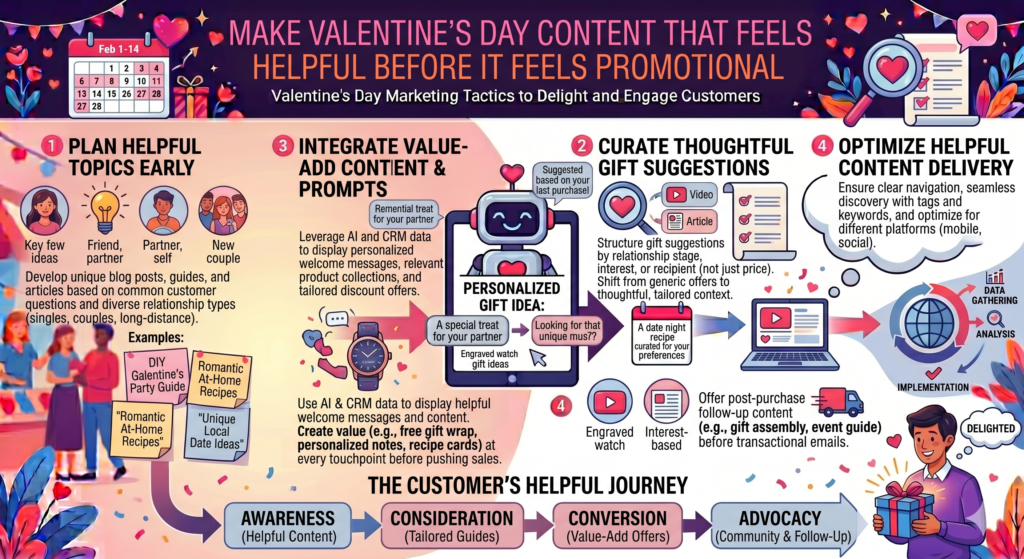
This matters because Valentine’s Day shoppers are often unsure. They may not know what to buy, how much to spend, what message to write, or how to make a simple gift feel personal. If your brand helps them answer those questions, you become more than a store. You become the guide.
The best content does not scream, “Buy from us.” It helps the customer solve the small problem sitting in their mind. Once that problem is solved, buying from you feels like the natural next step.
Your Valentine’s Day blog content should answer real buying questions
Many brands write Valentine’s Day blog posts that sound nice but do not help the reader take action. They talk about love, joy, gifts, and memories, but they do not guide the customer toward a clear decision. That kind of content may look good on the surface, but it rarely drives strong results.
A better approach is to build content around real questions. What should someone buy in a new relationship? What is a good last-minute gift that does not feel lazy? What can someone send to a long-distance partner? What are thoughtful gifts for people who do not like big romantic gestures?
What should someone write in a gift note? What is a good Valentine’s Day gift for a friend, parent, coworker, or loyal customer?
These questions are useful because they come from real uncertainty. When your article answers them clearly, the reader feels helped. That feeling builds trust.
For example, a brand that sells candles can write about how to create a simple Valentine’s Day night at home. A food brand can write about how to plan a sweet surprise without booking a restaurant. A fashion brand can write about outfit ideas for different kinds of Valentine’s Day plans.
A service business can write about how to show customer appreciation during the season.
The topic should connect naturally to what you sell, but it should not feel forced. The reader should feel like the article would still be useful even if they do not buy right away.
Your content should move the reader from idea to action
Helpful content should not leave the reader with more work to do. It should lead them toward a simple next step. This does not mean stuffing the article with product links. It means placing the right next step at the right moment.
If you are writing about gifts for new relationships, show a few options that feel thoughtful but not too serious. If you are writing about long-distance Valentine’s Day ideas, mention products that ship well, digital gifts, message cards, or surprise delivery.
If you are writing about self-care, guide readers toward items that create calm, comfort, or a small daily ritual.
The key is to keep the link between advice and product clear. Do not interrupt the reader with random promotion. Let the product appear as a natural answer to the problem you just discussed.
This is where many brands go wrong. They write an article with some helpful ideas, then suddenly drop a hard sales message that feels out of place. A smoother path works better. First, name the problem. Then explain the thinking. Then show a simple option that solves it.
Content should reduce doubt, not add more choices
A good Valentine’s Day article does not need to show every product you sell. In fact, too many choices can make the reader freeze. The goal is not to show the full catalog. The goal is to help the customer feel sure.
If you recommend a product, explain why it fits. Say who it is for. Say what kind of feeling it creates. Say when it is the right choice. This is what turns a product mention into useful guidance.
A simple phrase like “This works well for someone who loves quiet evenings more than big plans” is far more useful than “Shop our best-selling gift.” It helps the reader match the product to a real person. That match is what makes the purchase feel personal.
Your non-product content can still drive strong sales
Not every Valentine’s Day content piece needs to be a gift guide. Some of the best content supports the emotional side of the holiday. A brand can create note-writing guides, date-night ideas, customer appreciation templates, self-care rituals, friendship celebration ideas, or small surprise ideas.
This kind of content works because it gives customers more than a product. It gives them a way to use the product better.
For example, if you sell stationery, a post about what to write in a Valentine’s Day card can lead naturally to your cards. If you sell coffee, a post about creating a slow morning ritual can lead naturally to your gift box. If you sell beauty products, a post about building a relaxing night routine can lead naturally to your self-care bundle.
The article should make the customer feel more capable. That is a powerful feeling. When your brand helps someone create a better moment, they are more likely to trust your products.
Use Storytelling To Make Simple Products Feel More Meaningful
Valentine’s Day is one of the best times to use storytelling because the holiday is already emotional. But storytelling in marketing does not mean writing long, dramatic copy. It means giving the customer a small scene they can picture.
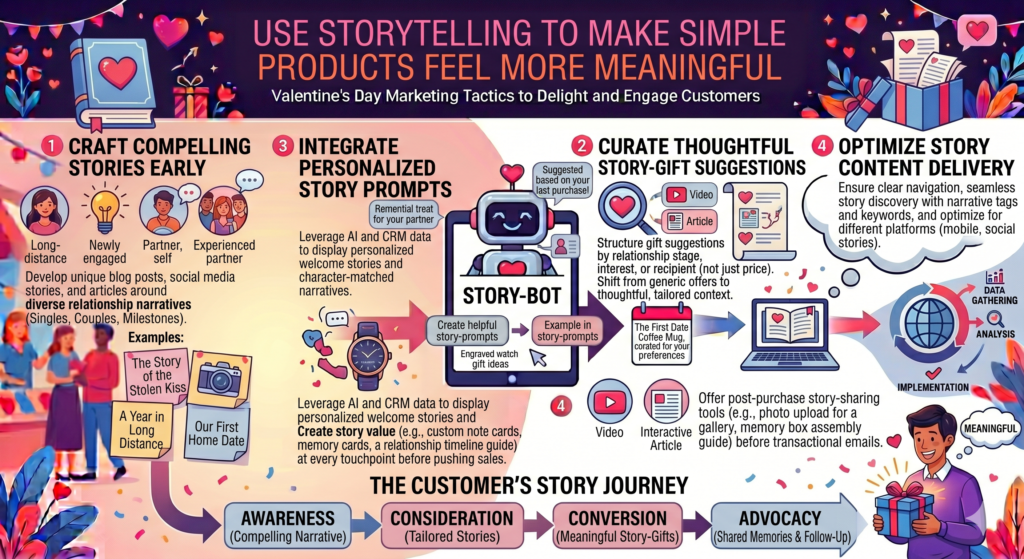
People buy faster when they can imagine the product in use. They need to see the moment in their mind. They need to picture the smile, the surprise, the quiet dinner, the message card, the first sip, the soft blanket, the shared dessert, or the small box waiting at the door.
A story turns a product from an item into an experience.
Your product story should be short, clear, and easy to picture
A strong product story does not need many words. It only needs the right words. The goal is to help the buyer imagine giving or receiving the gift.
Instead of saying, “This gift set includes three premium bath products,” you could say, “This is for the person who needs one quiet evening with no rush, no noise, and no one asking for anything.” The second version creates a scene. It makes the gift feel like relief, not just soap and lotion.
Instead of saying, “Our cookies are made fresh,” you could say, “Send this when you want their day to feel warmer before they even open the box.” That line gives the product a role in the customer’s life.
Storytelling works because it connects the item to a human outcome. The product still matters, but the feeling becomes clearer.
Your customer should be the hero of the story, not your brand
Many brands make themselves the center of the campaign. They talk about their quality, their history, their process, and their values. Those things can matter, but Valentine’s Day customers care most about what the gift helps them do.
Your brand is not the hero. The customer is.
The customer wants to be thoughtful. The customer wants to make someone smile. The customer wants to feel proud of the gift they chose. Your brand is the helper that makes that possible.
This shift changes the copy. Instead of saying, “We created the perfect Valentine’s Day collection,” say, “You can make the day feel special without planning something huge.” Instead of saying, “Our gift boxes are beautifully packed,” say, “They will know you thought about every detail before they even see what is inside.”
The focus moves from your effort to the customer’s result. That makes the message stronger.
A good story makes the buyer feel smart for choosing you
People like to feel that they made a good choice. Your campaign should support that feeling. When a customer buys from you, they should feel like they found something that fits, not like they settled for what was available.
You can create this feeling through careful product framing. Tell them why the gift is not just nice, but right. Tell them why it suits a certain kind of person or moment. Tell them how it helps create a better experience.
This is especially useful for products that are common in Valentine’s Day campaigns. Flowers, sweets, candles, jewelry, beauty products, clothing, and meals are everywhere. Storytelling helps your version feel different. It gives the customer a reason to choose yours.
Brand stories should feel honest, not overly polished
Customers can sense when a story is too perfect. Valentine’s Day copy can quickly become cheesy if it tries too hard. The best stories feel simple and true.
Talk about small moments. Talk about the gift arriving at the right time. Talk about someone opening a message after a long day. Talk about a couple choosing a night in instead of a crowded restaurant. Talk about a friend sending a small surprise just because the day felt heavy.
These stories feel human because they are close to real life. They do not need grand claims. They need honest detail.
If your brand has a real story behind a product, use it. If a product was inspired by a customer request, say that. If your team chose certain items because they work well together, explain why. If your packaging was designed to make gifting easier, show that.
Real details make the story believable. Believable stories sell better than perfect ones.
Create Valentine’s Day Campaigns For People Beyond Romantic Couples
One of the biggest missed chances in Valentine’s Day marketing is focusing only on couples. Romance is still important, but it is not the whole market. Many people use Valentine’s Day to celebrate friends, family, pets, coworkers, customers, teams, and themselves.
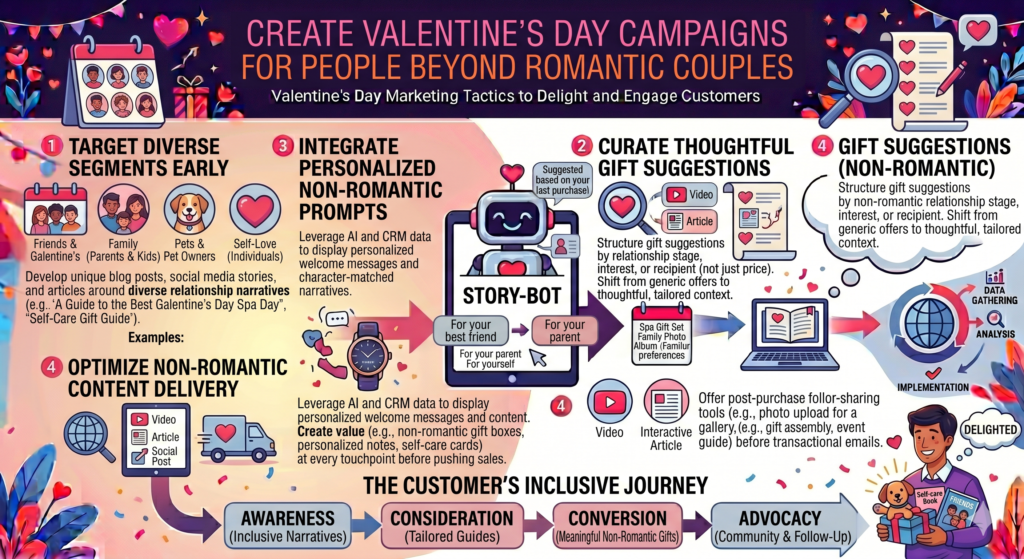
This matters because broader campaigns can bring in more buyers. They also make your brand feel more welcoming. Not every customer wants roses and romance. Some want humor. Some want comfort. Some want friendship. Some want self-care. Some want a simple way to say thank you.
When your campaign includes more forms of care, more people can see themselves in it.
Self-love campaigns should feel grounded and real
Self-love is a strong Valentine’s Day angle, but it must be handled with care. If the copy feels shallow, customers may ignore it. A weak self-love campaign says, “Treat yourself” and stops there. A stronger campaign explains why the person deserves a small moment of care.
This can work well for beauty, wellness, food, fashion, books, home goods, fitness, education, digital products, and services. The message should be simple. Valentine’s Day does not have to be about waiting for someone else to make the day feel special. It can also be about choosing one small thing that makes your own day better.
But the tone should not sound lonely or sad. It should feel calm and confident. The customer is not buying because something is missing. They are buying because they are allowed to enjoy something for themselves.
That difference matters.
Friendship and family campaigns can feel warm without being overly sweet
Friendship-based Valentine’s Day campaigns can work very well because they feel easy and low-pressure. A customer may not buy an expensive gift for a friend, but they may buy something small, funny, useful, or sweet. The same is true for siblings, parents, children, teachers, coworkers, or neighbors.
Your copy should match that lighter mood. It can be warm without sounding dramatic. It can say, “For the friend who always replies in three seconds,” or “For the person who makes ordinary days better.” These kinds of lines feel personal because they point to real relationships.
This is also a good place for lower-priced bundles, small add-ons, buy-more-save-more offers, and shareable products. If the gift is easy to send and easy to enjoy, customers may buy more than one.
Customer appreciation can turn Valentine’s Day into a business growth moment
For B2B brands, agencies, coaches, consultants, SaaS companies, and local service businesses, Valentine’s Day can become a customer appreciation campaign. It does not need to be romantic. It can simply be about showing gratitude.
A business can send a helpful resource, a thank-you email, a small gift, a discount on a future service, a bonus consultation, or a referral reward. The message should be sincere and specific. Do not say, “We value our customers” in a cold way. Say what you appreciate about them. Thank them for trusting you, growing with you, sharing feedback, or being part of your community.
This kind of campaign can deepen loyalty. It can also reactivate past customers. A thoughtful message during a warm seasonal moment can remind people why they liked working with you.
Inclusive Valentine’s Day marketing helps your brand feel more human
People notice when a campaign leaves them out. They also notice when a brand makes space for different kinds of love and care. This does not mean your campaign needs to become complicated. It simply means you should avoid assuming every buyer is shopping for a romantic partner.
Use copy that gives people options. Talk about partners, friends, family, teams, customers, and self-care where it fits. Let the customer choose the path that matches their life.
This makes your campaign more flexible. It also gives you more content angles, more email segments, more landing page sections, and more ad messages.
A wider campaign does not weaken the romantic message. It adds more doors into the same seasonal moment.
Turn Valentine’s Day Into A Customer Retention Campaign, Not Just A One-Day Sale
Many brands treat Valentine’s Day like a short sales spike. They push hard, collect orders, ship gifts, and then move on. That is a mistake. Valentine’s Day can bring in new customers, reactivate old customers, and deepen loyalty if you plan the follow-up well.
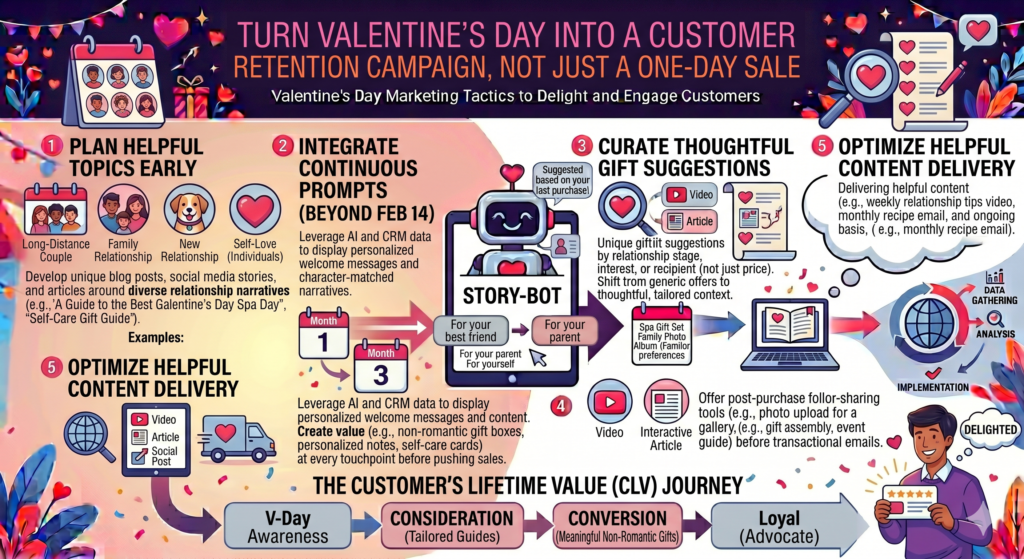
The sale is not the end of the campaign. It is the start of the next relationship.
This is especially important because many Valentine’s Day buyers may be first-time customers. They may have found you through a gift guide, ad, social post, or recommendation. If their first experience is good, they may come back for birthdays, anniversaries, holidays, or personal purchases.
But that repeat purchase will not happen by accident. You need a follow-up plan.
The post-purchase experience should make the buyer feel proud
After someone buys a Valentine’s Day gift, your job is to reduce worry and build excitement. The order confirmation email should not feel cold. It should reassure the buyer that they made a good choice.
You can remind them what happens next. Tell them when the order will ship. Explain how the gift will be packed. Mention the gift note if they added one. If there is a delivery deadline, make the timeline clear.
You can also add a small emotional touch. A line like “You chose something thoughtful, and we are getting it ready with care” feels warmer than a plain receipt. It makes the buyer feel good about the purchase.
This matters because the buyer is not only waiting for a product. They are waiting for a moment to go well.
After delivery, help the customer get more value from the gift
Once the product has arrived, the campaign should continue. Send a follow-up email that helps the customer or recipient use the gift well. If it is a food item, share serving ideas. If it is skincare, share a simple routine. If it is a home product, share styling tips. If it is a digital product, share the easiest first step. If it is a service, explain how to get the best result.
This follow-up should not feel like another hard sell. It should feel like care. You are helping the customer enjoy what they already bought.
That kind of support builds trust. It also opens the door for another purchase later.
The best retention campaigns connect Valentine’s Day to the next occasion
After Valentine’s Day, the next buying moment may be closer than you think. It could be an anniversary, birthday, spring event, Mother’s Day, Father’s Day, graduation, wedding season, or a personal milestone.
Your follow-up can gently guide customers toward these next moments. For example, a brand can send an email a few weeks later with a message about keeping thoughtful gifting simple all year.
A customer who bought for a partner may be interested in anniversary gifts. A customer who bought for themselves may be interested in a monthly self-care offer. A customer who bought for a friend may respond to birthday reminders.
You can also invite customers to save important dates in their account or sign up for gift reminders. This turns a one-time seasonal buyer into someone your brand can help again.
Valentine’s Day customers should be segmented after the campaign ends
Once the campaign is over, do not treat all buyers the same. Segment them based on what they bought, who they likely bought for, how much they spent, whether they used a discount, whether they bought a gift card, and whether they were new or returning.
This helps you send smarter messages later.
A first-time buyer may need a welcome sequence that introduces the brand. A gift buyer may need help finding something for themselves. A high-value buyer may be a good fit for premium offers. A discount buyer may need value-based messages before another promotion. A gift card buyer may need reminders to send digital gifts for future occasions.
The point is to learn from the Valentine’s Day behavior instead of letting that data sit unused.
Valentine’s Day is not only a holiday. It is a signal. It shows what people buy when emotion, timing, and gift intent come together. Smart brands use that signal to improve future campaigns.
Use Valentine’s Day SEO To Capture Buyers Before They Know What To Buy
Valentine’s Day SEO is not only about ranking for broad terms like Valentine’s Day gifts. Those terms are useful, but they are also crowded. Many large retailers fight for them every year. Smaller brands can still win by targeting the more specific searches that real customers use when they are confused, rushed, or looking for something more personal.
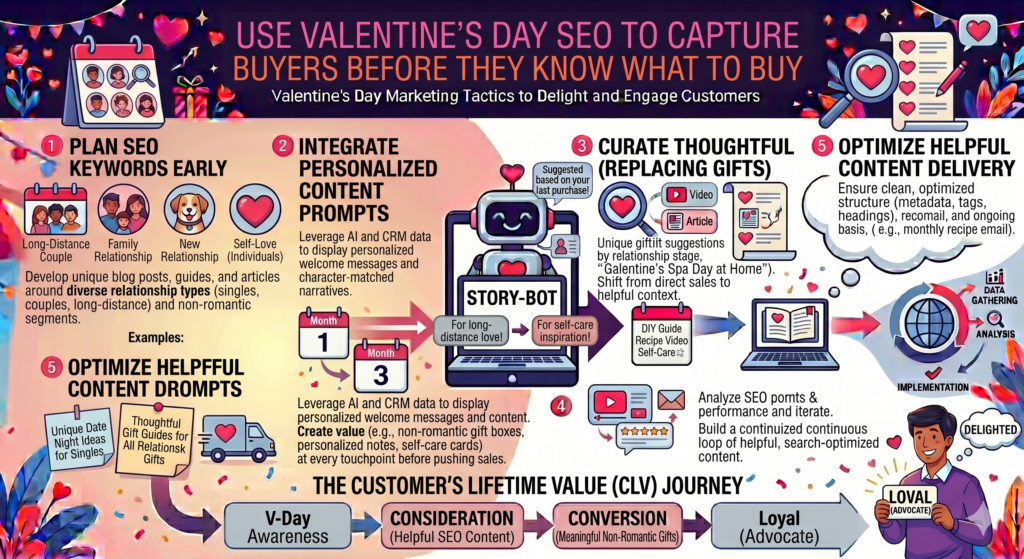
A customer may not search for your product first. They may search for the problem they are trying to solve. They may type “what to get someone I just started dating for Valentine’s Day” or “last minute Valentine’s Day gift that feels thoughtful” or “Valentine’s Day gifts for long distance partner.”
These searches show strong intent. The person may not know what to buy yet, but they are close to making a decision.
This is where smart content can bring in high-quality traffic. You do not need to chase every keyword. You need to own the questions that fit your products, your audience, and your brand voice.
Your SEO plan should be built around buying intent, not search volume alone
Search volume can be tempting. A keyword with a big number looks exciting. But high search volume does not always mean high sales. Some people search broad Valentine’s Day terms just to browse ideas. Others are looking for free messages, quotes, images, or history of the holiday. Those visitors may not be ready to buy.
A smaller search with stronger intent can be more valuable.
For example, someone searching “Valentine’s Day gifts under $50 for wife” has a clearer buying need than someone searching “Valentine’s Day ideas.” Someone searching “same day Valentine’s Day delivery gifts” likely has urgency. Someone searching “what to write in Valentine’s Day card for boyfriend” may need a card, gift, flowers, or personal add-on.
Your SEO strategy should focus on these real buying moments. Think about what the customer is feeling when they search. Are they confused? Are they late? Are they trying to keep the gift casual? Are they trying to make a long-distance relationship feel closer? Are they trying to avoid another boring gift?
When you understand the intent, your content becomes sharper. The article title, heading structure, product mentions, internal links, and calls to action all become easier to write because they are tied to a real customer problem.
Your Valentine’s Day content should be published before the rush begins
Many brands publish seasonal content too late. They wait until February, then wonder why their blog posts do not gain traction. Search engines need time to crawl, index, and rank content. Customers also begin researching before the final buying rush.
For SEO, your Valentine’s Day content should ideally be planned weeks or even months ahead. You can update older seasonal pages each year instead of starting from zero. This is especially useful for gift guides, evergreen advice, and product-led seasonal pages.
A strong Valentine’s Day page can become an asset you improve every year. You can refresh the title, update product picks, improve internal links, add new customer questions, update shipping dates, and make the page more useful. Over time, this can build authority and reduce the need to rely only on ads.
This is one of the most practical moves a brand can make. Paid ads stop when the budget stops. A well-built seasonal SEO page can keep bringing traffic year after year if it is maintained properly.
Your old Valentine’s Day pages should not be abandoned after the season ends
A common SEO mistake is creating new seasonal pages every year and letting old ones die. One year the brand has one Valentine’s Day gift guide. The next year it creates another page with a slightly different URL. Then another. Soon the site has several weak pages competing with each other.
A better approach is to keep one strong main Valentine’s Day hub and update it each year. That page can link to more specific guides, product collections, and blog posts. It becomes the center of your seasonal SEO strategy.
After the holiday, do not delete the page. You can keep it live with a soft message that says the collection will be refreshed for the next season, or you can shift it toward evergreen gift ideas. When the next year comes, update it again.
This keeps the page’s value alive. It also makes your next campaign easier to launch.
Internal linking can turn seasonal traffic into real revenue
Valentine’s Day SEO should not sit alone on your blog. It should connect to your products, collections, guides, and email capture points. If someone lands on an article, they should have a clear path to buy or keep exploring.
For example, an article about gifts for new relationships should link to products that feel light, thoughtful, and not too intense. An article about last-minute gifts should link to items with fast delivery, digital options, or pickup. An article about self-care should link to bundles that create a calm experience.
The links should feel natural. They should not interrupt the reader. They should appear where the advice and product match.
This is where content becomes a sales tool without feeling pushy. The reader gets help first. Then the product appears as the simple next step.
Use SMS And Messaging Carefully Because Valentine’s Day Is Personal
SMS and direct messaging can be powerful during Valentine’s Day because they feel immediate. But that is also why they must be used with care. A text message lands in a more personal space than an email or social post. If the message feels too loud, too frequent, or too generic, it can annoy the customer fast.
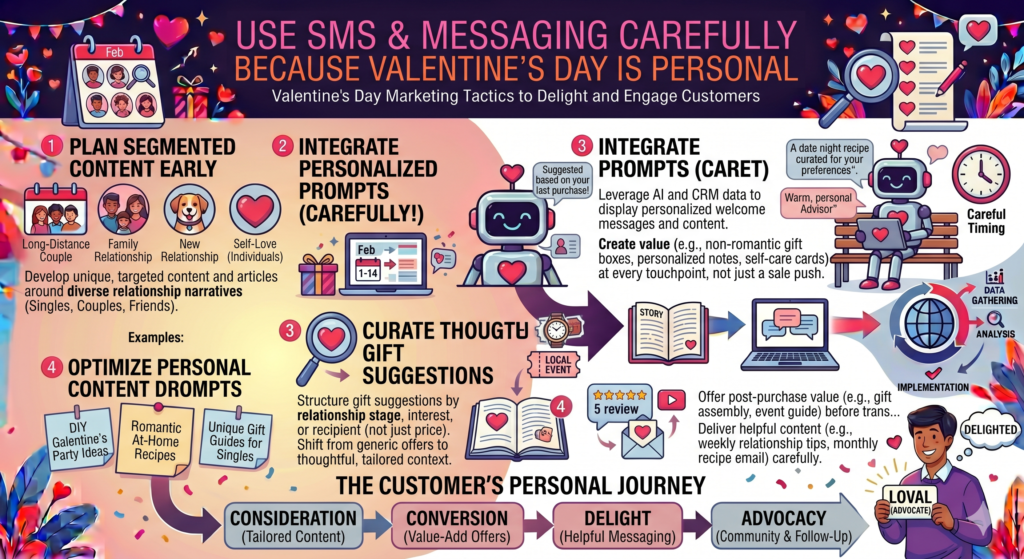
The best Valentine’s Day SMS campaigns are short, useful, and well-timed. They help the customer take action at the right moment. They do not try to say everything.
Your SMS should solve a timing problem, not repeat your email
SMS works best when time matters. This makes it useful for shipping cutoffs, last-minute reminders, limited stock alerts, pickup options, and digital gift options. It should not simply repeat the same message someone already saw in email.
If your email is emotional and detailed, your SMS can be simple and direct. It can remind the customer that today is the last day to order for guaranteed delivery. It can tell them a best-selling gift is back in stock. It can share a short link to a last-minute gift page. It can let them know that digital gift cards are still available.
The message should feel like a helpful nudge. Not a shout.
For example, a strong message could say, “Still need a gift? Our ready-to-send Valentine’s picks can arrive in time if you order today.” That is useful because it gives the customer both urgency and a solution.
Personal timing matters more than high frequency
Many brands send too many messages during seasonal campaigns. This can hurt trust. Valentine’s Day is already full of promotions, so customers become sensitive to noise. More messages do not always mean more sales. Often, better timing does.
A customer who viewed a product but did not buy may need one reminder with a clear benefit. A customer who abandoned cart may need a message about shipping timing or gift note options. A loyal customer may respond well to early access. A last-minute buyer may need a fast option close to the deadline.
Each message should have a reason to exist. If you cannot explain why the customer needs that message now, do not send it.
A good SMS campaign should feel like service, not pressure
The tone of SMS should be calm and clear. Avoid fake panic. Avoid too many emojis. Avoid long messages. Avoid vague promises. The customer should understand the value in seconds.
If the deadline is real, say it plainly. If the offer ends tonight, say it clearly. If delivery is no longer guaranteed, do not pretend it is. Trust is worth more than a quick click.
You can also use messaging after purchase. A delivery update, pickup reminder, or gift note confirmation can make the experience smoother. These are not just operational messages. They are part of the customer experience. When they are done well, they reduce worry and increase confidence.
Direct messages can support high-touch sales when used with permission
For some brands, especially local businesses, service providers, and high-value product sellers, direct messages can help customers choose the right gift. But this should be done with care. Do not spam people. Do not send cold promotional messages that feel invasive.
Instead, invite customers to message you if they need help. A social post can say, “Not sure what to choose? Send us a message and tell us who you are shopping for.” This creates a helpful path. The customer starts the conversation, which makes the interaction feel welcome.
This can work well for boutiques, florists, bakeries, restaurants, salons, photographers, coaches, and local experience-based businesses. It can also work for higher-ticket online products where the buyer may need guidance.
The key is to make the conversation useful. Ask simple questions. Who is it for? What kind of mood do you want? What budget feels right? Do you need it delivered? Then recommend one or two clear options instead of overwhelming them.
Make Your Creative Feel Fresh Without Losing The Valentine’s Day Mood
Valentine’s Day has a strong visual style. Red, pink, hearts, roses, ribbons, candles, chocolates, and soft lighting are everywhere. These cues are useful because they help customers instantly understand the season. But if your creative looks like every other brand, it becomes invisible.
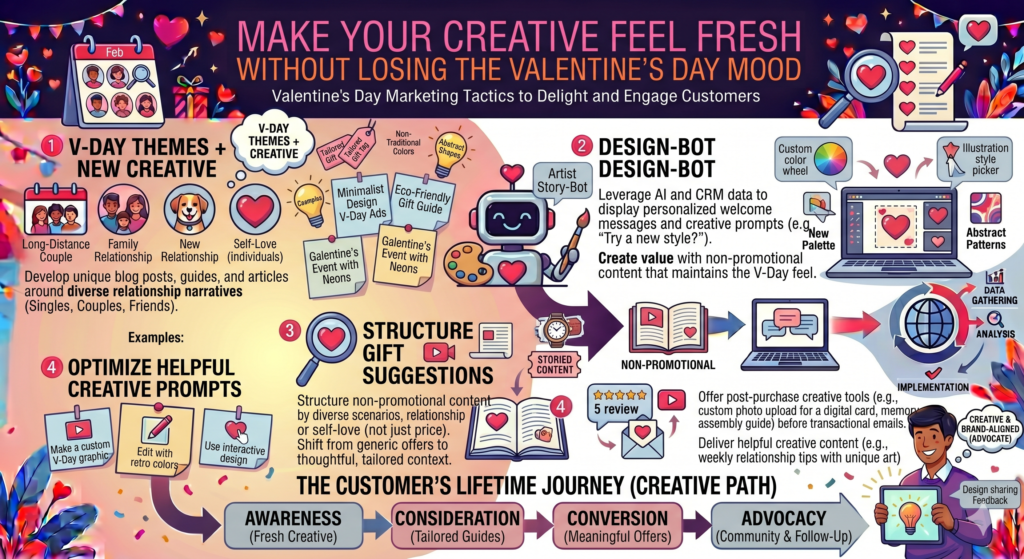
The goal is not to reject the Valentine’s Day mood. The goal is to make it feel like your brand.
Your colors, images, layouts, videos, and copy should carry the emotion of the day while still feeling distinct. A luxury brand may use quiet, elegant visuals. A playful brand may use humor and bright images. A wellness brand may use calm, soft scenes. A food brand may use close-up textures and warm moments. A B2B brand may use clean, thoughtful appreciation themes.
The season gives you the frame. Your brand gives it the voice.
Your creative should show the moment, not just the product
A plain product photo can work, but a product-in-moment photo is often stronger during Valentine’s Day. People need to imagine the gift being used, opened, shared, or enjoyed.
Show the product on a breakfast tray. Show the box near a handwritten card. Show the dessert being shared at home. Show the skincare set beside a warm towel. Show the flowers at a desk with a note. Show the digital gift being opened on a phone. Show the customer experience around the product.
These images help people feel the value faster. They do not just see what they are buying. They see what the gift does.
This is especially important for simple products. A product that looks ordinary on a white background can feel much more meaningful when shown in a real Valentine’s Day moment. The context adds emotion.
Video should focus on simple scenes people recognize
Short video can be very effective for Valentine’s Day, but it does not need to be complex. A simple scene can do more than a polished production if it feels true.
You can show someone packing an order with care. You can show a gift being placed at a door. You can show a person writing a short note. You can show a before-and-after of a simple date night setup. You can show three gift ideas for three different kinds of people. You can show what to buy when you forgot to plan.
The best videos often feel like a useful shortcut. They help the viewer decide quickly.
For example, a video titled “What to get when they say they do not want anything” can hold attention because it starts with a real problem. A video titled “Three gifts that feel thoughtful but not too serious” speaks to new relationships. A video titled “Last-minute gifts that still feel personal” speaks to urgent buyers.
The title matters because it tells the viewer why to keep watching.
Your creative should avoid looking too perfect to feel real
Overly polished Valentine’s Day creative can sometimes feel cold. Customers may enjoy beautiful visuals, but they also want to feel that the gift fits real life. Real homes, real hands, real notes, real packaging, and real customer moments can make creative feel more believable.
This does not mean your visuals should look messy. It means they should feel lived-in. A small wrinkle in a napkin, a half-open gift box, a real handwritten note, or a warm table scene can make the image feel human.
People connect with details. Those details help the campaign feel less like an ad and more like a moment they could actually create.
Your copy and visuals should work together, not fight each other
Creative becomes weaker when the copy says one thing and the image says another. If your copy promises a cozy night in, the image should feel cozy. If your copy talks about last-minute gifts, the image should show speed, ease, or ready-to-send options. If your copy focuses on premium gifting, the image should show quality, detail, and care.
Every part of the ad, email, landing page, and product page should support the same idea. This makes the message easier to understand. It also makes the brand feel more confident.
A customer should not have to work hard to understand what you are offering. The feeling should land quickly.
Use Influencers And Partners To Add Trust Before The Holiday Rush
Influencer and partner campaigns can work very well for Valentine’s Day because gifts are easier to trust when someone else shows how they fit into real life. A brand can describe a product all day, but a creator showing how they would give it, use it, style it, or react to it can make the idea feel more natural.
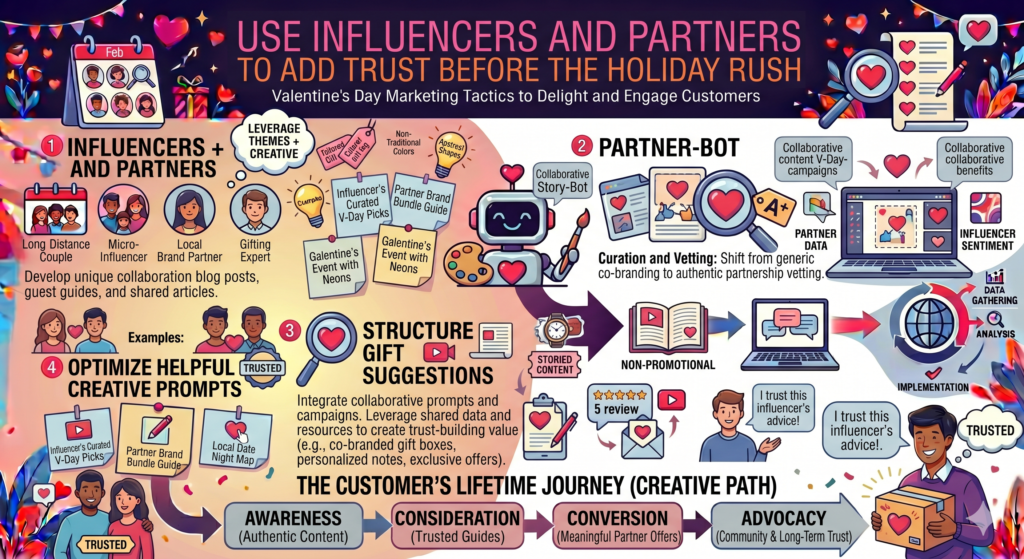
The key is choosing partners who match the campaign goal. A creator with a huge audience is not always the best choice. A smaller creator with strong trust and the right audience can drive better results.
Valentine’s Day is personal, so the voice recommending the gift matters.
Your influencer brief should focus on the story, not just the product
A weak influencer brief says, “Show this product and mention the discount code.” That can work sometimes, but it often feels flat. A stronger brief gives the creator a clear situation to build around.
For example, you can ask the creator to show how they would choose a gift for someone who is hard to shop for. You can ask them to create a cozy night-in setup. You can ask them to share a last-minute gift idea that does not feel rushed. You can ask them to show a self-care Valentine’s routine. You can ask them to compare three gift options for different relationship stages.
This kind of brief gives the content a reason to exist. It also lets the creator sound more natural because they are telling a small story instead of reading a product pitch.
The product should appear as part of the story. That makes the recommendation feel more trusted.
Partner campaigns can help you reach buyers in a warmer way
Partnerships are often underused during Valentine’s Day. A good partner campaign can help two brands reach each other’s audiences with a stronger offer or better experience.
A bakery can partner with a florist. A salon can partner with a restaurant. A clothing brand can partner with a jewelry brand. A fitness coach can partner with a wellness brand. A digital marketing agency can partner with a CRM, design tool, or local business group to create a customer appreciation campaign.
The best partnerships make sense to the customer. They should not feel random. The combined offer should create a better Valentine’s Day experience than either brand could create alone.
For example, a restaurant and a flower shop could create a dinner-and-bouquet package. A skincare brand and a candle brand could create a self-care night bundle. A photographer and a makeup artist could create a couple’s shoot package. A SaaS brand and an agency could create a “show your customers love” campaign with templates and strategy support.
The partnership works when the customer sees the value right away.
Your partner campaign should have one clear landing page
If two brands run a Valentine’s Day campaign together, the customer journey must be simple. Do not make people jump between pages and guess what to do. Create one clear landing page that explains the offer, who it is for, what is included, how to buy, and when the deadline is.
The copy should explain the shared value. Why are these two brands together? What better moment do they create? What problem do they solve for the buyer?
A joint campaign can create trust because each brand borrows credibility from the other. But that trust only turns into sales if the path is easy.
Creator content can be reused across the campaign with care
Influencer content should not live only on the creator’s page. With permission, it can be used in ads, emails, product pages, landing pages, and social proof sections. This helps the campaign feel more real and varied.
A short creator video can become a paid ad. A creator quote can support a product page. A gift reaction can become an email section. A styling video can become a landing page asset. A self-care routine can become a blog or social post.
This gives you more value from the partnership and makes your brand content feel less repetitive.
But always set usage rights clearly before the campaign begins. Make sure both sides know where the content can be used, how long it can run, and whether it can be edited. This protects the relationship and avoids confusion later.
Create A Valentine’s Day Customer Experience That Feels Smooth From First Click To Final Delivery
A strong Valentine’s Day campaign is not only about the message. It is also about the experience after someone clicks. A customer may love your ad, open your email, and like your product, but if the experience feels confusing, slow, or risky, they may still leave.
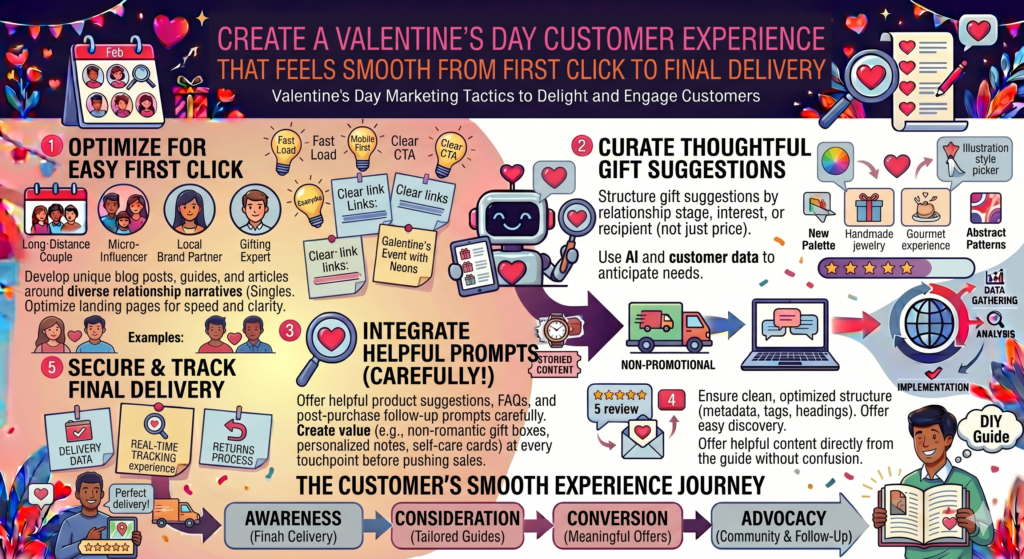
This matters even more during Valentine’s Day because the gift is tied to a fixed date. The customer is not just buying something. They are trusting you with a moment. If the gift arrives late, looks careless, or creates stress, the emotional damage is bigger than a normal order issue.
That is why the full customer journey needs to feel safe, clear, and thoughtful.
Your delivery promise should be clear before the customer reaches checkout
Delivery is one of the biggest concerns during Valentine’s Day. Customers want to know if the gift will arrive on time. They do not want to dig through shipping pages or guess based on vague words like “fast delivery.”
Make the delivery promise easy to see on product pages, collection pages, cart pages, and checkout pages. Use plain language. Say the last order date. Say which shipping option is needed. Say what happens if the deadline has passed.
If you offer local pickup, same-day delivery, digital gifts, printable cards, or delayed gift messages, make those options clear too. These can save last-minute customers and keep them from leaving your site.
The goal is to remove doubt before it grows. A customer who feels unsure about delivery may abandon the cart even if they love the product. A customer who feels guided is more likely to buy.
Your packaging should support the promise your marketing makes
If your ads and emails talk about thoughtful gifting, the package must feel thoughtful too. The box, wrapping, note, receipt handling, and unboxing experience all shape how the gift feels.
This does not mean every brand needs luxury packaging. It means the packaging should match the emotional promise. A simple kraft box with a clean note can feel warm. A bright sleeve can feel playful. A soft tissue wrap can feel premium. A small message card can make even a modest gift feel personal.
The recipient should feel that care went into the gift before they even see the product.
For online brands, this is especially important because the package is part of the first physical contact with the customer. The website sold the idea. The package proves it.
Your gift note experience should be easy and mistake-proof
Gift notes are small, but they matter a lot during Valentine’s Day. They let the buyer add meaning without much effort. If you offer gift notes, the process should be simple.
The note field should be easy to find. The character limit should be clear. The preview should show how the message will appear. If you support emojis or special characters, say so. If you do not, say that too. Small details like this prevent mistakes.
You can also help customers write better notes. A short prompt near the note field can make a big difference. For example, you can say, “Keep it simple. A few honest words often mean the most.” That takes pressure off the buyer.
If your brand wants to go further, you can offer message ideas on a separate page or inside the checkout flow. Keep them simple and human. Not everyone knows what to write, and helping them with that makes your brand feel useful.
Your support team should be ready for emotional questions, not just order questions
Valentine’s Day support is different from normal support. Customers may ask about delivery, changes, address errors, gift notes, damaged items, or late orders. But behind those questions is often stress. They are worried that the gift will not go well.
Your support team should be trained to respond with warmth and clarity. A cold answer may solve the technical issue, but it may not calm the customer. A better answer explains what can be done, what cannot be done, and what the next best option is.
If an order cannot arrive in time, do not simply say it is too late. Offer a digital card, printable message, pickup option, future delivery note, or alternative product if possible. The customer may still be disappointed, but they will feel helped.
The way you handle these moments can create loyalty. People remember brands that save them from stress.
Use Valentine’s Day To Grow Your Email List Without Making It Feel Like A Trick
Valentine’s Day can bring a lot of new visitors to your site. Some will buy right away. Many will not. If you do not capture some of that interest, you lose a large part of the campaign value.
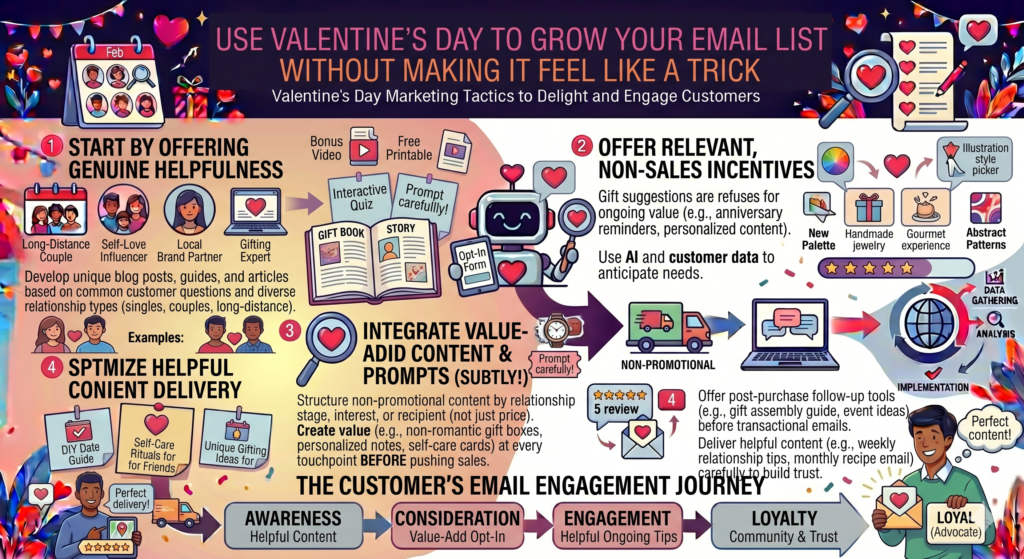
But list growth must be done with care. A pop-up that screams for an email the second someone lands on your site can hurt the experience. During Valentine’s Day, people are already in a hurry. If your sign-up offer feels annoying, they may close the page.
The best email capture offers feel useful. They help the customer choose, save, plan, or get something that improves the gifting experience.
Your sign-up offer should match the reason the visitor came to your site
A generic “Join our newsletter” message is weak during Valentine’s Day. It gives the visitor no clear reason to act now. A better offer is tied to the season.
You can offer early access to Valentine’s Day bundles. You can offer a gift guide by budget. You can offer a quiz result. You can offer a reminder before shipping deadlines. You can offer a small discount on a first order. You can offer note-writing ideas or a printable gift card template.
The offer should feel like help, not a trap.
For example, a pop-up that says “Get 10% off” may work, but a message that says “Still choosing? Get our quick guide to gifts that feel thoughtful without overthinking it” may attract a more engaged lead. The second message speaks to a real problem.
When the lead magnet matches the customer’s situation, the email address feels like a fair exchange.
Your welcome email should continue the Valentine’s Day path right away
Once someone joins your list, do not send a dull welcome email that ignores why they signed up. If they joined through a Valentine’s Day offer, the first email should help them take the next step.
If they signed up for a gift guide, send the guide and highlight the easiest choices. If they took a quiz, send the result and explain why the recommendation fits. If they signed up for shipping reminders, send the key dates and best options. If they joined for a discount, show them what to buy with it.
The welcome email should feel immediate and useful. The customer should think, “Good, this helped.”
This is also a good place to introduce the brand, but keep it short. The customer came for a gift solution, not a long brand history. Show your value through helpful guidance first.
Your email capture should create segments you can use later
Every Valentine’s Day sign-up can teach you something. If someone joins through a self-care guide, they may be interested in wellness or personal use. If they joins through a long-distance gift guide, delivery and message features may matter. If they joins through a luxury gift page, premium offers may work better.
Use these clues to segment future emails. This makes your follow-up smarter after Valentine’s Day.
A person who wanted a gift for a partner may later respond to anniversary ideas. A person who wanted a gift for a friend may respond to birthday reminders. A person who wanted self-care may respond to a subscription, routine, or seasonal refresh.
This is how a short holiday campaign becomes a long-term growth asset.
Your exit-intent offer should help shoppers who are still unsure
Some visitors leave because they are not ready. Others leave because they are confused. An exit-intent message can help, but it must be simple.
Instead of only offering a discount, ask what kind of help they need. You can point them to a gift guide, quiz, bestsellers page, last-minute collection, or customer support chat. You can also offer to save their cart or send gift ideas to their inbox.
The message should not feel desperate. It should feel like a final helpful nudge.
A strong exit message could say, “Still deciding? Save our easiest Valentine’s Day gift ideas and come back when you are ready.” This respects the customer’s pace while keeping the relationship open.
Build Valentine’s Day Offers For Different Buying Speeds
Not every Valentine’s Day customer buys at the same pace. Some people plan early. Some wait until the week before. Some buy the night before and hope for a miracle. Your campaign should serve all of them, but not with the same message.
If you speak to every customer as if they are ready right now, you miss the ones still thinking. If you speak to every customer as if they have weeks left, you lose the urgent ones. Timing matters.
A smart campaign changes as the date gets closer.
Early buyers need inspiration, choice, and confidence
Early buyers are usually open to ideas. They may be comparing options and looking for something that feels different from last year. Your message should help them explore without pressure.
This is the right time for gift guides, quizzes, early access, limited bundles, pre-order offers, and planning content. The tone can be relaxed. You can talk about choosing with care, finding something personal, and avoiding the rush.
Early buyers may also be willing to spend more because they are not under panic. They have time to consider premium gifts, custom items, or thoughtful bundles. This is where your brand can show higher-value options before the last-minute discount noise begins.
Make them feel smart for planning ahead. You can reward them with early access, free gift wrap, a bonus note card, or first choice of limited items.
Mid-season buyers need simple choices and strong reasons
Mid-season buyers know Valentine’s Day is coming, but they may still be undecided. They need help narrowing the options.
This is the time to promote bestsellers, relationship-based guides, customer reviews, and clear product comparisons. Your copy should help them match the gift to the person.
Instead of saying, “Shop now,” say what makes a product the right fit. Explain that one gift is best for cozy nights, another is best for long-distance love, another is best for someone who enjoys small daily comforts, and another is best for someone who likes bold surprises.
This type of guidance reduces choice overload. It makes the customer feel like they are not just picking at random.
Last-minute buyers need rescue, not shame
Last-minute buyers are often stressed. They may have forgotten, delayed the decision, or waited too long because they were unsure. Your brand should not make them feel bad. It should help them solve the problem quickly.
Last-minute messaging should focus on what is still possible. Show gifts that can still arrive. Show pickup options. Show digital gift cards. Show instant experiences. Show printable notes. Show fast support.
Do not overcomplicate the page. A last-minute buyer does not want to browse fifty items. They want the safest good choice.
Use calm, clear copy. “There is still time to send something thoughtful” feels better than “Last chance before it is too late.” Both create urgency, but the first one also creates relief.
Post-Valentine buyers still matter because the season does not end on February 14
Some customers will miss the date. Others will want a late gift, a make-up gift, or something for a celebration that happens after Valentine’s Day. Do not shut the campaign off too suddenly.
A post-Valentine message can say that thoughtful gifts are still worth sending. It can speak to belated surprises, anniversary-style moments, or self-care after a busy week. It can also invite people to plan ahead for the next occasion.
This is also the right time to follow up with customers who browsed but did not buy. Their original need may still exist, even if the holiday has passed. A softer message may bring them back without feeling stale.
Measure What Actually Matters In Your Valentine’s Day Campaign
A Valentine’s Day campaign should not be judged only by total sales. Revenue matters, of course, but it does not tell the full story. You need to understand which messages worked, which products moved, which channels brought the best customers, and where people dropped off.
Without this, every year becomes guesswork. You may repeat weak tactics because they looked busy. You may ignore strong tactics because their value was not obvious at first glance.
Measurement turns the campaign into a learning system.
You should track the path from first touch to final purchase
Many Valentine’s Day customers interact with more than one channel before buying. They may see an Instagram post, click an ad later, read a gift guide, open an email, and then buy from a retargeting ad. If you only look at the final click, you may give too much credit to the last channel and too little credit to the content that created interest.
Look at the full path where possible. Which content brought people in? Which emails made them return? Which ads closed the sale? Which landing pages converted best? Which products had high views but low purchases?
This helps you see the campaign clearly.
For example, your gift guide may not have the highest direct sales, but it may help many customers choose. Your last-minute SMS may close sales, but only because earlier emails warmed people up. Your influencer content may not drive huge direct traffic, but it may improve ad performance when reused as social proof.
A good review looks at how the pieces worked together.
Your conversion data should be read by buyer intent
Do not only measure products. Measure intent. Which category performed better: gifts for partners, gifts for friends, self-care gifts, last-minute gifts, premium gifts, or budget gifts? Which pages had the longest time on page? Which offers had the highest cart rate? Which products were added to cart but not purchased?
These answers show what customers really wanted.
If self-care gifts performed better than expected, that may become a larger angle next year. If last-minute digital gifts had strong conversion, you may want to promote them earlier. If premium bundles got views but few sales, the offer may need better proof, clearer value, or stronger packaging.
The goal is not just to know what happened. The goal is to know what to improve.
Customer feedback can explain what the numbers cannot
Data tells you where something happened. Feedback helps explain why. After the campaign, read reviews, support tickets, social comments, email replies, and post-purchase survey answers.
Customers may tell you that shipping was clear, packaging felt special, the gift note was hard to find, the bundle was useful, or the product page did not answer a key question. These comments are gold.
They show you the small parts of the experience that shape trust. They also give you copy for next year. If many customers say, “This arrived beautifully packed,” that phrase can become proof on future product pages. If people ask the same delivery question again and again, that answer should be more visible next time.
Your post-campaign review should happen while the details are still fresh
Do not wait months to review the campaign. Right after Valentine’s Day, gather the key numbers, customer comments, creative examples, and team notes. Document what worked, what failed, and what should change.
This review does not need to be complicated. It should be clear enough that your team can use it next year without starting from zero.
Look at timing, offers, channels, content, products, customer segments, support issues, shipping performance, and repeat purchase behavior. Save the winning subject lines, ad angles, landing page sections, product descriptions, and customer reviews.
A good Valentine’s Day campaign becomes easier and stronger each year because the learning compounds.
Conclusion:
Valentine’s Day is not just a date on the retail calendar. It is a moment when people are already thinking about connection. That makes it powerful. But it also means brands must handle it with care.
The brands that win are not always the loudest. They are not always the ones with the biggest discounts. They are the ones that understand what customers are really trying to do. A customer is not simply buying a product. They are trying to create a feeling. They are trying to say something. They are trying to make someone feel remembered, loved, thanked, comforted, or seen.















Comments are closed.