
WinSavvy Editorial Standards
How this article was created
People do not hire lawyers the way they buy shoes, book hotels, or choose a restaurant. When someone looks for a lawyer, there is usually stress behind the search. They may be facing a divorce, a business dispute, a personal injury, a criminal charge, an estate issue, or a legal problem they do not fully understand yet. They are not just looking for information. They are looking for safety, clarity, and someone who can guide them without making them feel small.
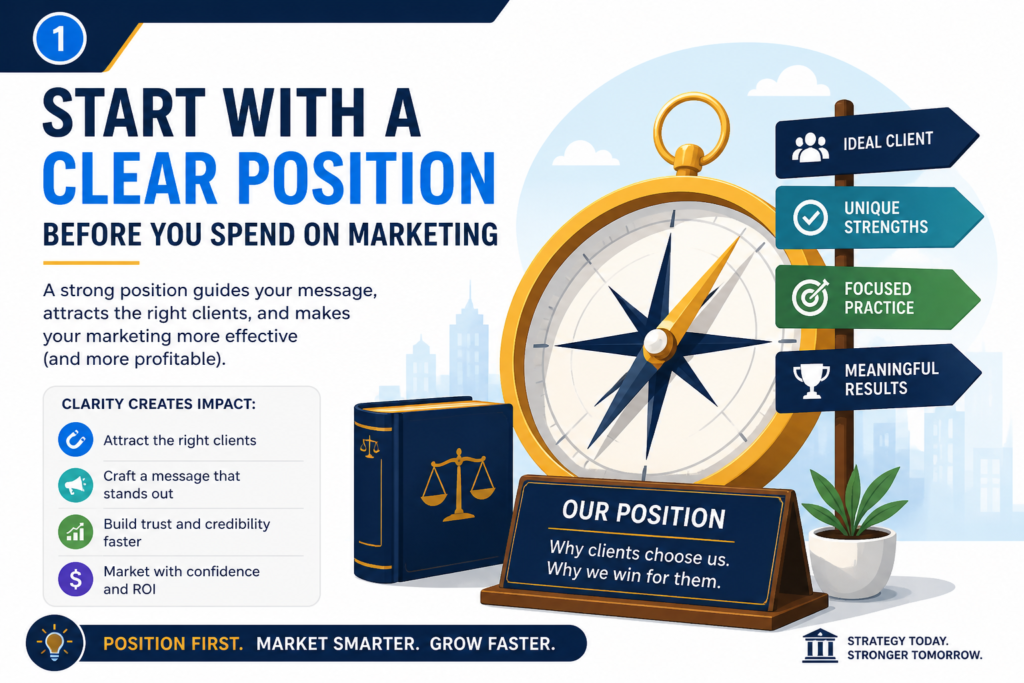
Start With a Clear Position Before You Spend on Marketing
A law firm cannot grow well if the market does not understand what it stands for. This is one of the biggest problems in legal marketing. Many firms try to look broad because they do not want to lose any possible case.
They say they handle many legal issues, serve many types of clients, and offer personal attention. The problem is that this sounds like every other law firm.
When a person is looking for a lawyer, they are not trying to study your whole firm. They are trying to answer one simple question in their mind: “Is this the right lawyer for my exact problem?” If your message makes them work too hard to answer that question, they leave.
Strong marketing starts with sharp positioning. This means your firm must be clear about who it helps, what problems it solves, why it is different, and why someone should trust it now. You do not need to sound clever. You need to sound clear. A confused visitor rarely becomes a client.
Your law firm should not try to sound right for everyone
Many law firms make the mistake of using safe, general language. They say things like “trusted legal support” or “experienced attorneys fighting for you.” These phrases are not wrong, but they are too common. They do not help a client see why your firm is the better choice.
A family law firm, for example, should not market itself the same way to every person going through a divorce. A high-conflict custody case is different from a quiet uncontested divorce. A business owner with assets has different fears than a young parent with limited money.
A good message speaks to the real pain behind the legal issue.
Your positioning should make people feel that you understand their situation before they ever call you. That feeling is powerful. It lowers doubt. It builds trust. It makes the next step feel safer.
Your message should make the client feel seen
A strong law firm message is not only about your years of experience. It is about the client’s fear, goal, and next step. People want to know that you understand what is at stake. They want to know that you have handled matters like theirs before. They want to know that talking to you will not make things more confusing.
For example, instead of saying your firm offers “business litigation services,” you could say that you help business owners resolve disputes before they drain time, money, and focus from the company. That is still simple, but it speaks to the real problem.
The client is not just worried about a lawsuit. They are worried about distraction, cost, damage, and losing control.
This kind of message should appear across your website, ads, email campaigns, social pages, and consultation process. When people see the same clear idea again and again, they remember it. When they remember it, they are more likely to trust it.
Build a Website That Turns Visitors Into Calls
Your website is not just an online brochure. It is often the first serious meeting between your law firm and a potential client. Before someone calls, they may read your homepage, check your attorney bio, look at reviews, scan your practice area pages, and compare your site with two or three other firms.
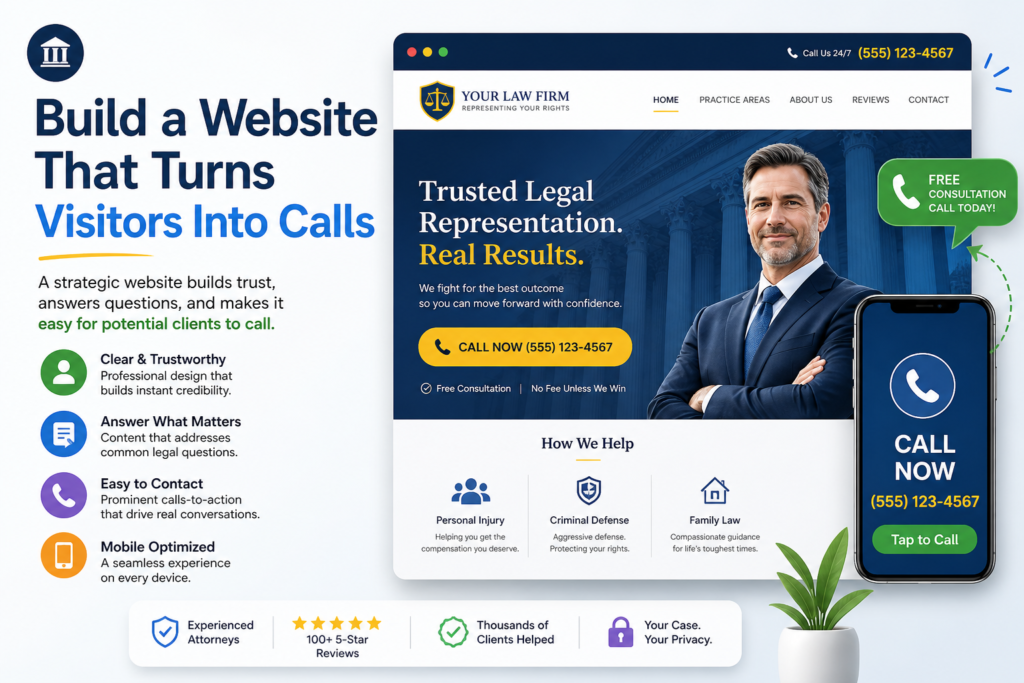
This means your website has a real job. It must help people feel that your firm is credible, easy to understand, and worth contacting. A beautiful design is helpful, but design alone does not bring cases. The site must answer questions, remove fear, and guide visitors toward action.
A law firm website should feel calm, clear, and useful. It should not overwhelm people with heavy legal language. It should not hide the phone number. It should not make every page sound the same. Every page should help a visitor move one step closer to trust.
Your homepage must make the right promise fast
The homepage has to do a lot of work quickly. When someone lands on it, they should know what kind of law you practice, who you help, where you serve clients, and why they should keep reading. If they need to scroll for a long time before understanding this, the page is weak.
The top section of your homepage should be simple. It should speak to the client’s problem, not just your firm’s pride. A headline like “Helping injured workers in Dallas get clear legal help after serious workplace accidents” is stronger than “Dedicated legal representation with integrity and excellence.”
The first one tells the visitor where they are and why it matters. The second one sounds nice but could belong to any firm.
The homepage should also make it easy to contact you. Your phone number should be visible. Your consultation button should be clear. Your contact form should not ask for too much information. The more effort you require, the more people you lose.
Your website should reduce fear before asking for contact
A legal website should not only push people to call. It should help them feel ready to call. This is an important difference. Many people delay contacting a lawyer because they are afraid of cost, judgment, confusion, or pressure. Your website can reduce those fears before the first conversation.
You can do this by explaining what happens after they contact you. Tell them whether the first call is free. Explain how long it usually takes. Let them know what information they should have ready. Tell them they will not be pressured. Simple details can make a big difference.
Attorney bio pages also matter here. Many firms write cold bios that read like resumes. A good attorney bio should still show skill, but it should also show the human side of the lawyer. Clients want to know that the person helping them is not only qualified, but also calm, clear, and easy to speak with.
Use Local SEO to Become the Obvious Choice in Your Area
Most law firm growth starts close to home. Even if your firm can serve clients across a wider region, many people still search with local intent. They type phrases like “divorce lawyer near me,” “personal injury attorney in Chicago,” or “estate planning lawyer in Tampa.”
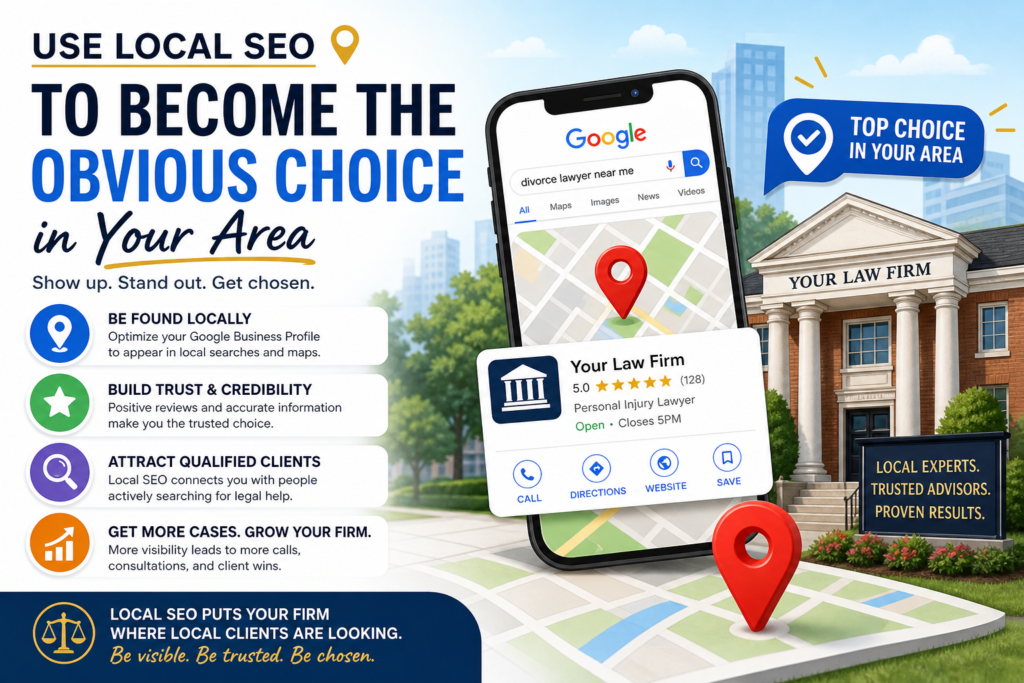
If your firm does not show up in those searches, you are invisible to many ready-to-hire clients.
Local SEO is the work of helping your firm appear when people in your area search for legal help. It includes your website, Google Business Profile, local pages, reviews, directories, and the way your firm’s name, address, and phone number appear across the web.
This is not something to treat as a side task. For many firms, local search is one of the strongest lead sources because the person searching already has intent. They are not just browsing. They have a problem and are looking for help now.
Your Google Business Profile should be treated like a second homepage
Your Google Business Profile may be seen before your website. When someone searches for your type of firm in your city, your profile can show your reviews, photos, services, location, phone number, hours, and posts. This profile can either build trust fast or make your firm look inactive.
Many law firms set up their profile once and forget it. That is a mistake. Your profile should be complete, updated, and aligned with your website. Your practice areas should be accurate. Your description should be clear. Your photos should look professional.
Your hours should be correct. Your service areas should match the markets you actually want to serve.
Reviews are especially important. A firm with strong reviews and clear responses often earns more clicks than a firm that only has a better-looking website. People trust what other clients say because it feels less polished and more real.
Your local pages should be useful, not copied
Many law firms create city pages that all say almost the same thing. They change the city name and leave the rest of the page nearly identical. This does not help users, and it does not build much trust. A local page should feel like it was truly written for people in that area.
If your firm serves multiple cities, each local page should explain the legal issue in that specific market. Mention local courts when useful. Talk about common client concerns in that area. Explain how your firm helps people nearby. Keep the language natural.
The goal is not to trick Google by adding city names. The goal is to prove that your firm is relevant and helpful for that location. When your page gives real value, it has a better chance of ranking and converting.
Create Practice Area Pages That Sell Without Sounding Pushy
Practice area pages are some of the most important pages on a law firm website. These are the pages people visit when they are close to needing help. A person reading a criminal defense page, immigration page, probate page, or injury page is often not casually browsing.
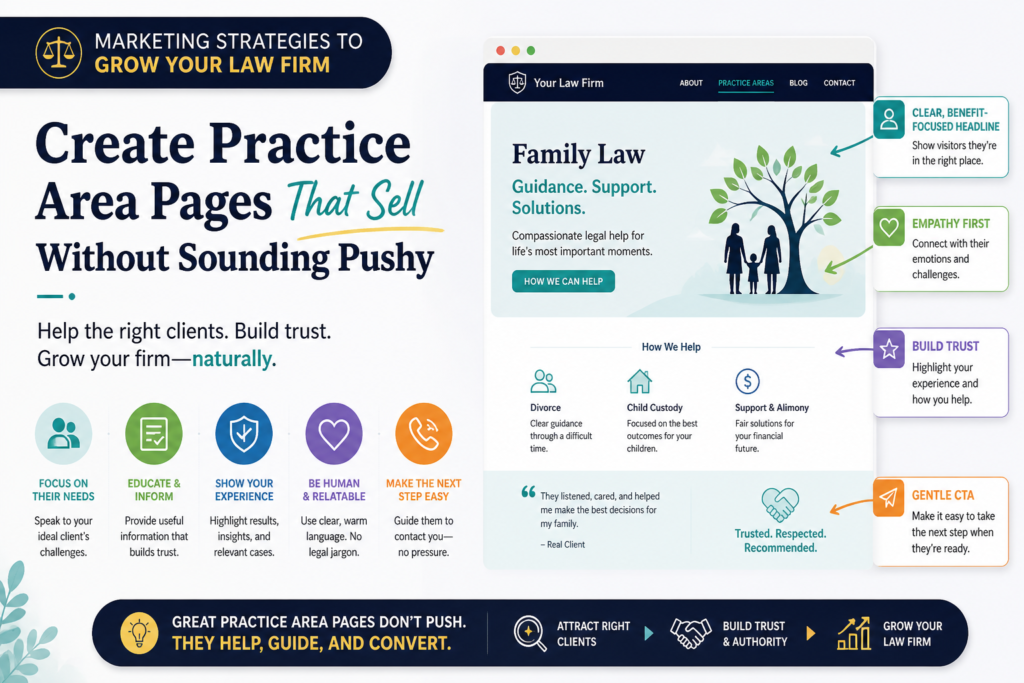
They are trying to understand their options and decide who to contact.
Many law firms waste these pages by making them too thin. They list the service, add a few general paragraphs, mention experience, and end with a contact button. That is not enough. A strong practice area page should guide the reader from confusion to clarity.
The page should explain the problem, the risks, the process, how your firm helps, what the client should do next, and why timing matters. It should also answer the hidden questions the client may be afraid to ask.
Each practice area page should match one clear search intent
One page should not try to rank for everything. If your firm handles car accidents, truck accidents, motorcycle accidents, slip and fall cases, and wrongful death matters, each major service should have its own strong page.
A person hurt in a truck accident has different concerns than someone hurt in a small car crash. The law, damages, insurance issues, and emotions may be different too.
When you create a focused page, the content becomes more useful. Google can better understand it. Visitors can better relate to it. Your firm can explain its experience in a more direct way.
This does not mean writing long pages just for the sake of length. It means covering the topic fully enough that a real person feels helped. A useful page often keeps visitors longer because it answers the questions already in their mind.
Your page should show the cost of waiting
Legal clients often wait too long before they call. Sometimes they hope the problem will go away. Sometimes they think they can handle it alone. Sometimes they are embarrassed. Your practice area pages should explain why waiting can make the issue harder.
This must be done carefully. You do not want to scare people in a cheap way. You want to help them understand real risks. For example, evidence may disappear. Deadlines may pass. The other side may gain an advantage. Insurance companies may use delays against them.
A business dispute may become more expensive if ignored.
When you explain the cost of waiting in plain words, you help people take action. You also show that your firm is practical, not just legal. Clients want a lawyer who understands real life, not only rules and documents.
Write Content That Answers Real Client Questions
Content marketing works very well for law firms when it is done with care. The problem is that many firms write content only for search engines. They publish articles that sound stiff, broad, and empty. They answer simple questions in a way that feels copied from every other legal blog.
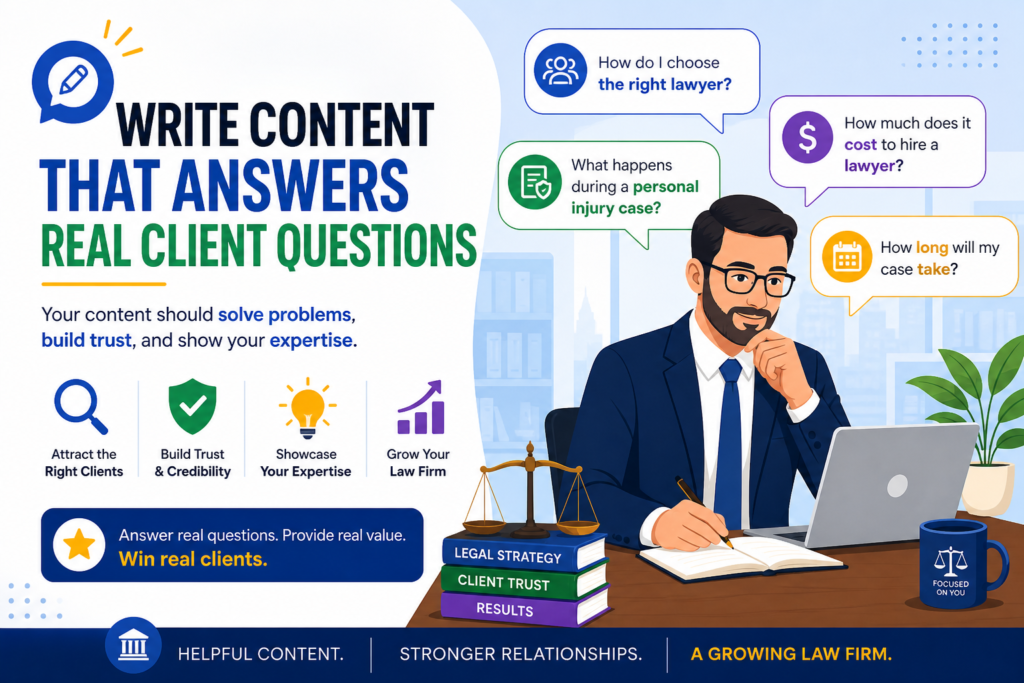
Good content should sound like a helpful lawyer explaining things to a worried person across a desk. It should be clear, direct, and useful. It should not make the reader feel stupid. It should not hide behind legal words. It should make the reader think, “This firm understands what I am dealing with.”
Content builds trust before the client is ready to call. Some people will read three or four articles before contacting you. Others may bookmark your site and return later. Some may share your article with a spouse, partner, or friend. This is how content becomes more than traffic. It becomes trust at scale.
Your best content ideas come from client conversations
The strongest blog topics are often hiding inside your intake calls, consultations, emails, and case updates. Every repeated client question is a content idea. Every confusion point is a chance to educate. Every fear you hear often can become an article that helps people feel less alone.
For example, a family lawyer may hear questions about who keeps the house, how custody schedules work, or what happens if one parent refuses to cooperate. A business lawyer may hear questions about contract breaches, unpaid invoices, partner disputes, or employee issues.
A personal injury lawyer may hear questions about medical bills, recorded statements, settlement timelines, or dealing with insurance adjusters.
These topics work because they are real. They are not based on guesses. They come from the exact people your firm wants to reach.
Your content should give enough value to earn trust
Some lawyers worry that giving too much information will stop people from calling. In most cases, the opposite is true. When your content is genuinely helpful, people trust you more. They see your knowledge. They hear your voice. They understand the issue better and often realize they need help.
The key is to educate without pretending every situation is the same. You can explain general steps, common mistakes, and smart questions to ask. You can also make it clear that legal outcomes depend on facts. This protects the reader and your firm.
A good legal blog should not end with a weak line like “contact us today.” It should lead naturally into the next step. After helping the reader understand the problem, explain how your firm can help them review their situation and make a clear plan.
Build Trust With Reviews Before People Ever Contact You
Reviews are not just nice to have. For a law firm, they can shape the decision before a person reads a full page on your website. A potential client may find your firm on Google, see your star rating, read a few client stories, and decide in less than a minute whether you feel safe enough to contact.
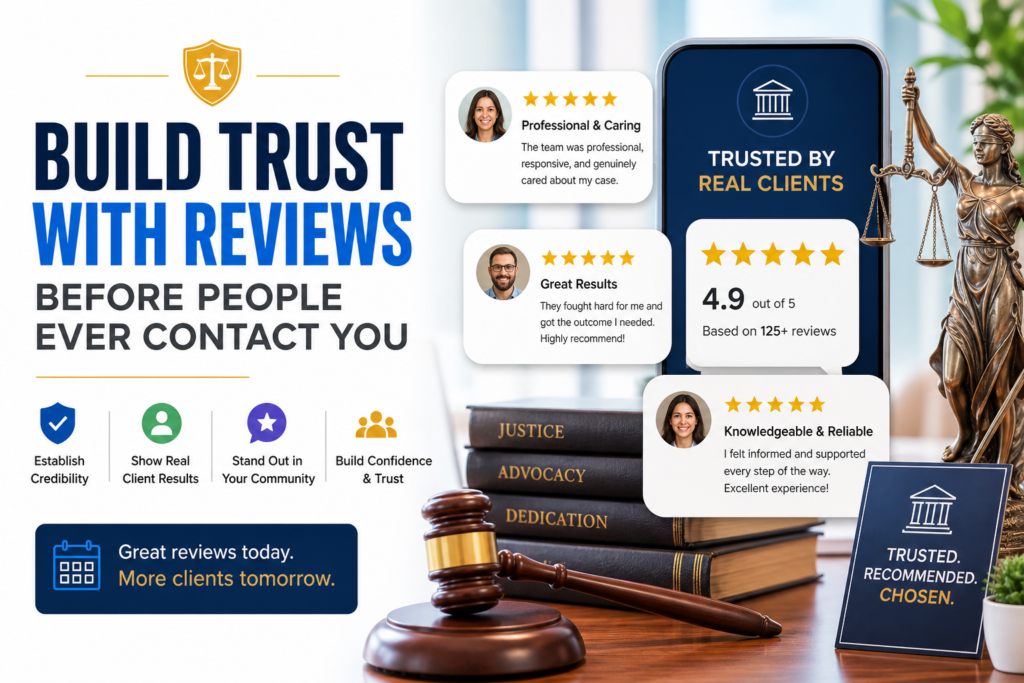
That may sound unfair, but it is how people make decisions when they are stressed. They look for proof. They want to know that others trusted you and felt helped. They want to know that your firm communicates well, acts with care, and does what it says it will do.
A strong review profile makes every other part of your marketing work better. Your ads get more trust. Your local SEO gets stronger. Your website feels more believable. Your consultation calls often start warmer because the person already has a good feeling about your firm.
Your review strategy should be simple and steady
Many law firms only ask for reviews when they remember. This creates long gaps. A firm may serve many happy clients but have very few recent reviews because no one made review requests part of the process.
The better approach is to build reviews into your client journey. When a matter ends well, or when a client clearly expresses thanks, your team should have a calm and respectful way to ask for feedback. The request should feel human, not forced. It should explain that reviews help other people choose legal help with more confidence.
You should also make the process easy. Do not send a long email with five steps. Give the client a direct link and a short note. The easier it is, the more likely they are to act.
Reviews should also be spread across the places that matter. Google is usually the most important for local visibility, but legal directories may also help depending on your practice area and market. The key is to know where your clients actually look before they call.
Your responses to reviews also market your firm
Many law firms focus only on getting reviews and forget that their replies are public too. A thoughtful response can show warmth, professionalism, and care. It tells future clients how your firm treats people.
Your replies should be short, respectful, and careful about privacy. You do not need to share case details. In fact, you should avoid doing that. A simple response that thanks the client and shows appreciation is often enough.
Bad reviews should also be handled with care. Do not argue. Do not sound defensive. Do not reveal private facts. A calm response can protect your reputation even when the review is unfair. People do not expect every business to have perfect feedback. They watch how you respond when something goes wrong.
A strong review system is not about chasing praise. It is about making your real client experience visible. If your firm serves people well, your review strategy should help the market see that more clearly.
Use SEO to Capture People at Every Stage of Their Legal Problem
SEO for law firms is not only about ranking for phrases like “lawyer near me.” Those searches matter, but they are only one part of the full client journey. People search many things before they are ready to contact a lawyer. They search symptoms of the problem, possible risks, timelines, costs, forms, deadlines, rights, and what to expect.
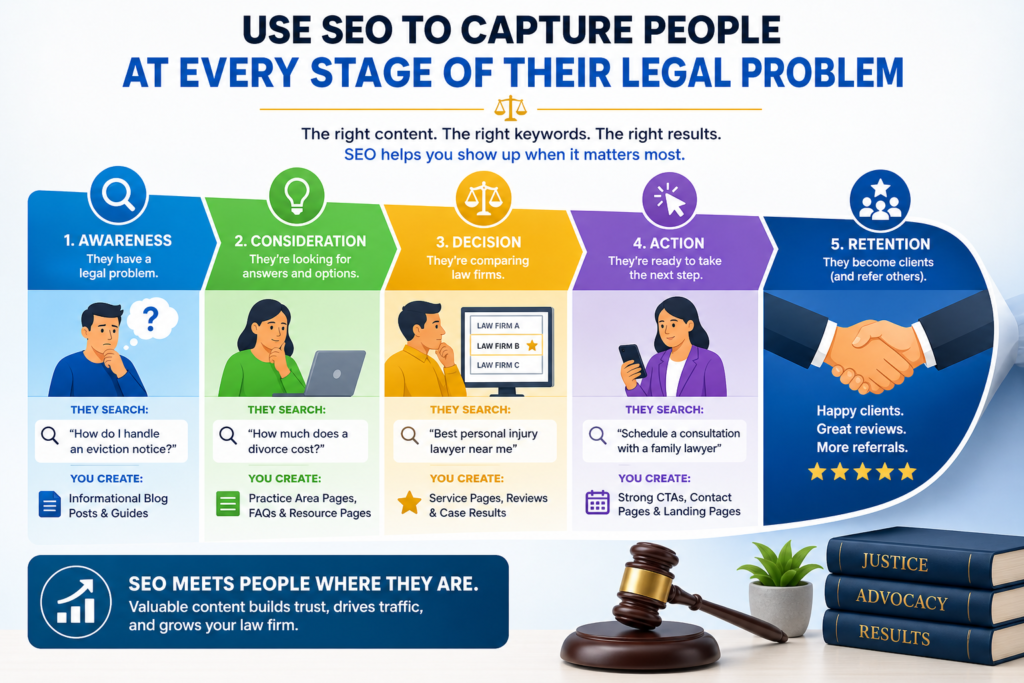
If your firm only targets ready-to-hire keywords, you miss the chance to build trust earlier. A smart SEO strategy meets people at different stages. It helps them when they are confused, when they are comparing options, and when they are ready to act.
This is how your firm becomes familiar before the consultation. By the time someone calls, they may already feel like they know you because your content has guided them through several important questions.
Your SEO plan should include more than service pages
Service pages are important because they target people who already know they need a lawyer. But blog posts, guides, FAQs, local pages, and comparison pages can help you reach people who are still learning.
For example, someone may not search “estate planning attorney” first. They may search “what happens if someone dies without a will” or “how to choose a guardian for children.” Someone with a workplace issue may search “can my employer fire me after I complain” before they search for an employment lawyer.
These early searches are valuable. They show a real problem. They give your firm a chance to teach, build trust, and guide the reader toward the next step.
Your content should connect naturally. A blog post should lead to a related practice area page. A practice area page should lead to a consultation. An FAQ should link to a deeper guide. SEO works better when your site feels like a helpful path, not a pile of separate pages.
Your keywords should match real client language
Lawyers often use words that clients do not use. This can weaken SEO and conversion. A client may not search for “premises liability counsel.” They may search “I slipped in a grocery store and got hurt.” A business owner may not search “commercial litigation attorney.” They may search “client refuses to pay invoice.”
This does not mean you should avoid legal terms completely. It means you should balance them with plain language. Your pages should include the official terms and the words real people use when they explain the problem.
The best keyword research often starts by listening. Look at intake notes. Read consultation questions. Study live chat logs. Ask your team what people say on calls. Then use SEO tools to check search demand. This gives you content that is both searchable and human.
SEO is not just a technical task. It is a listening task. The better you understand how clients think, the better your pages will perform.
Turn Attorney Bios Into Trust-Building Pages
Attorney bios are some of the most visited pages on law firm websites. People want to know who may handle their case. They want to know whether the lawyer is experienced, calm, sharp, and easy to talk to. Yet many attorney bios are written like formal resumes.
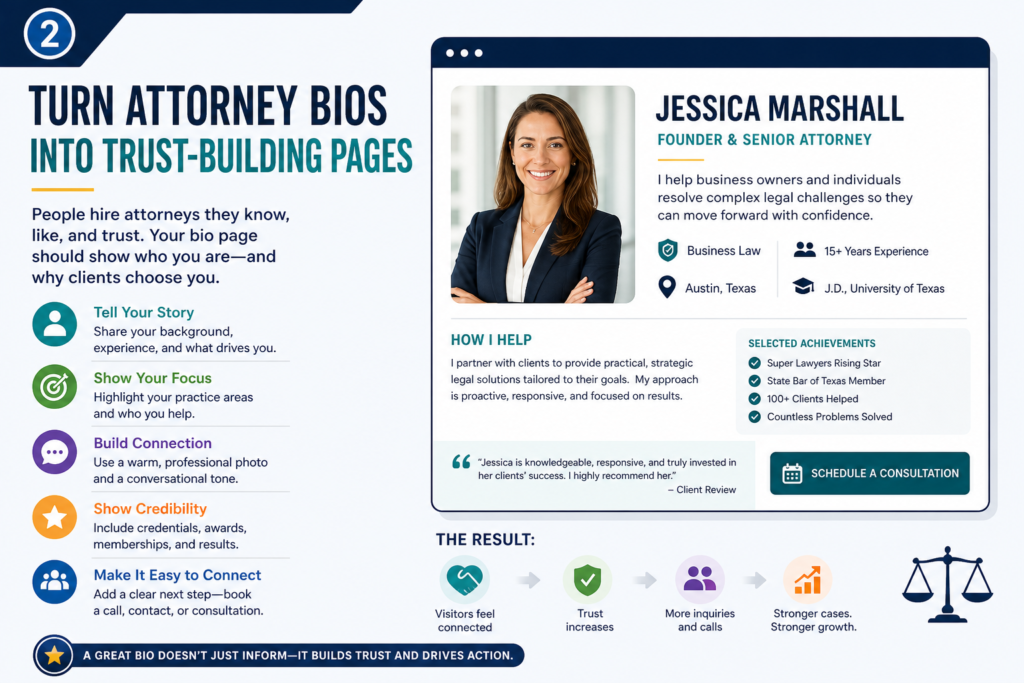
A bio that only lists schools, awards, bar admissions, and court memberships may prove skill, but it may not create a human connection. Clients are not hiring a list of achievements. They are hiring a person to guide them through something important.
A strong attorney bio should do both. It should show authority and warmth. It should prove that the lawyer knows the law, but it should also show why clients feel comfortable trusting them.
Your bio should explain how you help, not just what you have done
A good bio should answer the question, “Why should I trust this lawyer with my problem?” That answer may include experience, but it should also include approach.
For example, a personal injury lawyer may explain that they help clients deal with insurance companies while they focus on healing. A family lawyer may explain that they help clients make clear choices during emotional moments. A business lawyer may explain that they help owners solve disputes without losing sight of the company.
This kind of language helps visitors see themselves in the page. It turns the bio from a record of the lawyer’s past into a reason to contact the firm now.
The page should also include a strong photo. It does not need to look cold or overly staged. It should look professional and approachable. People form impressions quickly, and a photo can make the attorney feel more real.
Your bio should support both SEO and conversion
Attorney bios can also help search performance when written well. They can rank for the lawyer’s name, practice area, and location. They can support credibility for the whole site. But they should not be stuffed with keywords. They should read naturally.
Each bio should include the attorney’s main practice areas, location, experience, education, and relevant professional background. It should also include a clear contact path. If someone is ready to speak with that attorney or the firm, the next step should be easy.
You can also add selected media mentions, speaking events, case experience, articles, or answers to common questions. This makes the page richer and more useful. It also gives visitors more reasons to stay on the site.
Most of all, the bio should feel like it was written for clients, not other lawyers. A person in legal trouble does not want to decode a resume. They want to feel, “This person can help me.”
Create Content for the Questions People Are Afraid to Ask
Some of the best law firm content comes from questions clients feel embarrassed to ask. These questions often carry fear, shame, money worries, or confusion. If your firm answers them clearly, you can build a deep level of trust.
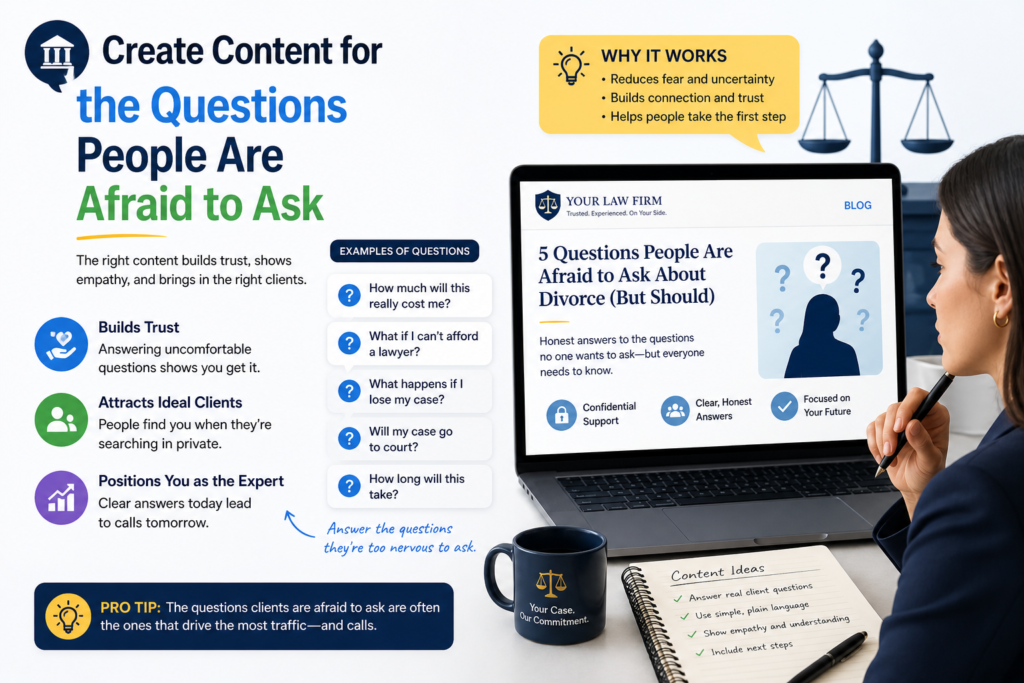
People may wonder if their case is too small. They may worry that they waited too long. They may feel embarrassed about a mistake. They may not know if they can afford a lawyer. They may be afraid that calling a firm means they are committing to something.
When your content answers these concerns with respect, it makes your firm feel safer. This is powerful because legal marketing is not only about proving expertise. It is about lowering the emotional wall between the client and the call.
Your content should speak to the hidden worry behind the search
A search query often has an emotional question behind it. When someone searches “what happens after a DUI arrest,” they may really be asking, “Is my life ruined?” When someone searches “how long does divorce take,” they may really be asking, “How much longer will I feel stuck?” When someone searches “can I sue after a fall,” they may really be asking, “Do I have a real case, or am I overreacting?”
Good content answers both the legal question and the emotional question. It does not exaggerate. It does not promise results. It simply explains what may happen, what steps matter, and why getting advice can help.
This is where simple language matters most. When people are stressed, they do not want to read dense legal writing. They want clarity. Short paragraphs, natural flow, and plain words help them keep reading.
Your firm can win trust by being honest about limits
Many law firm websites sound too certain. They make every case feel urgent, valuable, and winnable. But real clients can sense when marketing feels too polished. Honest content often works better.
You can say that not every case has the same strength. You can explain that timelines vary. You can share that fees depend on the matter. You can tell people what factors may affect the outcome. This does not make your firm look weak. It makes your firm look trustworthy.
People want a lawyer who will tell them the truth, not just what they want to hear. When your content shows that kind of honesty, it can set your firm apart.
This also improves lead quality. Clear content helps the wrong-fit client self-select out and helps the right-fit client call with better understanding. That saves your team time and makes consultations more useful.
Use Paid Ads Only When the Funnel Is Ready
Paid ads can grow a law firm quickly, but they can also waste money quickly. Legal clicks are often expensive. In some markets, one click can cost more than a full campaign in another industry. That means you cannot afford to send paid traffic to weak pages, unclear offers, or slow follow-up systems.
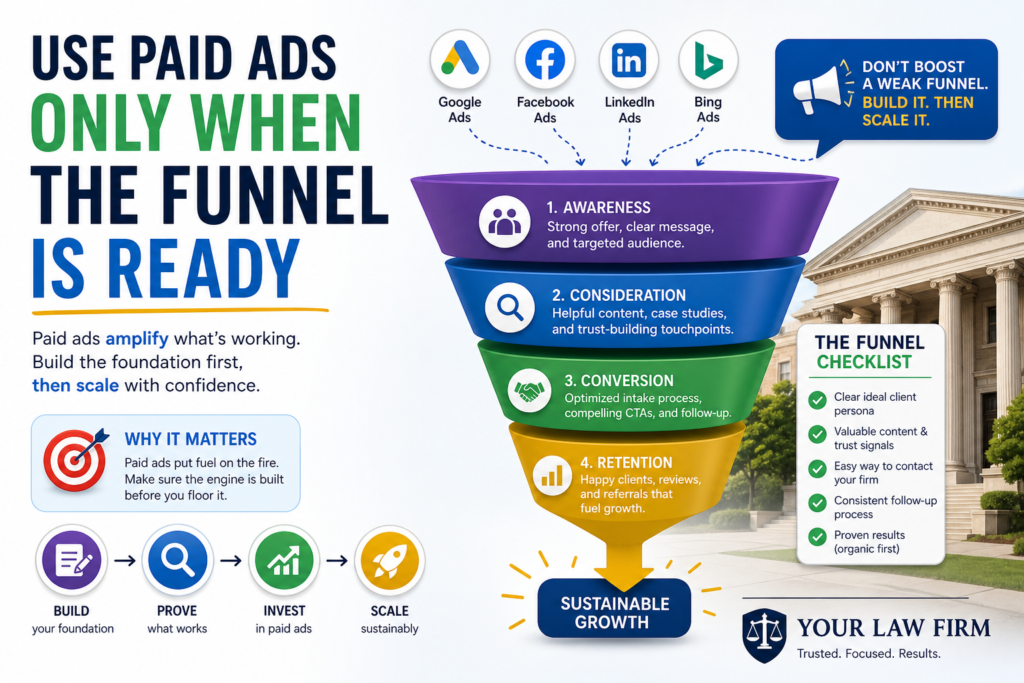
Before you invest heavily in ads, your firm needs the right foundation. Your website should be clear. Your landing pages should match the ad. Your phone process should be strong. Your tracking should work. Your team should respond fast. Without these pieces, ads may bring leads, but not profitable cases.
Paid ads are not magic. They are fuel. If the engine is weak, more fuel only creates more waste.
Your ads should match a specific problem, not a broad service
A common mistake is running broad ads that say the firm handles a general practice area. For example, “Call our personal injury lawyers today” is less sharp than an ad focused on a specific problem like a truck accident, workplace injury, or denied insurance claim.
Specific ads usually work better because they match the client’s situation. A person who was hit by a commercial truck wants to feel that the firm understands truck accident cases. A person facing a custody dispute wants to see language about custody, not just divorce in general.
Your landing page should continue the same message. If the ad talks about truck accidents, the page should talk about truck accidents. If the ad talks about probate disputes, the page should talk about probate disputes. When the message changes too much between ad and page, trust drops.
Your follow-up speed can decide whether ads are profitable
With paid ads, speed matters. Many people contact more than one law firm. If your team waits too long to respond, another firm may get the consultation. A strong ad campaign can fail simply because intake is slow.
Your firm should have a clear process for calls, forms, chats, and missed leads. Someone should know who responds, how fast, what they say, and how follow-up happens. Every paid lead should be tracked from first contact to signed case. Without this, you may not know which campaigns are actually working.
You also need to track lead quality, not just lead volume. Ten weak leads can look good in a report, but one strong signed case may matter more. The goal is not to get the cheapest lead. The goal is to get the right cases at a cost that makes sense.
Paid ads can be a strong growth channel, but only when used with discipline. Start focused. Test carefully. Improve the landing page. Listen to call recordings where allowed. Study which cases become real revenue. Then scale what works.
Build an Intake System That Converts More Leads Into Clients
Marketing does not end when someone calls your law firm. In many ways, that is where the real growth work begins. A firm can have strong SEO, helpful content, good ads, and a clean website, but still lose cases because the intake process is weak.
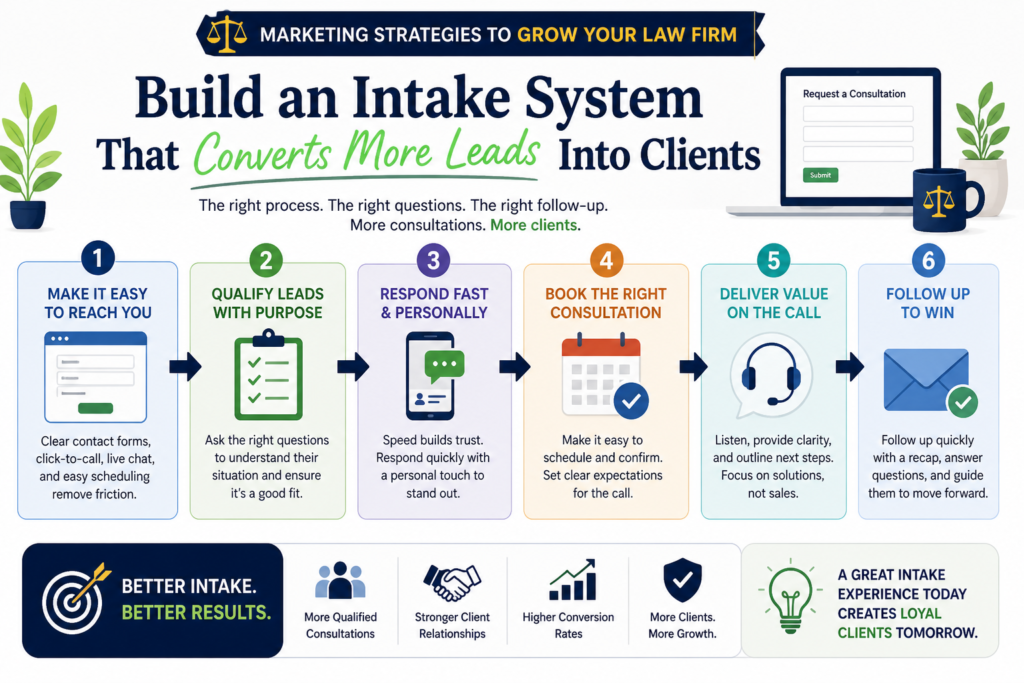
This happens more often than many law firms realize. A person fills out a form and waits too long for a reply. A call goes to voicemail. A staff member answers with a cold tone. The consultation is not explained clearly. The follow-up is late or missing. The person may have liked your website, but the first human contact changes how they feel.
For a law firm, intake is marketing. It is the bridge between interest and trust. When someone reaches out, they are often nervous, confused, or in pain. They may not know what to say. They may not know if their issue is serious. They may fear being judged. Your intake process should make them feel calm and guided from the first moment.
Your first response should make the person feel safe
The first few minutes after a lead contacts your firm are very important. People do not only judge your legal skill. They judge your care, speed, and clarity. If they feel ignored or rushed, they may move on.
Your intake team should not sound like they are just collecting data. They should sound like they are helping a real person take the first step. This does not mean offering legal advice before an attorney is involved. It means listening well, using plain language, and explaining what will happen next.
A simple intake conversation should help the person feel heard. It should confirm the basic issue, collect the right details, explain the next step, and set clear expectations. If the person is not a fit, your team should still be respectful. Even a non-fit lead can leave a review, refer someone later, or remember how your firm treated them.
Your intake script should guide the call without sounding scripted
A good intake script is not a stiff set of lines. It is a guide that helps your team stay consistent while still sounding human. The goal is not to turn staff into robots. The goal is to make sure every lead gets the same level of care.
The script should help your team ask the right questions in the right order. It should also help them explain the consultation process, fees where appropriate, documents needed, and response timelines. This reduces confusion for the client and mistakes inside the firm.
The best intake systems also include follow-up. Some people are not ready to book during the first call. Some need to speak with a spouse, gather documents, or think about cost. If your firm does not follow up, those leads often disappear. A polite follow-up email or call can bring many of them back.
Your intake process should be reviewed often. Listen to calls when allowed. Read form submissions. Track how many leads become consultations, and how many consultations become clients. When you improve intake, you often grow revenue without spending more on traffic.
Use Email Marketing to Stay Close Until People Are Ready
Most people do not hire a lawyer the first time they visit a website. Some do, especially in urgent matters, but many need time. They may be comparing firms, waiting for the problem to get clearer, talking with family, or trying to decide if they need help at all.
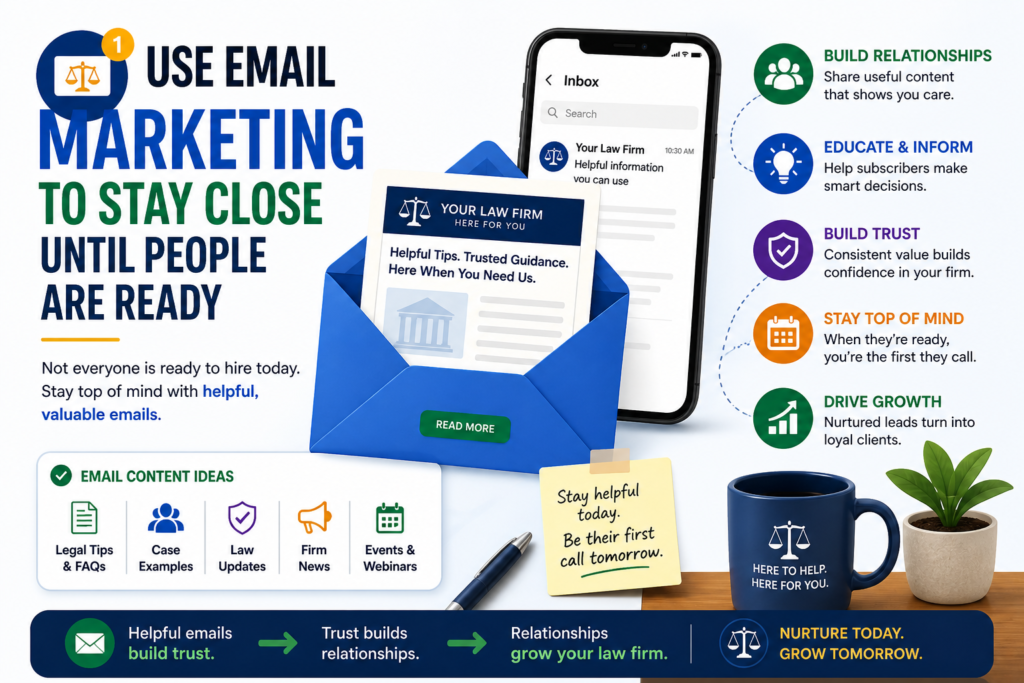
This is where email marketing can help. It allows your firm to stay present without being pushy. It gives people useful information over time. It reminds them that your firm is available when they are ready.
Email is especially useful for practice areas with longer decision cycles. Estate planning, business law, family law, immigration, employment law, and some litigation matters often involve careful thought. A person may read a guide today and call weeks later. If you have no follow-up system, you may lose them to another firm that stayed in touch.
Your email list should be built around useful legal help
A law firm should not send random emails just to stay active. People are busy. Their inboxes are crowded. If your emails do not help them, they will ignore them.
The best legal email marketing starts with a clear reason to subscribe. This could be a simple guide, checklist, webinar, case update, legal planning series, or helpful resource tied to one practice area. The offer should solve a real problem or answer a common question.
For example, an estate planning firm could offer a plain-language guide on what families should prepare before meeting a lawyer. A business law firm could offer a contract review checklist for small business owners. A family law firm could offer a guide on what to think about before filing for divorce.
The email follow-up should continue that same helpful tone. It should not jump straight into selling. It should educate, explain, and guide. When people feel helped, they are more likely to trust the firm.
Your emails should feel like advice, not a newsletter no one asked for
Many firm newsletters fail because they talk too much about the firm. They announce awards, events, new hires, and general updates. These things may matter, but they should not be the main focus. The reader is asking, “How does this help me?”
A stronger email may explain a common mistake, a change in law, a step in a legal process, or a question many clients ask. It should be short enough to read, but useful enough to save. It should sound like a helpful note from a trusted advisor.
Email marketing also helps past clients. A past client may not need you again right away, but they may know someone who does. Staying in touch with care can support referrals. It can also help clients return for future needs, such as updating estate plans, reviewing contracts, or handling new legal issues.
Email is not the fastest marketing channel, but it is one of the best for relationship building. It turns one visit into an ongoing connection. For law firms, that kind of trust can be worth a lot.
Use Social Media to Show Authority Without Chasing Attention
Social media can help law firms, but only when used with the right expectations. It is not always the best place to get direct leads every day. People usually do not wake up and hire a lawyer because of one social post. But social media can make your firm more familiar, more trusted, and more human.
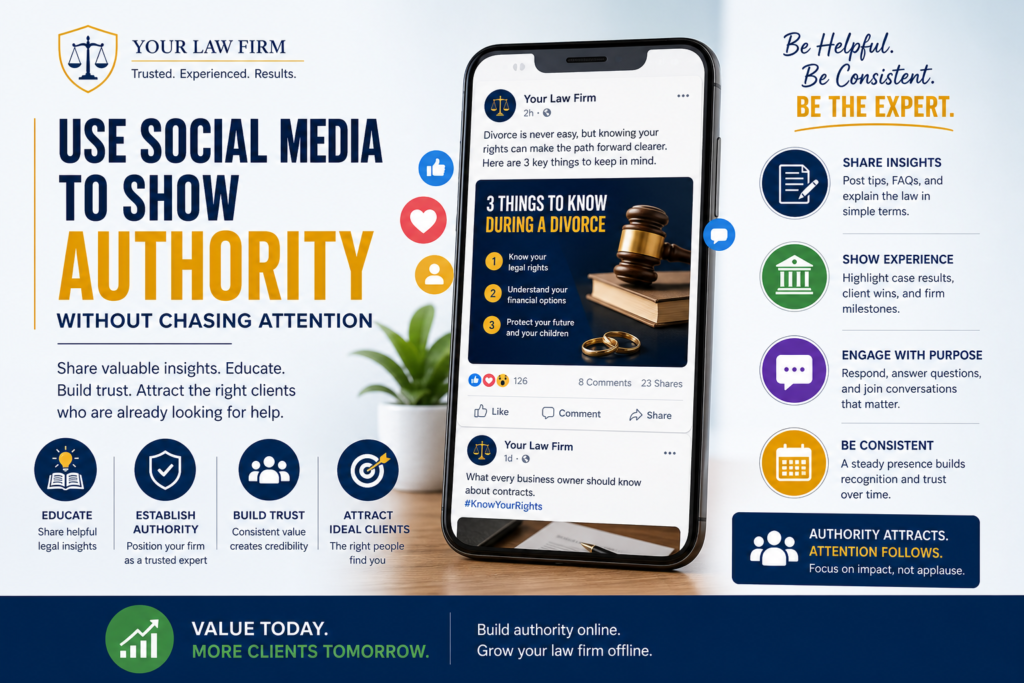
The mistake many law firms make is trying to copy brands that depend on viral content. They post trends, jokes, or broad quotes that do not support their real business goals. This may get views, but views alone do not grow a firm.
A better approach is to use social media as a trust channel. Your posts should show how your firm thinks, what clients should understand, what mistakes to avoid, and what kind of guidance you offer. The goal is not to entertain everyone. The goal is to be remembered by the right people.
Your social content should come from your real legal work
You do not need to share private client details to create strong social content. In fact, you should not. But you can talk about patterns, common questions, lessons, myths, and general issues you see in your practice.
A lawyer who handles business disputes can post about contract mistakes that lead to conflict. A family lawyer can explain why preparation matters before a custody discussion. An injury lawyer can talk about what people should avoid saying to insurance adjusters. An estate lawyer can explain why a simple will may not be enough for some families.
This type of content works because it is practical. It shows your thinking. It helps people understand the value of legal guidance before they need it.
Social media can also support your website content. A long blog post can become several short posts. A common FAQ can become a short video. A webinar can become clips, quotes, and email ideas. This helps your firm get more value from the content you already create.
Your tone should be clear, calm, and professional
Law firm social media should not feel cold, but it also should not feel careless. People are trusting you with serious issues. Your tone should show confidence without arrogance. It should be human without becoming too casual.
Short videos can work well because they let people hear your voice and see your face. This can reduce fear before a consultation. A person may feel more comfortable calling after watching a lawyer explain something in simple words.
LinkedIn can be strong for business law, employment law, intellectual property, tax, and other practice areas tied to professionals and companies. Facebook may work better for community-based firms. Instagram and TikTok can help with awareness when content is simple, visual, and clear. The right platform depends on your clients, not on what is trendy.
Social media should not replace SEO, reviews, or a strong website. It should support them. It keeps your firm visible and gives people more reasons to trust you when they finally need help.
Create Referral Systems Instead of Hoping Referrals Happen
Referrals are one of the strongest growth sources for law firms. A referred lead often arrives with more trust, asks fewer basic questions, and may be easier to convert. But many firms treat referrals as luck. They serve clients well and hope people send others their way.
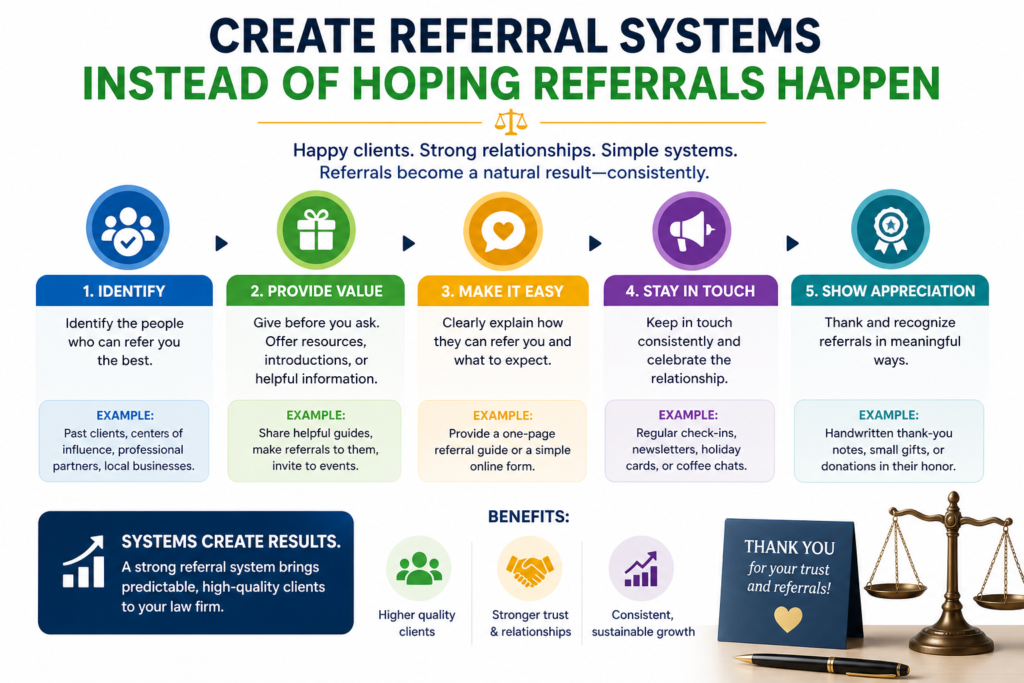
Hope is not a system. A strong referral strategy makes it easier for clients, other attorneys, local professionals, and community partners to remember your firm and recommend you at the right time.
This does not mean pressuring people or making every relationship feel transactional. It means staying visible, being useful, and making your value clear. People cannot refer you if they do not remember what you do. They also may hesitate if they are not sure what type of client is right for your firm.
Your referral partners need clear reasons to remember you
Other professionals may know many lawyers. Accountants, financial advisors, real estate agents, therapists, business consultants, doctors, and other attorneys may all have chances to refer clients. But they need to understand your focus.
If you simply say, “We handle family law,” that may not be enough. It is more useful to say that your firm helps business owners going through divorce protect assets and plan carefully. That is easier to remember. It gives the partner a clear mental trigger.
The same idea applies to other practice areas. A probate lawyer may become known for helping families handle complex estate disputes. A business lawyer may become known for helping growing companies clean up contracts before problems start. A criminal defense lawyer may become known for helping professionals protect their licenses after an arrest.
When your positioning is clear, referrals become easier because people know when to think of you.
Your firm should nurture referral relationships before you need them
Referral relationships are built over time. You cannot only reach out when you want something. You need to be useful before you ask.
This can be done through thoughtful updates, simple educational resources, co-hosted events, lunch conversations, client-safe guides, or short notes about common issues their clients may face. The goal is to help partners serve their own audience better.
Past clients can also become referral sources. But they need reminders. A simple check-in after a matter closes, a useful email series, or an annual legal planning reminder can keep your firm top of mind. You do not need to ask for referrals in a pushy way. You can simply remind them that your firm is available if someone they care about needs help.
A good referral system also tracks where leads come from. If a partner sends several strong clients, your firm should know and thank them in a proper way. When you treat referrals as a real channel, you protect and grow one of the most valuable sources of new business.
Use Video to Make Your Firm Easier to Trust
Video can be powerful for law firms because trust is personal. Before someone calls, they may want to know what it feels like to hear from you. They may want to see whether you explain things clearly. They may want to know if you seem calm, confident, and approachable.
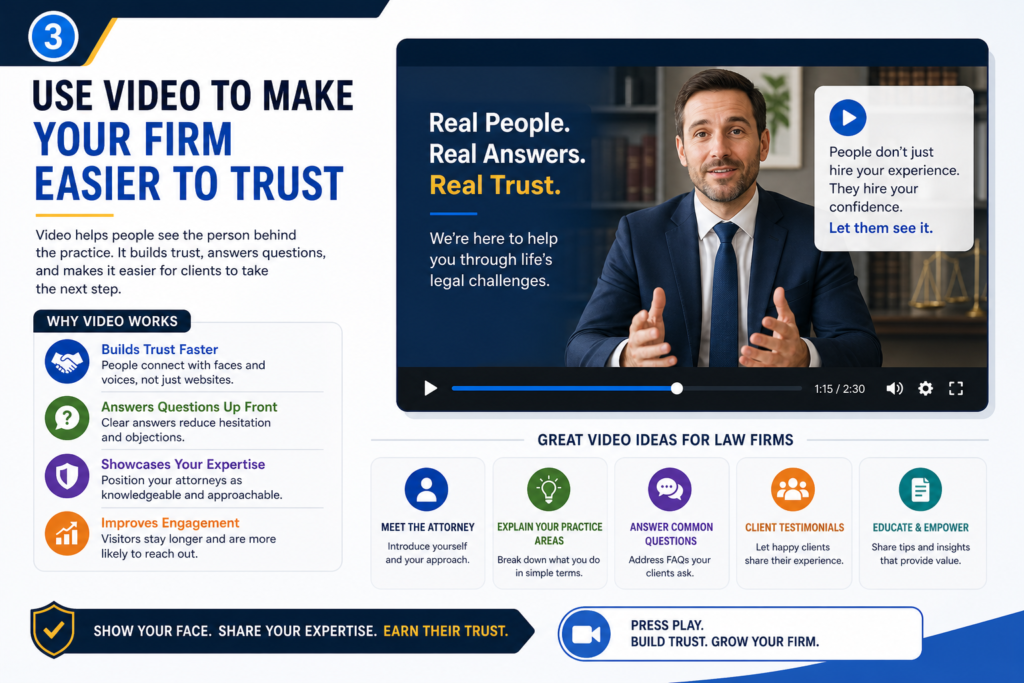
A written page can do a lot, but video adds another layer. It lets people hear your tone. It lets them see your face. It can make the first call feel less intimidating because the person already feels familiar with you.
Video does not need to be expensive to work. It does need to be clear, useful, and focused. A simple video answering one real client question can be more effective than a glossy brand video that says very little.
Your best videos should answer one question at a time
Many law firm videos try to cover too much. They introduce the firm, explain the practice area, talk about experience, and ask people to call. The result often feels too broad.
A stronger video focuses on one clear question. For example, “What should I do after a car accident if the insurance company calls?” or “What happens during the first divorce consultation?” or “When should a business owner hire a lawyer for a contract dispute?”
This format works because it matches how people search and think. They have a question. You answer it. If the answer is helpful, they may watch another video, visit your site, or contact your firm.
The video should be short enough to hold attention but complete enough to be useful. It should avoid legal jargon. It should feel like a calm explanation, not a sales pitch.
Your videos should appear where clients already look
Do not hide your videos on one page and forget about them. Use them across your marketing. Add them to practice area pages, attorney bios, blog posts, email campaigns, YouTube, social media, and landing pages.
A video on an attorney bio can help visitors feel more connected to the lawyer. A video on a practice area page can explain the process in a warmer way. A video in an email can make the message feel more personal. A video in a paid ad landing page can increase trust for cold visitors.
You can also use video to improve intake. A short video explaining what happens after someone contacts the firm can reduce fear and improve show-up rates for consultations. It helps people know what to expect, which makes them more comfortable.
Video is not about becoming famous online. It is about making your firm easier to trust. When people can see and hear you before they call, the distance between stranger and client becomes smaller.
Build Landing Pages for Each Type of Client You Want More Of
A law firm website should not treat every visitor the same way. A person looking for emergency criminal defense has a different mindset from a business owner planning ahead. A parent facing a custody dispute has different fears from someone preparing an estate plan.
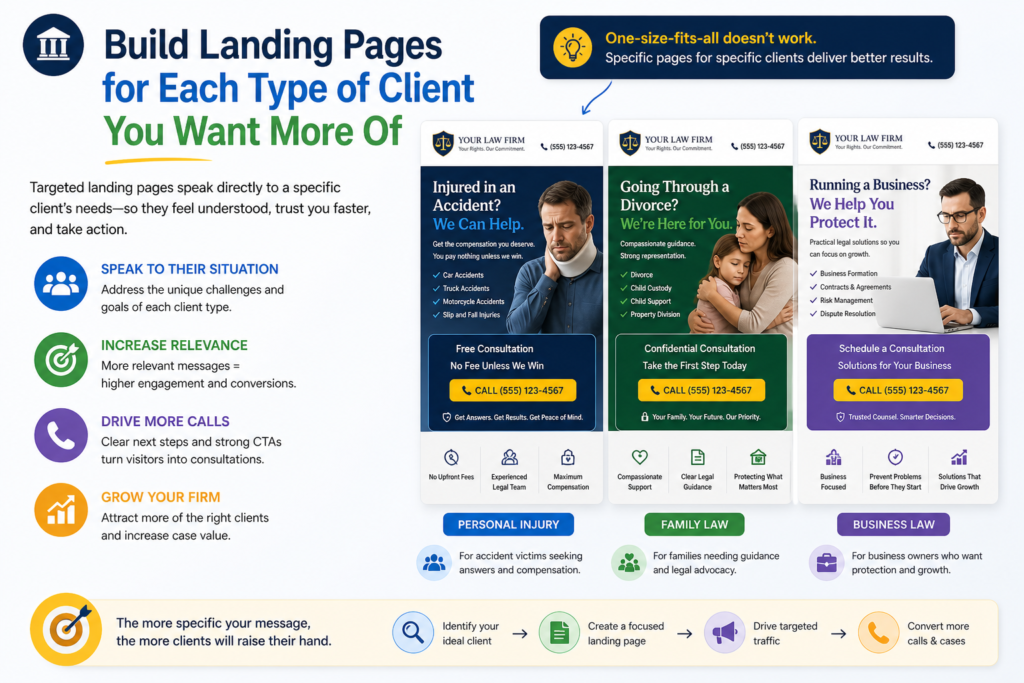
If you send all of them to the same general page, you make the visitor do too much work.
Landing pages help solve this. A landing page is a focused page built for one type of visitor, one problem, and one next step. It does not try to explain your whole firm. It speaks to a clear need and guides the reader toward action.
This is especially useful for paid ads, local campaigns, referral campaigns, and specific services you want to grow. The tighter the page, the easier it is for the visitor to feel, “This is for me.”
Your landing page should match the visitor’s exact problem
A strong landing page starts with the problem the person is facing. It does not begin with a long story about your firm. It tells the reader they are in the right place.
For example, if the page is for people injured in truck accidents, the page should talk about truck accident claims from the first screen. It should not send them through a broad personal injury message first.
If the page is for business owners dealing with unpaid invoices, the page should speak to cash flow, contracts, pressure, and the need to act before the issue grows.
This kind of focus makes the page feel more relevant. It also makes ads perform better because the message stays consistent from search to click to page.
A landing page should also remove anything that distracts from the next step. That does not mean it should be thin. It should still answer key questions. But every part of the page should support one action, such as booking a consultation, calling the firm, or submitting a case review form.
Your landing page should answer trust questions before asking for action
People do not contact a law firm just because a page tells them to. They contact when enough trust has been built. Your landing page should answer the questions that hold people back.
The reader may wonder if your firm handles cases like theirs. They may wonder what the first call feels like. They may worry about fees. They may not know what information they need. They may fear being judged. Your page should speak to these concerns in plain words.
You can explain what happens after they reach out. You can show client reviews where allowed. You can introduce the lawyer or team. You can explain why timing matters. You can include a short form that is easy to complete.
The best landing pages feel helpful, not pushy. They guide the person with care. They make action feel safe. That is what turns a click into a real lead.
Use Case Studies Carefully to Show How Your Firm Thinks
Case studies can be very useful in law firm marketing, but they must be handled with care. Legal work involves privacy, rules, and facts that should not be shared without permission. You should never reveal details that could harm a client or break professional rules.
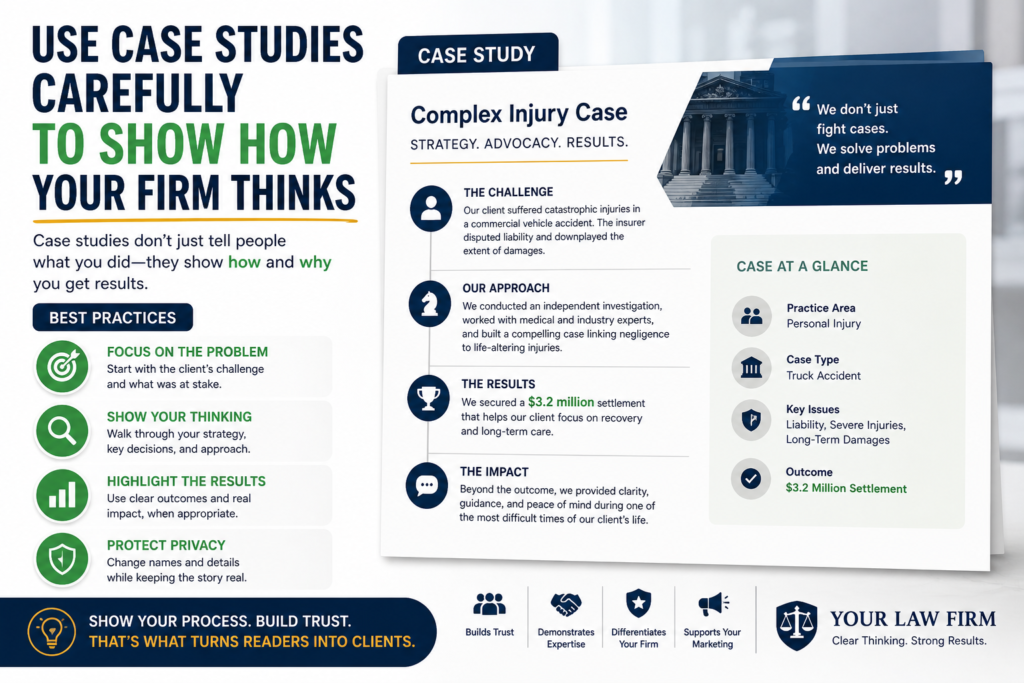
Still, when done properly, case studies can show how your firm approaches problems. They can help future clients understand the kind of thinking, planning, and care your firm brings to a matter. They can also make your experience feel more real than broad claims.
A case study does not need to promise that the same result will happen again. In fact, it should not. The goal is not to say, “We can get this exact outcome for you.” The goal is to show how your firm finds the issue, builds a plan, and guides the client through the process.
Your case studies should focus on the problem and process
A strong case study does not need dramatic language. It should explain the client’s challenge in a general and safe way, the risks involved, the approach your firm took, and the result or resolution if it can be shared.
For example, a business law firm might explain how a contract dispute was handled before it became a long court fight. A family law firm might explain how a complex parenting issue was organized into a clearer plan. An injury firm might explain how careful evidence gathering helped support a claim.
The important part is the thinking. People want to see that your firm does not just react. They want to see that you plan, protect, explain, and guide.
This type of content also helps people understand the value of legal work. Many clients do not know what happens behind the scenes. They may only see calls, documents, and meetings. A case study can show the strategy behind those steps.
Your case studies should be written in plain language
A case study should not read like a court filing. It should read like a clear story. The reader should understand what happened, why it mattered, and how your firm helped.
Keep the language simple. Avoid heavy legal terms unless you explain them. Focus on what the client was facing in real life. Did they risk losing money? Were they under pressure? Was there a deadline? Was the other side refusing to cooperate? These details help the reader connect.
You should also include careful disclaimers where needed. Make it clear that past results do not promise future results. Keep the tone honest and balanced. Do not oversell.
When used well, case studies can help a potential client think, “This firm has handled serious problems before. They know how to guide someone through this.” That feeling is often more powerful than a long list of services.
Make Your Brand Feel Consistent Everywhere People Find You
A law firm brand is not just a logo, color, or tagline. It is the feeling people get when they see your firm again and again. It is the tone of your website, the way your ads sound, the style of your emails, the quality of your reviews, the way your team answers the phone, and the way your lawyers explain things.
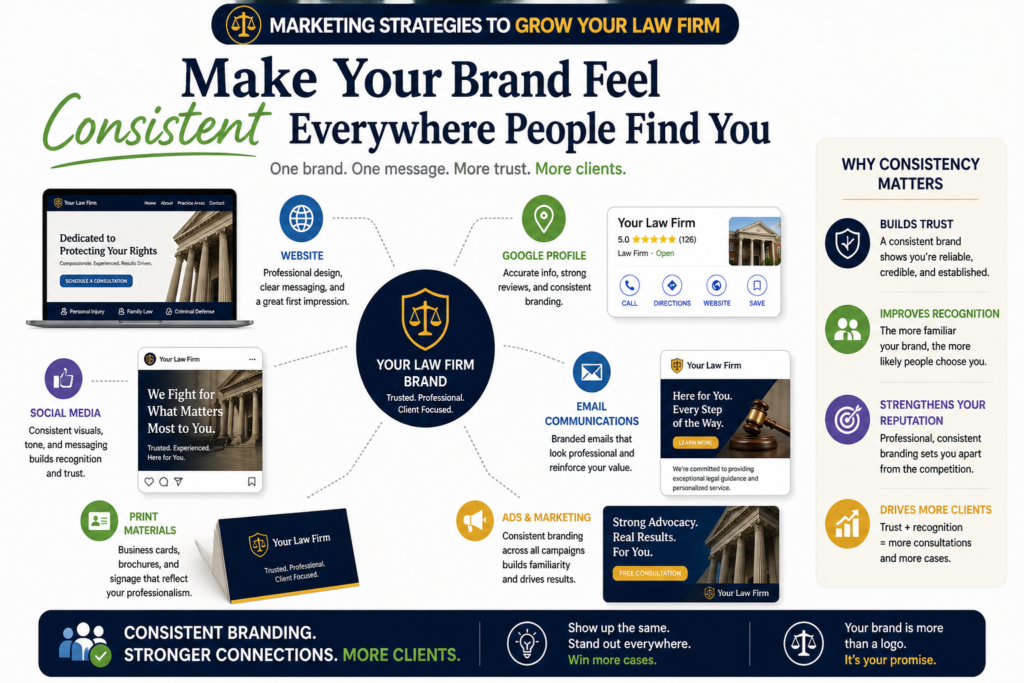
When your brand feels consistent, people trust you faster. They see the same promise across every touchpoint. They do not feel like the website says one thing, the ads say another, and the intake call feels like something else.
Consistency matters because legal clients are already dealing with uncertainty. Your marketing should not add more confusion. It should make your firm feel steady and reliable.
Your brand voice should match the clients you want
Some firms need to sound calm and protective. Some need to sound sharp and business-focused. Some need to sound strong and urgent. Some need to sound warm and patient. There is no single voice that works for every law firm.
The right voice depends on your clients, your practice area, and your firm’s real personality. A criminal defense firm may need a voice that feels direct, firm, and fast-moving. An estate planning firm may need a voice that feels clear, careful, and reassuring. A business law firm may need a voice that feels practical and strategic.
The mistake is trying to sound like every other lawyer. If your brand voice is full of overused phrases, people will not remember it. Clear language is more powerful than fancy language.
Your voice should also show up in small places. Form messages, email replies, consultation confirmations, review responses, and follow-up notes should all feel like they come from the same firm.
Your visual brand should support trust, not distract from it
Design matters, but it should not get in the way. A law firm website should feel clean, professional, and easy to use. The colors, fonts, photos, and layout should support the message.
Stock photos can be useful, but too many generic images can make a firm feel less real. Real team photos, office photos, community images, and attorney videos can build stronger trust. People want to know who they are contacting.
Your brand should also feel modern. An outdated website can make people wonder if the firm is behind in other ways too. This may not be fair, but it happens. Clients judge details quickly.
Brand consistency does not mean every page must look identical. It means every touchpoint should feel connected. When someone sees your Google profile, visits your website, reads an email, and speaks with your team, the experience should feel like one clear firm.
Track the Numbers That Actually Show Growth
Law firm marketing can become emotional if you do not track the right numbers. One month may feel busy. Another may feel slow. An ad may seem successful because it gets many clicks. A blog post may seem useless because it does not bring calls right away. Without clear tracking, you may make decisions based on feelings instead of facts.
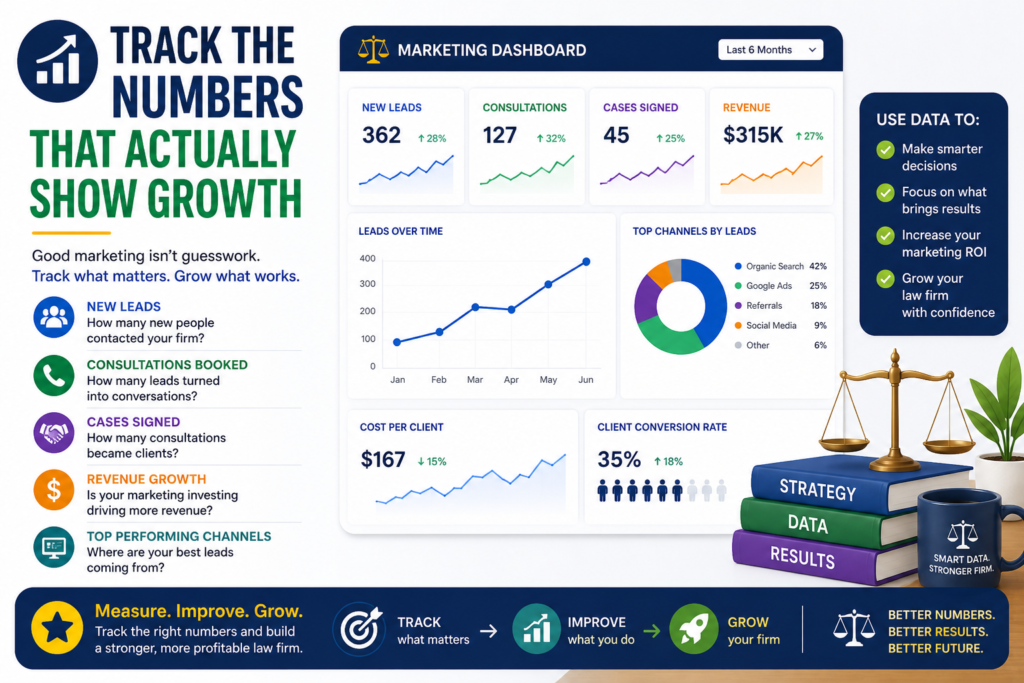
Good tracking helps your firm see what is working, what is wasting money, and where the biggest growth opportunities are. It also helps you improve without guessing.
You do not need to track every number in the world. In fact, too many numbers can create confusion. The goal is to track the numbers that connect marketing to real business results.
Your firm should track leads, not just traffic
Website traffic matters, but it is not the final goal. A law firm can get more traffic and still not grow if the visitors are not the right people or if the website does not convert them.
You should know how many leads come from organic search, paid ads, referrals, local search, email, social media, and direct visits. You should also know how many of those leads become consultations, and how many consultations become signed clients.
This is where many firms find hidden problems. Maybe SEO is bringing many leads, but the intake team is not following up fast enough. Maybe paid ads are bringing calls, but most are wrong-fit cases. Maybe referrals convert well, but the firm is not investing in referral relationships.
Tracking makes these issues visible. Once they are visible, you can fix them.
Your best metric is signed revenue by source
Leads are useful, but signed revenue is better. A campaign that brings twenty weak leads may look good until you compare it with a campaign that brings four strong cases. The second one may be far more profitable.
Your firm should try to connect each new client back to the source that brought them in. This may require call tracking, form tracking, CRM notes, intake tags, and simple team discipline. It does not need to be perfect at first. Even basic tracking is better than guessing.
You should also look at cost per signed case, not only cost per lead. A cheap lead is not cheap if it never becomes a client. An expensive lead may be worth it if it turns into a strong matter.
Marketing becomes much easier to manage when you know the numbers. You can stop feeding weak channels, improve average ones, and scale the channels that bring real growth.
Improve Your Follow-Up So Good Leads Do Not Go Cold
Many law firms lose good leads because they stop too soon. A person may call, ask questions, and say they need to think. They may fill out a form but not answer the first return call. They may book a consultation and miss it because life gets busy. If your firm has no follow-up system, these leads disappear.
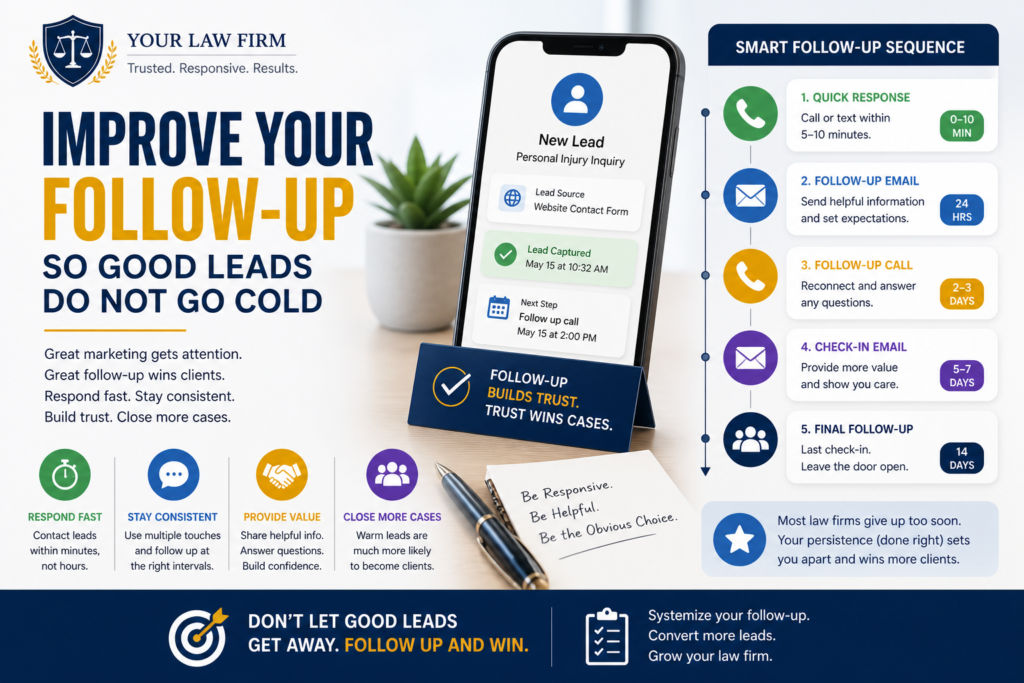
Not every lead should be chased forever. Some are not a fit. Some are not serious. But many good leads need a little more guidance before they are ready. Follow-up helps them feel supported without pressure.
This matters because legal decisions can feel heavy. People may delay because they are scared, unsure about cost, or overwhelmed by the next step. A respectful follow-up can help them move forward.
Your follow-up should be planned before the lead arrives
Follow-up should not depend on memory. Your firm should decide what happens after a missed call, an unfinished form, a consultation request, a no-show, or a proposal that has not been signed.
The message should be clear and helpful. It should not sound desperate. It should remind the person why taking the next step matters and make it easy to respond.
For example, after a missed consultation, your firm can send a warm note explaining that you understand schedules get busy and offering a simple way to reschedule. After a form submission, your team can call, email, and send a text if the person gave permission.
After a consultation, your firm can summarize the next step and the deadline.
The key is to be steady, not pushy. Good follow-up feels like service.
Your follow-up should answer the reason people pause
People pause for different reasons. Some do not understand the fee. Some are not sure if their issue is serious. Some need to talk to a family member. Some are afraid of starting a legal process. Some are comparing firms.
Your follow-up should address these reasons. A useful follow-up email might explain what happens during the first meeting. Another might share a guide that answers common questions. Another might remind the person of a deadline or risk tied to waiting.
This is where content and intake work together. Your team should not have to write every follow-up from scratch. You can create simple email templates, short videos, and helpful pages that answer common concerns.
When follow-up is done well, it does not feel like sales. It feels like guidance. And for many law firms, better follow-up can create growth without spending one more dollar on ads.
Conclusion:
Growing a law firm is not about chasing every marketing trend. It is about becoming the firm people trust when they need help most. Clear positioning, strong SEO, useful content, real reviews, fast intake, smart follow-up, and steady referrals all work together to create that trust.
When your message is simple and your systems are consistent, more of the right people find you, understand you, and contact you. The firms that grow best are not always the loudest. They are the clearest, most helpful, and most reliable. Build that kind of presence, and growth becomes much more steady.


















Comments are closed.