
WinSavvy Editorial Standards
How this article was created
Email marketing is not dead. It is just harder to do well. People still open emails. They still click. They still buy. But they do not respond to boring emails, lazy offers, or messages that feel like they were sent to everyone on a list with no real thought behind them. That is where many brands lose the game.
Start With the Real Reason People Joined Your Email List
Most email campaigns fail before the first email is written. The problem starts with a simple mistake: the brand forgets why the person signed up in the first place.
A subscriber does not join your list because they want “updates.” That is too vague. They join because they want something. They may want a discount. They may want a guide. They may want help solving a problem. They may want ideas, proof, answers, or a faster way to make a buying choice.
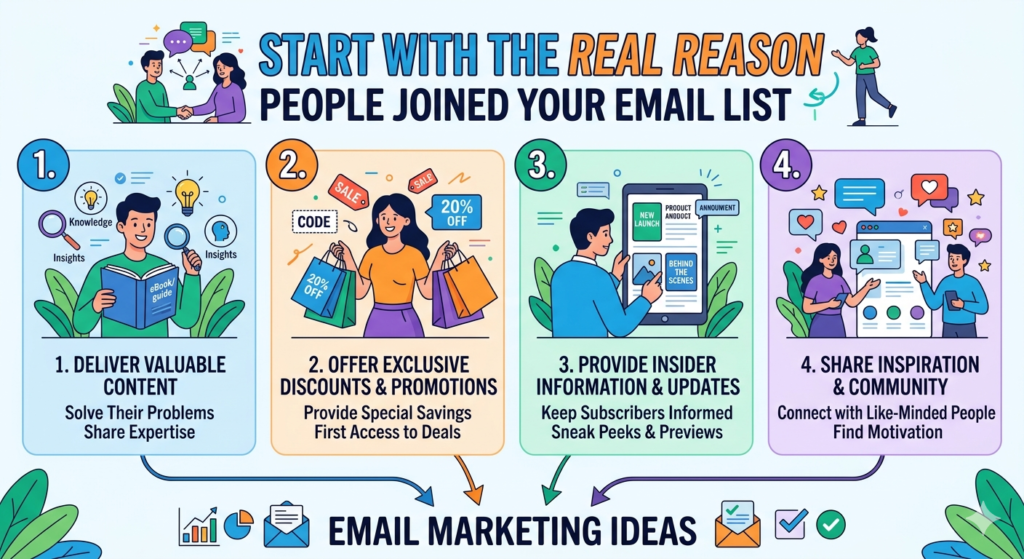
Your job is to understand that reason and build your emails around it.
When someone gives you their email address, they are giving you a small piece of trust. They are saying, “You may speak to me again.” But that trust is not permanent. It can fade fast if your first few emails feel random, too sales-heavy, or disconnected from the promise that made them sign up.
This is why strong email engagement starts with intent.
Your First Email Should Match the Signup Promise
If someone joins your list to get a free checklist, your first email should not jump straight into a sales pitch. It should deliver the checklist clearly, explain how to use it, and help them get a quick win.
If someone joins for a discount, make the discount easy to find and easy to use. Do not hide it under a long brand story. You can tell your story later. First, give them what they came for.
If someone signs up for expert advice, your first email should prove that your advice is worth reading. Give them a simple insight they can use right away. Make them feel smarter after reading it.
This sounds basic, but many brands miss it. They treat every new subscriber the same. They send the same welcome email to people who came from a blog post, a product page, a webinar, a lead magnet, a quiz, and a checkout form.
That is a mistake.
Each signup source tells you something about the person’s state of mind. A person who downloaded a beginner’s guide is not in the same place as a person who abandoned a cart. A person who joined from a pricing page is not thinking the same way as someone who joined after reading a how-to article.
When your emails match the reason behind the signup, people feel understood. And when people feel understood, they are more likely to open the next email.
Build Your Welcome Flow Around the Subscriber’s Starting Point
Your welcome flow is not just a polite greeting. It is the first bridge between interest and trust.
A good welcome flow should answer the questions already forming in the subscriber’s mind. It should help them understand who you are, why your brand matters, what they can expect from you, and what step they should take next.
But the order matters.
Start with the reason they joined. Then deepen the relationship. Then guide them toward action.
For example, if someone joins after downloading a guide on improving email conversions, the first email should deliver the guide. The second email might show them one common mistake that keeps conversions low. The third could share a short story of how a small change improved results. The fourth could invite them to book a call, try a tool, read a deeper article, or explore a service.
That flow feels natural because it follows the subscriber’s own thinking.
It does not rush. It does not push too hard. It simply moves the person from interest to belief to action.
Use the First Few Emails to Train Future Opens
The first few emails teach your subscriber how to treat your emails.
If your first emails are useful, clear, and easy to read, the subscriber learns that opening your emails is worth it. If your first emails are long, dull, confusing, or too focused on your brand, they learn to ignore you.
This is why your early emails should be strong, simple, and focused.
Do not try to say everything at once. Do not overload the reader with your full company history, every product benefit, every offer, and every social link. Give each email one job.
One email can welcome them. One can solve a small problem. One can show proof. One can handle a common doubt. One can invite action.
When each email has one clear purpose, the reader does not feel lost. They know what they are reading and why it matters.
That clarity builds trust.
Make Every Welcome Email Feel Like It Was Written for One Person
The best welcome emails do not sound like announcements. They sound like a helpful note from someone who knows what the reader is trying to do.
Instead of saying, “We are excited to welcome you to our newsletter,” say something closer to, “You joined because you want better results from email, so let’s start with the one mistake that quietly hurts most campaigns.”
The second version speaks to the reader’s reason. It pulls them into the message. It makes the email feel useful from the first line.
That is the tone you want across your welcome flow.
You are not broadcasting. You are guiding.
Segment Your List by What People Actually Care About
Segmentation is one of the most powerful ways to improve email engagement, but many brands make it too complex or too shallow.
They either do no segmentation at all, or they create segments that do not lead to better messages.
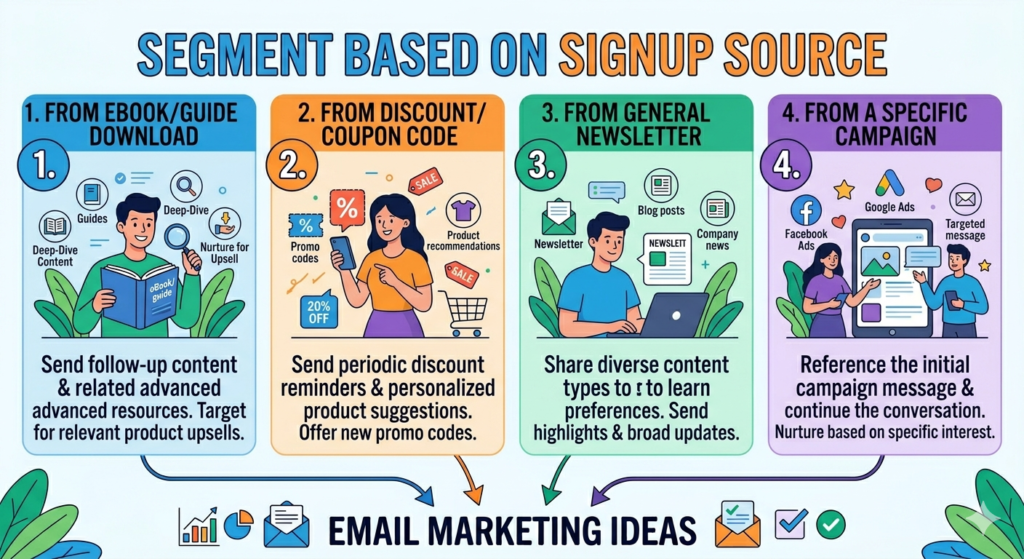
A useful segment is not just a label. It should help you send a better email.
For example, splitting your list by “new subscribers” and “old subscribers” can help. But splitting by what people want, what they clicked, what they bought, what problem they have, or how close they are to buying is usually much stronger.
The goal is simple. Stop sending the same email to people with different needs.
When your email speaks to the reader’s real interest, it feels more personal even if you do not use their name. Personalization is not just “Hi Sarah.” Real personalization is relevance.
Segment Based on Signup Source
The easiest place to start is signup source.
Where did the person join your list?
If they joined from a blog post about beginner email tips, they may need education. If they joined from a service page, they may be comparing options. If they joined from a discount pop-up, they may be closer to purchase. If they joined from a webinar, they may want deeper advice.
Each group should receive emails that match their stage.
A blog subscriber may need nurturing. A pricing page subscriber may need proof. A cart abandoner may need a reason to complete the order. A past customer may need help getting more value from what they bought.
This does not mean you need dozens of complex flows right away. Start with your main entry points. Look at where most subscribers come from. Then build better messages for those paths.
Even three simple segments can improve results because the emails will feel more relevant.
Segment Based on Clicks and Behavior
Clicks tell you what people care about.
If a subscriber clicks on emails about pricing, they may be closer to a buying decision. If they click on beginner guides, they may still be learning. If they click on case studies, they may want proof. If they click on product comparisons, they may be weighing options.
You can use these signals to send smarter follow-up emails.
For example, if someone clicks on a case study about increasing conversions, you can send them another email that explains the exact strategy behind that result. If someone clicks on a pricing page but does not buy or book a call, you can send an email that explains how to choose the right plan or what affects pricing.
This works because you are not guessing. You are responding to interest.
The key is to avoid overcomplicating it. You do not need to create a new segment for every small action. Focus on the actions that show clear intent.
A click on a service page matters. A click on a pricing page matters. A click on a comparison article matters. A click on a product category matters. These actions reveal what the person may want next.
Segment Customers and Non-Customers Differently
A person who has bought from you should not receive the same emails as someone who has never bought.
This is one of the most common mistakes in email marketing.
When customers keep getting beginner sales emails, it feels lazy. It can also weaken trust because the customer may feel like your brand does not know them.
Customers need a different path. They may need onboarding, usage tips, cross-sell ideas, loyalty offers, referral requests, review requests, or deeper education.
Non-customers need trust, proof, answers, and reasons to take the first step.
These are different conversations.
For a customer, your goal is often to increase value and deepen the relationship. For a non-customer, your goal is often to reduce doubt and create enough confidence to act.
When you separate these groups, your emails become more respectful and more useful.
Use Simple Segments Before Building Complex Systems
Many brands avoid segmentation because they think it needs a large data setup. It does not.
You can start with simple groups.
New subscribers. Active readers. Inactive subscribers. First-time buyers. Repeat buyers. Cart abandoners. People who clicked pricing. People who downloaded a specific guide.
These simple groups are enough to make your emails sharper.
Over time, you can add more depth. But do not wait for a perfect system. A simple relevant email beats a complex irrelevant one every time.
Write Subject Lines That Create Clear Curiosity, Not Cheap Tricks
The subject line has one job. It should make the right person want to open the email.
That does not mean it should trick them. It does not mean it should sound shocking just to get attention. It means it should create a small gap between what the reader knows and what they want to know.
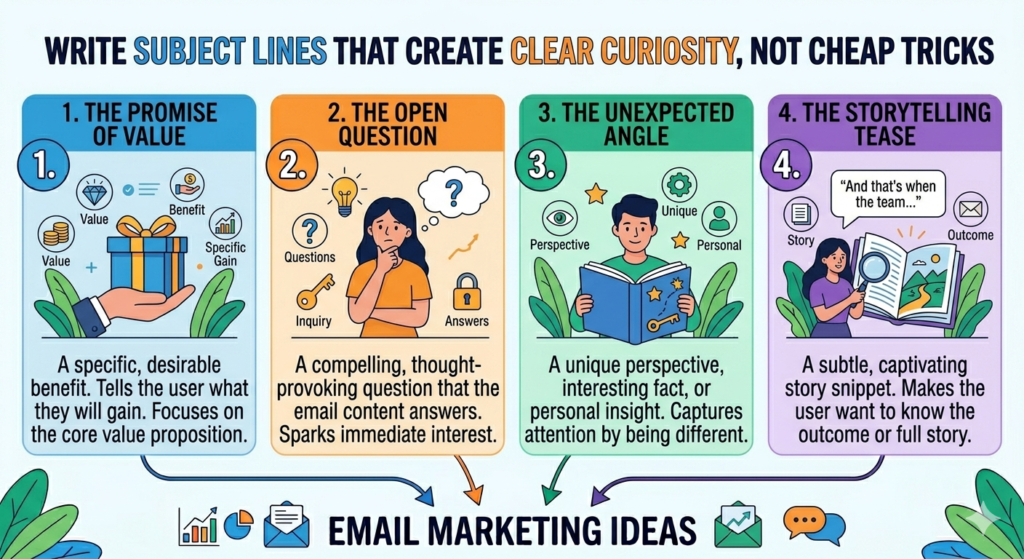
Good subject lines are clear, specific, and tied to a real benefit.
Bad subject lines either say too little or promise too much.
For example, “Big news inside” is weak because it is vague. “You won’t believe this” feels cheap because it sounds like clickbait. “Three small changes that can lift email clicks” is stronger because it tells the reader what they will get and why it matters.
The best subject lines respect the reader’s time.
Use Specific Problems Your Audience Already Recognizes
People open emails when the subject line touches a problem they already care about.
If your audience struggles with low open rates, say that. If they struggle with weak cart recovery, say that. If they are worried their welcome flow is too generic, say that.
A subject line should often feel like a mirror.
For example, “Why your welcome emails are getting ignored” speaks to a real worry. “The simple fix for low repeat purchases” gives a clear reason to open. “Your subscribers may not need more emails” creates curiosity while staying connected to a real issue.
The more closely your subject line matches the reader’s inner question, the more likely they are to open.
This is why strong email marketers study customer language. They read reviews, sales calls, support tickets, comments, survey answers, and chat logs. They look for the exact words people use when describing problems.
Then they use that language in subject lines.
Not in a manipulative way. In a clear way.
When the subject line sounds like the reader’s own thought, it earns attention.
Avoid Subject Lines That Break Trust
You can get opens with tricks. But you cannot build long-term engagement with tricks.
Subject lines like “Re: your account,” “Final notice,” or “I tried calling you” may increase opens once, but they often damage trust. If the reader feels fooled, they may not open your next email. Worse, they may unsubscribe or mark your email as spam.
The short-term open is not worth the long-term loss.
Your subject line should match the email body. If you promise a strategy, give a strategy. If you tease a story, tell the story. If you mention a discount, make the discount clear. If you ask a question, answer it.
The inbox is crowded, but trust still matters.
A clear subject line may not always get the most opens, but it often gets better clicks, better replies, and better buyers. That matters more.
Test Angles, Not Just Words
Many brands test subject lines in a shallow way. They change one word and hope for a big lift.
A better way is to test angles.
One subject line may focus on a pain point. Another may focus on a benefit. Another may focus on curiosity. Another may focus on proof. Another may focus on urgency.
For example, if you are sending an email about abandoned cart recovery, one angle could be “Why shoppers leave before buying.” Another could be “A better way to recover lost carts.” Another could be “The cart email mistake most stores miss.”
Each angle attracts attention for a different reason.
This kind of testing teaches you what your audience responds to. Do they open emails about mistakes? Do they respond to proof? Do they like direct how-to advice? Do they react to softer story-led subject lines?
Over time, this gives you a stronger sense of your audience’s buying mind.
Make the Preview Text Work With the Subject Line
The preview text is not a small detail. It is a second chance to earn the open.
Many brands waste it by letting the email platform pull random text, such as “View this email in your browser” or “Hi there, we are excited to share.”
That is lost space.
Your preview text should extend the subject line. It should add context, deepen curiosity, or make the benefit clearer.
If your subject line is “Your welcome flow may be leaking sales,” the preview text could say, “Here is where most brands lose warm subscribers in the first week.”
Now the subject line and preview text work together. The reader understands the value before opening.
That small change can make the inbox experience feel more polished and more intentional.
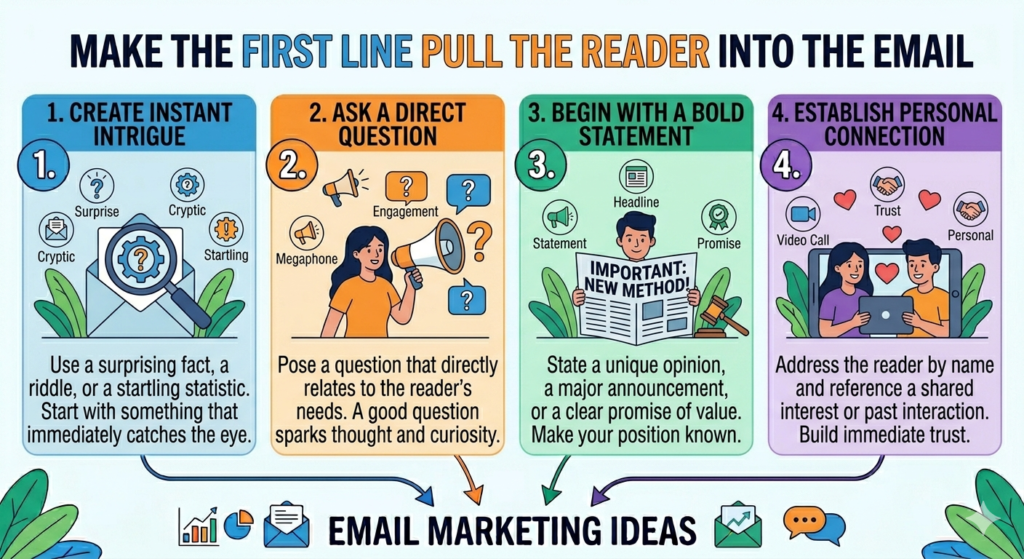
Make the First Line Pull the Reader Into the Email
Getting the open is only the first step. The first line decides whether the person keeps reading.
Many emails lose the reader right away because they start with empty phrases.
“Hope you are doing well.”
“We are excited to announce.”
“In today’s newsletter, we will discuss.”
These openings are familiar, but they do not create momentum. They feel slow. They make the email sound like every other email.
A better first line enters the reader’s world quickly.
It names a problem. It opens a loop. It makes a clear promise. It shares a sharp insight. It starts a story. It says something the reader feels but may not have said out loud.
Start With the Reader, Not the Brand
Your reader is not opening the email to hear about your company first. They are opening it to see if the message matters to them.
So start with them.
Instead of saying, “We have been working on new email templates,” say, “Most email templates fail because they make the reader work too hard.”
Instead of saying, “We are launching a new service,” say, “If your emails are getting opens but not clicks, the issue may not be your offer.”
Instead of saying, “We wanted to share some tips,” say, “A good email does not feel like a push. It feels like the next useful step.”
These openings create interest because they speak to the reader’s problem or goal.
Once the reader is engaged, you can bring in your brand, offer, story, or service. But earn that attention first.
Use Short Openings That Create Motion
Email is not a blog post. People read it in a faster, more distracted way.
That means your opening should move quickly.
Short sentences help. Clear ideas help. Simple words help. A strong first line helps the reader slide into the second line. The second line should lead into the third. This creates flow.
Think of your email like a conversation, not a report.
You do not need a long setup. You do not need to explain the whole background before making your point. Start close to the pain, desire, or insight.
For example, an email about list fatigue could open with, “Your list may not be tired of hearing from you. It may be tired of hearing the same kind of message.”
That line creates interest because it challenges a common belief. It makes the reader want to know more.
That is the job of the opening.
Create a Reason to Keep Reading
Every strong email gives the reader a reason to continue.
This reason can be a promise, a question, a story, or a problem that needs solving.
For example, “There is one part of your welcome flow that often decides whether people keep opening your emails.” That line makes the reader wonder which part.
Or, “A discount can win a sale, but it can also train customers to wait.” That line creates tension.
Or, “We reviewed a campaign that had strong opens but weak sales. The issue was not the subject line.” That line starts a story and opens a loop.
These openings work because they create forward movement.
The reader feels there is something useful ahead.
Cut Warm-Up Sentences Without Mercy
Before sending any email, read the first five lines and ask one question: does the email really start here?
Often, the real start is hidden in line three or four. The first few lines are just warm-up.
Cut them.
Your reader is busy. Respect that. Start where the value begins.
This does not mean your email should feel cold or rushed. It means every line should earn its place.
A warm tone and a sharp opening can work together. In fact, that is often the best mix.
Build Emails Around One Clear Action
A confused email does not convert.
Many emails try to do too much. They ask the reader to read a blog post, watch a video, check a product, follow on social media, use a discount, join a webinar, and reply with feedback.
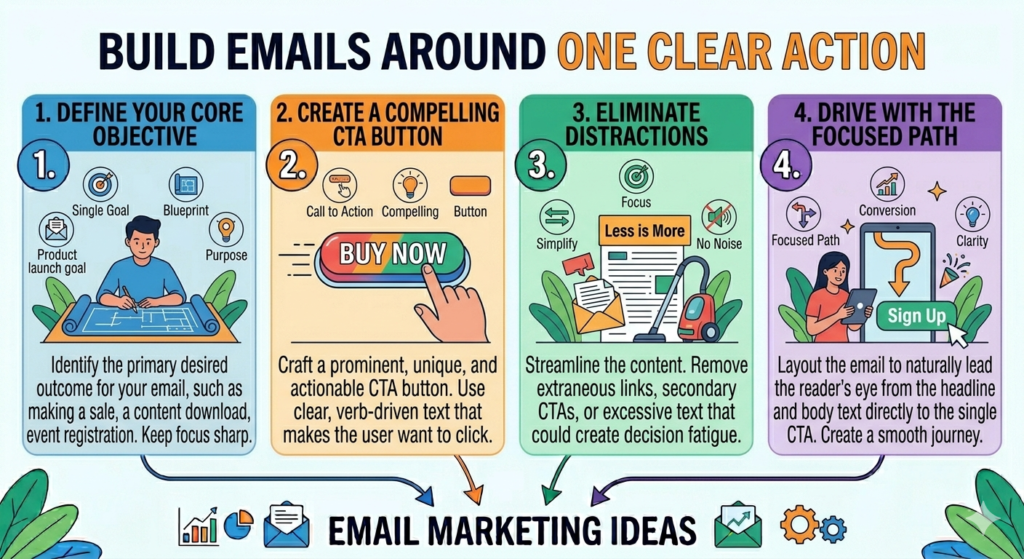
That may feel efficient to the brand, but it feels scattered to the reader.
When an email has too many actions, the reader often takes none.
A stronger approach is to build each email around one main action.
That action might be to click, buy, reply, book, read, watch, download, or complete a setup step. But it should be clear.
The rest of the email should support that action.
Match the Call to Action to the Reader’s Stage
Not every subscriber is ready to buy. If you ask too soon, you may lose them. If you never ask, you may miss sales.
The right call to action depends on the reader’s stage.
A new subscriber may need to read a helpful guide. A warm lead may need to see proof. A cart abandoner may need to finish checkout. A past buyer may need to try a related product. A high-intent visitor may need to book a call.
This is why sending the same call to action to everyone is weak.
A person who just found your brand may not be ready for “Buy now.” But they may be ready for “See how it works.” A person who has clicked three case studies may not need more education. They may be ready for “Book a strategy call.”
Your call to action should feel like the next natural step, not a sudden demand.
Make the Action Feel Low-Friction
People avoid actions that feel like work.
If your call to action feels heavy, unclear, or risky, fewer people will click.
Simple language helps. Instead of “Submit your information to begin the consultation process,” say “Book your free strategy call.” Instead of “Explore our comprehensive product catalog,” say “Find the right plan.” Instead of “Proceed to checkout,” say “Finish your order.”
The action should feel easy to understand and easy to take.
You can also reduce friction by setting expectations. Tell people what happens after they click. If they are booking a call, explain how long it takes. If they are downloading a resource, say what they will get. If they are starting a trial, explain whether they need a card.
Uncertainty lowers clicks. Clarity raises them.
Repeat the Same Action in Natural Ways
If your email is longer, you can mention the same action more than once. But do not make it feel robotic.
The first mention can be soft. The second can be more direct. The final mention can come after you have built the case.
For example, an email promoting a conversion audit might first say, “If you are not sure where your email flow is leaking sales, a simple audit can make the problem easier to see.” Later, it can say, “You can book an audit here.” Near the end, it can say, “Start with the audit, and you will know what to fix first.”
It is the same action, but each mention feels natural.
That is much better than repeating the same button text over and over without context.
Remove Links That Compete With the Main Goal
Before you send an email, look at every link.
Does each link support the main action? Or does it distract from it?
If the goal is to book a call, do you really need links to three blog posts, two social accounts, and your homepage? Maybe not.
Every extra link gives the reader another path. Sometimes that path helps. Often, it weakens focus.
Strong conversion emails keep the path simple.
The reader should always know what to do next and why it matters.
Use Stories to Make Your Emails Feel Less Like Promotions
People are tired of being sold to. They are not tired of good stories.
That is why story-based emails often work so well. A story gives the reader a reason to stay with the message. It makes the email feel more human. It also helps you teach, persuade, and sell without sounding like you are pushing too hard.
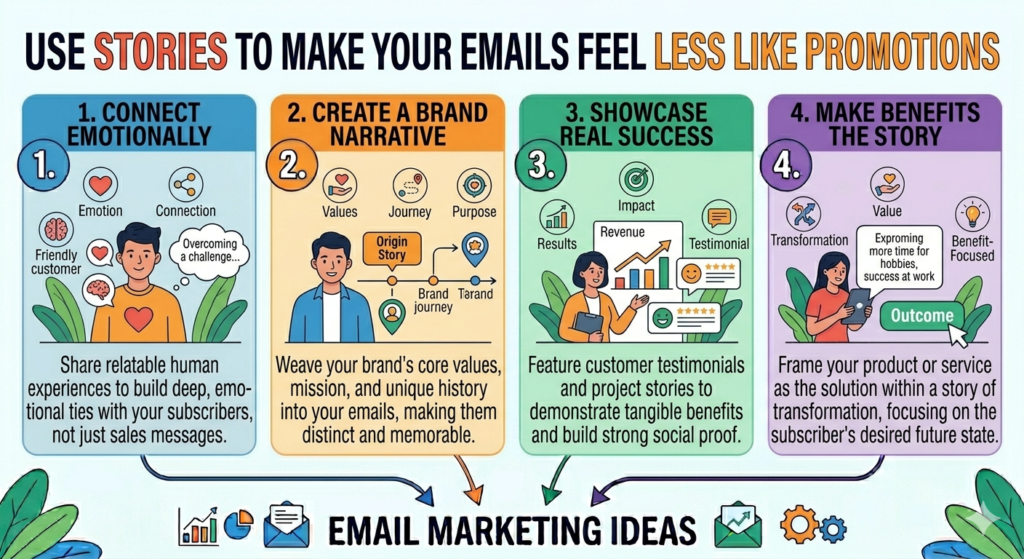
A story does not need to be long. It does not need to be dramatic. It does not need to start with “Once upon a time.” In email marketing, a good story can be as simple as a customer problem, a small mistake, a lesson learned, a behind-the-scenes moment, or a real example from your business.
The goal is not to entertain for the sake of it. The goal is to make the message easier to care about.
When you tell a story, the reader sees the point instead of just being told the point. That is powerful because people remember examples more than instructions.
Show the Problem Before You Show the Solution
A common mistake in email marketing is rushing to the solution too fast.
Brands often say, “Here is our product. Here is what it does. Here is why you should buy it.” But the reader may not yet feel the problem deeply enough. If they do not feel the problem, the solution will not feel urgent.
A story helps you slow down in the right way.
For example, instead of saying, “Our email audit helps you improve conversions,” you could tell a short story about a brand that had strong open rates but weak sales. Their team kept changing subject lines because they thought that was the issue.
But the real problem was inside the email. The offer came too late. The call to action was unclear. The email asked the reader to do too many things.
Now the reader understands the problem better. They may even see themselves in it.
Once that happens, your solution feels more useful because it is tied to a real situation.
This is how strong marketing works. You do not just present a solution. You help the reader understand why the problem matters.
Use Customer Moments as Teaching Tools
Your customers can give you some of your best email ideas.
Think about the questions they ask before buying. Think about the doubts they share on sales calls. Think about the mistakes they make before they come to you. Think about the small wins they get after using your product or service.
Each of these moments can become an email.
For example, a digital marketing agency like WinSavvy could write an email about a business owner who thought their email list was too small to matter. The real issue was not list size. It was that the business had no clear welcome flow, no follow-up plan, and no way to turn interest into action.
That story could lead into a practical lesson about building a simple email journey.
Or you could tell a story about a brand that sent weekly emails but had falling engagement. The lesson might be that frequency was not the core problem. The emails were just saying the same thing in different words.
Stories like this help readers learn without feeling lectured.
They also create trust because they show that you understand real problems, not just theory.
Let the Story Lead Into the Offer Naturally
A story email should not feel like a trick. The offer should connect naturally to the lesson.
If the story is about a brand losing sales because its welcome emails were weak, the offer could be an email flow audit. If the story is about a customer who improved repeat purchases with better post-purchase emails, the offer could be a retention strategy call.
If the story is about a founder who did not know what to send after a lead magnet, the offer could be a done-for-you nurture sequence.
The story should create the need. The offer should feel like the next step.
That is much stronger than forcing a pitch at the end of a random story.
The reader should feel, “This makes sense. I see why this matters. I understand why this offer exists.”
That feeling makes conversion easier.
Keep Email Stories Tight and Useful
A story email is not a novel. You do not need too many details.
You only need enough to make the point clear.
Set up the situation. Show the problem. Share the lesson. Connect it to the reader. Then guide them toward the next action.
If a detail does not help the reader understand the lesson, cut it.
Strong stories are not long because the writer had more to say. They are strong because the writer knew what to leave out.
Make Your Emails Feel Personal Without Sounding Fake
Personalization is not just adding someone’s first name to the subject line.
That can help in some cases, but it is not enough. In fact, fake personalization can make an email feel worse. If the email says “Hi James” but the rest of the message feels generic, the reader knows it was automated.
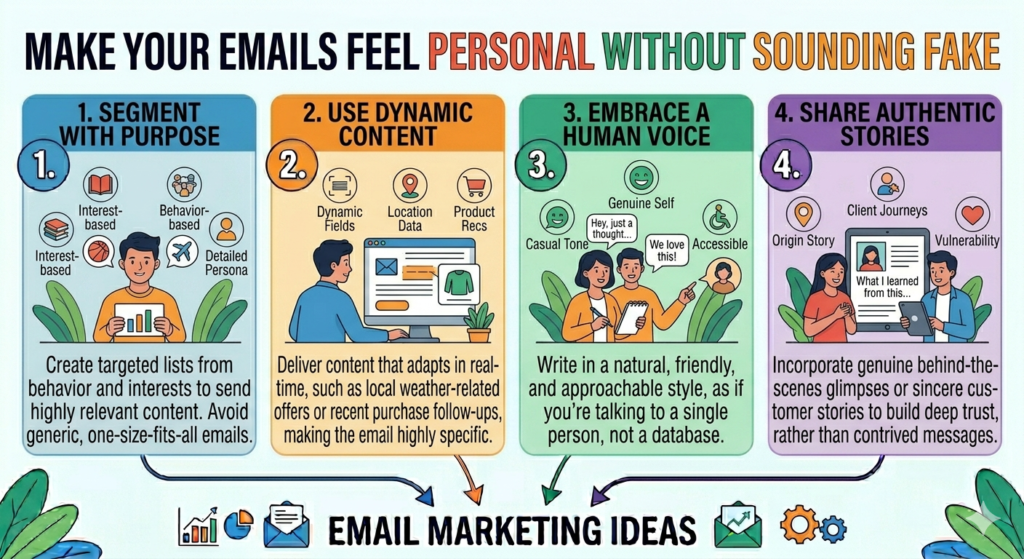
Real personalization means the email matches the reader’s needs, timing, interest, and behavior.
It feels like the email was sent for a reason.
That reason could be based on what they clicked, what they bought, what they downloaded, what page they visited, what stage they are in, or what problem they showed interest in.
This kind of personalization is more useful because it changes the message, not just the greeting.
Personalize Based on the Problem, Not Just the Name
People care more about their problems than their names.
That does not mean names are useless. It means the deeper win comes from showing that you understand what the person wants.
For example, if someone downloaded a guide about improving email open rates, you can send follow-up emails that focus on subject lines, preview text, sender trust, and list quality. If someone downloaded a guide about conversion rates, you can focus on offers, calls to action, email flow, and sales messages.
That is real personalization.
The reader feels the email is tied to their interest. It does not feel random.
A simple line like “Since you were looking at ways to improve email conversions, this next step may help” can make the email feel more relevant. It gives context. It reminds the reader why they are receiving the message.
This is much better than sending the same broad newsletter to everyone.
Use Behavior to Send Better Follow-Ups
Every click, purchase, reply, and page visit can help you understand what the reader might need next.
If someone clicks on an email about abandoned carts, send them more useful ideas about cart recovery. If someone clicks on an email about customer retention, send them a retention-focused case study. If someone clicks your pricing page, follow up with an email that explains how to choose the right option.
This does not need to feel creepy. You do not have to say, “We saw you clicked this.” That can feel uncomfortable.
Instead, keep it natural.
You can say, “If you are comparing ways to improve your email revenue, here is a simple way to think about it.” Or, “A lot of teams reach this point and wonder which flow to fix first.”
The email feels timely without making the reader feel watched.
Good personalization should feel helpful, not invasive.
Write Like a Real Person Is Reading
Even automated emails should sound human.
Many brands write emails in a stiff way because they think it sounds professional. But stiff writing often creates distance. It makes the email feel like a notice, not a message.
You can be professional and still sound human.
Use simple words. Use natural rhythm. Write the way a smart person would explain something to a client in a calm conversation.
Instead of saying, “We are pleased to provide our subscribers with a comprehensive overview of retention-focused email strategies,” say, “Retention emails work best when they help customers get more value from what they already bought.”
The second version is clearer. It is easier to read. It feels more direct.
That matters because the inbox is not a place where people want to work hard.
Remove Lines That Sound Like a Template
Before sending an email, look for phrases that feel like they could appear in any brand’s email.
Phrases like “We are excited to announce,” “Don’t miss out,” “For a limited time only,” and “Unlock your potential” are not always wrong, but they are often overused. When readers see them too often, they stop paying attention.
Replace broad phrases with specific ones.
Tell the reader what is actually useful. Tell them why it matters. Tell them what changes when they act.
Specific writing feels more personal because it has more meaning.
Build Engagement With Emails That Teach One Useful Thing
One of the best ways to keep people opening your emails is to teach them something they can use.
Not every email should sell directly. Some emails should help the reader think better, choose better, avoid mistakes, or take a small step forward.
When your emails teach well, readers begin to trust your brand. They start to see you as useful. They begin to believe that if your free emails are this helpful, your paid product or service may be even better.
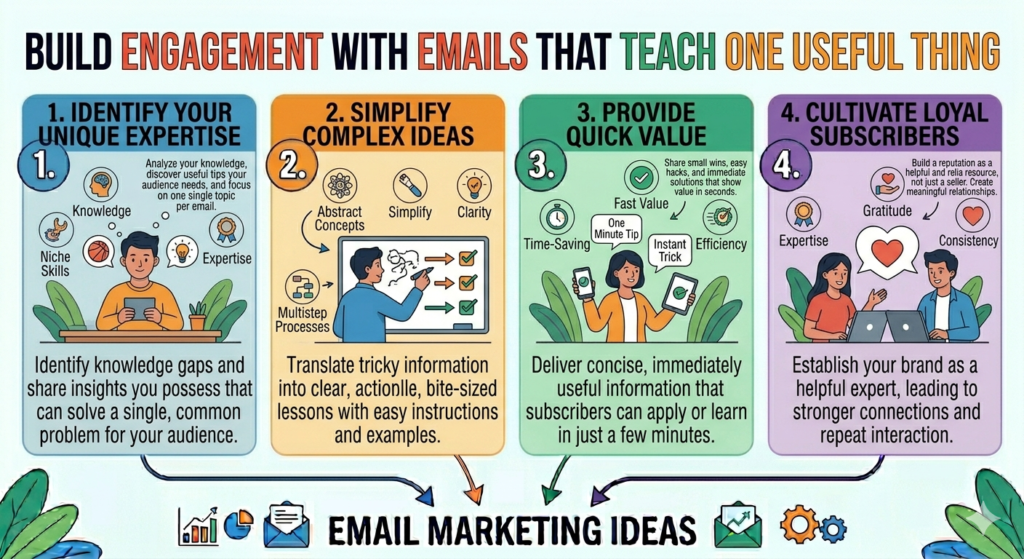
This is especially powerful for service businesses, agencies, consultants, software brands, and high-ticket offers. In these cases, the buyer often needs trust before they are ready to act.
Education builds that trust.
But the key is to teach one clear thing at a time.
Do Not Turn Every Email Into a Full Guide
A teaching email should not try to cover everything.
If you try to explain a whole strategy in one email, the message becomes too heavy. The reader may save it for later and never come back. Or they may skim it and miss the main point.
A better approach is to teach one small but useful idea.
For example, do not write one email called “How to Improve Your Entire Email Marketing Strategy.” That is too broad.
Instead, write one email about why the first email in a welcome flow should match the signup promise. Write another about how to fix a weak call to action. Write another about how to use customer objections as email topics. Write another about why discount emails stop working when you use them too often.
Each email becomes easy to read and easy to remember.
Small lessons build trust over time.
Make the Lesson Practical Right Away
The best educational emails do not just explain what matters. They show the reader what to do next.
If you teach that welcome emails should match signup intent, show a simple example. If you teach that calls to action should be clear, show how to rewrite a weak one. If you teach that inactive subscribers need a different message, explain what that message should say.
A reader should leave the email thinking, “I can use this.”
That feeling is valuable. It creates goodwill. It also trains people to keep opening your emails because they expect a useful payoff.
This is where many brands go wrong. They write emails that sound smart but do not help the reader act. The reader may agree with the message, but nothing changes.
Actionable emails are different. They create movement.
And movement leads to trust, clicks, replies, and sales.
Teach in a Way That Leads Toward Your Offer
Educational emails should not be random. They should support your business goals.
This does not mean every email needs a hard sell. It means every lesson should connect to the kind of problem your product or service solves.
If you sell email marketing services, teach people how to think about email strategy, segmentation, conversion, customer journeys, and retention. If you sell fitness coaching, teach people about habits, food choices, training mistakes, and progress tracking. If you sell accounting software, teach people about cash flow, invoices, taxes, and business planning.
The lesson should make the reader more aware of the problem you solve.
That way, when you make an offer, it does not feel random. It feels connected to the education you have already given.
This is how you build demand without always pushing.
Use Simple Examples to Make the Lesson Stick
People understand faster when they see an example.
If you say, “Make your emails more specific,” that is helpful but not enough. If you show a weak line and a stronger line, the lesson becomes clear.
For example, “Improve your emails today” is broad. “Fix the one welcome email mistake that costs new subscribers” is more specific.
That example teaches the idea in seconds.
You can use this style often. Show before and after. Show what most brands do and what works better. Show a common mistake and the smarter version.
This makes your emails easier to read and more useful.
Use Customer Questions as Email Topics
Your audience is already telling you what to write about.
They do it through sales calls, support chats, contact forms, surveys, comments, reviews, replies, and objections. Every question they ask can become an email.
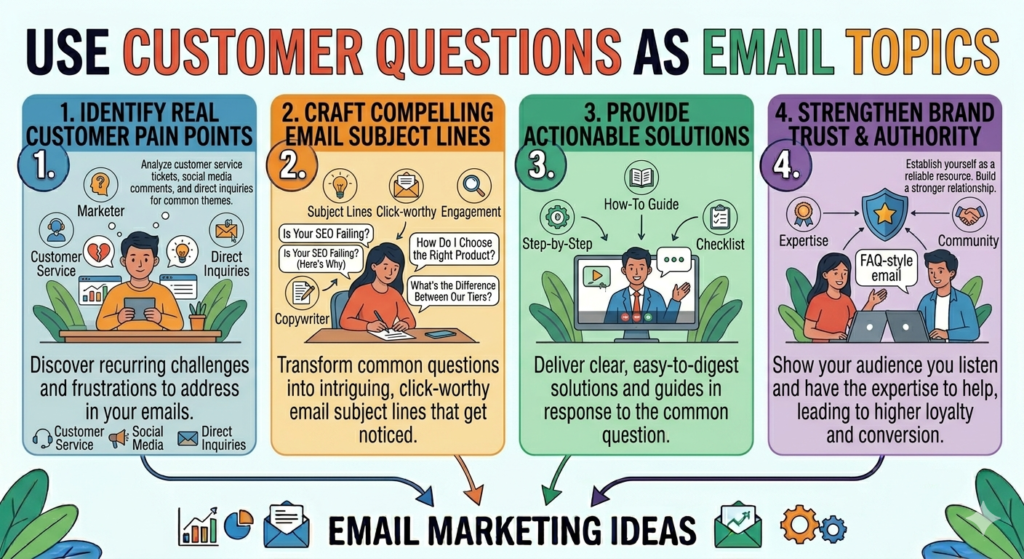
This is one of the easiest ways to create emails that feel relevant because the topics come directly from the market.
Instead of guessing what people want to hear, listen to what they already ask.
If one person asks a question, many others are probably thinking it too.
Turn Common Questions Into Trust-Building Emails
A question is a sign of interest. It also shows where the reader may be stuck.
For example, a prospect might ask, “How often should we send emails?” That can become an email about finding the right sending rhythm.
Another might ask, “Do we need a large list before email marketing works?” That can become an email about quality over list size.
Another might ask, “Should we offer discounts in every campaign?” That can become an email about how discounts affect buyer behavior.
These topics are strong because they meet the reader where they already are.
They also give you a chance to guide the buying conversation before a sales call ever happens.
When you answer questions well, you reduce doubt. You make the reader feel safer. You show that you understand their concerns.
That is what builds trust.
Answer the Question With Honesty, Not a Sales Pitch
The fastest way to weaken a question-based email is to turn every answer into a pitch.
If someone asks, “How often should we email our list?” and your answer is only “Hire us to find out,” the email is not helpful.
Give a real answer.
Explain the thinking. Share what affects the decision. Give the reader a simple way to choose. Then, if it fits, mention how your service can help.
Honest answers build authority because they show confidence.
You do not need to hide value to make people buy. In many cases, giving useful guidance makes people more likely to trust you with the bigger work.
A strong answer might say that email frequency depends on list expectations, offer type, content quality, and buying cycle. Then it could explain that sending more is not the problem if the emails are useful, but sending weak emails too often can hurt engagement.
That kind of answer helps the reader think better.
Use Objections as Email Content
Objections are not problems to avoid. They are powerful email topics.
If people often say, “We tried email before and it did not work,” write an email about why email fails when there is no strategy behind it.
If they say, “Our list is too small,” write about how a small list with strong intent can outperform a large cold list.
If they say, “We do not want to annoy people,” write about the difference between helpful follow-up and annoying promotion.
If they say, “We do not know what to send,” write about turning customer questions into email ideas.
Every objection gives you a chance to teach, reframe, and build confidence.
This is especially useful in nurture emails because many people do not buy right away. They need their doubts answered first.
Keep a Running List of Real Questions
Do not rely on memory.
Create a simple place where your team saves customer questions. It could be a document, a spreadsheet, a note inside your email platform, or a shared file.
Whenever a prospect asks something useful, save it. Whenever a customer gives feedback, save it. Whenever a sales call reveals a common concern, save it.
Over time, this becomes a rich source of email ideas.
Better yet, these ideas will not feel forced because they come from real people.
That is how you avoid writing generic campaigns.
Create Email Campaigns Around Buying Triggers
People do not buy at random.
Something usually happens before they take action. They feel a pain more clearly. They notice a missed chance. They compare options. They get pressure from their team. They hit a deadline. They see a better way. They reach a moment where staying the same feels more costly than making a change.
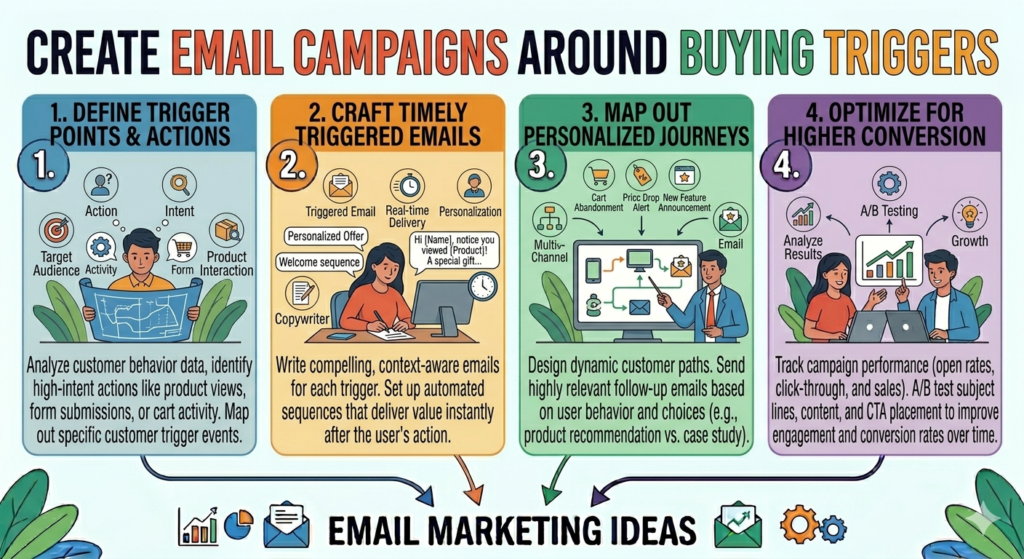
These moments are buying triggers.
Smart email marketing is not just about sending campaigns on a calendar. It is about understanding what makes someone ready to move and writing emails that speak to those moments.
When your emails connect to buying triggers, they feel more timely and more persuasive.
Find the Moments That Make People Care More
To find buying triggers, look at your best customers.
What happened before they bought?
Did they just launch a product? Did they miss a revenue target? Did their ads get more expensive? Did their sales team complain about lead quality? Did their website traffic grow but conversions stay flat? Did they hire a new leader? Did they enter a new market? Did they realize their current agency was not enough?
These moments matter because they change the buyer’s urgency.
A business owner may ignore email marketing for months. But if paid ads become too expensive, email suddenly matters more. A SaaS founder may delay lifecycle email work. But if trial users are not converting, email becomes urgent. An ecommerce brand may put off retention strategy. But if repeat purchase rates drop, email becomes a priority.
Your emails should speak to these moments.
Instead of saying, “Email marketing can grow your business,” say, “If ads are bringing in traffic but repeat sales are weak, your email system may not be doing enough after the first visit.”
That message is more specific. It connects to a trigger.
Build Campaigns for Different Trigger Moments
Once you know the triggers, you can build campaigns around them.
One campaign could speak to brands that are getting traffic but not enough sales. Another could speak to businesses that have leads but poor follow-up. Another could speak to ecommerce stores with too many one-time buyers. Another could speak to SaaS companies with trial users who do not activate.
Each campaign should focus on one clear situation.
This makes the message feel sharper because you are not trying to speak to everyone at once.
A trigger-based email might begin with a line like, “If your list is growing but sales are not, the problem may be what happens after signup.” That speaks to a very clear situation. The reader can quickly decide if it applies to them.
When it does, they keep reading.
Connect the Trigger to the Cost of Doing Nothing
A strong email does not only show the benefit of action. It also shows the cost of delay.
This does not mean using fear in a cheap way. It means helping the reader see what happens if the problem stays unsolved.
If a brand has no welcome flow, new subscribers may forget why they signed up. If cart recovery emails are weak, paid traffic keeps leaking revenue. If customer emails stop after purchase, repeat sales may stay low. If leads do not get nurtured, sales teams may have to work harder for the same results.
When the reader sees the cost clearly, action feels more important.
But keep the tone helpful. You are not trying to scare them. You are helping them make a smarter decision.
Make Timing Part of the Message
Buying triggers are often tied to timing.
A year-end planning email feels different from a random strategy email. A post-launch email feels different from a general product email. A cart recovery email sent after someone leaves checkout feels different from a broad promotion.
When possible, connect your email to the moment the reader is in.
Timing makes relevance stronger.
And relevance is what turns an email from noise into a message worth reading.
Use Welcome Emails to Build Trust Before You Sell Hard
A welcome email is not just a polite hello. It is one of the most important emails you will ever send.
This is the moment when the subscriber still remembers you. They know why they signed up. They are curious. They are more open to hearing from you than they may be later.
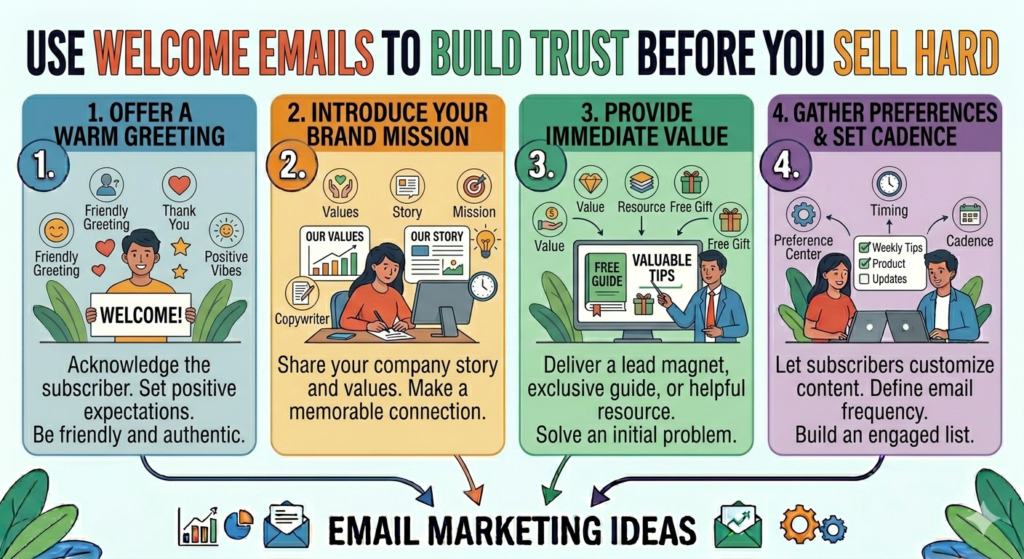
That makes the welcome email powerful.
But many brands waste it.
They either send a cold, boring message that says, “Thanks for subscribing,” or they push too hard with a fast offer before trust has been built. Both approaches can hurt engagement.
A strong welcome email should make the reader feel they made a good choice by joining your list. It should confirm the promise that brought them in. It should show them what kind of value they can expect. It should make the next step easy.
Most of all, it should start the relationship in a way that feels useful.
Make the Welcome Email About the Reader’s Next Step
Your welcome email should not be mostly about your brand.
Yes, you can introduce yourself. Yes, you can explain what you do. But the main focus should be the reader.
What are they trying to solve? What do they want next? What should they do now that they have joined?
For example, if someone signs up for an email marketing guide, your welcome email could say that most brands do not need more random campaigns. They need a simple system that turns attention into trust and trust into action.
That line gives the reader a clear frame.
Then you can tell them what to expect from your emails. You might explain that you will share ideas on better subject lines, stronger offers, better follow-ups, smarter segmentation, and ways to turn more subscribers into customers.
Now the reader understands why staying subscribed is useful.
That is much stronger than saying, “You are now on our mailing list.”
Give a Quick Win Early
A welcome email should give the reader something useful right away.
This quick win does not need to be huge. It just needs to help them feel progress.
For example, you can share one simple email fix they can use today. You can show them a better way to write a call to action. You can explain one mistake that hurts clicks. You can give them a short question to ask before sending any campaign.
A quick win creates trust because the reader gets value before you ask for anything big.
It also sets the tone for future emails.
If your first email helps them, they are more likely to open the second. If the second helps them too, they are more likely to open the third. That is how engagement is trained.
Good email marketing is not just about one strong campaign. It is about building a pattern of usefulness.
Use the Welcome Email to Set Expectations
People are more comfortable when they know what to expect.
Tell subscribers what you will send and why it will help them. You do not need a long explanation. Just make the value clear.
For example, you can say that they will get practical ideas to improve opens, clicks, conversions, customer follow-up, and repeat sales. You can say that the emails will be simple, useful, and focused on action.
This does two things.
First, it tells people why they should keep opening. Second, it creates a standard you must live up to.
When you promise useful emails, you force yourself to send useful emails.
That is good for your audience and good for your brand.
Do Not Overload the First Email
Many brands try to fit too much into the welcome email.
They add their full story, their services, their case studies, their social links, their latest blog posts, their offer, their values, their founder story, and five different calls to action.
That creates noise.
Your first email should be clear and calm. Give the promised item if there is one. Share a short useful idea. Set expectations. Give one simple next step.
You can build the relationship over several emails.
You do not need to win everything in the first message.
Build a Welcome Sequence That Feels Like a Guided Path
A single welcome email is good. A strong welcome sequence is better.
Most subscribers need more than one message before they trust you enough to buy, book a call, request a quote, or take the next step. That is why a welcome sequence works so well.
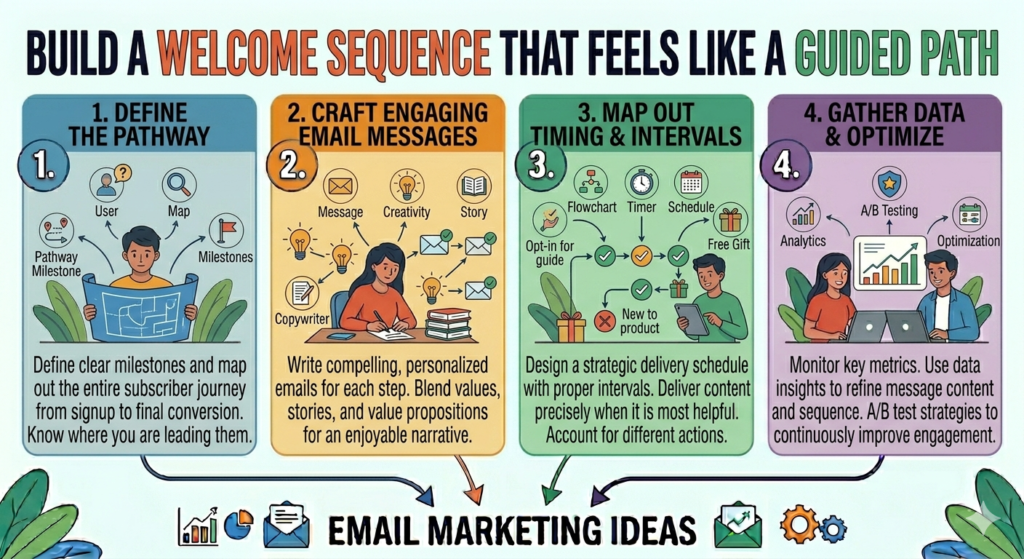
It gives you time to guide the reader.
Instead of trying to explain everything at once, you can spread the message across several emails. Each email can do one job. Together, they can move the subscriber from curiosity to trust to action.
A welcome sequence is not just a set of emails. It is a path.
The reader should feel like each email builds on the last one.
Use the First Email to Confirm the Promise
The first email should deliver what the person expected.
If they signed up for a guide, deliver it. If they joined for a discount, give it clearly. If they subscribed to get insights, give them one strong insight right away.
Do not make them search. Do not bury the value. Do not send them somewhere confusing.
This first email should create relief. The reader should feel, “Good, this is what I asked for.”
That feeling matters because it protects trust.
After you deliver the promise, you can add a short note that helps them use it. If it is a guide, tell them where to start. If it is a discount, suggest the easiest way to choose the right product. If it is a checklist, explain the first step.
This makes the email more helpful.
Use the Second Email to Name the Bigger Problem
The second email can go deeper.
This is where you help the reader understand the larger issue behind their interest.
For example, if they joined because they want better email engagement, the bigger problem may not be subject lines alone. It may be that their emails do not match the reader’s stage. Or they may be sending too many sales emails and not enough trust-building emails. Or they may have no clear journey after signup.
This email should help the reader see the problem in a smarter way.
When people understand their problem better, they are more likely to trust your solution.
This is a powerful moment because you are not selling yet. You are helping them think.
That makes your brand feel useful and credible.
Use the Third Email to Show Proof
Once the reader understands the problem, they need proof.
Proof does not always mean a full case study. It can be a short example, a customer story, a before-and-after moment, a result, a lesson from a campaign, or a clear breakdown of what changed.
For example, you could explain how a brand improved email results not by sending more emails, but by changing the order of its welcome flow. You could show how a clearer call to action increased clicks. You could explain how segmenting buyers from non-buyers made campaigns feel more relevant.
The point is to show that the ideas you teach work in the real world.
Proof lowers doubt.
It helps the reader move from “This sounds useful” to “This might work for me.”
Use the Fourth Email to Handle Doubt
Before people act, they often have quiet doubts.
They may wonder if they have enough subscribers. They may worry that email marketing will annoy people. They may think they do not have time to write better emails. They may believe their audience is different. They may worry that they tried email before and it did not work.
Your welcome sequence should answer these doubts.
Do not pretend they do not exist. Bring them into the open.
For example, you could write an email around the idea that a small list can still create strong results if the people on the list have real intent. Or you could explain that people do not hate emails. They hate emails that waste their time.
When you answer doubts clearly, you make action feel safer.
That is important because people rarely buy only because they want a result. They also need to feel that the risk is low enough to move.
Use the Final Welcome Email to Invite Action
At the end of the welcome sequence, make a clear offer.
This does not need to be aggressive. It just needs to be direct.
If you want the reader to book a call, say why the call matters. If you want them to try your product, explain what they will get. If you want them to reply, ask a simple question. If you want them to read a case study, explain what they will learn.
The offer should feel like the natural next step after the emails they have already received.
This is why the sequence matters. By the time you ask for action, you have already delivered value, explained the problem, shown proof, and handled doubt.
The ask feels earned.
Send Better Newsletters by Making Each Issue Worth Reading
A newsletter can be a powerful way to stay close to your audience.
But only if it is actually worth reading.
Many newsletters are not. They are just collections of links, company updates, recycled blog posts, and random announcements. They do not have a strong point of view. They do not help the reader solve anything. They do not feel personal or useful.
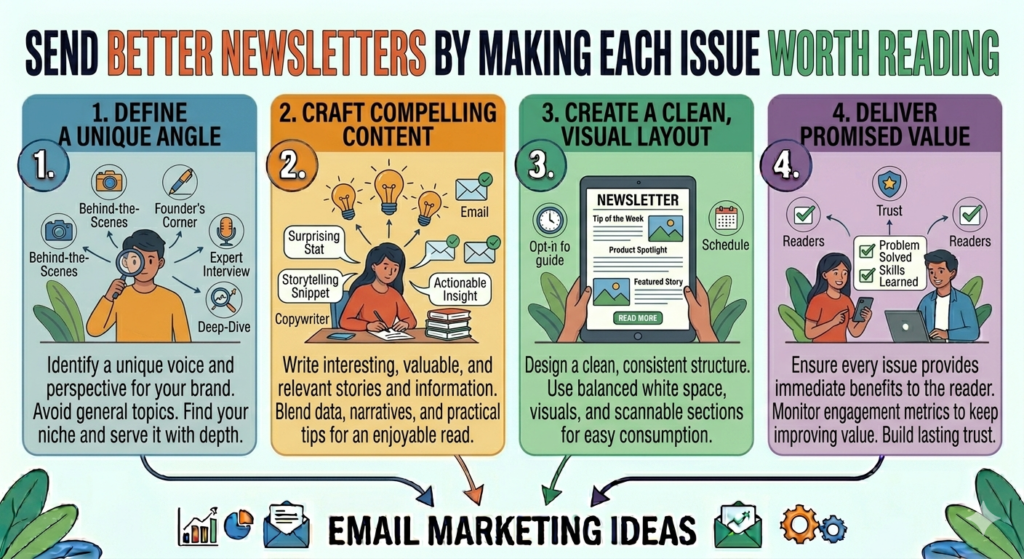
That is why people stop opening them.
A good newsletter should feel like a habit the reader wants to keep. It should give them a reason to come back. It should make them feel smarter, clearer, or more ready to act.
This does not happen by chance. It happens when every issue has a clear purpose.
Give Every Newsletter One Main Idea
A strong newsletter should not feel like a pile of unrelated things.
Even if you include more than one section, the issue should still have one main idea.
For example, instead of sending a newsletter with a blog link, a product update, a discount, a team photo, and a podcast episode, you could build the issue around one theme: how to turn new subscribers into buyers.
Then every part of the email supports that theme.
You might share one lesson about welcome flows. You might link to a deeper guide. You might mention a short customer example. You might invite readers to get help improving their own flow.
Now the newsletter feels focused.
The reader understands why it matters.
This is much better than sending a mixed bag and hoping something gets clicked.
Write the Newsletter Like a Useful Letter, Not a Content Dump
A newsletter should not feel like a bulletin board.
It should feel like someone smart is writing to the reader with a reason.
Start with a clear thought. Explain why it matters. Give a useful lesson. Then point the reader to the next step.
For example, you might open with, “A lot of brands blame low email revenue on list size. But the real problem is often what happens after someone joins.”
That opening gives the issue a point of view.
Then you can explain the mistake. You can share how to fix it. You can link to a related resource or invite the reader to take action.
This kind of newsletter feels more valuable because it has a clear voice.
It is not just sending links. It is guiding attention.
Use Regular Features to Build Familiarity
Readers like knowing what to expect.
That is why regular newsletter features can help. You might include a short teardown, a quick email fix, a customer question, a mistake of the week, or a simple strategy lesson.
The feature gives structure. It also makes the newsletter easier to write because you are not starting from zero every time.
For example, a digital marketing agency could include a short section that breaks down one common email mistake. Another section could show a better version of a weak email line. Another could answer one real subscriber question.
This creates rhythm.
Over time, readers may start opening because they like that specific part of the newsletter.
That is a strong sign of engagement.
Cut Anything That Does Not Serve the Reader
Before sending a newsletter, ask whether each part helps the reader.
Does the company update matter to them? Does the link give real value? Does the announcement solve a problem or help them make a better choice?
If not, cut it or rewrite it.
A newsletter is not a place to include things just because the brand wants to say them.
The reader’s inbox is crowded. Every part of the email must earn its space.
Use Promotional Emails Without Training People to Wait for Discounts
Promotional emails can drive sales fast.
A good offer sent to the right segment at the right time can create strong revenue. But promotions can also create a problem if you rely on them too much.
When every email is a discount, people learn to wait. They stop buying at full price. They ignore normal emails. They only pay attention when there is a sale.
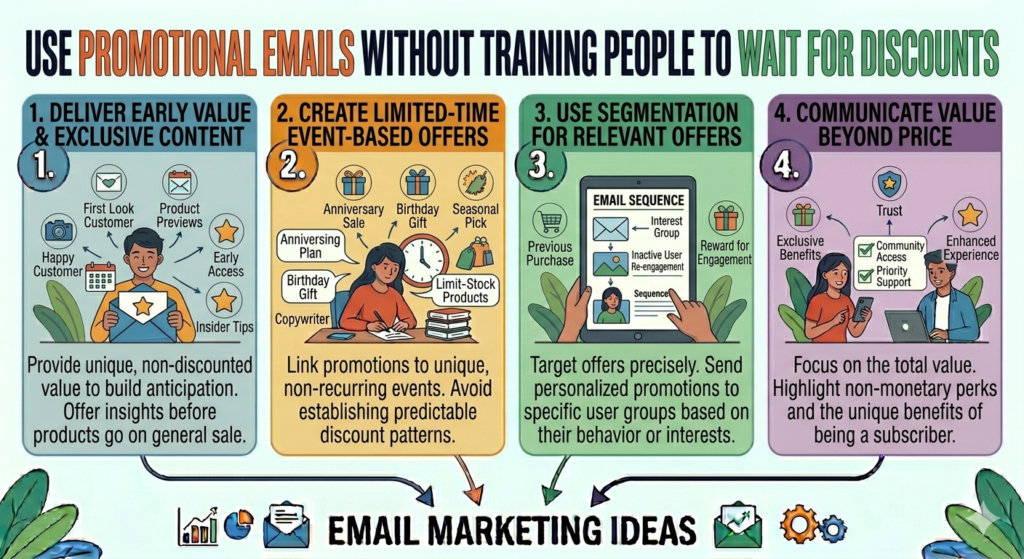
That can hurt long-term profit.
The goal is not to stop sending promotions. The goal is to make them smarter.
A strong promotional email should do more than announce a discount. It should explain why the offer matters, who it is for, what problem it solves, and why now is a good time to act.
Give the Promotion a Clear Reason
A random discount can feel weak.
People may still use it, but it does not build much meaning. A promotion with a reason feels stronger.
For example, a discount tied to a seasonal need, a product launch, a customer milestone, a bundle, a limited service window, or a clear buying moment feels more natural.
The reason gives context.
Instead of saying, “Get 20 percent off,” you might say, “If you have been meaning to fix your welcome flow before your next campaign push, this is a good week to start.”
That message connects the offer to a business goal.
It makes the promotion feel useful, not desperate.
Sell the Outcome Before the Discount
A discount is not the real reason people buy. It is only a push.
The real reason is the outcome they want.
Before you mention the discount too heavily, remind the reader what they gain.
If you are selling an email strategy service, the outcome might be better follow-up, clearer messaging, stronger conversion, and less revenue lost after signup. If you are selling a product, the outcome might be comfort, speed, confidence, beauty, health, or ease.
The discount should support the desire. It should not replace it.
This matters because discount-first emails often attract price-driven buyers. Outcome-first emails attract people who understand the value.
The strongest promotional emails make the reader want the thing before they care about the discount.
Use Urgency Carefully and Honestly
Urgency can improve conversions, but only when it is real.
If every email says “last chance,” readers stop believing you. If every offer is “ending soon,” but it comes back next week, trust drops.
Use urgency when there is a real reason. A sale ends. A bonus expires. A cohort starts. A service slot closes. A seasonal window matters. A price changes.
Then explain it clearly.
For example, “We are closing audit bookings for this month on Friday because we only review a limited number of accounts at a time” feels more believable than “Hurry before it is gone.”
The first version gives a reason. The second feels like pressure.
Honest urgency respects the reader.
It helps them make a decision without feeling tricked.
Do Not Let Promotions Become Your Whole Email Strategy
Promotions should be part of your email plan, not the whole plan.
Between offers, keep building trust. Teach. Share stories. Answer questions. Show proof. Help readers get value. Build the relationship.
Then, when you send a promotion, it lands better.
People are more likely to buy from a brand that has helped them before asking for the sale.
That is the long game.
Use Re-Engagement Emails to Wake Up Quiet Subscribers
Every email list has quiet subscribers.
Some people stop opening. Some stop clicking. Some lose interest. Some joined for one thing and never came back. Some still care, but your emails no longer feel relevant enough to earn their attention.
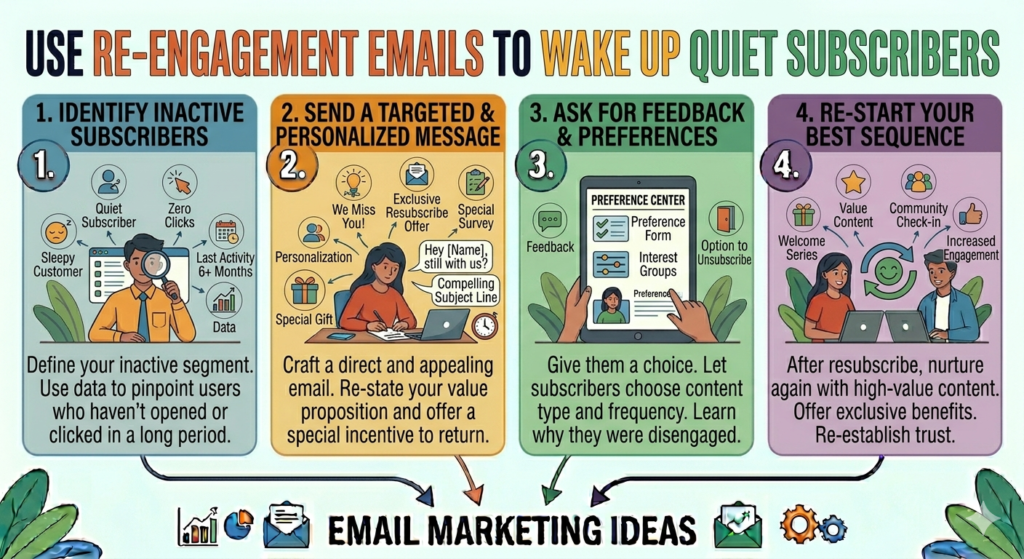
Ignoring these subscribers is a mistake.
A quiet list can hurt your results over time. It can lower engagement rates and make it harder to understand what is really working. It can also hide possible buyers who simply need a better reason to pay attention again.
Re-engagement emails are designed to bring these people back.
But they need to be handled with care.
Do Not Start With Guilt
Some brands send re-engagement emails that make the reader feel blamed.
They say things like, “We noticed you have not opened our emails,” or “Are you still there?” or “You are about to be removed.”
These can work sometimes, but they often feel cold.
A better re-engagement email should focus on value.
Instead of calling out the reader’s inactivity, give them a fresh reason to care.
For example, you could say, “If email marketing has felt hard to keep up with, start with this one simple fix.” Or, “Here is the fastest way to find out if your welcome emails are doing their job.”
This makes the email about the reader’s benefit, not your tracking.
That feels more respectful.
Offer a Clear Choice
Sometimes people go quiet because your emails no longer match what they want.
Give them a simple way to choose.
You can ask whether they want tips on strategy, examples, audits, ecommerce emails, B2B nurture, retention, or conversion. You can invite them to click the topic that fits them best. You can let them reduce email frequency.
This does two things.
First, it gives subscribers control. Second, it gives you better data.
A person who clicks a topic is showing fresh interest. You can use that interest to send more relevant emails.
Re-engagement is not just about getting one open. It is about learning what the subscriber needs now.
Use a Strong Piece of Content to Restart the Relationship
A good re-engagement campaign should remind people why your emails are worth reading.
One of the best ways to do that is to send a strong, useful piece of content.
It could be a practical teardown, a short checklist, a clear framework, a mistake to avoid, or a simple plan.
For example, WinSavvy could send a re-engagement email with a subject focused on a common pain, such as low clicks despite decent open rates. The email could explain one reason this happens and give a practical fix.
That gives the subscriber value even if they have been quiet for months.
If they engage, you can move them into a more active segment. If they do not, you can send one or two more useful emails before deciding whether to clean the list.
Clean the List When Needed
Not every subscriber should stay forever.
If someone has not opened or clicked in a long time, and they do not respond to re-engagement emails, it may be better to stop sending to them.
This can feel uncomfortable because list size feels important. But a smaller engaged list is often more valuable than a large silent one.
Email marketing is not about having the biggest list. It is about having a list that wants to hear from you.
Use Abandoned Cart Emails to Recover Buyers Who Were Already Close
Abandoned cart emails work because they speak to people who have already shown buying intent.
These people did not just browse. They did not just read a blog post. They placed something in the cart. That means there was interest. Something stopped them before they completed the purchase.
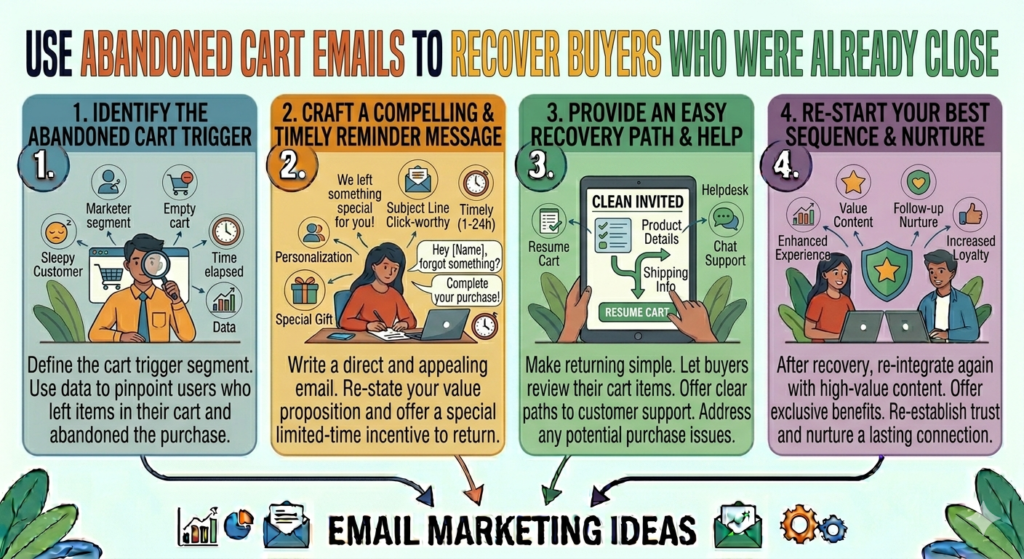
Your job is not to shame them or push them too hard. Your job is to help them finish the decision.
Many brands treat abandoned cart emails like simple reminders. They say, “You left something behind,” add a product image, and include a checkout link. That can work, but it leaves a lot of money on the table.
A better cart recovery email answers the quiet questions that may have stopped the buyer.
Is this worth the price? Will it arrive on time? What if it does not fit? Can I trust this brand? Is there a better option? Do I really need this now? Is shipping too high? Is the return process easy?
The closer someone is to buying, the more small doubts matter.
Send the First Cart Email Quickly, but Keep It Helpful
The first abandoned cart email should usually arrive while the purchase is still fresh in the buyer’s mind.
At this stage, the tone should be light and helpful. The person may have been interrupted. They may have wanted to compare options. They may have had a payment issue. They may simply have walked away.
Do not assume they rejected the product.
A simple first email can remind them what they were looking at and make it easy to return. But you can make it stronger by adding one helpful reason to complete the purchase.
For example, instead of only saying, “Your cart is waiting,” you could say, “The items you picked are still in your cart, and checkout only takes a minute.”
That small line reduces friction.
If shipping is fast, mention it. If returns are easy, mention it. If support is available, mention it. If the product has a clear benefit, remind them of it.
The goal of the first email is not to pressure. It is to make the next step feel simple.
Use the Second Cart Email to Reduce Doubt
If the buyer does not return after the first email, the second email should do more than repeat the same reminder.
This is where you address doubt.
For ecommerce brands, doubt often comes from price, fit, quality, shipping, delivery time, return policy, or trust. For software brands, it may come from setup time, feature confusion, pricing, team approval, or fear that the tool will not solve the problem.
Your second email should answer one or two of these concerns clearly.
For example, if return policy is a strength, explain it in plain words. If reviews are strong, include a short customer quote. If the product solves a clear pain, remind the reader what changes after they buy. If the product is easy to start using, explain how quickly they can get value.
This email should make the buyer feel safer.
A person who is close to buying does not always need a discount. Sometimes they need confidence.
Use the Final Cart Email to Create a Clear Decision Point
The final cart email should help the buyer make a decision.
This does not mean using fake urgency. It means giving a real reason to act or move on.
If the cart will expire, say so. If stock is limited, say so only if it is true. If a bonus or offer is ending, explain that clearly. If there is no real deadline, you can still create a decision point by framing the benefit.
For example, “If you still want to solve this before the weekend, this is the easiest next step” can work without sounding false.
If you choose to offer a discount, use it carefully. Discounts can recover sales, but they can also train people to abandon carts on purpose. If you always send a discount in the final cart email, some customers will learn to wait.
A better approach is to test discounts by segment. New buyers may need a small push. Repeat customers may not. High-margin products may support a discount. Low-margin products may need a different incentive, such as free shipping, a bonus, or support.
Make the Checkout Link Clear and Easy
Every abandoned cart email should make returning to checkout simple.
Do not bury the link. Do not make the buyer search. Do not include too many competing links.
The main action should be clear.
If the buyer has to think too much, you may lose them again.
Cart recovery works best when it removes friction, answers doubts, and helps the buyer feel ready.
Use Browse Abandonment Emails to Turn Interest Into Action
Browse abandonment emails target people who looked at a product, service, category, or key page but did not take the next step.
These emails are different from abandoned cart emails because the buyer’s intent is usually weaker. They were interested, but they may not have been ready. They may have been comparing. They may have been learning. They may have clicked out before making a decision.
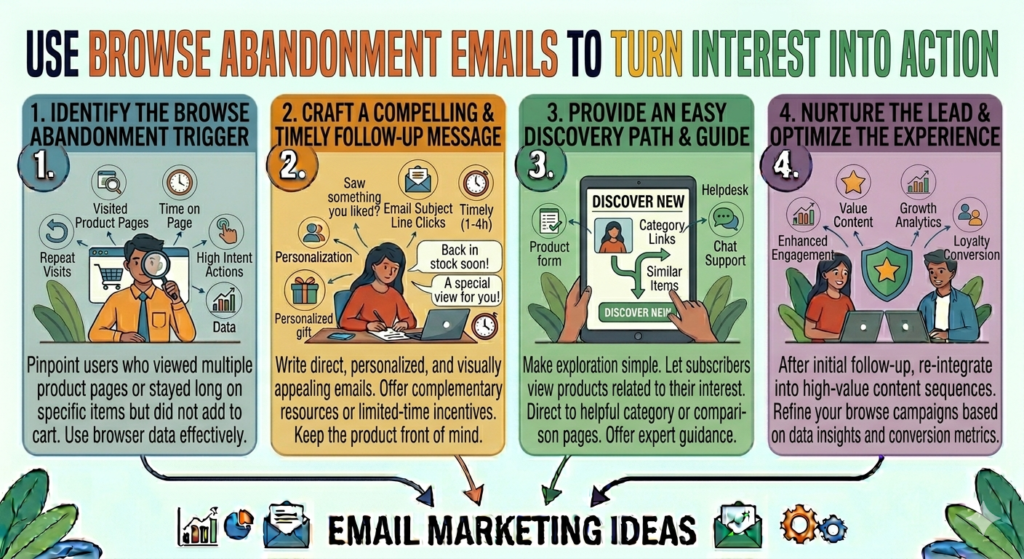
That means browse abandonment emails should be softer.
You are not trying to force a sale. You are trying to continue the conversation based on what they already showed interest in.
When done well, these emails feel helpful. When done poorly, they feel creepy or pushy.
The difference is in the wording.
Refer to the Interest Without Making It Feel Creepy
You do not need to say, “We saw you looking at this page.”
That can make people uncomfortable.
Instead, you can frame the email around the topic, product, or problem.
For example, if someone viewed a page about email marketing services, you could say, “If you are comparing ways to improve email results, here is a simple place to start.”
That feels natural. It connects to their interest without making the tracking obvious.
For ecommerce, instead of saying, “You viewed this product,” you could say, “Still thinking it over? Here is what customers usually want to know before choosing.”
This gives the reader a reason to keep engaging.
The best browse abandonment emails feel like guidance, not surveillance.
Help the Reader Compare and Choose
People often browse because they are not sure what to choose.
Your email can help.
If they viewed a product category, send an email that explains how to pick the right option. If they viewed a service page, explain what type of business the service is best for. If they viewed a pricing page, explain how to think about value, scope, or fit.
This kind of email is useful because it helps the reader move from interest to clarity.
For example, a SaaS company could send an email that says, “Not sure which plan fits? Start with the outcome you need in the next 30 days.” Then the email can explain how to choose based on use case.
A marketing agency could send an email that says, “If you are wondering whether your email problem is strategy, copy, or automation, here is a simple way to tell.”
That kind of message helps the reader self-diagnose.
And when people understand their problem better, they are more likely to take action.
Use Proof to Build Confidence
A browse abandonment email is a good place to include proof.
If the reader is interested but unsure, proof can help them feel safer.
Proof can come from reviews, results, customer stories, case studies, ratings, expert notes, or simple before-and-after examples.
But keep it tight. Do not overwhelm the reader with too much information.
For example, if someone viewed a service page for email strategy, the follow-up email could share a short example of a brand that improved results by fixing its welcome flow. Then it could invite the reader to book a strategy call.
The proof should match the page they viewed.
If they looked at retention services, show proof around retention. If they viewed product recommendations, show proof around that product category. If they viewed pricing, show proof around value and return.
Relevance makes proof stronger.
Use Browse Emails to Start a Softer Path
Not every browse abandonment email needs to push for a sale.
Sometimes the better action is to read a guide, compare options, take a quiz, watch a short demo, or reply with a question.
This is especially true for high-ticket offers or complex services.
When the buying decision is bigger, the next step should feel lighter.
The goal is to keep the relationship moving.
Use Post-Purchase Emails to Increase Trust, Repeat Sales, and Referrals
The sale is not the end of email marketing.
In many ways, it is the beginning of the most important part.
A customer who just bought from you is paying attention. They want to know what happens next. They want reassurance that they made a good choice. They want to receive the product, use the service, or get the result without confusion.
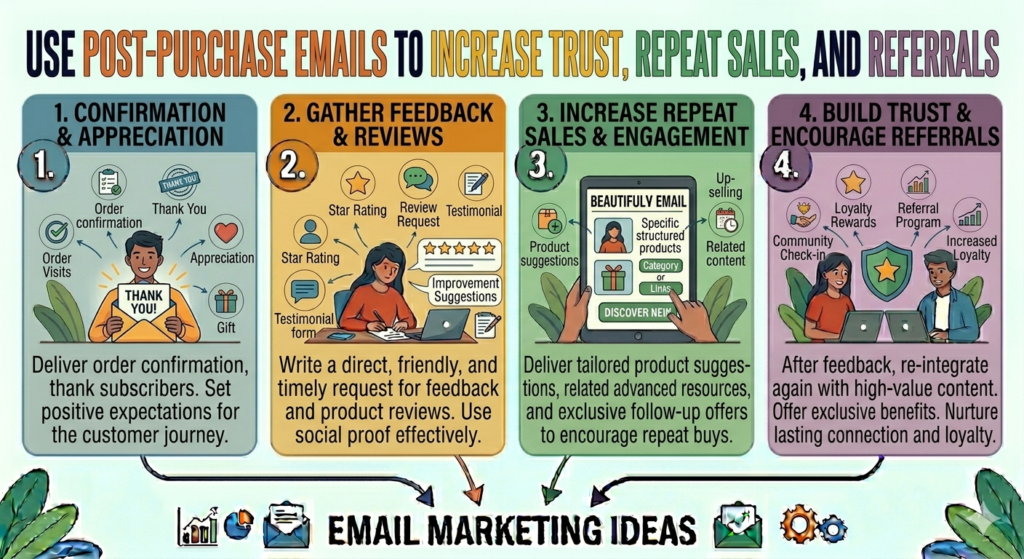
This is where post-purchase emails matter.
A strong post-purchase sequence can reduce buyer’s remorse, improve customer experience, increase repeat purchases, drive referrals, and create better reviews.
A weak post-purchase experience can do the opposite.
If the customer hears nothing useful after buying, they may feel unsure. If they do not know how to get value, they may lose interest. If the brand only sends more sales emails, they may feel like the relationship became one-sided.
Reassure the Customer Right After Purchase
The first post-purchase email should confirm the order or action clearly.
But it can also do more.
It can make the customer feel good about the decision they just made.
For ecommerce, this might mean explaining what happens next, when the order will ship, how to track it, and how to get help. For software, it might mean showing the first setup step. For a service business, it might mean explaining the onboarding process, timelines, and what the client should prepare.
This email should reduce uncertainty.
A buyer who feels informed is less likely to worry. A buyer who feels confident is more likely to stay engaged.
Even a simple line like “You are all set, and here is what happens next” can create calm.
That matters because the moments after purchase shape the customer’s memory of the brand.
Help the Customer Get Value Fast
A customer who gets value quickly is more likely to buy again, stay longer, and say good things about you.
Your post-purchase emails should help them reach that first win.
For a physical product, this may mean care tips, usage ideas, styling ideas, setup steps, or ways to get the best result. For software, it may mean a short onboarding path. For a course, it may mean where to start and how to avoid feeling overwhelmed. For a service, it may mean what the client can expect during the first phase.
The key is to think from the customer’s point of view.
What could confuse them? What could delay success? What do they need to know first? What small win would make them feel happy they bought?
Build emails around those answers.
Do not assume the customer will figure it out alone.
The more you guide them, the more value they feel.
Ask for Reviews at the Right Moment
Reviews matter, but timing matters too.
If you ask too early, the customer may not have enough experience. If you ask too late, the moment may pass.
The right time depends on what you sell.
For ecommerce, you may wait until the product has been delivered and the customer has had time to use it. For software, you may wait until the user completes a key action. For a service, you may ask after a milestone or clear win.
The review request should feel personal and easy.
Do not make the customer work too hard. Tell them why their feedback matters. Make the action simple. If possible, guide them with a gentle prompt, such as what problem they were trying to solve or what changed after using the product.
This makes it easier for them to write something useful.
Use Post-Purchase Emails to Open the Next Buying Path
Once the customer has received value, you can guide them toward another purchase.
This could be a related product, a refill, an upgrade, a service add-on, a referral, or a loyalty program.
But timing matters.
Do not rush the next sale before the customer feels good about the first one. The best cross-sell email often comes after the customer has had time to benefit from the original purchase.
The message should be based on what they bought.
For example, if they bought a beginner product, suggest the next step. If they booked a strategy service, suggest implementation support. If they purchased a product that needs replenishment, send a reminder at the right time.
Post-purchase emails work best when they feel like care first and selling second.
Use Win-Back Emails to Bring Past Customers Back
A past customer is not the same as a cold lead.
They already trusted you once. They already bought. They already had some kind of experience with your brand.
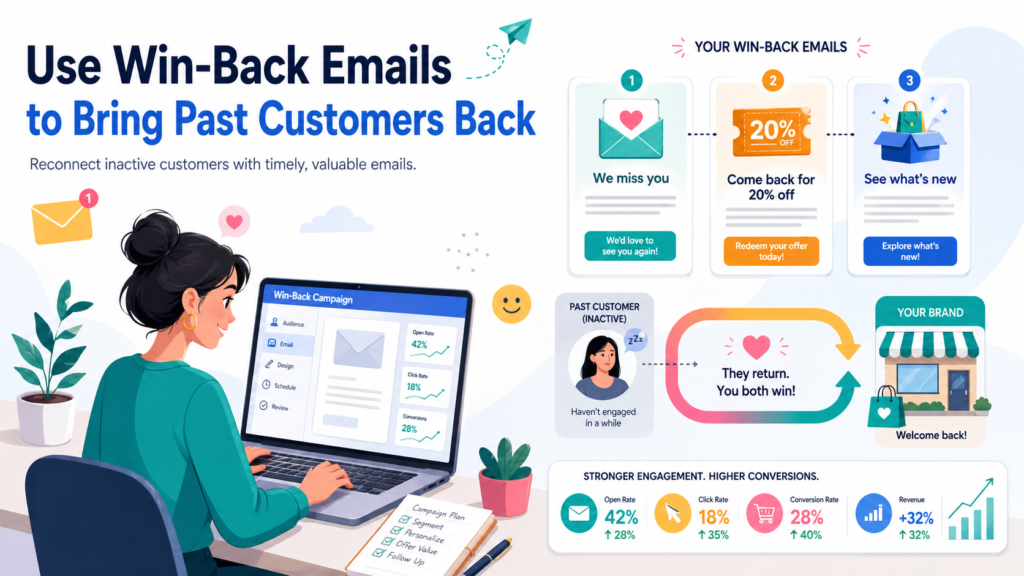
That makes win-back emails valuable.
But the message needs to be thoughtful. You cannot just say, “Come back” and expect it to work.
A good win-back email should remind the customer why they bought before, show what is new or better, and give them a clear reason to return.
The tone should feel warm, not desperate.
Understand Why Customers Stopped Buying
Before writing win-back emails, think about why customers may have gone quiet.
Some may not need the product again yet. Some may have switched to another brand. Some may have had a poor experience. Some may have forgotten about you. Some may only buy during certain seasons. Some may not understand what else you offer.
Different reasons need different messages.
If a customer buys skincare, timing and replenishment may matter. If they buy business services, their need may depend on budget, growth stage, or current goals. If they use software, inactivity may mean they did not get value fast enough.
A generic “We miss you” email may not be enough.
Try to match the win-back message to the likely reason.
If they may need replenishment, remind them at the right time. If they bought once but did not explore other products, introduce a related option. If they stopped using a service, show a better path back. If something has improved, tell them what changed.
Give Past Customers a Fresh Reason to Return
People often need a new reason to act.
That reason could be a new product, a better offer, an improved experience, a seasonal need, a limited bonus, a loyalty reward, or a helpful update.
For example, instead of saying, “We have not seen you in a while,” say, “Since your last order, we added a simpler way to choose the right bundle.”
That gives the customer a reason to look again.
For a digital agency, a win-back email might say, “If email has been sitting on the back burner, this is a good time to revisit it before your next campaign push.”
That message connects to a real business need.
A win-back email should not only look backward. It should show what is possible now.
Use Memory, but Do Not Overdo It
A win-back email can mention the customer’s past purchase or interest, but it should not feel too personal in a strange way.
For example, “Since you tried our email audit last year, you may now be ready to improve your full nurture flow” feels useful.
But too much detail can feel uncomfortable.
Use customer history to make the message relevant, not to show how much data you have.
The goal is to make the customer feel remembered in a helpful way.
Know When to Stop
If a past customer does not respond to win-back emails, do not keep pushing forever.
Send a thoughtful sequence. Give value. Make a clear offer. Then reduce frequency or move them into a lower-pressure segment.
A win-back campaign should protect the relationship, not burn it.
Sometimes the best marketing choice is to step back with respect.
Use Plain Text Emails to Make the Message Feel More Personal
Not every email needs a heavy design.
In fact, some of the highest-trust emails are plain text or mostly plain text. They feel closer to a personal note. They are easier to read. They load quickly. They can work especially well for service businesses, B2B brands, consultants, coaches, SaaS companies, and relationship-based offers.
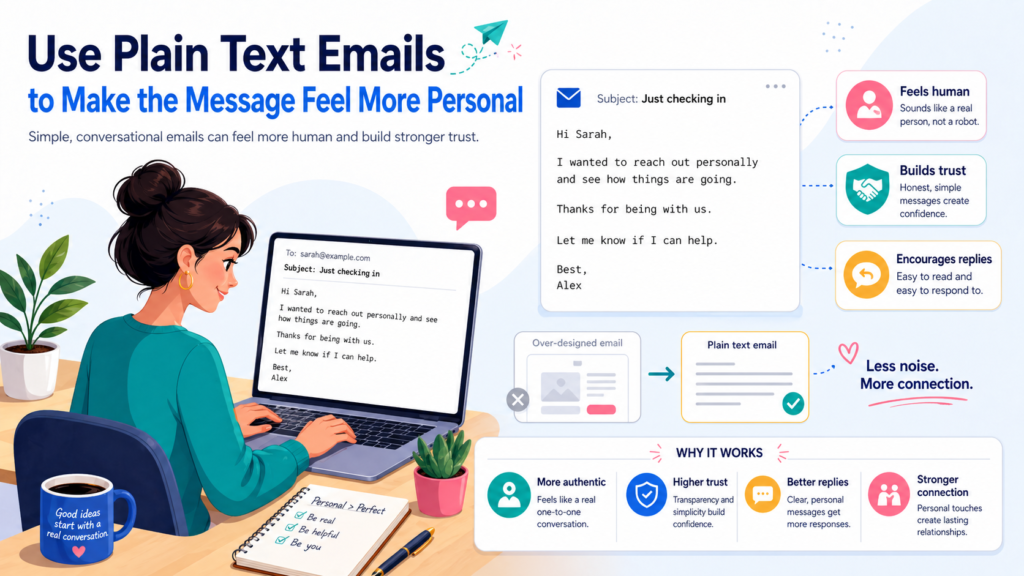
Designed emails have their place. They are useful for ecommerce, product launches, visual brands, and content-heavy newsletters.
But plain text emails can feel more direct.
They put the message first.
Use Plain Text When Trust Matters More Than Design
Plain text works well when the email needs to feel personal, thoughtful, or consultative.
For example, if you are inviting a lead to book a strategy call, a plain text email may feel more natural than a glossy designed email. If you are following up after a webinar, a simple message may feel warmer. If you are sending a founder note, plain text can make it feel more real.
The format should match the goal.
If the goal is to showcase products, design may help. If the goal is to start a conversation, plain text may work better.
A simple email can feel like it came from a person, not a department.
That can increase replies and trust.
Make Plain Text Emails Easy to Scan
Plain text does not mean messy.
The email still needs structure.
Use short paragraphs. Keep each thought clear. Avoid long walls of text. Make the call to action easy to see. Use a natural flow from problem to insight to next step.
A plain text email should feel simple, but not careless.
For example, a strong plain text email might open with a sharp observation, explain why it matters, give one useful idea, and invite the reader to take one action.
That is enough.
You do not need graphics, banners, or long sections when the message is strong.
Test Plain Text Against Designed Emails
Different audiences respond to different formats.
Some ecommerce audiences expect visuals. Some B2B audiences prefer direct notes. Some newsletters work best with light design. Some offers convert better when the email feels personal.
Do not guess forever. Test.
Send a designed version and a plain text version to similar segments. Compare opens, clicks, replies, conversions, and unsubscribes. Do not judge only by open rate. A plain text email may get fewer clicks but more replies. A designed email may get more product clicks but fewer conversations.
Look at the goal of the campaign.
The best format is the one that supports that goal.
Let the Message Choose the Format
Before designing an email, ask what the message needs.
Does it need visuals to sell the product? Does it need proof to show results? Does it need a personal tone to start a conversation? Does it need a simple link to one action?
Choose the format based on the job.
Good email marketing is not about using one style forever. It is about using the right style for the moment.
Conclusion
Email marketing works best when it feels useful, timely, and human.
The brands that win with email are not always the ones with the biggest lists or the loudest offers. They are the ones that understand their subscribers, respect their attention, and send messages that help people take the next right step.












Comments are closed.